Best Feeding Schedule for Large Breed Puppies
Dog Nutrition & Feeding By James C. • June 23, 2026
The best feeding schedule for a large breed puppy is three to four small meals a day until around six months, then two meals a day from six months into adulthood. Getting this right matters more for big dogs than most owners expect, because steady, controlled growth protects developing joints.
This guide covers how often and how much to feed, the right food, when to switch to adult food, and the simple habits that lower the risk of bloat.
Why large breed puppies need a different feeding schedule
Large breed puppies need a feeding schedule built around slow, steady growth rather than fast weight gain. A puppy that will mature past roughly 25 kilograms spends many months building a large frame, and the way you feed during that window has a lasting effect on the joints and bones that frame depends on.
The risk with big breeds is growing too quickly. Pushing rapid growth with too much food, or food that is too rich in energy and calcium, has been linked to developmental orthopaedic problems such as hip and elbow issues, since the skeleton is being asked to carry weight it is not yet ready for. Veterinary guidance on growth in large breed puppies stresses that controlled, moderate growth is healthier than maximum growth.
This is why a large breed puppy feeding schedule is about consistency and measured portions, not free access to a full bowl. Smaller, regular meals suit a young digestive system, keep energy steady, and make it far easier to feed the right total each day. Breeds like the Great Dane, German Shepherd and Labrador Retriever all benefit from this patient approach during their long growth phase.
The best feeding schedule by age
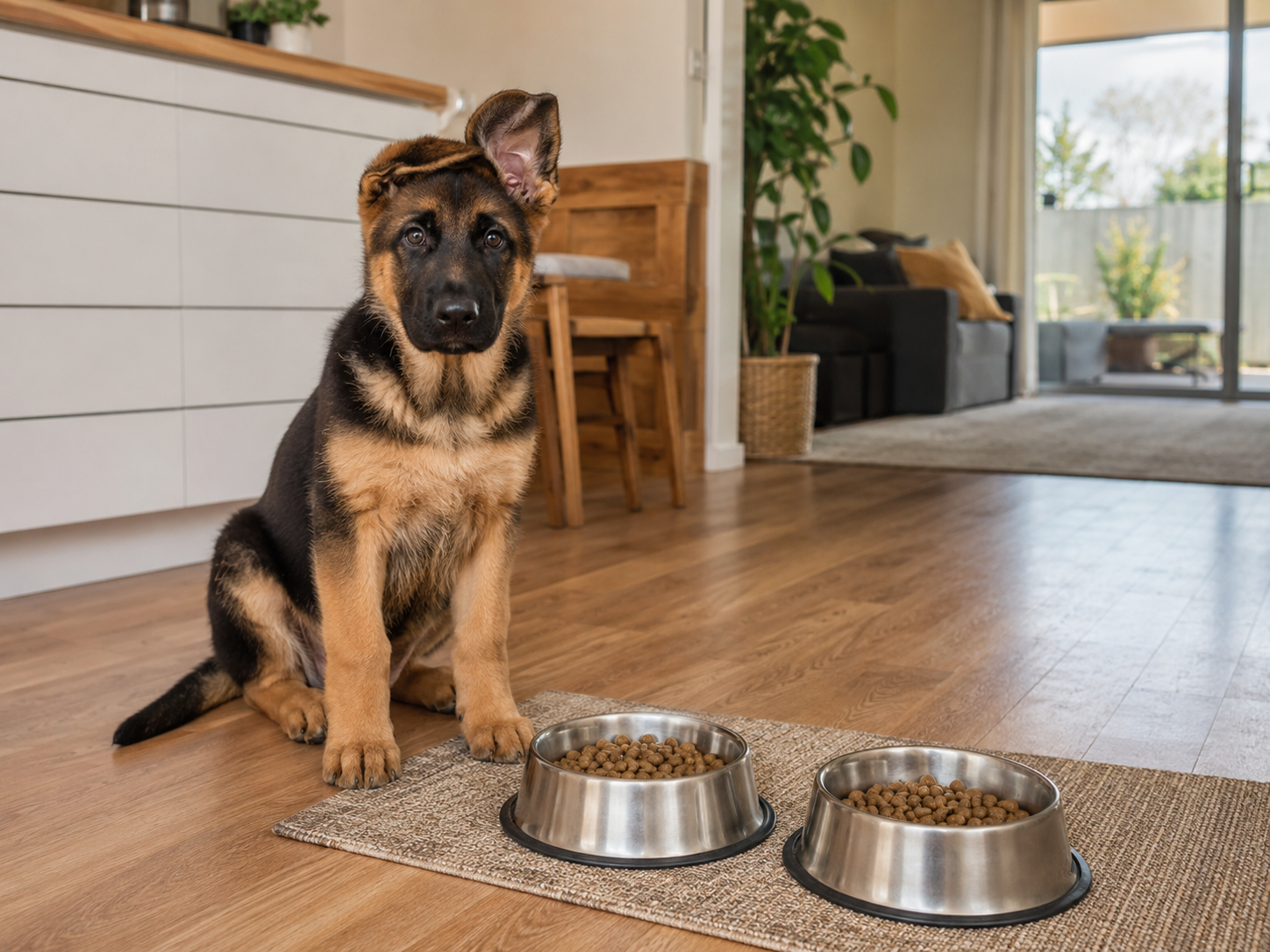
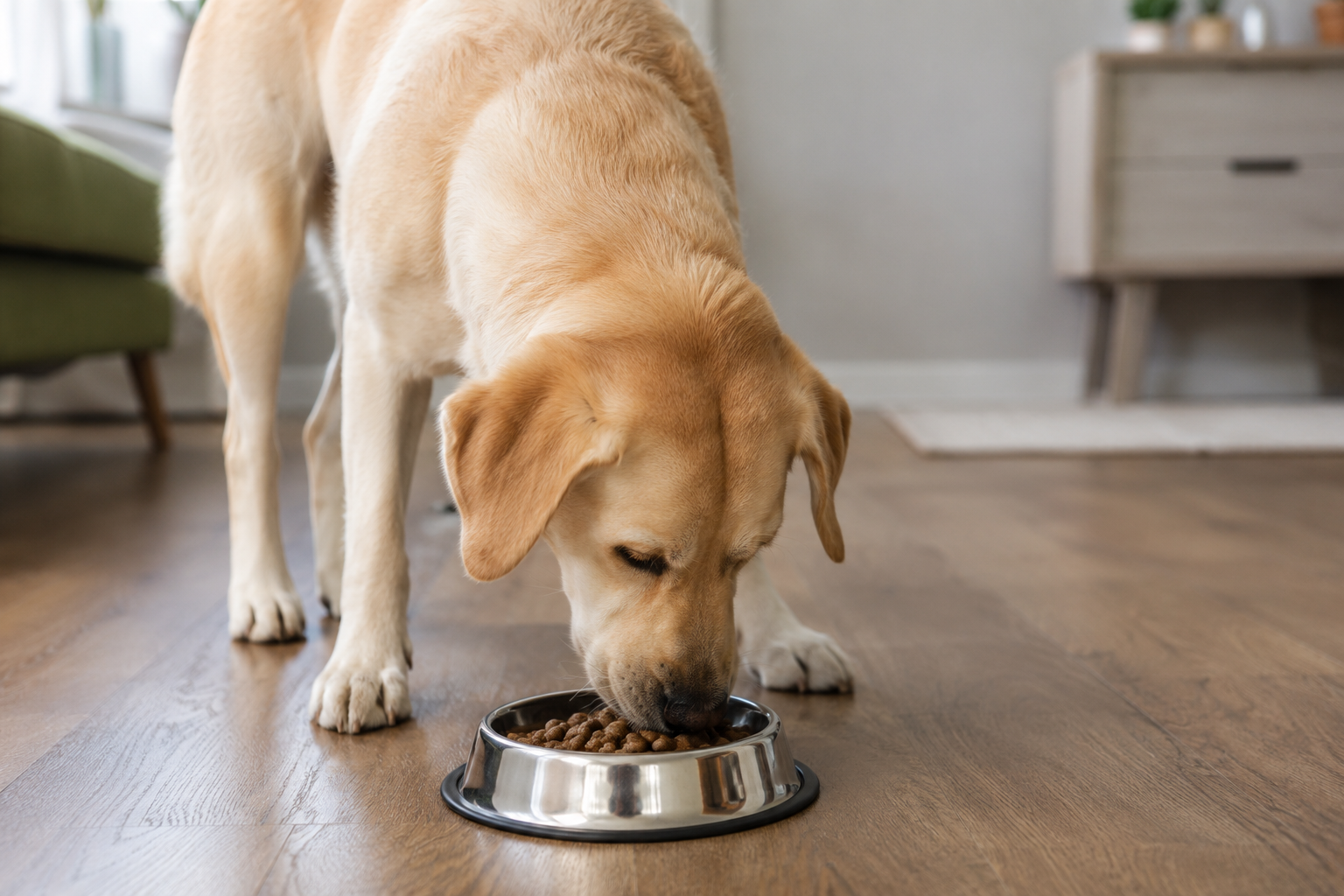
Feed large breed puppies three to four meals a day as youngsters, then reduce to two meals a day as they mature. Spreading food across the day matches how puppies digest and helps avoid large, single servings that can overload a young stomach. As your puppy grows, you gradually lower the number of meals while keeping the daily amount appropriate for their stage.
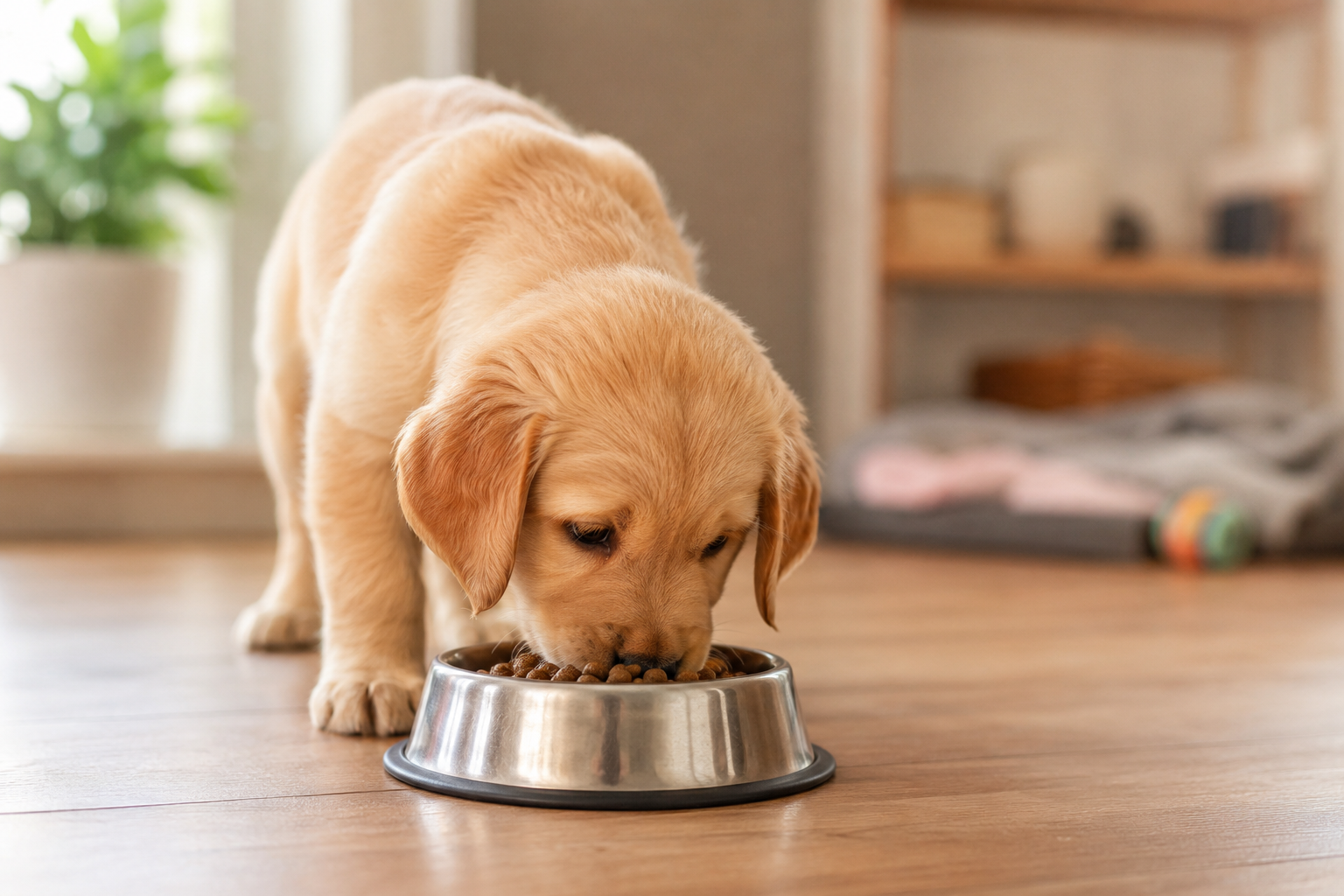
The general pattern, supported by veterinary feeding guidance such as the puppy feeding timeline, is to reduce meal frequency as the puppy ages rather than change it suddenly. A simple routine works best: feed at consistent times, at a calm feeding station for your puppy, and pick up the bowl after each meal.
| Puppy age | Meals per day | What it looks like |
|---|---|---|
| 8 weeks to 3 months | 3 to 4 | Small, frequent meals while the stomach is tiny and energy needs are high |
| 3 to 6 months | 3 | A settled morning, midday and evening routine with measured portions |
| 6 to 12 months | 2 | Drop the midday meal and feed morning and evening |
| 12 to 24 months | 2 | Stay on large-breed puppy food, twice daily, until the move to adult food |
Where possible, give the last meal earlier in the evening rather than just before bed. This leaves time for digestion and a toilet trip before settling, which also helps with overnight house training in the early weeks.
How much to feed a large breed puppy
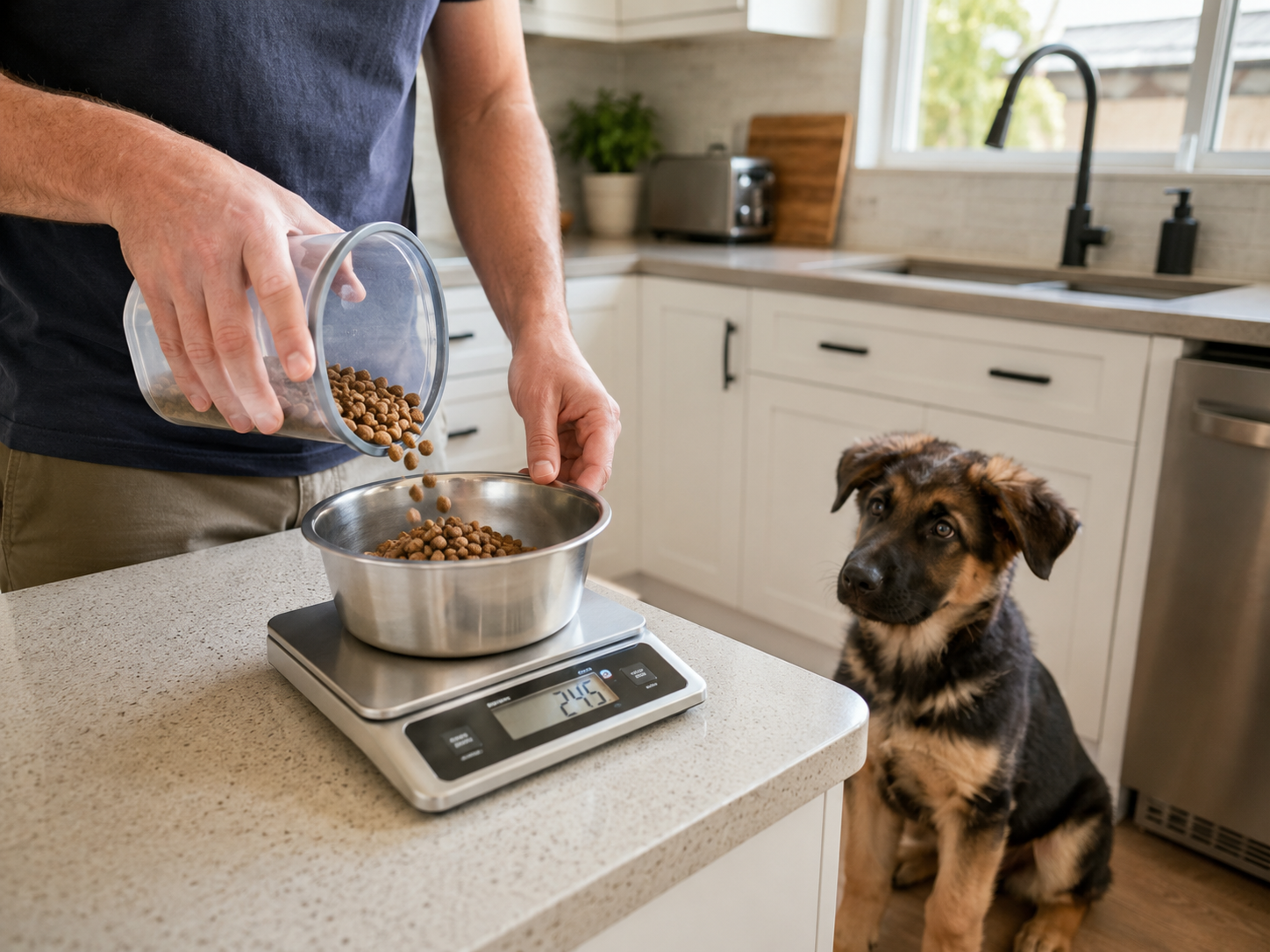
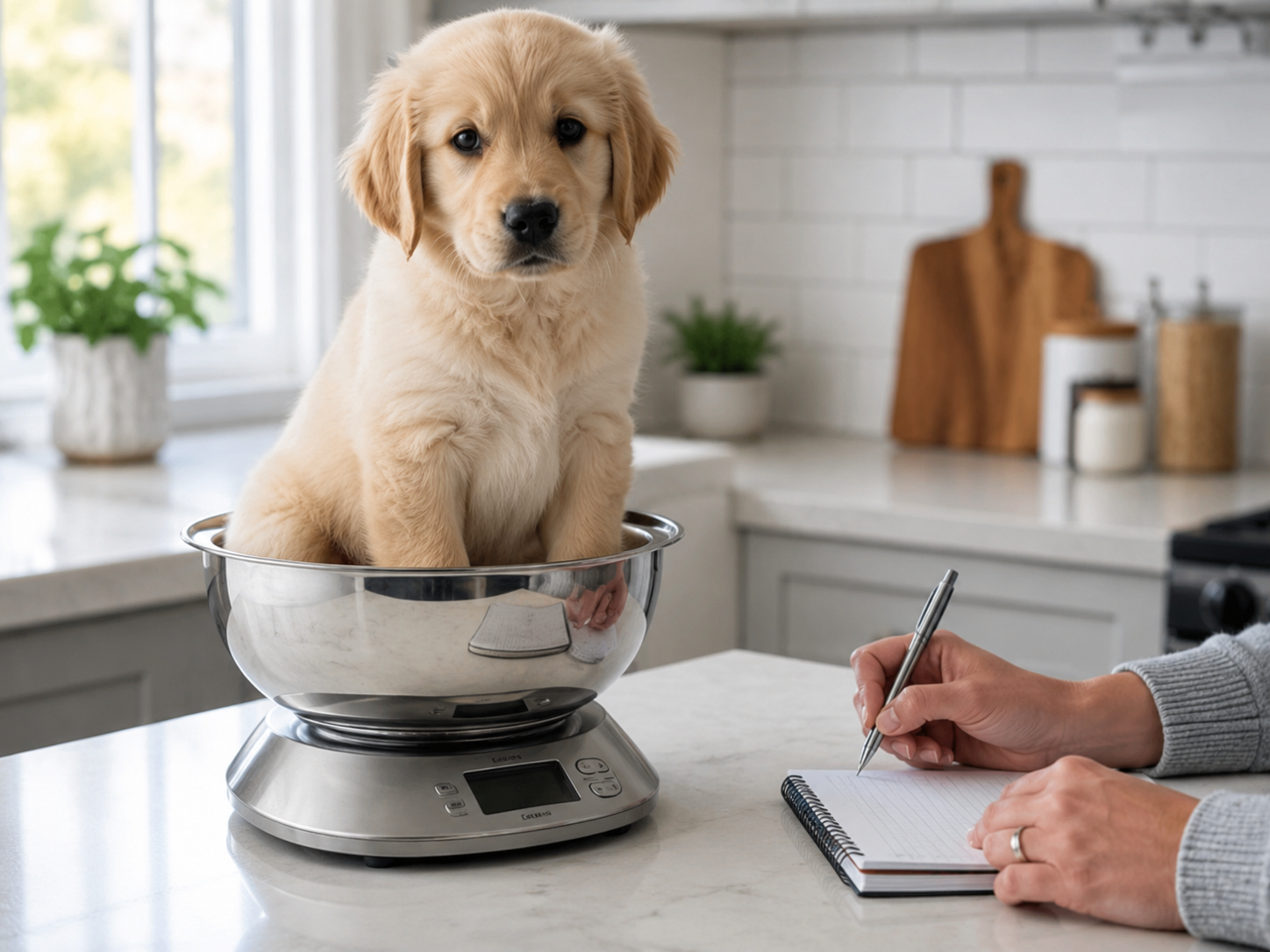
Feed the amount on your puppy food’s large-breed feeding chart, then adjust to keep your puppy lean. Reliable feeding charts are calculated from your puppy’s age and expected adult weight, so the pack guide is your starting point rather than a guess. Weigh the daily amount, then divide it evenly across that day’s meals.
Because foods vary in energy density, two products can recommend quite different amounts, so always read the chart on the bag you are actually feeding and treat any general figure as approximate. The most reliable check is your puppy’s body condition, not a fixed number of grams. The RSPCA recommends regular weighing and body condition checks rather than overfeeding, especially in large and giant breeds.
| Body condition check | What you are aiming for |
|---|---|
| Ribs | Easily felt with light pressure, not buried under fat or sharply visible |
| Waist | Visible from above, tucking in behind the ribs |
| Tummy | Tucks up when viewed from the side |
| Overall | Lean and even, never rounded or bony |
Treats count toward the daily total, so keep them to a small share and use part of the meal allowance for training. If you are ever unsure about amounts, it is best to confirm with your veterinarian, who can weigh your puppy and advise on the right portion for their growth.
Choosing the right large breed puppy food
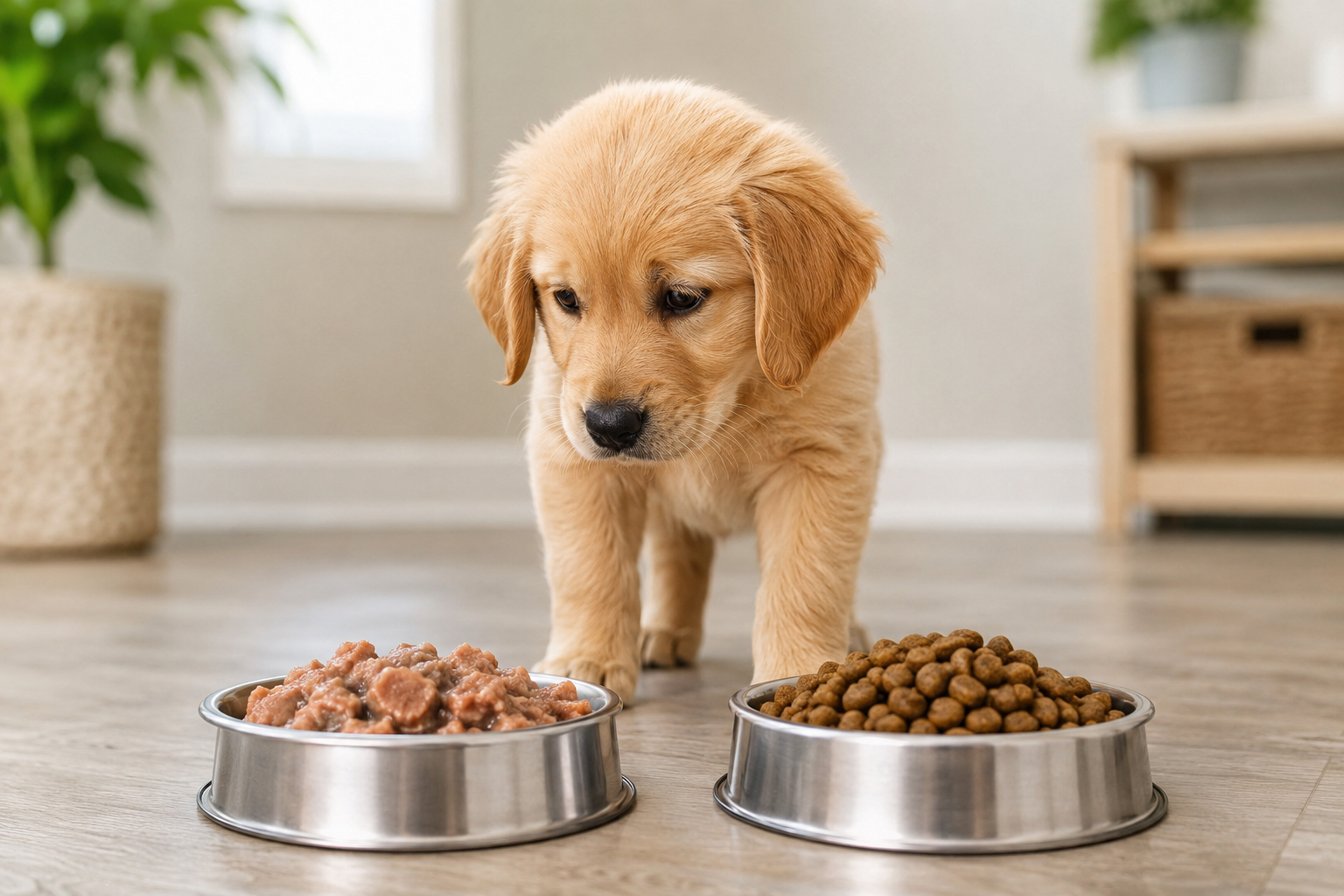
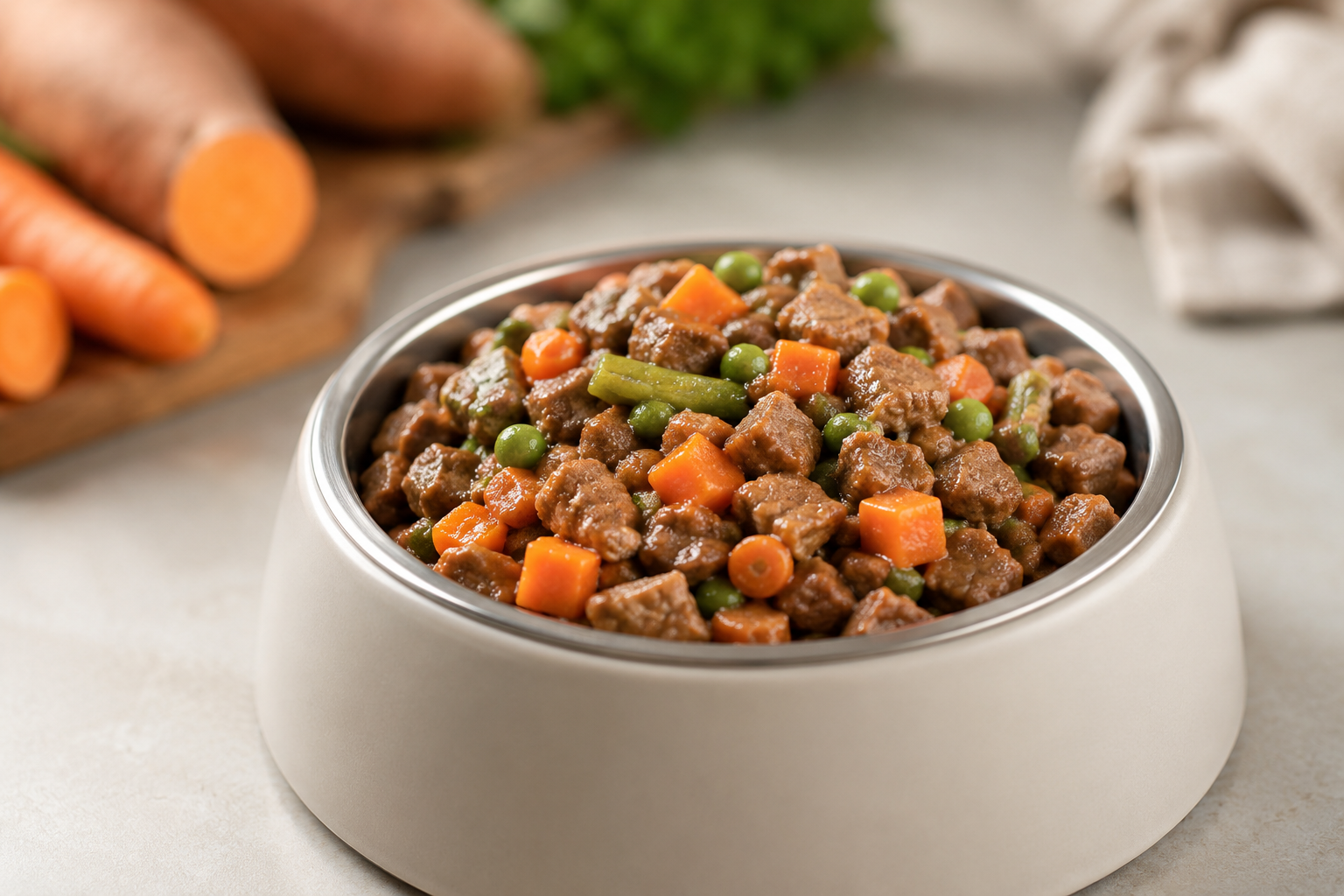
Large breed puppies should eat a complete food formulated specifically for large-breed growth. These diets are designed to support steady development, with controlled levels of calcium, phosphorus and energy so puppies do not grow too fast. Standard puppy foods and adult foods are not built for this stage and can allow growth to run ahead of the skeleton.
Calcium control matters in particular. Young puppies have limited ability to regulate how much calcium they absorb, so a diet with too much can be a problem during the main growth phase. Choosing a balanced, large-breed puppy formula removes most of that risk, which is why supplementing a complete food with extra calcium or other additives is generally discouraged unless a vet advises it.
Look for a food labelled as complete and balanced for large-breed puppies, the foundation of good puppy nutrition, and stick with it through the growth period for consistency. Feeding a large breed is also a real budget line, so it is worth factoring food into the lifetime cost of a large dog from the start.
Feeding to protect joints and avoid overfeeding
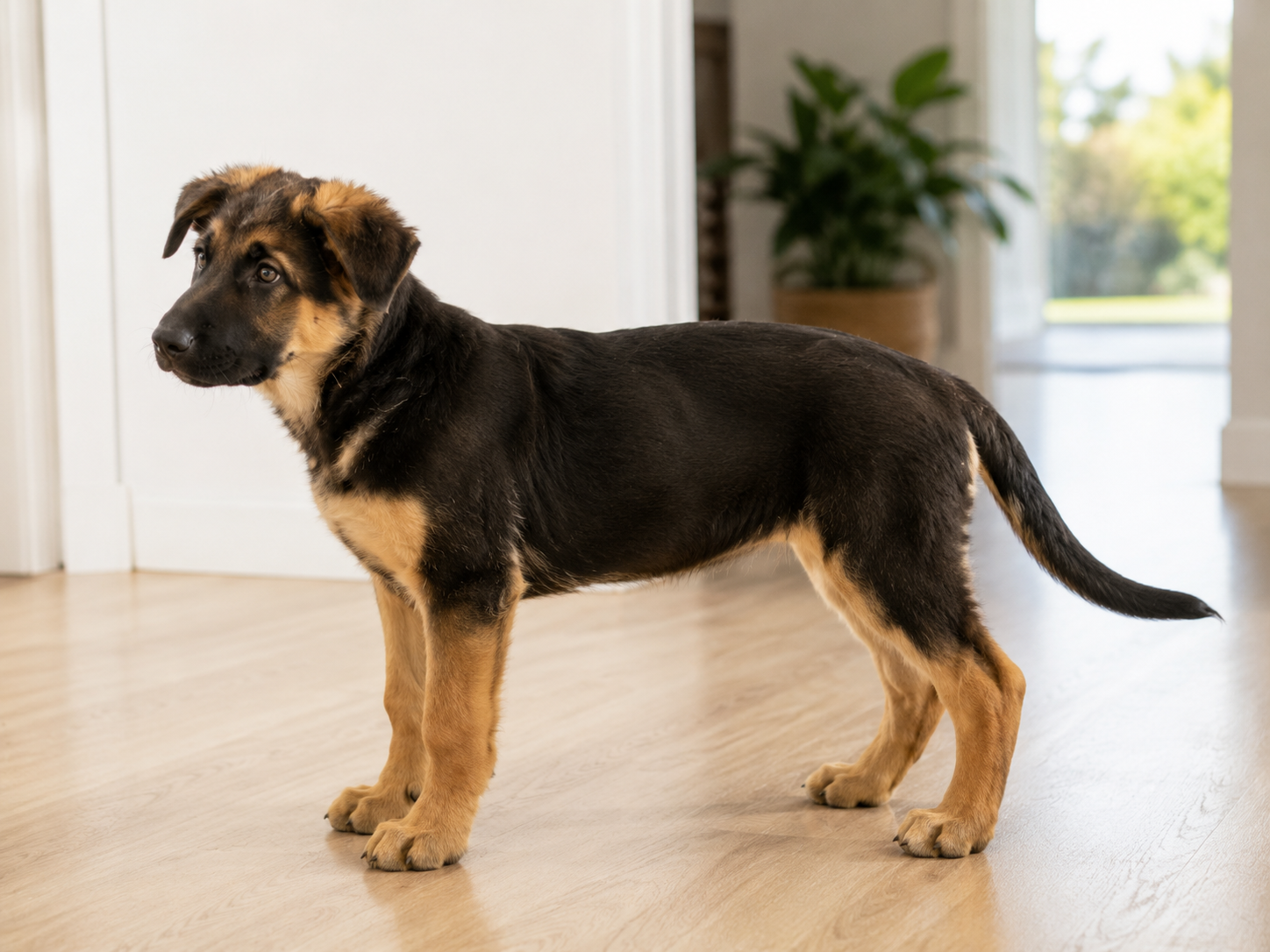
The single most protective habit is feeding measured portions to keep your puppy lean. Overfeeding adds weight and speeds growth, and both place strain on joints that are still forming. A slightly lean large breed puppy is in a much better position than a heavy one carrying extra load through a long growth phase.
Owners should be aware that excess weight and over-fast growth can be associated with conditions such as hip and elbow dysplasia in large breeds. This is why a flexible, condition-based approach beats rigidly feeding a fixed amount. If your puppy is becoming rounded, ease the portions slightly; if ribs are too prominent, increase a little.
Weigh your puppy regularly and track the trend rather than a single number. Steady, gradual gain is the goal. If growth seems very fast or very slow, or you are worried about how your puppy is developing, it is best to discuss it with your veterinarian.
Reducing the risk of bloat and GDV at mealtimes
Feeding measured, calm meals helps lower the risk of bloat in large, deep-chested breeds. Bloat, and the more serious gastric dilatation-volvulus, is a sudden and dangerous condition, and breeds with deep chests such as the Great Dane and other giants may be more prone to it. A few simple mealtime habits can help.
Feed two or more measured meals across the day rather than one very large serve, keep mealtimes settled rather than excitable, and avoid hard exercise for an hour or two around eating. Measured meals and avoiding overfeeding are sensible precautions against GDV, according to the Purina Institute.
Know the warning signs as well. A swollen or tight abdomen, unproductive retching, drooling, restlessness or obvious distress shortly after eating needs urgent veterinary attention, since GDV can progress quickly. If you are unsure whether vomiting or retching is an emergency, treat it as one and call your vet.
When to switch from puppy to adult food
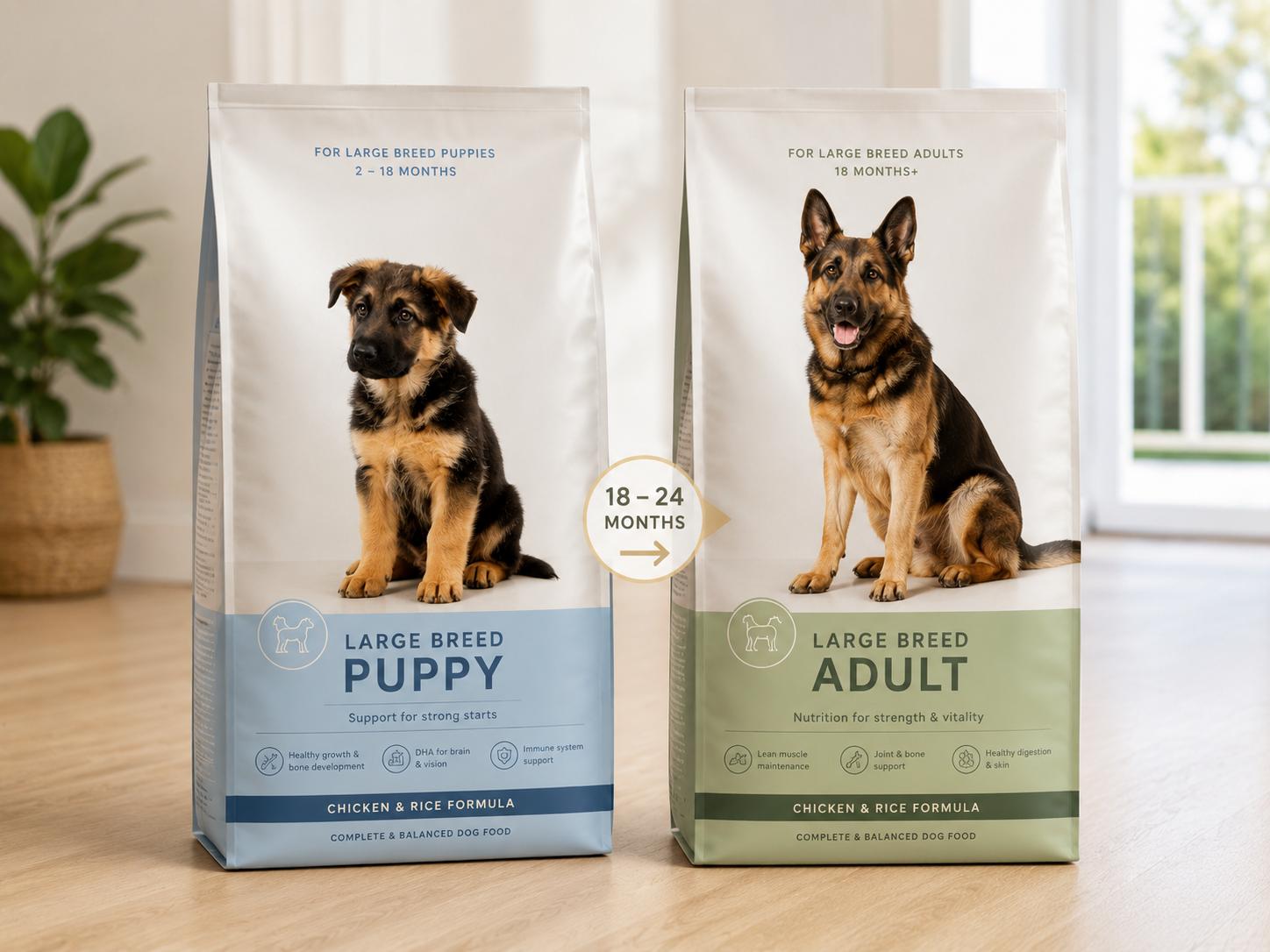
Most large and giant breeds stay on large-breed puppy food until around 18 to 24 months. This is later than small breeds, which often move to adult food near their first birthday, because big dogs keep growing for longer. Switching too early can cut short the controlled-growth support a puppy formula provides.
A useful marker is reaching roughly 90 percent of expected adult weight, when the body shifts from building to maintaining. The exact timing varies by breed and individual, so it is worth confirming with your vet, especially for giant breeds at the upper end of the range.
How to transition foods safely
Change foods gradually over about 7 to 10 days to avoid stomach upset. Whether you are switching brands or moving from puppy to adult food, a slow change lets the digestive system adjust. Start by mixing a small amount of the new food with the current one, then increase the new food and reduce the old a little each day until the change is complete.
Common large breed puppy feeding mistakes
The most common large breed puppy feeding mistakes all push growth too fast or unbalance the diet:
- Free-feeding from a full bowl, which makes it impossible to track how much your puppy eats and often leads to excess weight.
- Feeding a standard or adult food instead of a large-breed puppy formula built for controlled growth.
- Adding calcium or other supplements to a complete food, which can upset a carefully balanced diet.
- Letting treats and table scraps creep past about 10 percent of daily food.
- Switching to adult food too early, before around 18 to 24 months for most large and giant breeds.
- Pushing fast growth to get a bigger dog sooner, rather than steady, lean development.
- Feeding one large meal a day instead of splitting food across two or more meals.
- Skipping regular weigh-ins and body condition checks, so gradual weight gain goes unnoticed.
Keep it simple: measure the food, feed to body condition, use a quality large-breed puppy formula, and make changes slowly. These habits do more for a big dog’s long-term health than any single product. A complete puppy supplies checklist with the right bowls and storage makes a consistent routine far easier to keep.
Conclusion
A good large breed puppy feeding schedule is steady and measured: three to four meals a day early on, two meals from six months, the right large-breed food, and portions that keep your puppy lean.
Feed for healthy, controlled growth and check in with your vet as your puppy develops. Explore more Pups4Sale ownership guides to prepare with confidence.
Frequently Asked Questions
1. How often should I feed a large breed puppy?
Feed three to four small meals daily up to about six months, then two meals from six months onward, kept at twice a day into adulthood. Spreading food across the day suits a developing digestion and helps maintain steady energy and growth.
2. How much should a large breed puppy eat each day?
Use your puppy food’s large-breed feeding chart, which is based on expected adult weight and age, then adjust to keep a lean body condition. Weigh portions, divide them across the day’s meals, and review amounts with your vet as your puppy grows.
3. What is the best feeding schedule for a large breed puppy by age?
From eight weeks, feed three to four small meals, move to three meals by three to six months, then two meals from six to twelve months. Keep two meals a day through adulthood, with the last meal earlier in the evening.
4. When should a large breed puppy switch to adult food?
Most large and giant breeds stay on large-breed puppy food until around 18 to 24 months, longer than small breeds. The switch usually lines up with reaching roughly 90 percent of expected adult weight. Confirm the timing with your veterinarian.
5. Why do large breed puppies need special puppy food?
Large-breed puppy formulas control calcium, phosphorus and energy so puppies grow steadily rather than too fast. Slower, controlled growth helps protect developing joints and bones, which standard puppy foods and adult foods are not designed to support during this stage.
6. Can overfeeding harm a large breed puppy?
Yes. Overfeeding speeds growth and adds weight that developing joints are not ready to carry, which can be associated with orthopaedic problems. Feeding measured portions to a lean body condition is one of the most protective things an owner can do.
7. How can I reduce the risk of bloat at mealtimes?
Feed measured meals rather than one large serve, keep mealtimes calm, and avoid vigorous exercise for an hour or two around eating. Deep-chested breeds may be more prone to bloat, so it is best to discuss prevention with your veterinarian.
 Add us as a preferred source