Puppy Weight Gain Chart: What is Normal?
Dog Nutrition & Feeding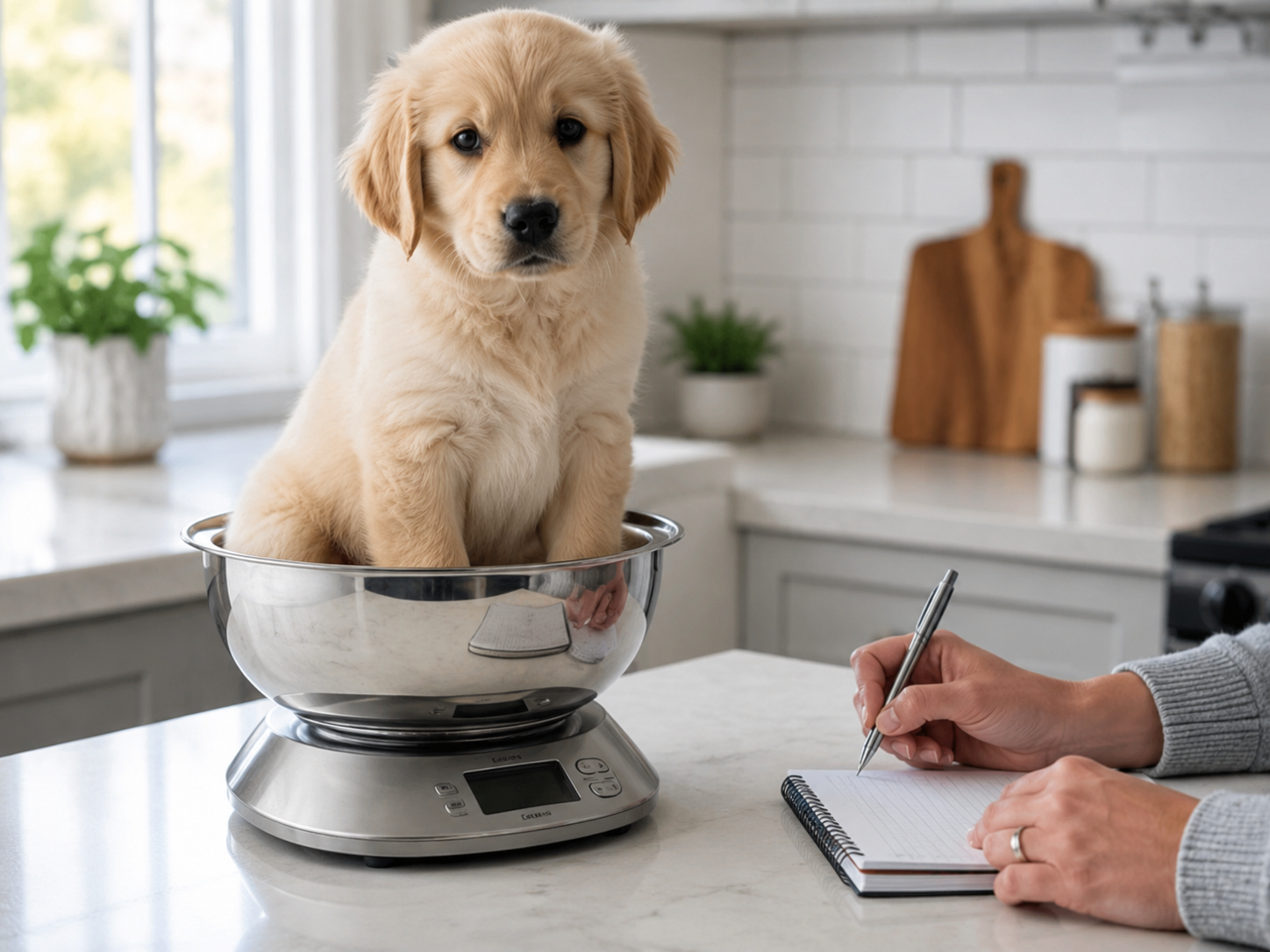 By James C. • June 23, 2026
A normal puppy gains weight steadily for its breed size, roughly 2 to 4 grams a day for every kilogram of its expected adult weight, with growth fastest in the first five months. Because a Chihuahua and a Great Dane grow at very different rates, there is no single right number.
This guide gives a puppy weight gain chart by age and breed size, shows how to estimate adult weight, and explains when a weight change is worth a vet visit.
How much weight should a puppy gain?
Healthy puppies gain weight gradually and consistently, at a rate that depends on how big they will be as adults. As a general guide, puppies put on around 2 to 4 grams a day for each kilogram of their expected adult weight, and growth is quickest in the first few months before slowing as they mature.
What matters most is a steady upward trend rather than any single figure. A puppy that keeps gaining at a sensible pace and stays in good body condition is usually doing well, even if its weight does not match a chart exactly. Veterinary growth research, such as the work behind the puppy growth charts used by many vets, is built around tracking this curve over time.
Weigh your puppy regularly and write the numbers down so you can see the pattern. Young puppies can be weighed at home, and most vet clinics are happy for you to pop in for a quick weigh-in between visits. A chart is a guide to compare against, not a pass or fail mark.
Puppy weight gain chart by age and breed size

The simplest way to read a puppy weight gain chart is by breed size, since each size grows and finishes at a different pace. The table below is an approximate guide in metric. Use it alongside a chart for your specific breed and your vet’s advice, since individual puppies vary.
| Breed size | Typical adult weight | About half adult weight by | Finishes growing around |
|---|---|---|---|
| Toy | Under 5 kg | 3 to 4 months | 8 to 10 months |
| Small | 5 to 10 kg | 3 to 4 months | 8 to 10 months |
| Medium | 10 to 25 kg | 4 to 5 months | 12 to 15 months |
| Large | 25 to 45 kg | 5 to 6 months | 14 to 18 months |
| Giant | Over 45 kg | 6 to 7 months | 18 to 24 months |
1. Toy and small breeds
Toy and small breeds grow quickly and finish early, often reaching their adult weight by 8 to 10 months. Their daily gains are small in grams, so weigh them on accurate scales and watch the trend rather than tiny day-to-day changes.
2. Medium breeds
Medium breeds reach about three quarters of their adult weight by 6 to 8 months and usually finish growing between 12 and 15 months. Steady, even gains are the goal through this stage.
3. Large and giant breeds
Large and giant breeds grow for much longer and should not be rushed. They keep developing to 18 to 24 months, and feeding for slow, controlled growth helps protect their joints, so lean and steady beats big and fast.
How to use a puppy weight gain chart
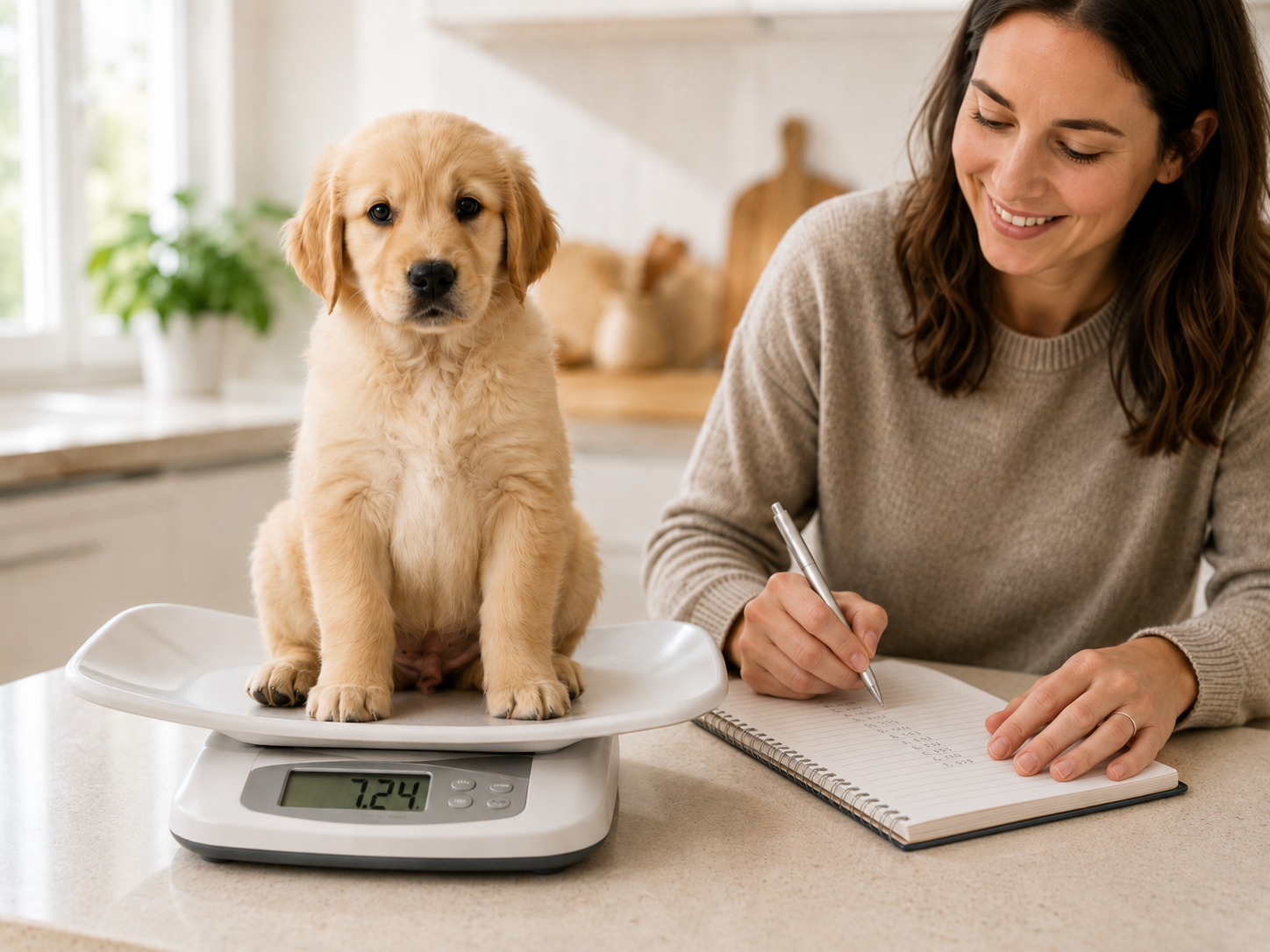
Use a weight gain chart to track your puppy’s trend over time, not to judge a single weigh-in. Weigh at the same time of day where you can, use the same scales, and plot the numbers so you can see a smooth upward curve.
Expect individual variation. Two puppies of the same breed and age can sit at different points and both be healthy, since genetics, sex and other factors play a part. What you are looking for is consistent progress and good body condition, not an exact match to a row in a table.
If your puppy’s weight suddenly flattens, drops, or shoots up well beyond the expected pace, that is the signal to look closer and check with your vet. Many Australian clinics also offer simple online tools, such as a puppy weight calculator, to compare your puppy against typical growth.
How to estimate your puppy’s adult weight
You can estimate adult weight from your puppy’s current weight, breed and parents, though it remains an estimate. A few simple methods give a reasonable ballpark, which is useful for choosing food, gear and knowing what to expect.
| Method | How it works |
|---|---|
| Small breeds | Roughly triple the weight at 8 weeks |
| Medium and large breeds | Roughly double the weight at 16 weeks (about 4 months) |
| Parent size | The adult weight of the parents is a strong guide |
| Breed average and calculators | Use the breed plus current age and weight for an estimate |
For mixed breeds, knowing the likely breeds in the mix and the size of the parents helps most. If you are unsure of your puppy’s breed background, your vet can give a sensible estimate based on age, weight and frame. Typical adult sizes for popular dog breeds in Australia can also help set expectations.
What affects a puppy’s growth
Several factors shape how fast and how large a puppy grows, which is why two puppies of the same age can differ:
- Genetics and breed set the overall size and pace, and some breeds are more prone to carrying extra weight, including Labradors, Boxers and Rottweilers.
- Sex plays a part, with males often growing a little larger than females in the same litter.
- Desexing timing matters, especially for large and giant breeds, since desexing very early can affect the growth plates, so many vets advise waiting longer for big breeds.
- Diet and portion size have a big influence, as a complete puppy food in the right amount supports steady growth while over or underfeeding pushes it off track.
- Health and parasites can hold weight back, and intestinal worms are a common reason a puppy struggles to gain.
- Exercise type matters more than the amount, since gentle, joint-friendly activity protects growing joints better than repetitive, high-impact play.
- Early nutrition and weaning set the foundation, so good feeding from the neonatal weeks onward supports healthy growth.
Feeding for healthy, steady growth
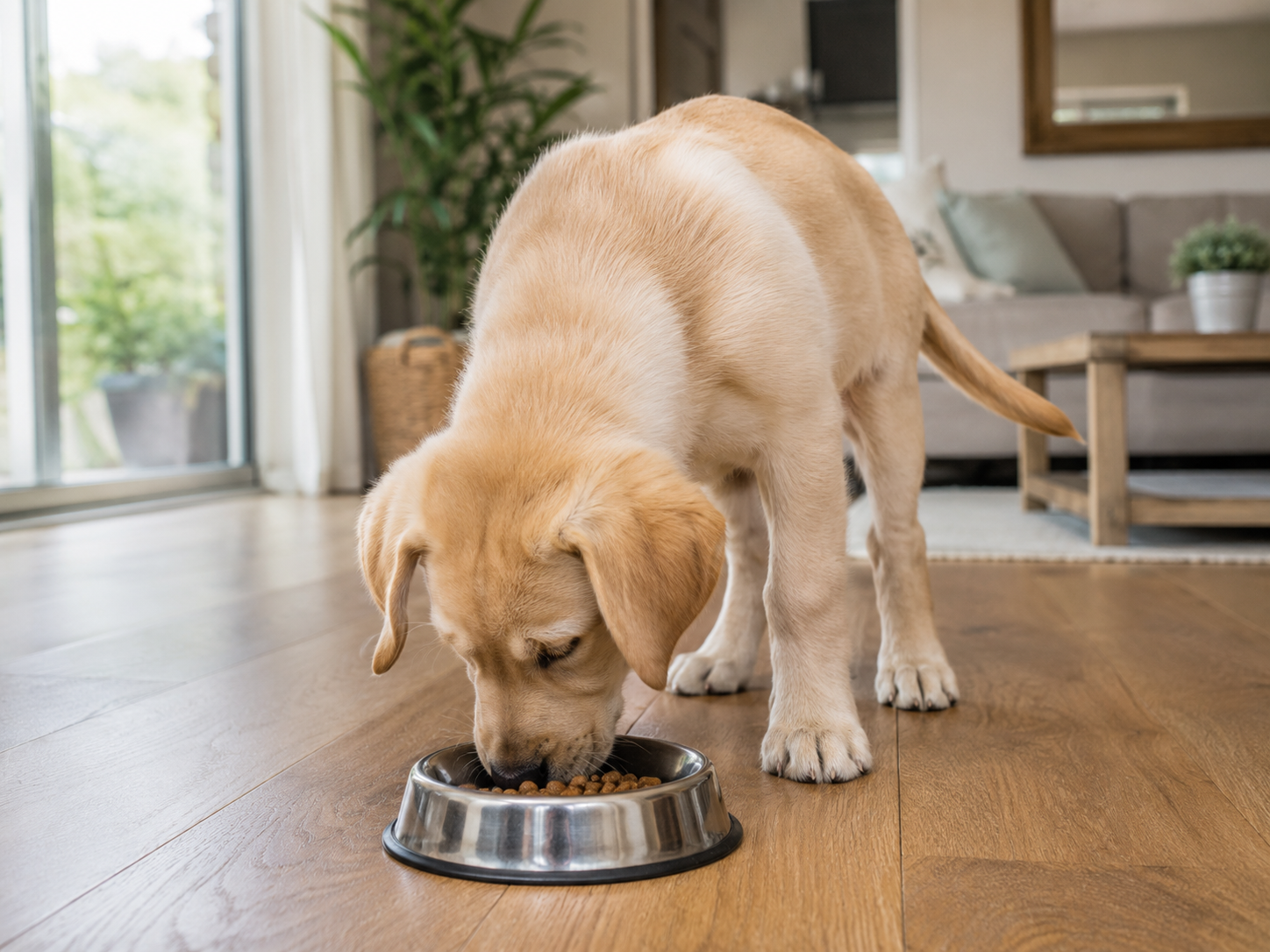
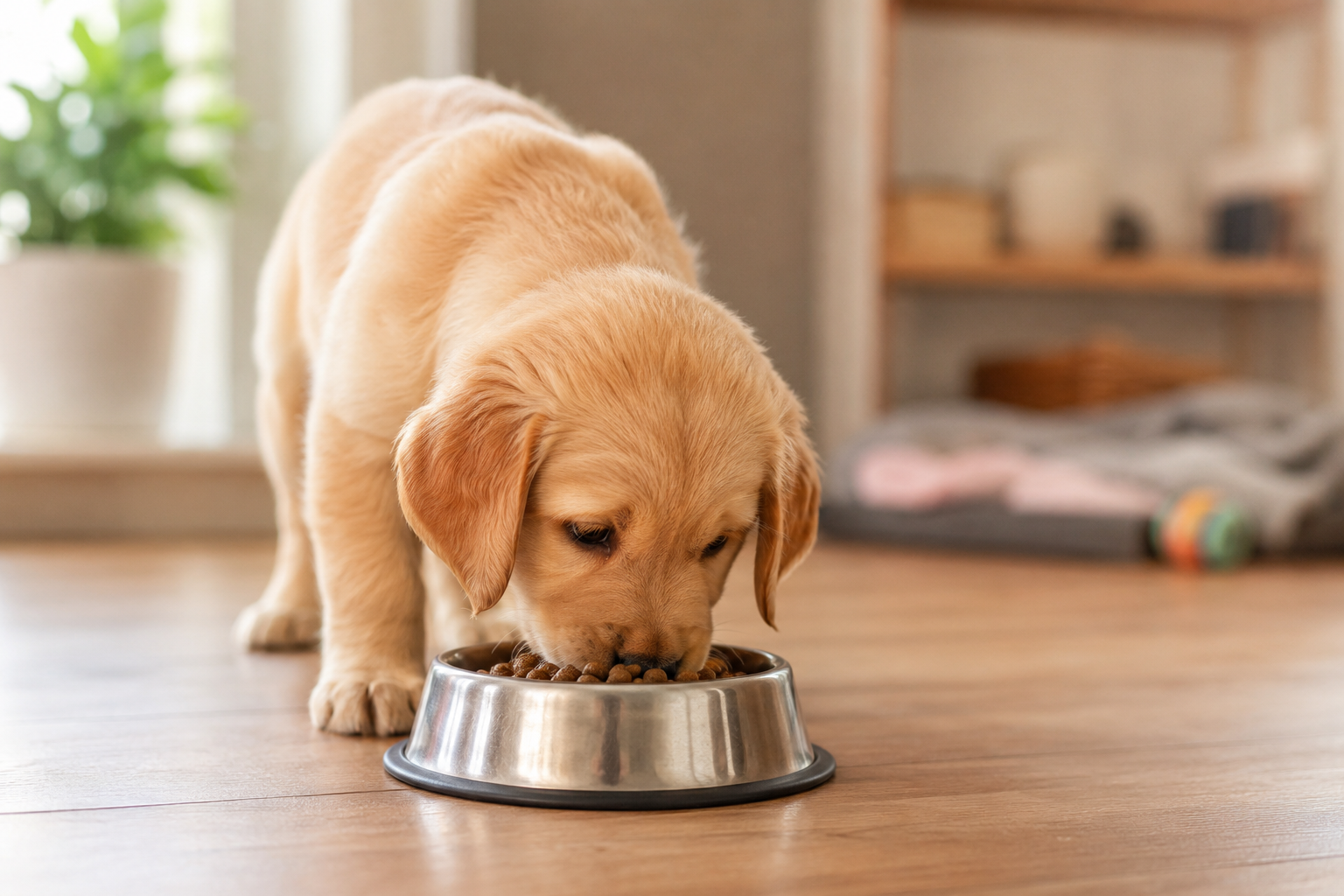
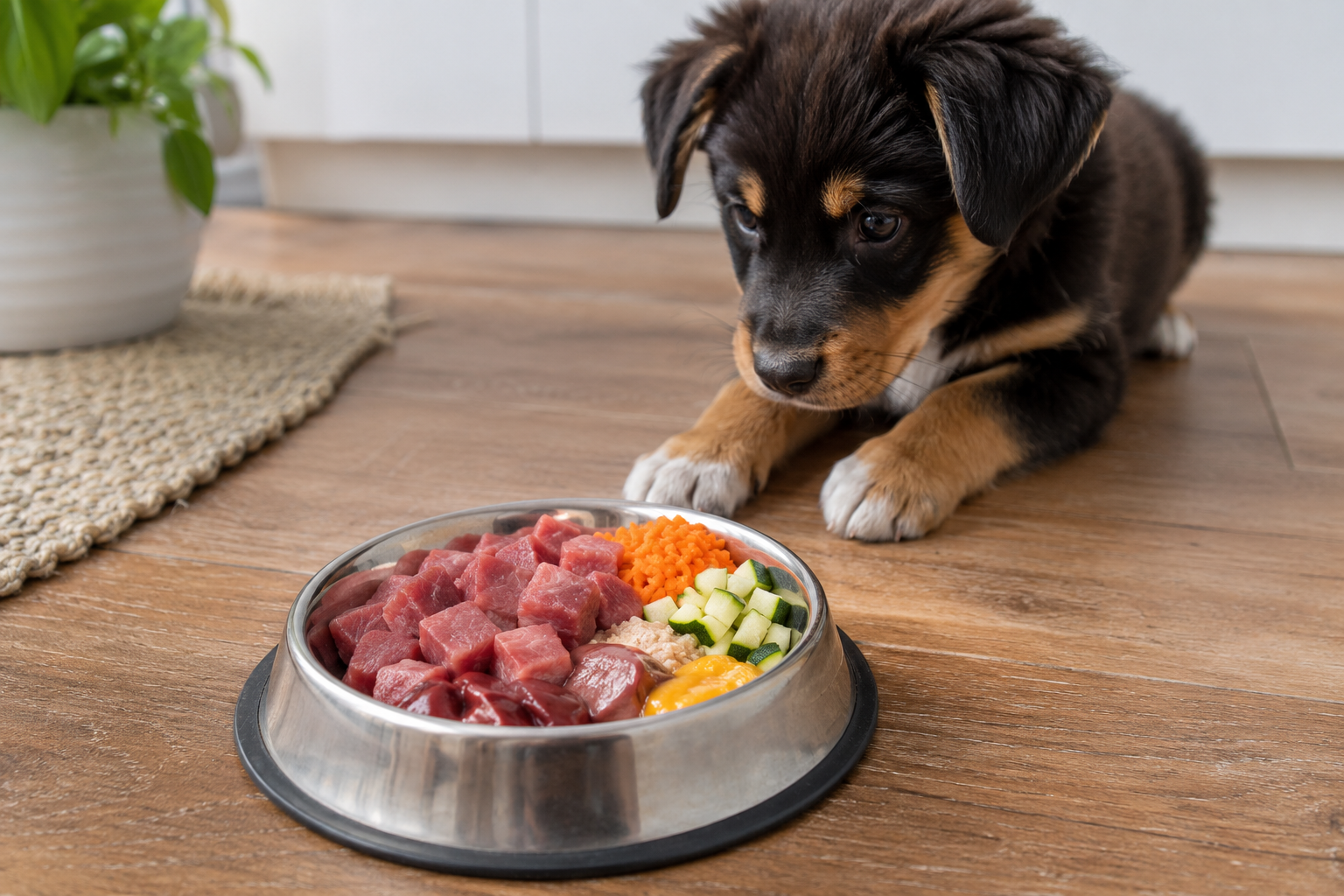
Feed a complete puppy food in measured amounts and adjust to keep your puppy lean. The feeding chart on the pack is a starting point based on age and expected adult weight, and body condition is the best day-to-day check. You should be able to feel the ribs easily and see a waist from above.
Avoid overfeeding, since excess weight and over-fast growth are hard on developing joints, particularly in large breeds. Keep treats to around 10 percent of daily food, and make any food changes gradually. A balanced puppy diet supports steady growth, and if growth seems too fast or too slow it is worth raising with your vet.
Practical feeding habits that support steady growth:
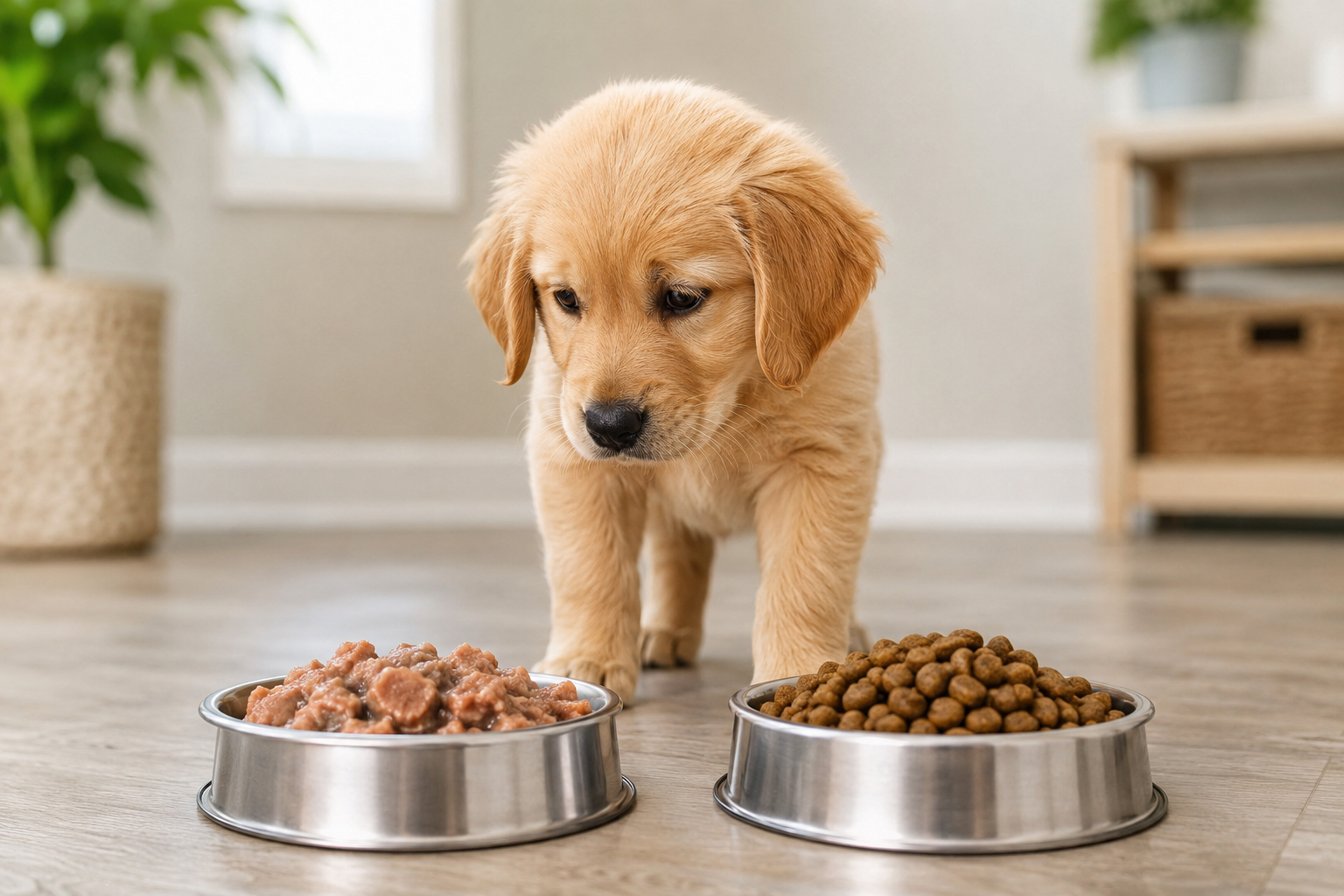
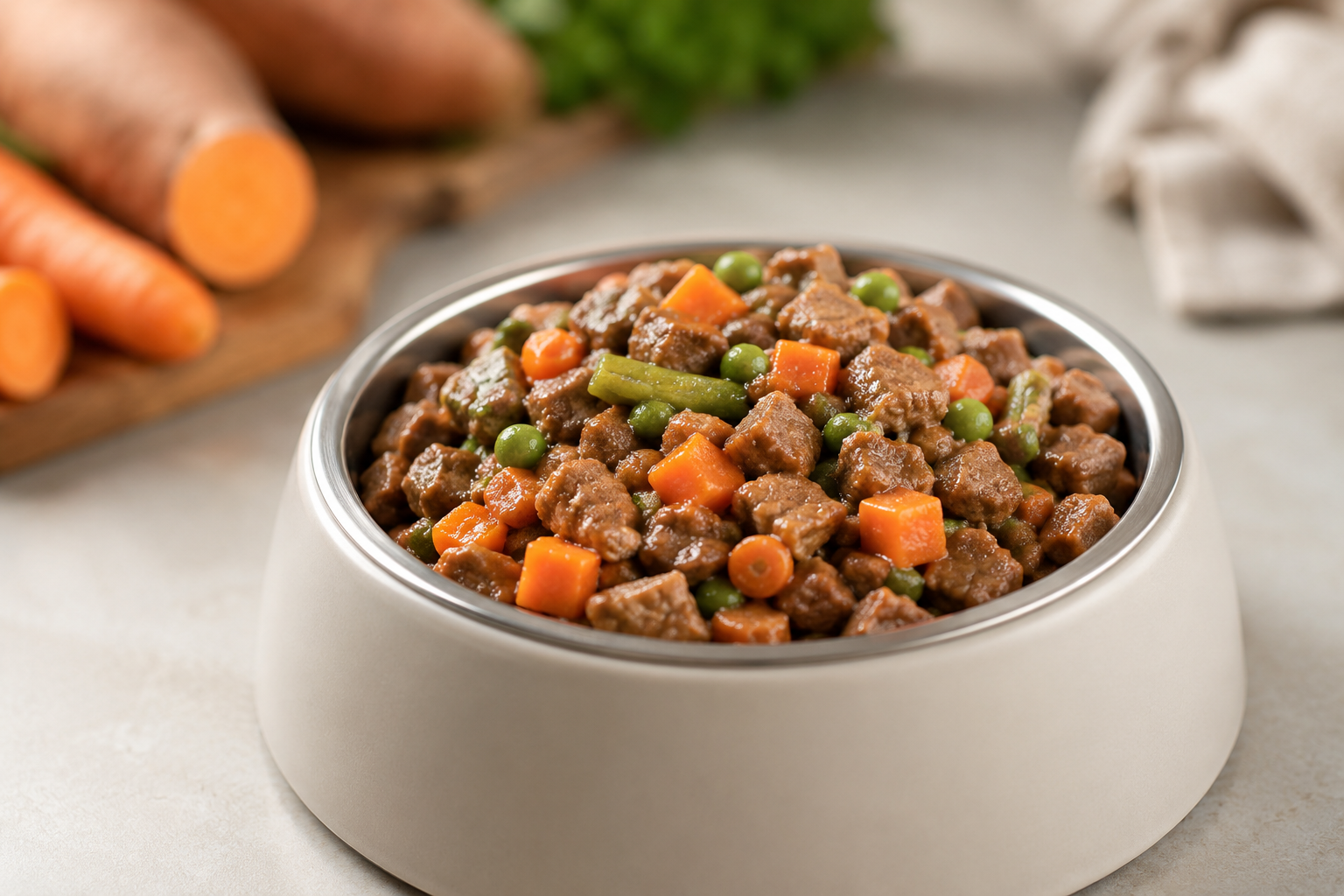
- Choose a complete and balanced puppy food made for your puppy’s size and life stage, rather than adult food.
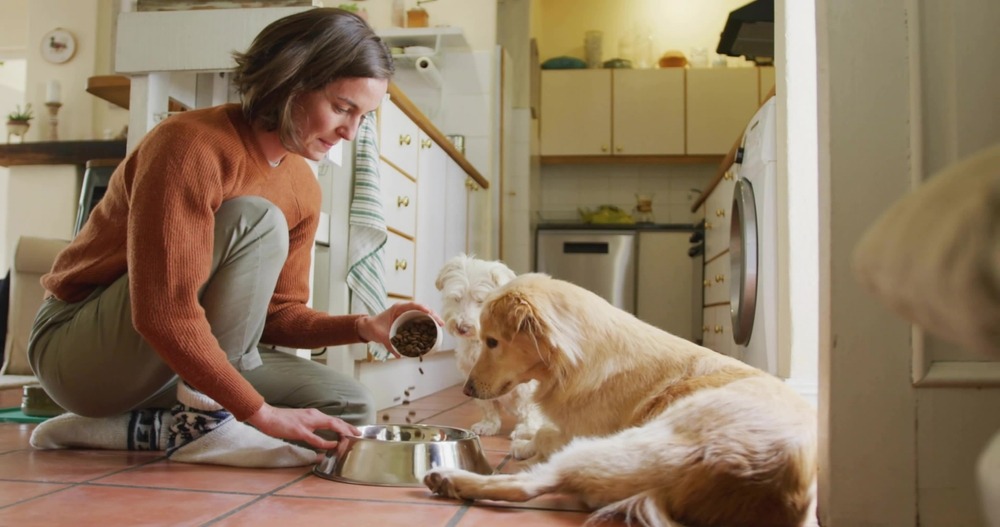
- Measure each meal instead of free-feeding, and weigh the daily amount on scales for accuracy.
- Feed more often when young, around three to four meals a day under four months, easing to two meals as your puppy matures.
- Feed to body condition, trimming portions if your puppy gains too fast and adding a little if it looks too lean.
- Keep treats and extras to about 10 percent of daily food, and avoid adding calcium or other supplements to a complete diet.
- Change foods gradually over 7 to 10 days, and always keep fresh water available.
How to weigh your puppy at home
Weighing your puppy regularly is the simplest way to track growth between vet visits.
For small puppies, weigh yourself on bathroom scales, then weigh yourself again holding your puppy and subtract the difference. Large and giant breeds soon outgrow home scales, so use the walk-on scales most vet clinics keep in reception. Weigh on the same scales at a similar time of day, and record each result in a notebook or app so you can see the trend rather than one-off numbers.
Weigh weekly while your puppy is young, then less often as growth slows. For a wider reference on healthy ranges by age and size, this puppy weight guide is a useful further read.
When to worry about your puppy’s weight
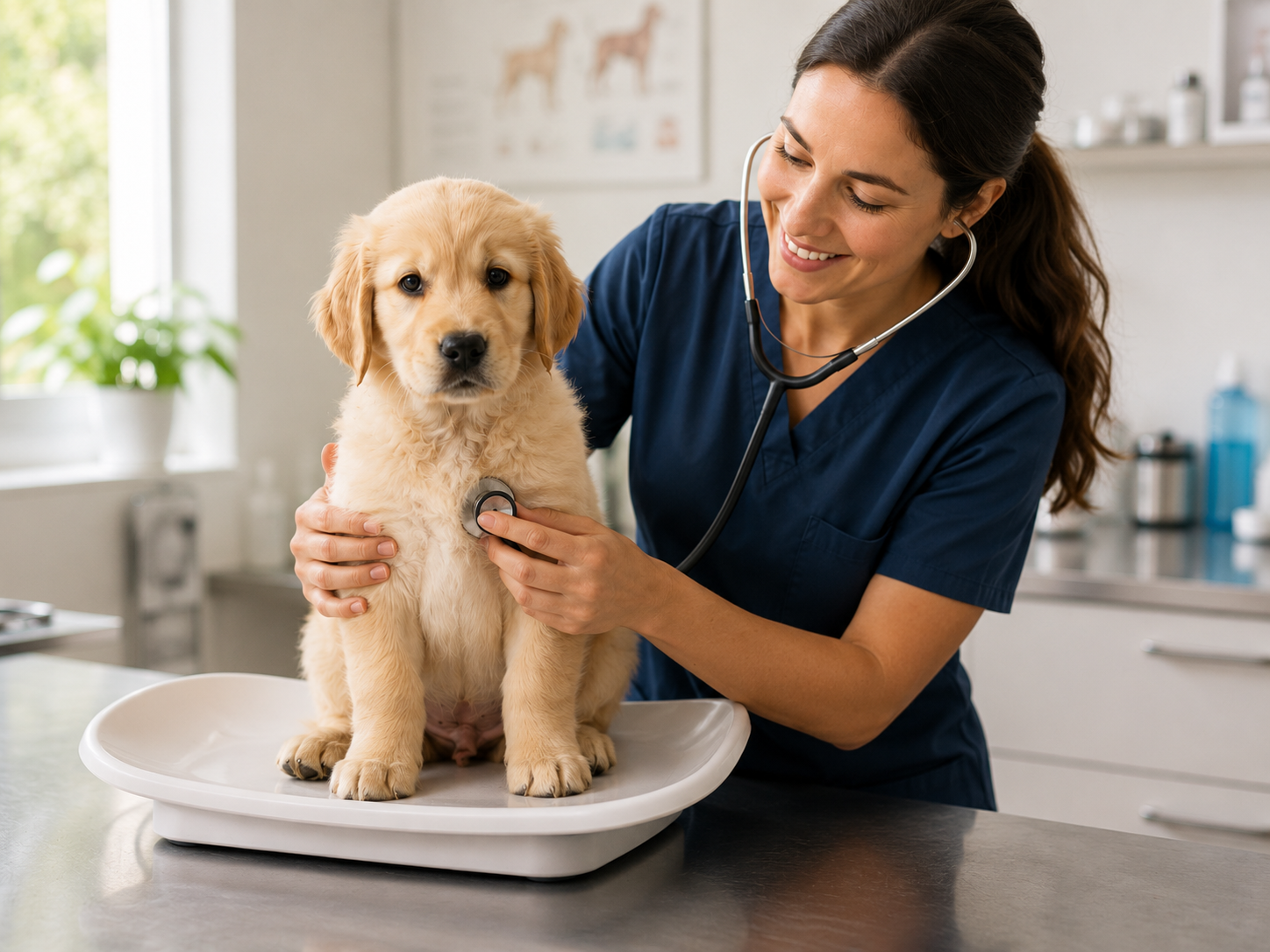
See your vet if your puppy is not gaining weight, is losing weight, or seems unwell. Occasional small wobbles in the curve are normal, but a consistent failure to gain, a clear drop, or a pot-bellied look alongside poor growth deserves attention.
Intestinal worms are one of the most common reasons a puppy struggles to gain weight, which is why regular worming matters, and other causes can include an unsuitable diet or an underlying health issue. It is best to discuss any concerns with a veterinarian, who may check a faecal sample and overall health. Guidance from vets on helping a puppy who is not gaining weight stresses ruling out medical causes early.
Seek help promptly if poor weight gain comes with lethargy, vomiting, diarrhoea or a loss of appetite, and treat a very young or clearly unwell puppy as urgent. Knowing the early signs of illness in puppies helps you act at the right time. Regular weigh-ins are also part of good puppy health and vet care.
Conclusion
A puppy weight gain chart is a helpful guide, not a verdict. Track the trend for your puppy’s breed size, feed a complete diet to a lean body condition, and estimate adult weight as a rough guide rather than a promise.
If growth stalls or your puppy seems unwell, check with your vet. Explore more Pups4Sale feeding and health guides for confident care.
Frequently Asked Questions
1. How much should my puppy weigh for its age?
There is no single number, since it depends on breed size. As a guide, puppies gain about 2 to 4 grams a day for each kilogram of expected adult weight. Compare your puppy with a chart for its size and follow the trend.
2. How do I know if my puppy is a healthy weight?
Check body condition rather than one figure. You should feel the ribs easily under a light covering, see a waist from above, and a tucked tummy from the side. Steady growth along a curve matters more than a single reading.
3. When do puppies stop growing?
It depends on size. Toy and small breeds usually finish by 8 to 10 months, medium breeds by about 12 to 15 months, and large and giant breeds keep growing to 18 to 24 months. Your vet can confirm for your puppy.
4. How can I estimate my dog’s adult weight?
Small breeds roughly triple their 8-week weight, while medium and large breeds roughly double their 16-week weight. Parent size and a breed calculator help too. Treat any figure as an estimate rather than a guarantee.
5. Why is my puppy not gaining weight?
Common causes include intestinal worms, an unsuitable diet, or feeding too little, and sometimes an underlying health issue. If your puppy is not gaining, or seems unwell, see your vet, who may check a faecal sample and overall health.
6. Can a puppy be overweight?
Yes. Overfeeding and too many treats can leave a puppy carrying excess weight, which is hard on growing joints, especially in large breeds. Feed measured meals to a lean body condition and keep treats within about 10 percent of daily food.
7. Do bigger paws mean a bigger dog?
Large paws can hint at a bigger adult dog, but they are only a rough cue. Breed, the size of the parents, and a growth chart for your puppy’s size give a far more reliable picture of adult weight.
 Add us as a preferred source