Wet vs Dry Dog Food for Puppies: Which Is Better?
Dog Nutrition & Feeding By James C. • June 23, 2026
Choosing the right food is one of the first important decisions puppy owners make. Many people wonder whether wet vs dry dog food for puppies is the better option for supporting healthy growth and development.
Both wet and dry puppy foods can provide balanced nutrition when they are formulated specifically for growing dogs. However, they differ in moisture content, texture, feeding convenience, and storage requirements.
Understanding these differences can help owners select a feeding approach that suits their puppy’s needs. This guide explains the benefits and drawbacks of wet and dry dog food and how to choose the most suitable option for your puppy.
What Is Wet Dog Food?

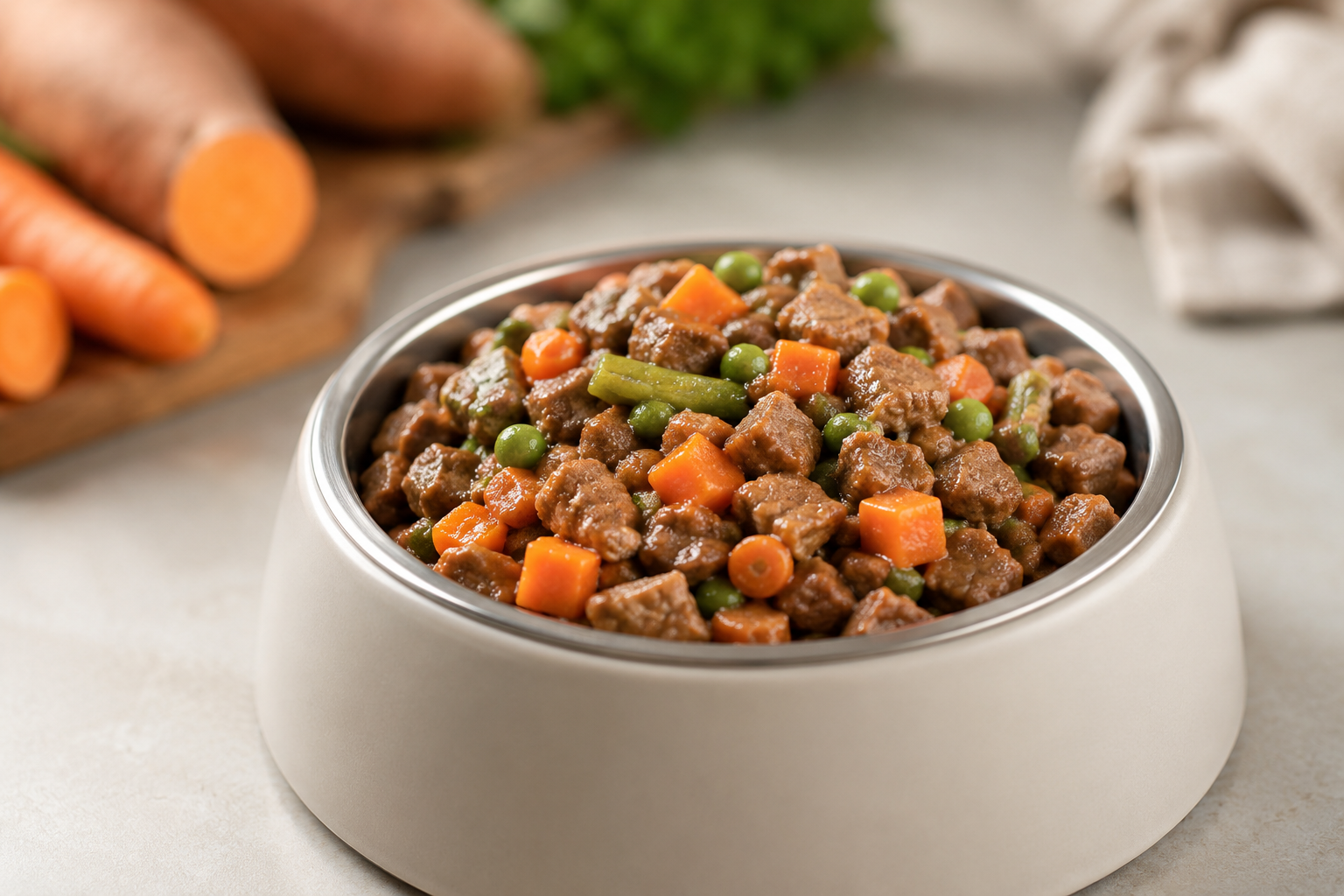
Wet dog food is a type of pet food that contains a high moisture content and is usually packaged in cans, trays, or sealed pouches. It typically has a soft texture and is made from ingredients such as meat, vegetables, grains, and added vitamins and minerals designed to support balanced puppy nutrition.
Because wet food contains significantly more water than dry kibble, it often helps support hydration while providing a softer meal that is easier for puppies to chew. This can be particularly helpful for very young puppies that are transitioning from their mother’s milk to solid food.
Wet dog food is also known for having a stronger aroma and taste compared to dry food. This can make it appealing for puppies that are picky eaters or have a lower appetite.
While wet food can be highly palatable, it usually requires refrigeration after opening and must be used within a shorter period than dry food.
What Is Dry Dog Food?

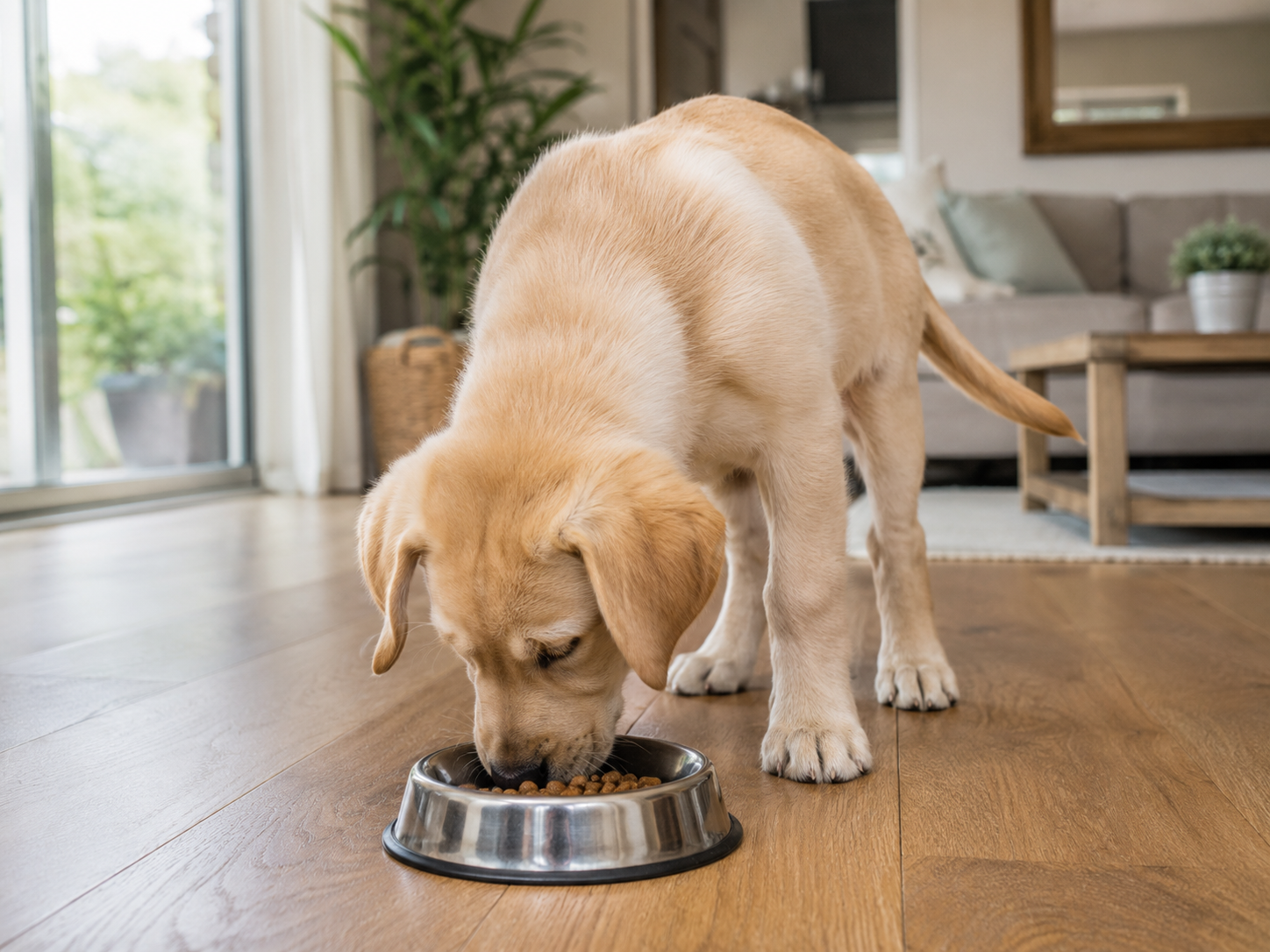
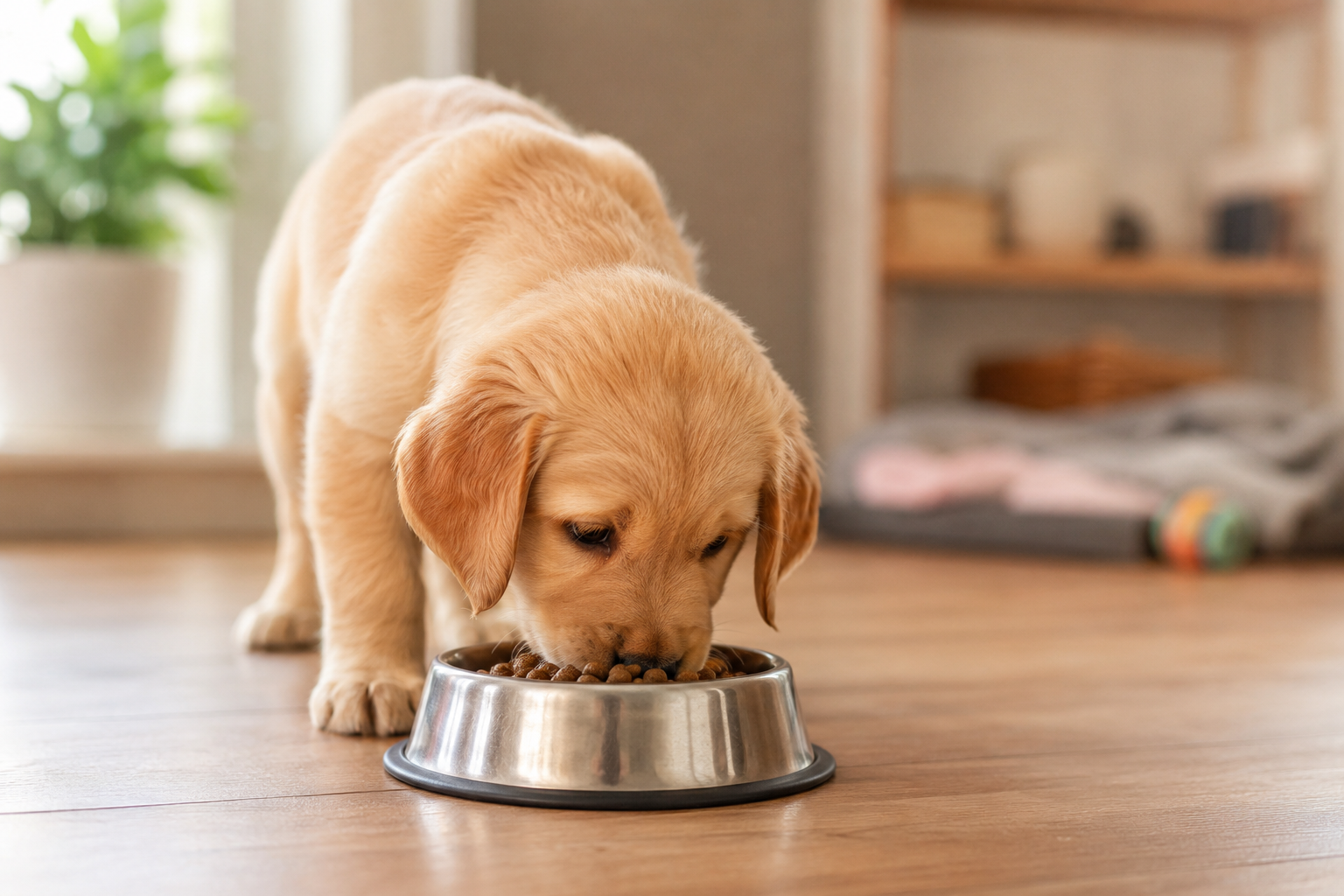
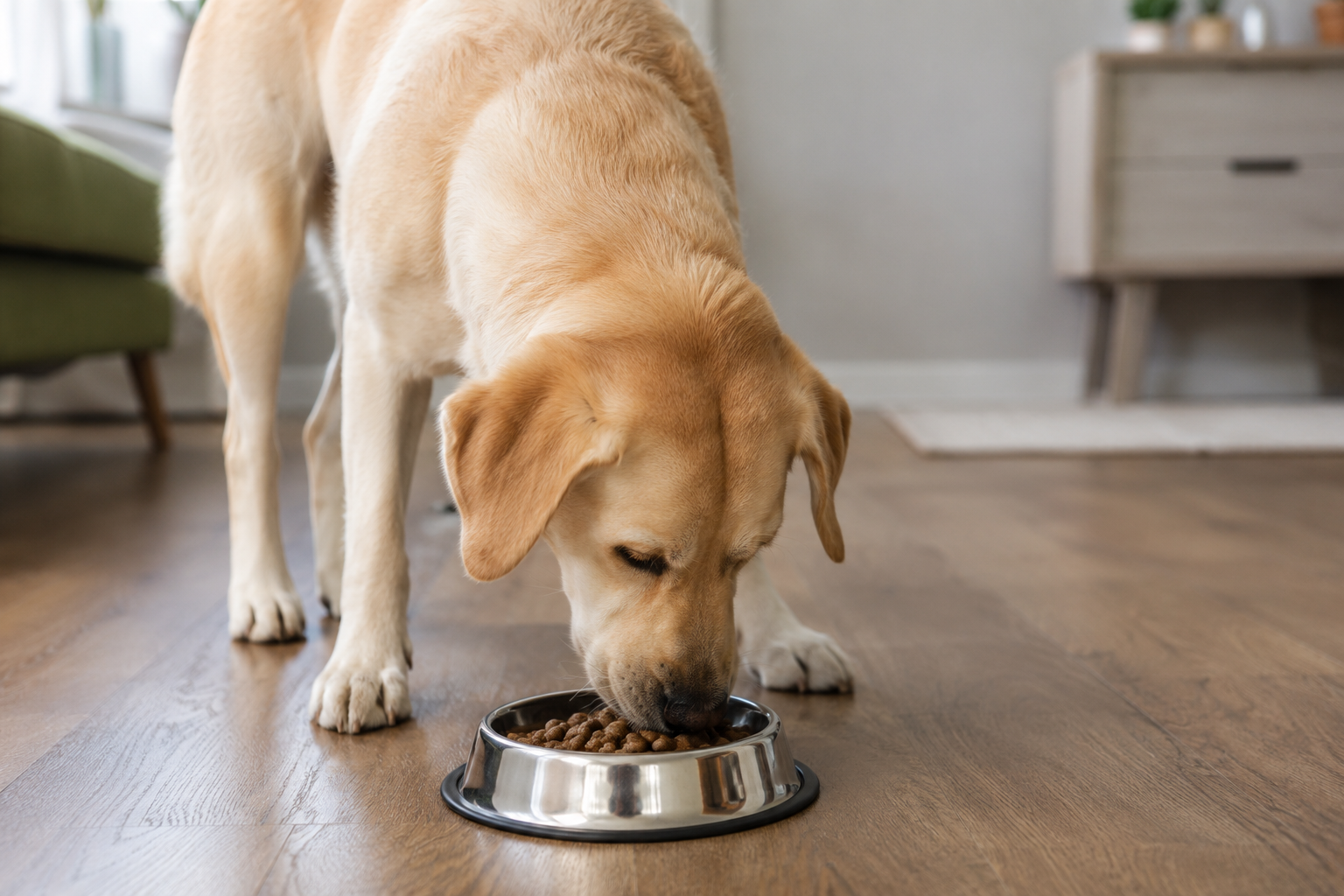
Dry dog food, commonly known as kibble, is one of the most widely used types of puppy food. It is produced by cooking ingredients such as meat, grains, vegetables, and nutrients, then forming them into small dry pellets. The food is processed to remove most of the moisture, leaving a product with a much longer shelf life than wet dog food.
Dry puppy food typically contains around 8 to 12% moisture, making it easier to store and measure during daily feeding. Because kibble is dry and crunchy, it can help support dental health by gently scraping plaque from a puppy’s teeth as they chew.
Another advantage of dry food is convenience. It is easy to portion, transport, and store, which makes it practical for many dog owners. High-quality dry puppy foods are formulated to provide balanced nutrition that supports healthy growth, strong bones, and proper development during the early stages of life.
Benefits of Wet Dog Food for Puppies
Choosing the right food can influence your puppy’s hydration, appetite, and early eating habits. These are the key benefits wet dog food can offer during the important growth stages.
- High Moisture Content: Wet dog food contains significantly more water than kibble, helping puppies stay hydrated. This can support digestion and is useful for puppies that do not drink enough water throughout the day.
- Easier for Puppies to Chew: The soft texture of wet food makes it easier for young puppies with developing teeth to eat comfortably, especially during teething stages when chewing harder kibble may feel uncomfortable.
- Stronger Smell and Taste: Wet food has a richer aroma and flavour that many puppies find appealing, which can encourage consistent eating and help prevent feeding problems in picky or reluctant eaters.
- Gentler on the Digestive System: The softer texture and higher moisture levels can make wet food easier for some puppies to digest, particularly during the early stages of transitioning from milk to solid food.
- Helpful During Weaning: Wet dog food can support the transition from a mother’s milk to solid food because its soft consistency allows puppies to adapt gradually while still receiving essential nutrients needed for growth.
Benefits of Dry Dog Food for Puppies
Dry dog food remains one of the most common feeding choices for puppies because of its practicality and nutritional reliability. Here are the key benefits dry dog food can offer growing puppies.
- Supports Dental Health: The crunchy texture of dry kibble encourages chewing, which can help reduce plaque buildup on developing teeth and support better oral hygiene as puppies grow.
- Convenient to Store and Serve: Dry dog food does not require refrigeration after opening and has a longer shelf life, making it easier for owners to store, measure, and serve from a set puppy feeding station during daily feeding routines.
- Cost-Effective Feeding Option: Dry food is generally more affordable than wet food, allowing owners to provide consistent nutrition for puppies over time without significantly increasing feeding costs.
- Nutrient-Dense Formulation: Many dry puppy foods contain concentrated nutrients and calories, helping support healthy growth, strong muscles, and energy needs during important developmental stages.
- Easy Portion Control: Measuring kibble is simple and helps owners control feeding portions accurately, reducing the risk of overfeeding and helping puppies maintain a healthy body weight.
Wet vs Dry Dog Food: Key Differences

Understanding the differences between wet and dry puppy food helps owners choose diets that support healthy growth and balanced nutrition. Here are the most important differences.
1. Moisture Content
One of the biggest differences between wet and dry dog food is moisture content. Wet food typically contains 70 to 80% moisture, which helps support hydration and may benefit puppies that drink less water.
Dry dog food contains around 10% moisture, making it more concentrated in nutrients. Because of this lower moisture level, puppies eating dry food often drink more water throughout the day.
2. Texture and Palatability
Wet dog food has a soft texture and a stronger aroma, which many puppies find more appealing. This can be particularly helpful for picky eaters or puppies transitioning from milk to solid food.
Dry dog food has a crunchy texture that requires chewing, which some puppies enjoy. However, very young puppies may need softened kibble at first before comfortably eating dry food on their own.
3. Nutritional Density and Calories
Dry dog food is typically more calorie-dense than wet food because it contains less water. This means smaller portions of kibble may provide the same energy as larger portions of wet food.
Wet food often appears more filling due to its moisture content, but portion sizes may need to be larger to meet a puppy’s energy needs.
4. Storage and Shelf Life
Dry dog food generally has a longer shelf life and is easier to store than wet food. It can remain fresh in sealed containers without refrigeration.
Wet food must be stored in sealed containers after opening and usually requires refrigeration. Because wet food spoils faster once opened, it must be consumed within a shorter period to maintain freshness and food safety.
5. Cost and Feeding Convenience
Dry dog food is usually more cost-effective for daily feeding, especially for larger breeds that require greater food quantities. It is also easier to measure and serve.
Wet dog food tends to be more expensive per serving and may require additional preparation. However, many owners still choose wet food because puppies often find it more flavourful and enjoyable.
Can Puppies Eat Both Wet and Dry Food?

Yes, puppies can eat both wet and dry dog food, and many owners choose a mixed feeding approach. Combining the two types of food can provide the benefits of each while supporting balanced nutrition during early development.
Wet food offers higher moisture content and a softer texture, which can make meals more appealing to puppies. This can be particularly helpful for young puppies that are transitioning to solid food or those with smaller appetites.
Dry food, on the other hand, is convenient to store and measure, and its crunchy texture may support dental health.
Mixing wet and dry food can also improve meal variety and encourage consistent eating habits. Some owners add a small amount of wet food to dry kibble to enhance flavour while still maintaining the convenience of dry food.
When combining both types of food, it is important to monitor portion sizes to avoid overfeeding. Puppies should still receive the correct daily calorie intake based on their age, breed size, and activity level, which depends on how much a puppy should eat at each stage.
Factors to Consider When Choosing Puppy Food
Selecting the right puppy food involves more than choosing wet or dry options. These key factors help ensure your puppy receives balanced nutrition for healthy growth and development.
- Age and Growth Stage: Puppies require diets formulated specifically for growth. Puppy food contains higher levels of protein, calories, vitamins, and minerals needed to support rapid development during the early stages of life.
- Breed Size and Growth Rate: Small and large breed puppies have different nutritional needs. Large breeds require controlled calcium and energy levels to support proper bone development and reduce the risk of joint problems.
- Activity Level: Highly active puppies burn more energy and may require higher calorie intake. Less active puppies need balanced portions to avoid excessive weight gain and maintain healthy growth.
- Ingredient Quality: High-quality puppy food should contain balanced nutrients, including protein, healthy fats, vitamins, and minerals. Choosing reputable brands that meet recognised nutritional standards helps ensure proper development.
- Veterinary Guidance: Consulting a veterinarian helps determine the most appropriate diet based on your puppy’s breed, health condition, and growth progress, ensuring the feeding plan supports long-term health.
Signs Your Puppy Is Responding Well to Their Food

A balanced diet should support your puppy’s growth, energy, and overall wellbeing. These signs can help you recognise when your puppy’s food is meeting their nutritional needs.
- Healthy Energy Levels: Puppies that receive proper nutrition usually remain active, playful, and alert throughout the day, showing consistent enthusiasm for exercise, playtime, and interaction with people and other pets.
- Steady Growth and Weight Gain: Puppies should grow steadily according to their breed and age. Consistent weight gain and normal development often indicate that the food provides the nutrients required for healthy growth.
- Healthy Skin and Shiny Coat: A balanced puppy diet supports healthy skin and a shiny coat. Puppies responding well to their food often develop smooth fur without excessive dryness, dandruff, or irritation.
- Normal Digestion and Firm Stools: Proper nutrition usually results in healthy digestion. Puppies eating suitable food typically produce firm stools and show fewer digestive issues such as diarrhoea, constipation, or frequent stomach discomfort.
- Good Appetite and Feeding Interest: Puppies that enjoy their food usually eat eagerly during regular mealtimes. A consistent appetite can indicate that the food is both nutritionally suitable and appealing to the puppy.
Choosing the Right Food for Your Puppy
Choosing between wet and dry dog food for puppies depends on your puppy’s nutritional needs, appetite, and feeding routine.
Both options can support healthy growth when they are complete and balanced for puppies.
Understanding the benefits of each helps you make confident feeding decisions.
For more expert puppy care tips and trusted breeder listings, visit Pups4Sale to help your puppy start life healthy and strong.
Frequently Asked Questions
1. Is wet dog food better for puppies than dry food?
Wet dog food is not necessarily better than dry food, but it can be helpful for puppies that struggle to chew kibble or need extra hydration. Both options can support healthy growth if the food is nutritionally balanced for puppies.
2. Can puppies eat only dry dog food?
Yes. Many puppies grow well on dry dog food alone as long as it is a complete and balanced puppy formula. Dry food also helps promote chewing, which can support dental health and encourage good feeding routines.
3. Should I mix wet and dry food for my puppy?
Mixing wet and dry food is a common feeding method. This approach can improve flavour, increase moisture intake, and provide texture variety. Owners should measure portions carefully to ensure puppies receive the correct daily calorie intake.
4. How much wet or dry food should a puppy eat?
The amount depends on age, breed size, weight, and activity level. Most puppy food packaging includes feeding guidelines based on body weight. Owners should adjust portions gradually while monitoring body condition and overall growth.
5. At what age can puppies start eating dry food?
Puppies usually begin transitioning to solid food at around four weeks old, often with softened kibble mixed with water. By six to eight weeks, most puppies can comfortably eat dry puppy food.
6. Which food is better for picky puppies?
Wet food is often more appealing to picky puppies because it has a stronger aroma and softer texture. Mixing small amounts of wet food with dry kibble can also help encourage puppies that are reluctant to eat.
 Add us as a preferred source