Best Grooming Routine for Curly-Coated Dogs
Dog Grooming & Hygiene By James C. • August 5, 2026
Curly-coated dogs need brushing every day or two to prevent mats, a bath around every 4 weeks, and a professional clip every 4 to 6 weeks, plus regular nails, ears and teeth.
Poodles, Cavoodles and Groodles are among the most popular dogs in Australia, but their soft, curly coats are also some of the highest maintenance. A curly coat that is left unbrushed mats quickly and often ends up shaved right down.
This guide gives a simple weekly and monthly schedule, the right tools, a proper anti-matting method, and how to bathe, clip and care for your curly dog at home.
Why curly coats mat so easily
Curly coats mat easily because the hair keeps growing and the curls trap shed hair instead of dropping it.
Most curly-coated dogs have a single, continuously growing coat rather than a coat that sheds out. When the hair the dog naturally loses cannot fall away, it stays tangled in the curl, and combined with moisture, friction and dirt it quickly knits into mats. This is exactly why so many Poodles and doodles are prized as low-shedding pets yet still demand daily attention: the hair you would otherwise find on the sofa stays in the coat instead.
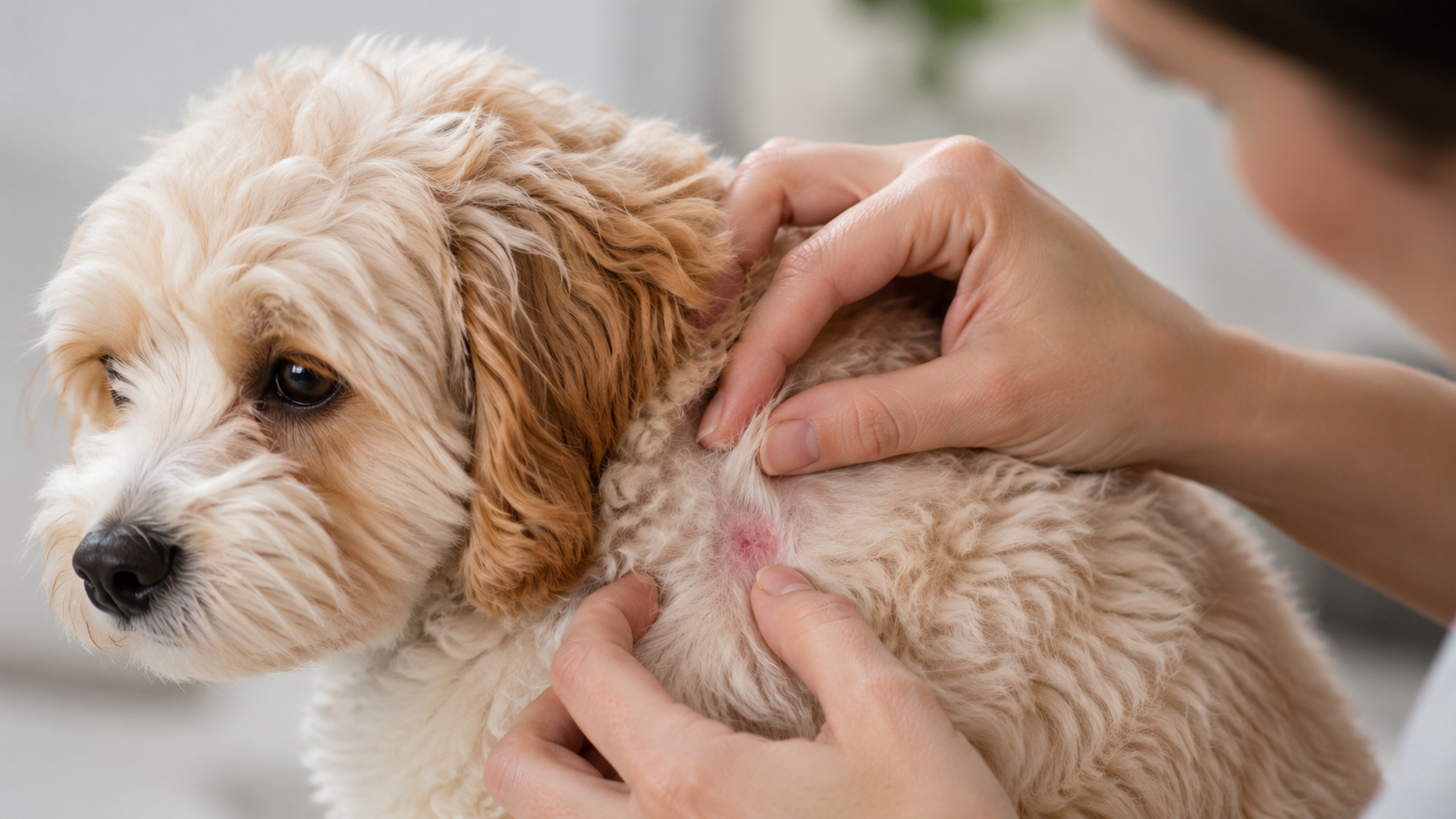
Mats are not just untidy: they are a genuine dog health issue. They pull on the skin, trap moisture and can hide irritation or grazes underneath. Left to spread, a matted coat often cannot be brushed out at all and has to be clipped short, which is the main reason curly dogs end up with a full shave-down. Consistent home brushing is what keeps that from happening.
A simple weekly and monthly routine
Use this schedule as your baseline, then adjust to your dog’s coat length and lifestyle.
| Task | How often |
|---|---|
| Brush and line-brush the coat | Every day, or every second day at least |
| Comb through with a steel comb to check for tangles | With every brush |
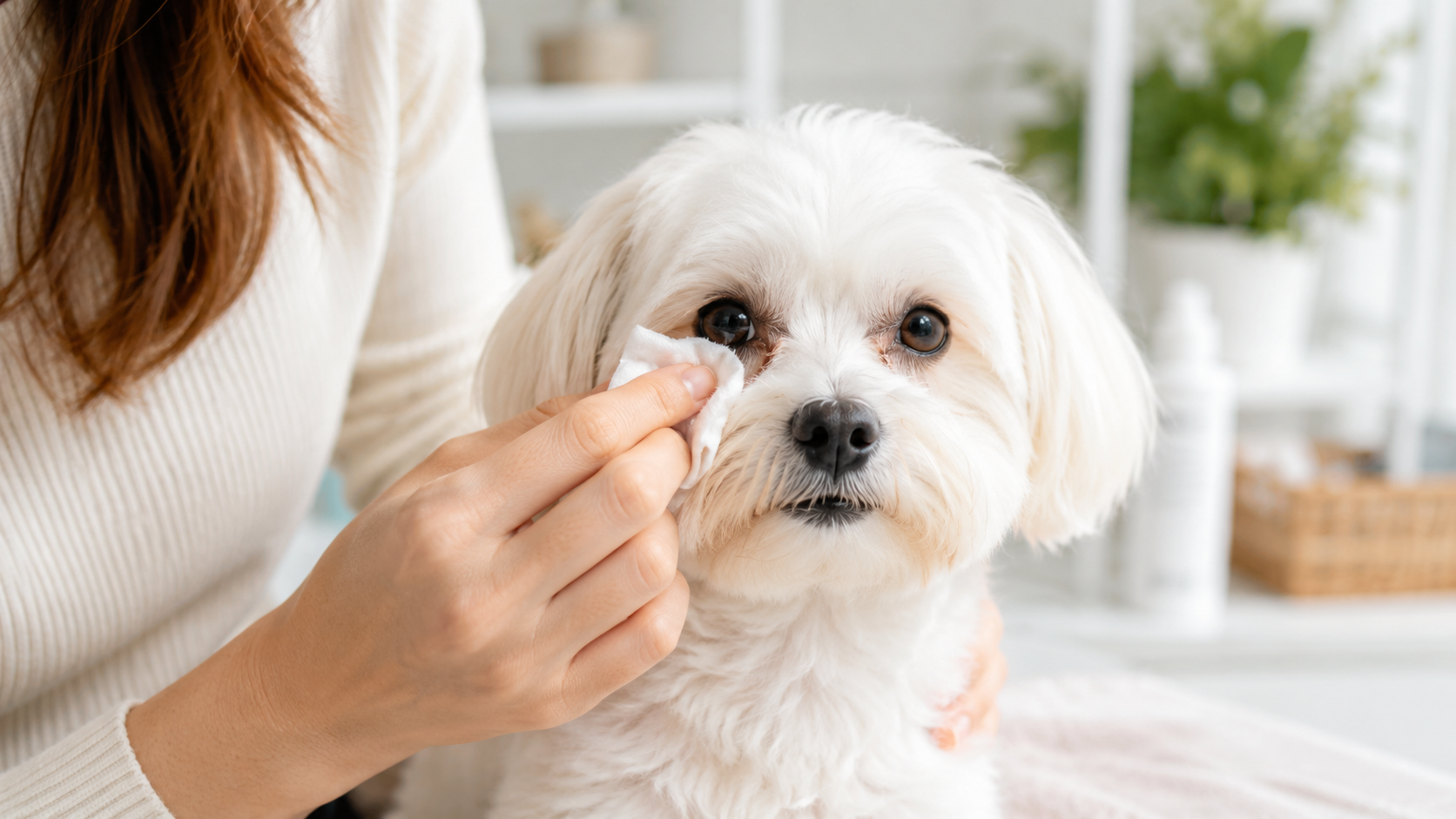
| Wipe eyes and face | Daily, to limit tear staining |
| Bath | Around every 4 weeks |
| Professional clip or tidy | Every 4 to 6 weeks |
| Nail trim | Every 3 to 4 weeks |
| Ear check and clean | Check weekly, clean as needed |
| Teeth brushing | Ideally daily |
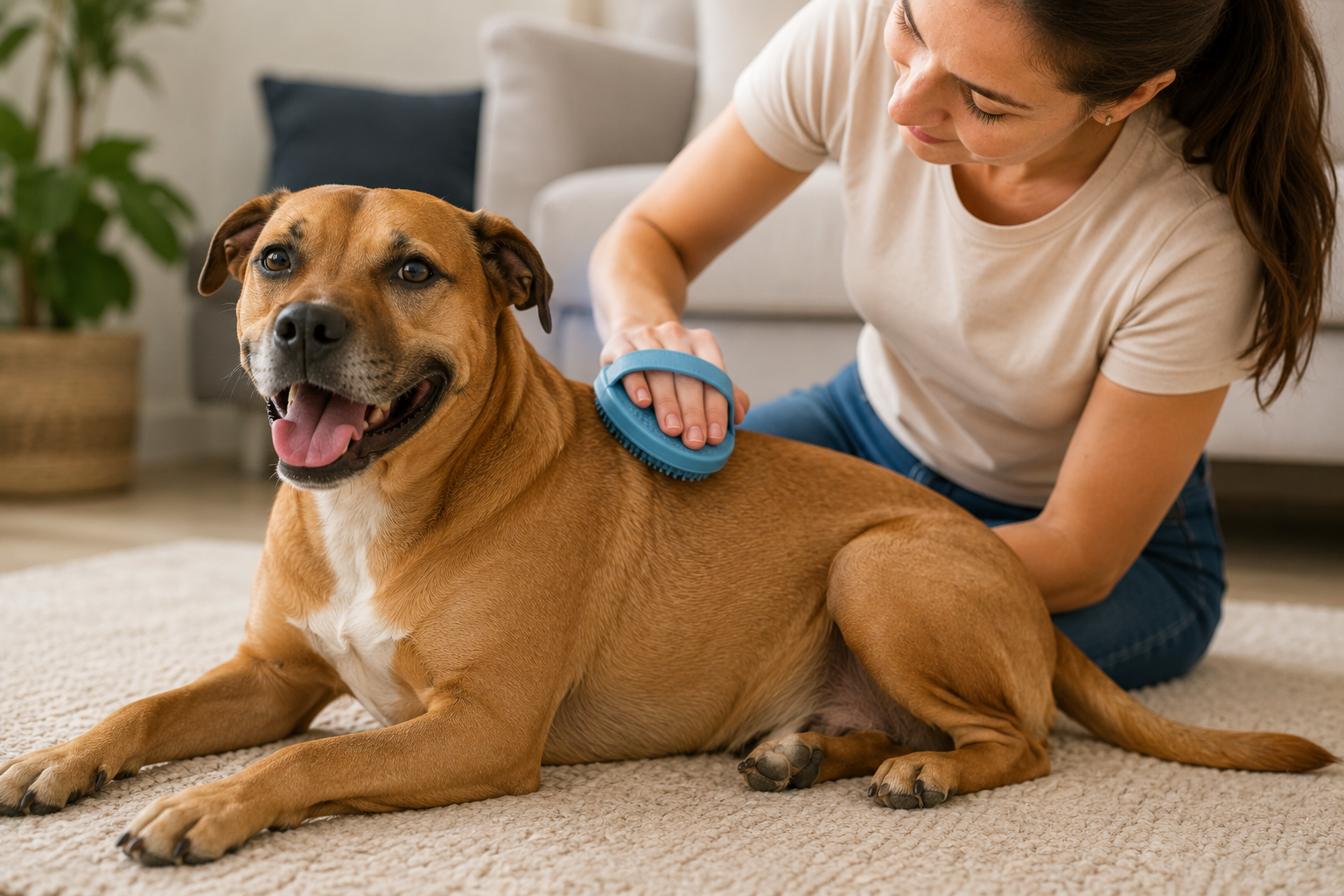
Daily brushing is the single habit that matters most for a curly coat. Skip it for a week and you will usually be dealing with mats.
Grooming tools you need

The right kit makes a curly coat far quicker and more comfortable to manage.
- A slicker brush, your everyday tool for lifting the coat and easing out tangles
- A steel comb, sometimes called a Poodle or greyhound comb, to check you have brushed down to the skin
- A detangling or conditioning spray
- A dematting tool for stubborn knots
- Blunt-tipped grooming scissors for tidying paws, face and sanitary areas
- A gentle, moisturising dog shampoo and conditioner suited to curly coats
- A towel, plus a dryer if your dog tolerates it, since curly coats need active drying
Steer clear of human shampoos, which upset a dog’s skin, and avoid brushes with sharp, rigid pins that can scratch. If you plan to clip at home, a set of quality dog clippers is worth the investment, though many owners leave clipping to a groomer.
Brushing and preventing mats: the line-brushing method

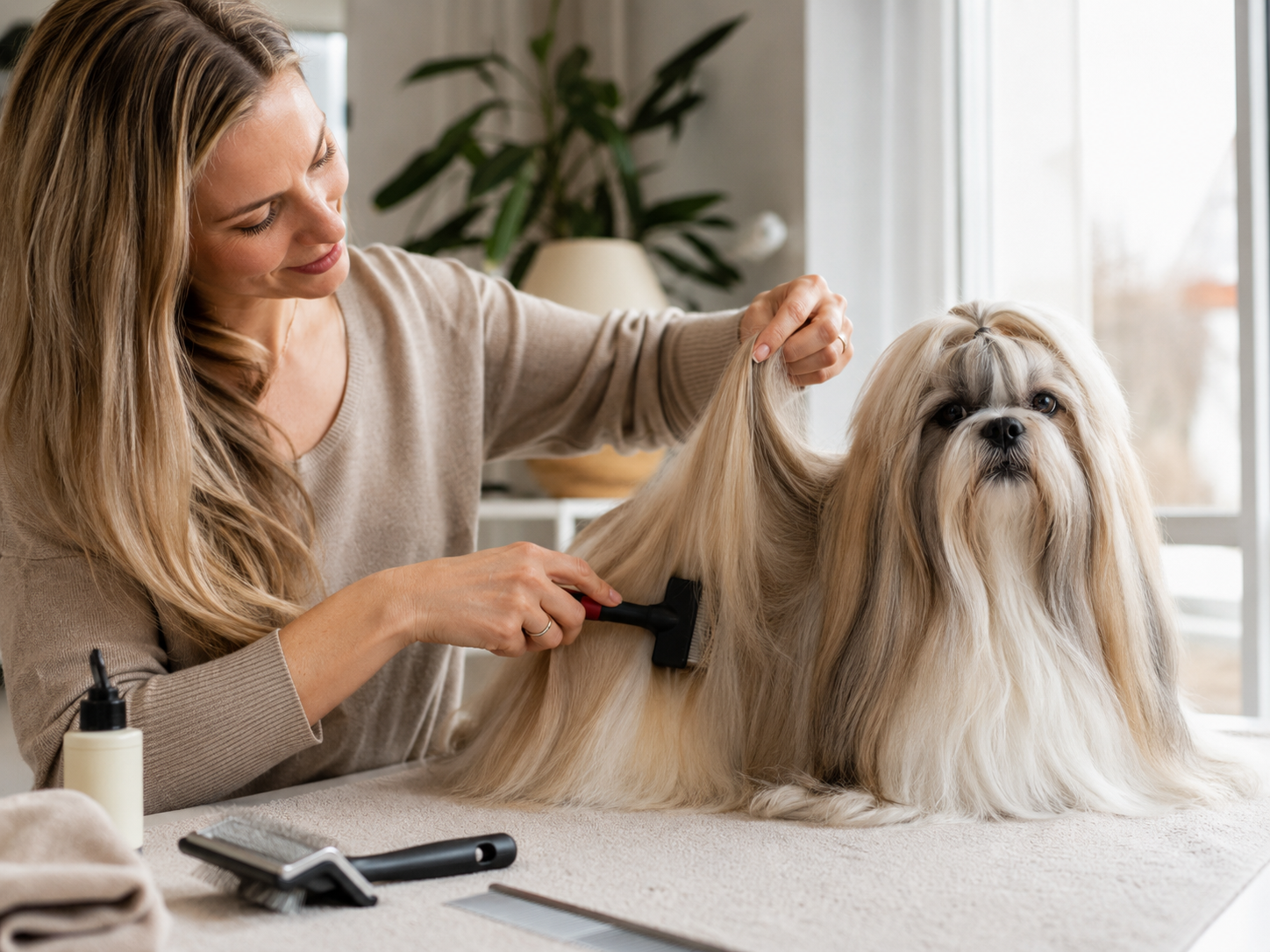
The best way to prevent mats in a curly coat is line brushing, which means working in sections from the skin outward rather than skimming the surface.
- First, run your fingers gently through the whole coat to check for grazes, lumps or foreign objects like grass seeds, so you do not brush over anything sore.
- Lightly mist each section with a detangling spray, since brushing a bone-dry curly coat causes breakage.
- Part the coat into sections and brush each one in layers from the skin out with your slicker brush, using gentle, short strokes.
- Pay extra attention to the friction zones where mats form fastest: behind the ears, under the collar and harness, the armpits, the groin and between the hind legs.
- Follow with a steel comb through each section. If it glides cleanly from root to tip, that section is mat-free; if it catches, there is still a tangle to work out.
One important safety point: never brush hard at a very dirty or heavily matted coat, since that can drag dirt and bacteria into the skin and hurts your dog. Small tangles can be teased apart with detangling spray and your fingers, working from the outer edge inward. Tight or widespread mats are a job for a groomer, not scissors at home.
Bathing curly-coated dogs

Bathe most curly-coated dogs around every 4 weeks, and always brush the coat out thoroughly first, since water tightens any existing tangles into solid mats.
Use lukewarm water and a gentle, moisturising dog shampoo, working it right down to the skin in sections rather than just over the curls. Rinse until the water runs completely clear, because leftover residue causes itching and dulls the coat. A conditioner or leave-in helps the curls stay soft and makes the next brush-out easier, and the right food for a healthy coat helps from the inside out.
Drying is where curly coats are won or lost. If you let a curly coat air-dry, the curls tighten and the hair mats as it dries. Instead, towel off the excess, then dry the coat with a dryer on a cool or low-heat setting while brushing gently, section by section, until it is completely dry. This fluff-drying step keeps the coat smooth, open and tangle-free.
Clipping and professional grooming
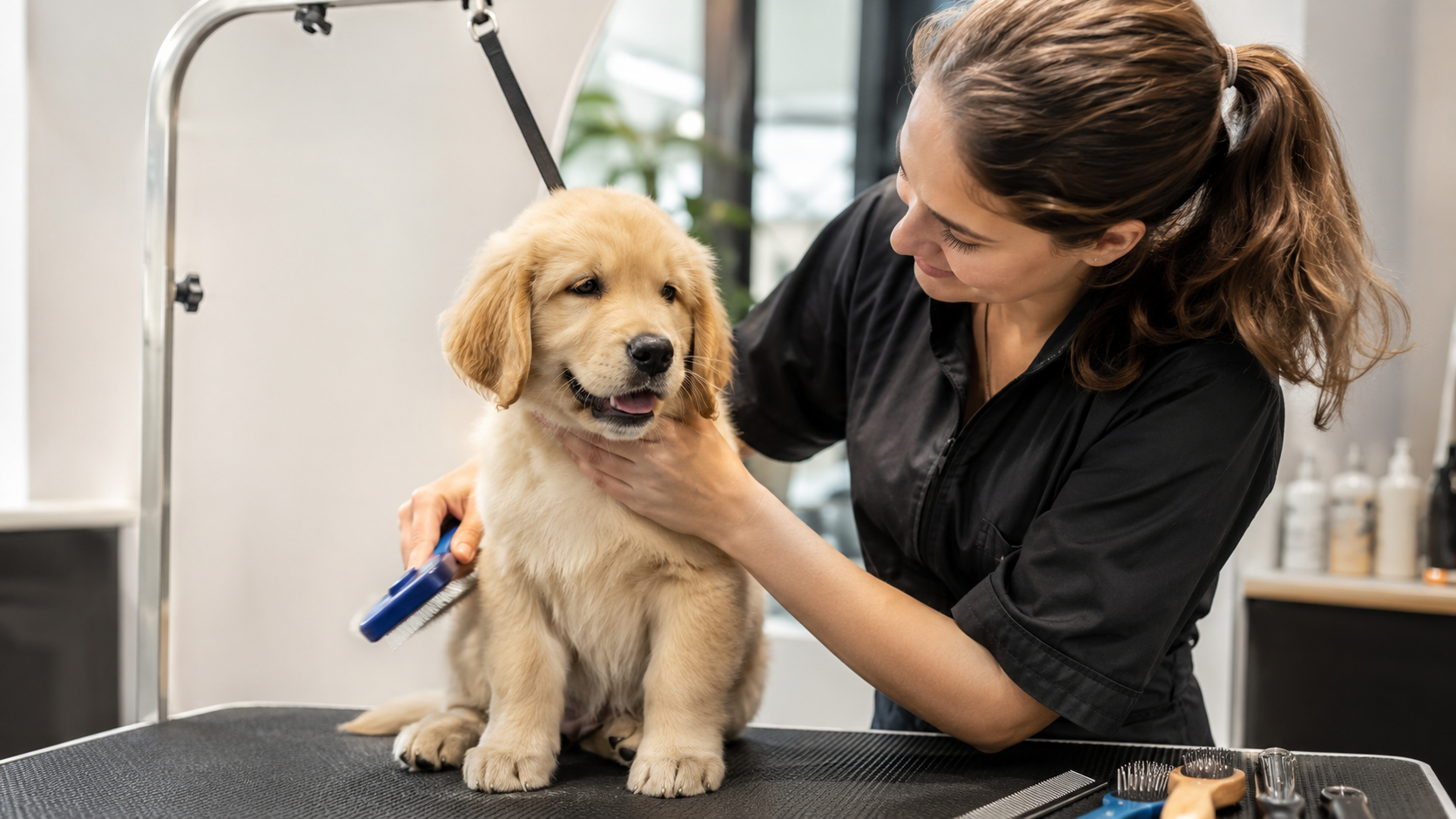
Most curly-coated dogs need a professional clip every 4 to 6 weeks to keep the coat at a manageable length.
Because the hair grows continuously, it has to be cut rather than simply tidied, so factor a regular clip into your ongoing pet care costs. Many owners choose a shorter, even “teddy bear” or “puppy” clip that keeps the soft curly look while making daily brushing far easier. Between clips, you can keep the paw pads, face and sanitary areas neat with blunt-tipped scissors. The best way to avoid a drastic shave-down is simple: brush every day so the coat never mats to the point where clipping short is the only humane option. A good groomer will also flag any skin or coat issues early.
Ears, eyes, nails and teeth
Curly-coated breeds need a little extra attention beyond the coat, especially around the ears and eyes.
Many curly dogs grow hair inside the ear canal and have floppy ears that trap moisture, which can lead to infections, so check the ears weekly and clean them when needed with a vet-approved solution and cotton wool, never cotton buds, staying alert to any smell that hints at an infection. Wipe the area under the eyes daily to limit tear staining, which shows up clearly on pale curly coats. Trim the nails every 3 to 4 weeks, or when they click on hard floors, and brush the teeth regularly, ideally daily, with dog toothpaste.
Curly-coated breeds and their needs
Curly coats vary, so tailor the routine to your dog.
- Poodles (Toy, Miniature and Standard): the classic curly coat, needing daily brushing and a clip every 4 to 6 weeks.
- Doodle crosses (Cavoodle, Groodle, Spoodle, Labradoodle): coats range from wavy to tightly curled, and the curlier the coat, the more it mats, so daily brushing is essential.
- Bichon Frise: a soft, curly coat that mats easily and needs frequent brushing and regular clipping.
- Lagotto Romagnolo: a dense, woolly curly coat that is clipped rather than brushed out heavily, and should not be over-brushed.
Whatever the breed, the principle is the same: brush to the skin every day, bathe and dry thoroughly, and clip on a regular cycle. Many of these curly favourites rank among Australia’s most-loved dog breeds.
The bottom line on grooming a curly-coated dog
A curly coat is beautiful but demanding: brush every day or two right down to the skin, bathe around every 4 weeks, dry the coat thoroughly, and book a clip every 4 to 6 weeks, alongside regular nails, ears and teeth.
Stay ahead of the mats and you will avoid the shave-down, keeping it all within a sensible approach to grooming and hygiene.
Frequently asked questions
1. How often should you brush a curly-coated dog?
Ideally every day, and every second day at the very least. Curly coats trap shed hair in the curl instead of dropping it, so they mat within days without regular brushing right down to the skin.
2. Should you brush a curly coat wet or dry?
Never bone dry and never soaking wet. Lightly mist the coat with a detangling spray first, then line-brush in sections. Always brush a curly coat out fully before bathing, since water tightens tangles into mats.
3. How do you prevent mats in a Poodle or doodle?
Brush daily using the line-brushing method, working from the skin outward and focusing on the ears, armpits and collar area, then check with a steel comb. Bathe and dry thoroughly, and keep to a regular clip.
4. Why do curly-coated dogs get shaved down?
Usually because the coat has matted too badly to brush out safely, leaving clipping short as the only kind option. Consistent daily brushing prevents this, letting the groomer keep a longer, softer style instead.
5. Can I groom my curly-coated dog at home?
You can do the daily brushing, bathing, drying, nails, ears and teeth at home. Full clipping takes skill and the right clippers, so many owners leave the clip to a professional groomer every 4 to 6 weeks.
6. How often should a curly-coated dog be bathed?
Around every 4 weeks for most curly dogs. Brush the coat out first, use a gentle moisturising shampoo, rinse until the water runs clear, and dry the coat fully with a dryer to keep the curls tangle-free.
 Add us as a preferred source