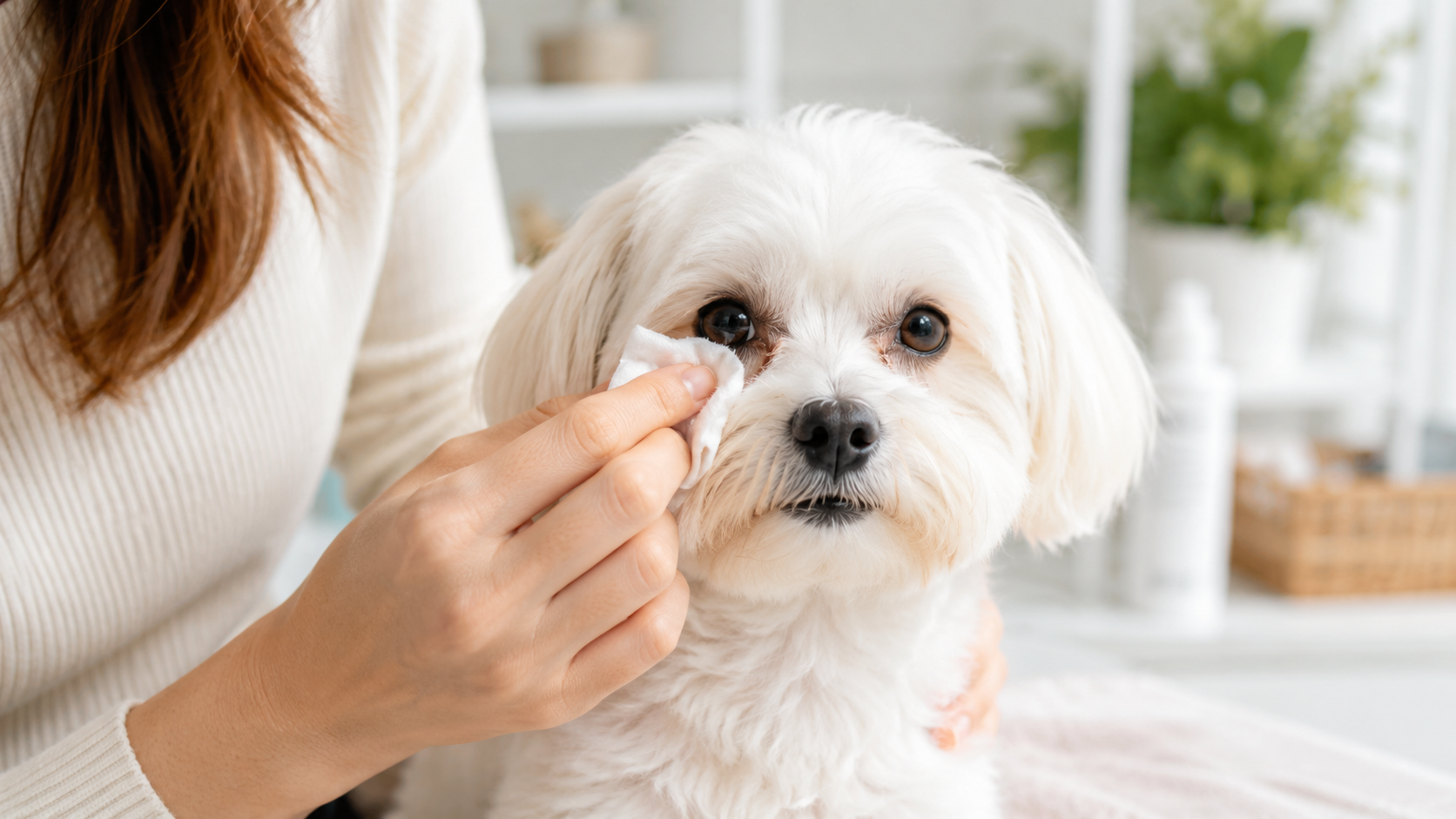
Best Grooming Routine for Silky-Coated Dogs
Dog Grooming & Hygiene By James C. • August 11, 2026
Silky-coated dogs need gentle brushing every day or two, a bath with conditioner every 4 to 6 weeks, and a trim every 6 to 8 weeks, plus regular nails, ears and teeth.
A silky coat, the fine, flowing hair of breeds like the Yorkshire Terrier and Maltese, looks beautiful but tangles easily and breaks if handled roughly. The routine that keeps it in good order is gentle and consistent rather than hard work.
This guide covers what makes a silky coat different, a simple schedule, a fine-hair detangling method, conditioning, and how to manage trims, topknots and tear stains.
What makes a silky coat different
A silky coat, seen on several of Australia’s most popular dog breeds, is fine, soft and usually straight or slightly wavy, and unlike most coats it keeps growing rather than shedding out.
Because each hair is so fine, a silky coat tangles quickly, and those tangles turn into mats faster than on a coarser coat. The hair also breaks easily if you brush too hard or drag through knots, which is why gentleness matters as much as frequency. Most silky coats shed only lightly, though many drop a little more twice a year, and daily brushing during those spells keeps it under control.
The upside is that a well-kept silky coat is stunning, glossy, flowing and soft to the touch. The key is to work with the hair, keeping it detangled and conditioned so it slides rather than snaps. Treat it gently and consistently, and the coat looks after itself far better than owners often expect.
A simple weekly and monthly routine
Use this schedule as your baseline, then adjust to your dog’s coat length and lifestyle.
| Task | How often |
|---|---|
| Gentle brush and comb-through | Every day, or every second day |
| Check tummy, armpits and behind ears for knots | With every brush |
| Wipe under the eyes | Daily, to limit tear staining |
| Bath with conditioner | Every 4 to 6 weeks |
| Trim (face, paws, tidy or full groom) | Every 6 to 8 weeks |
| Topknot or hair out of the eyes | As needed |
| Nail trim | Every 3 to 4 weeks |
| Ear check and clean | Weekly |
| Teeth brushing | Ideally daily |
Little and often is the rule with a silky coat. A short, gentle daily brush prevents the knots that a rushed weekly session cannot.
Grooming tools you need

Fine hair needs gentle tools, so the kit is a little different from a coarse or curly coat.
- A pin brush, the everyday tool for a fine, silky coat
- A fine or medium grooming comb to find knots and check the coat is clear to the skin
- A bristle brush to finish, laying the coat flat and spreading the natural oils
- A slicker brush for the heavier shedding spells
- A detangling or conditioning spray
- A conditioner, which a silky coat needs more than most
- Blunt-tipped scissors for tidying the face, paws and sanitary areas
- Soft ties or bands for a topknot on longer coats
Avoid harsh, stiff brushes that snap fine hair, and steer clear of human shampoos, which strip the coat’s natural oils and leave it dry and brittle.
Gentle brushing and detangling

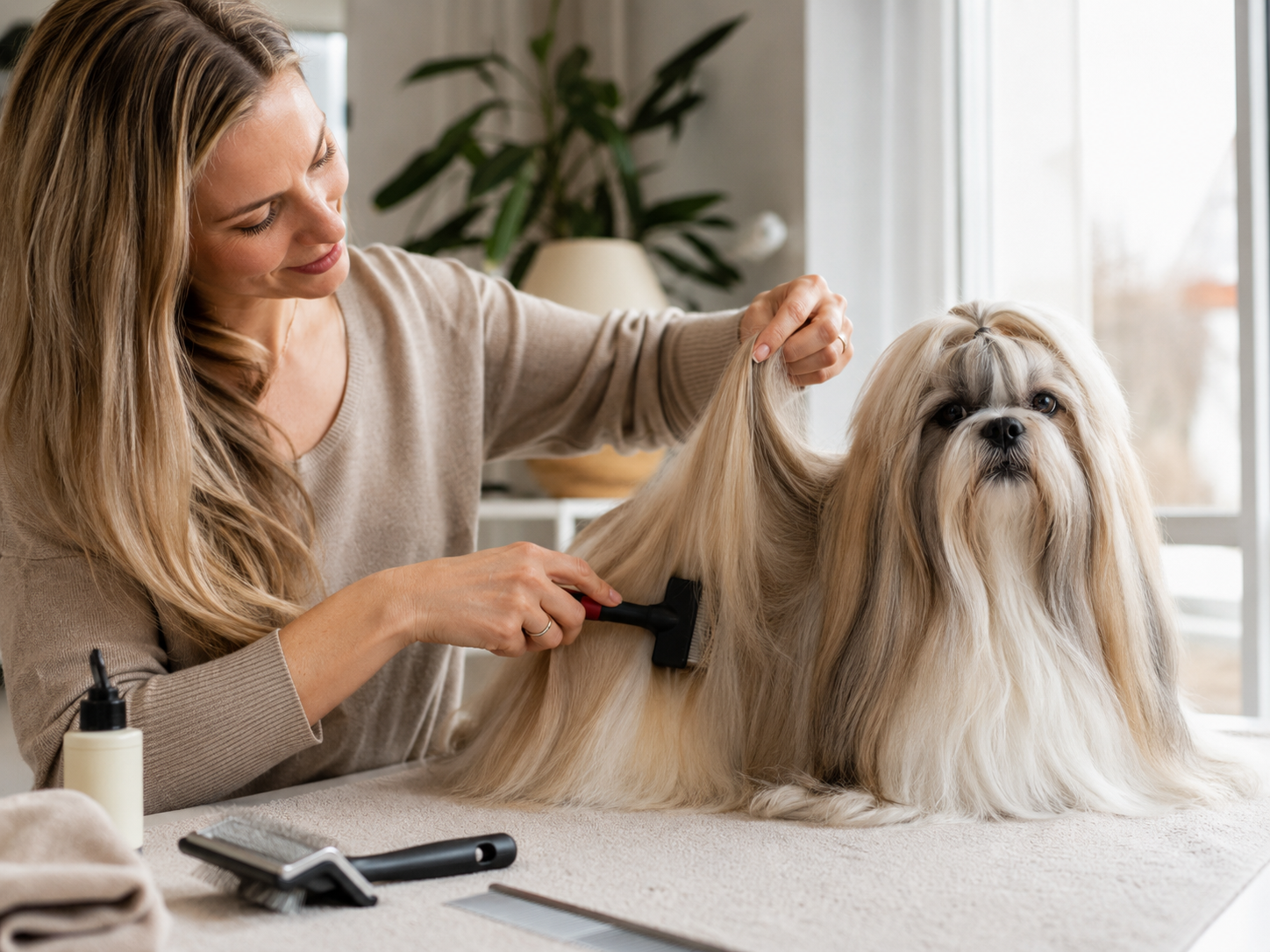
The secret to a silky coat is gentle brushing that works knots loose rather than tearing through them.
- Lightly mist the coat with a detangling spray first, since a dry, fine coat breaks and builds static.
- Brush through with a pin brush in the direction of growth, starting at the top and working down, making sure to reach the skin rather than skimming the surface.
- Give special attention to the tangle-prone spots: the tummy, the armpits, between the legs and behind the ears.
- Follow with a grooming comb to find any remaining knots. If it glides through, the coat is clear; if it catches, there is a tangle to work out.
- Finish with a bristle brush to lay the coat flat and bring out its shine.
When you meet a knot, never yank it. Hold the hair above the tangle to protect the skin, add a little detangling spray, and tease it apart from the ends inward with your fingers or the comb. Tight mats that will not ease out are safer left to a groomer than pulled or cut at home.
Bathing and conditioning
Bathe silky-coated dogs every 4 to 6 weeks, and always brush the coat out first, since water tightens any tangles into mats.
Use lukewarm water and a gentle dog shampoo, taking care around the eyes, ears and mouth, and use a damp washcloth for the face. Rinse until the water runs clear. For a silky coat, conditioner is not a luxury: it restores moisture, smooths each fine hair and makes the next brush-out far easier and kinder. Work it through, then rinse well.
Drying matters too. Pat the coat with a towel rather than rubbing, which tangles fine hair, then dry it with a dryer on a cool or low setting while brushing gently, so the coat dries straight and smooth. A properly conditioned and dried silky coat is far less prone to knots over the following days.
Trims and topknots
Most silky coats need a trim every 6 to 8 weeks, and many owners keep the hair out of the eyes with a topknot in between.
A full groom keeps the coat at a manageable length, and plenty of owners of Yorkies and Maltese choose a shorter “puppy trim” that keeps the soft look while making daily brushing quicker. Between grooms, keep the face, paws and sanitary areas neat with blunt-tipped scissors.
For breeds whose hair grows over the eyes, a simple topknot keeps hair out of the way and stops it irritating the eyes: gather the hair above the eyes, smooth it back, and secure it with a soft band rather than a tight elastic. Never trim close to the eyes yourself; leave that to a groomer.
Ears, eyes, nails and teeth
Silky breeds need a little extra care around the ears and eyes.
Many grow hair inside the ear canal that can trap moisture and wax, so check the ears weekly and clean them only when needed with a vet-approved solution and cotton wool, never cotton buds.
A build-up of wax and moisture is usually what makes a dog’s ears smell bad, so a quick weekly check keeps problems away. Wipe under the eyes daily to limit tear staining, which shows up clearly on pale silky coats. Trim the nails every 3 to 4 weeks, or when they click on hard floors, and brush the teeth regularly, ideally daily, with dog toothpaste.
Silky-coated breeds and their needs
Silky coats vary in length, but all share the same fine, tangle-prone hair.
- Yorkshire Terrier and Australian Silky Terrier: fine, flowing coats that tangle within a day and need gentle daily brushing, often kept in a shorter trim.
- Maltese: a long, pure-white silky coat that shows tear stains and dirt easily and needs daily care and regular conditioning.
- Afghan Hound: a long, fine, high-maintenance coat that demands careful, frequent brushing to stay mat-free.
- Cocker Spaniel and Setters: silky feathering on the ears, legs and belly that tangles and needs regular brushing and trimming.
Whatever the breed, the routine is the same in principle: brush gently and often, condition well, and keep the face and eyes clear. Since a healthy coat starts from within, feeding the right diet for coat and skin makes a visible difference.
The bottom line on grooming a silky-coated dog
A silky coat rewards gentle, regular care: brush and comb every day or two, bathe and condition every 4 to 6 weeks, dry it smooth, and trim every 6 to 8 weeks, alongside regular nails, ears and teeth.
Be gentle with the fine hair and stay ahead of tangles. The same gentle, regular approach carries across the rest of your dog’s grooming and hygiene basics.
Frequently asked questions
1. How often should you brush a silky-coated dog?
Every day, or every second day at least, and daily during a seasonal shed. Fine silky hair tangles within a day, so a short, gentle daily brush prevents the knots and mats a weekly session cannot catch up on.
2. How do you detangle a silky coat without breaking it?
Mist with detangling spray, then work knots from the ends inward with your fingers or a comb, holding the hair above the tangle to protect the skin. Never yank fine hair, and leave tight mats to a groomer.
3. Do silky-coated dogs need conditioner?
Yes, more than most coats. Conditioner restores moisture to fine hair, smooths it and makes brushing easier and kinder. Skipping it leaves a silky coat dry, brittle and far more prone to tangles and breakage.
4. How do I keep the hair out of my dog’s eyes?
A simple topknot works well: gather the hair above the eyes, smooth it back and secure it with a soft band, not a tight elastic. It keeps hair from irritating the eyes between grooms. Never trim close to the eyes at home.
5. How often should a silky-coated dog be bathed?
Every 4 to 6 weeks for most silky dogs. Brush the coat out first, use a gentle shampoo and a conditioner, rinse until the water runs clear, and dry the coat smooth to keep it tangle-free.
6. Why does my white silky dog have tear stains?
Tear staining is common on pale silky coats and shows where tears sit against the fur. Wipe under the eyes daily, keep the hair there trimmed and clear, and ask your vet if staining is heavy or sudden.
 Add us as a preferred source