How to Prevent Tear Stains in Dogs
Dog Grooming & Hygiene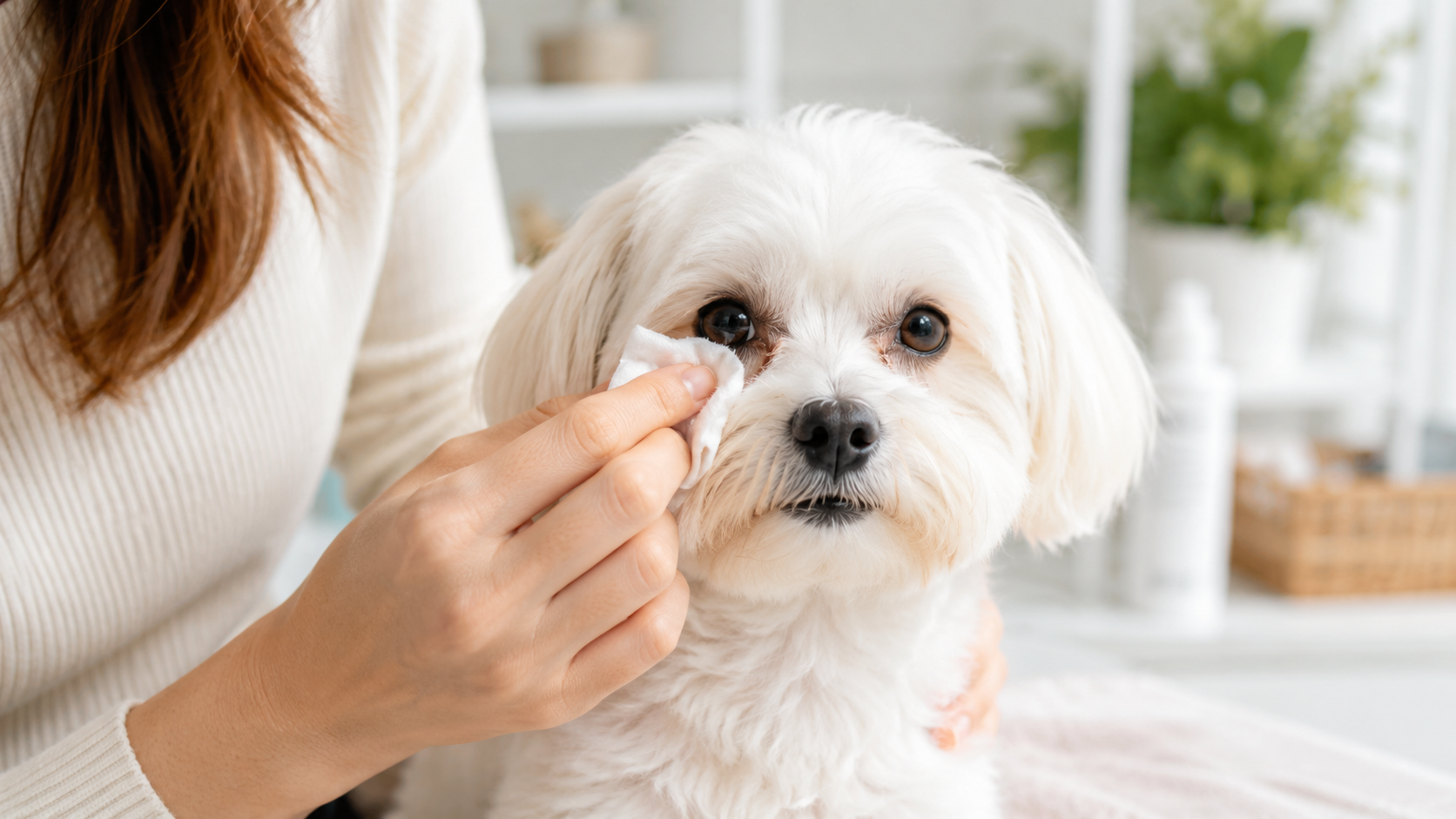 By James C. • July 24, 2026
You can prevent tear stains in dogs by keeping the face clean and dry every day and by treating the underlying cause of the excess tearing, from diet and water quality to a blocked tear duct.
Tear stains are the reddish-brown marks under a dog’s eyes, and they are usually a sign of trapped moisture rather than poor hygiene. This guide explains what causes tear stains in dogs, how to prevent them with a simple daily routine, how to clean them safely, and when the staining means it is time to see your vet.
What are tear stains, and what causes them?
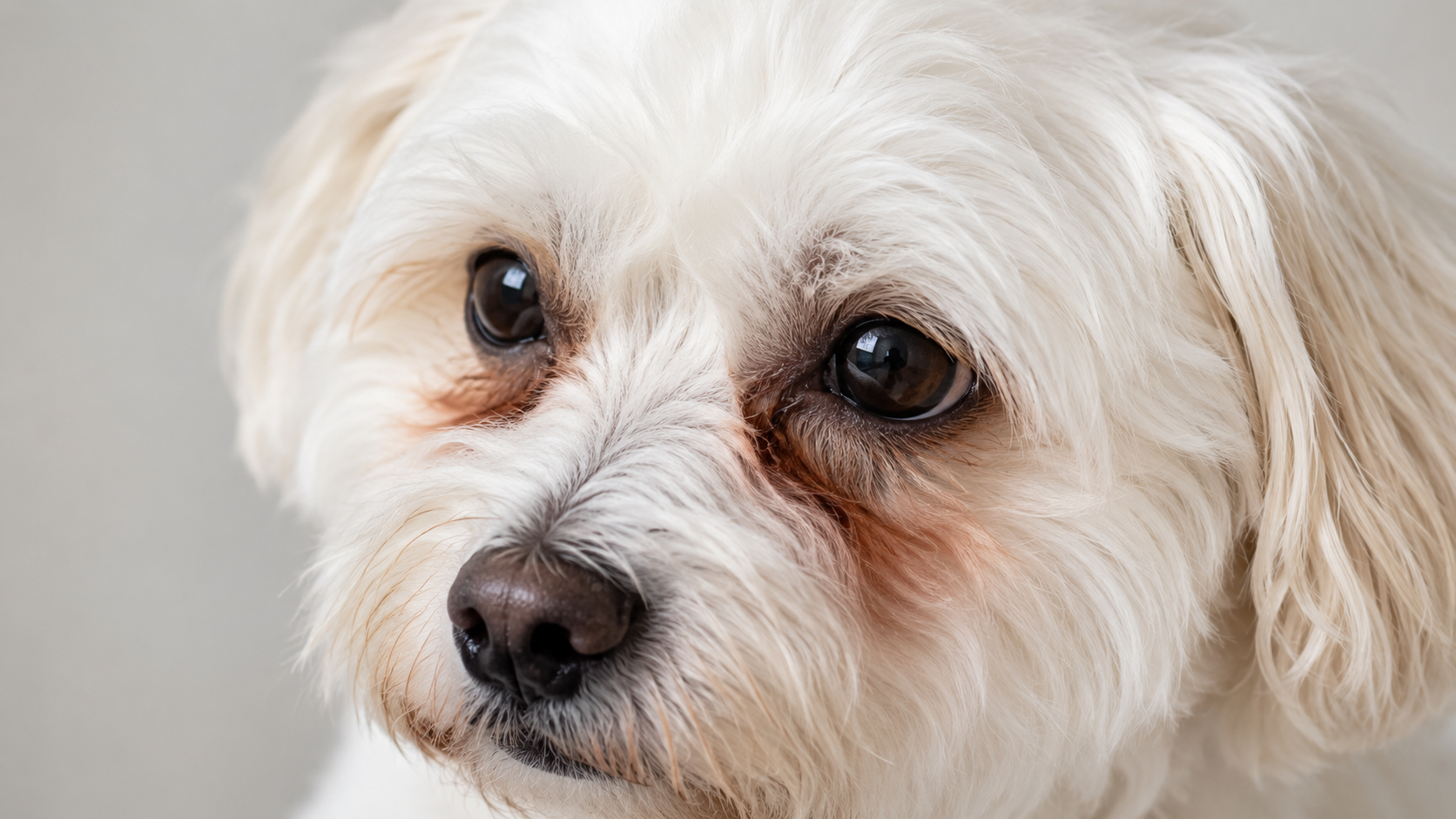
Tear stains are the rust-coloured marks that form when tears overflow and soak the fur below a dog’s eyes.
The colour comes from porphyrins, iron-based pigments in tears and saliva that turn reddish-brown when exposed to air and light. The constantly damp fur also lets yeast and bacteria build up, which can deepen the staining to a brown tinge. Excess tearing, known medically as epiphora, is what starts the process, and it can have many causes.
Common causes of excess tearing and staining include:
- Blocked or poorly developed tear ducts that stop tears draining normally
- Eye conditions such as conjunctivitis, inturned eyelids (entropion) or ingrown eyelashes
- Ear infections and smelly ears, since the ears, eyes and nose are all connected
- Allergies to food or the environment, including dust, pollen, smoke and air-conditioning
- Puppy teething, which can press on the tear ducts roughly between 4 and 8 months of age
- Stress, fleas, and irritation from long hair around the eyes
- Diet and water quality, covered in the next section
- Face shape, with flat-faced and large-eyed breeds more prone
Because the causes vary so much, lasting prevention means finding and addressing the reason behind the tears, not just wiping the stains away.
How diet, water and gut health affect tear stains
Diet and water quality are two of the most overlooked causes of tear staining, and often the easiest to improve.
Because porphyrins come from the breakdown of iron, a diet high in poor-quality or synthetic iron, fillers and artificial colours can add to staining. A good-quality diet with well-absorbed nutrients and healthy gut function supports a calmer immune system and fewer allergy-driven watery eyes, and some ingredients, such as certain grains, can trigger inflammation in sensitive dogs that constricts the tear ducts. If you are reviewing your dog’s food, it helps to know what to look for in a good-quality diet.
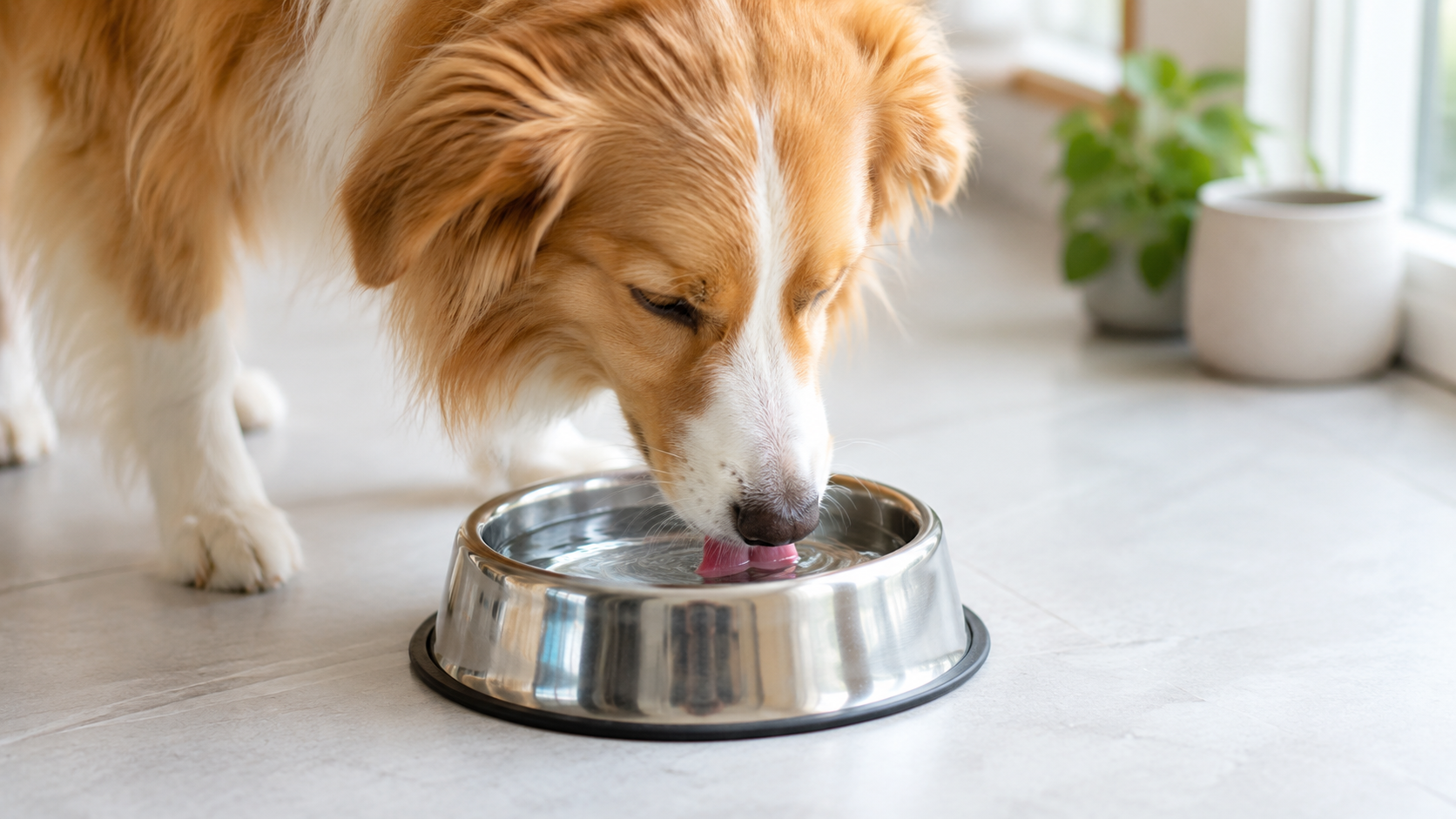
Water matters too. Mineral-rich tap water can contribute to staining, so many owners switch to filtered water, and serving it in a stainless steel or ceramic bowl rather than plastic helps, since scratched plastic can harbour bacteria. Keeping your dog well hydrated supports healthy tear drainage. Any diet change is best discussed with your vet, especially if your dog has allergies or a health condition.
How to prevent tear stains: a simple daily routine
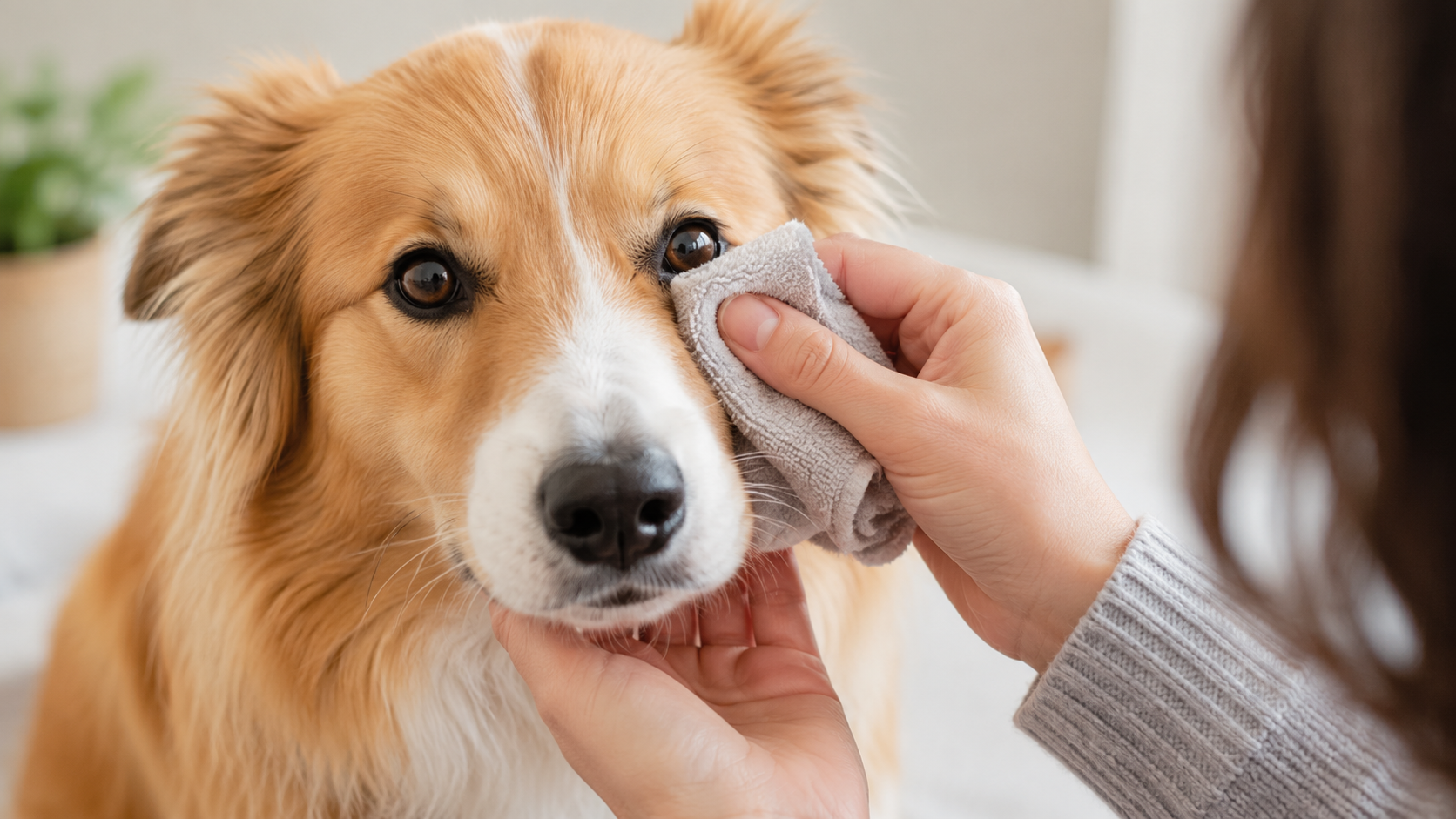
The most effective prevention is a quick, gentle face-care routine done every day.
Each day, wipe under and around your dog’s eyes with a clean, damp cloth or a dog-safe eye wipe to lift tears, food and debris before they stain, then gently pat the area dry. Keeping the fur dry is the single most important step, since stains form where moisture lingers. Trim the hair around the eyes, or ask your groomer to, so it does not wick tears across the face or poke the eye.
Beyond the face, keep the ears clean and dry, feed a good-quality diet, offer filtered water, and keep up with flea control. Introduce face handling gently with treats and praise, since not every dog enjoys having their face touched. Prevention works best when it is consistent, so a few seconds each day beats an occasional deep clean.
How to safely clean existing stains
Existing stains fade slowly, so clean gently and consistently rather than scrubbing.
Soften and wipe the stained fur with a clean cloth or cotton wool dampened with warm water, or with a tear-stain wipe made for dogs, working carefully and never touching the eye itself. For stubborn stains, a vet or groomer can trim away the worst of the stained fur so fresh, clean hair grows through. Some owners use tear-stain wipes or supplements, but it is best to check with your vet first, since not all are safe or effective. Be patient, since staining that took weeks to build up will take weeks to fade.
What not to use near your dog’s eyes
The area around the eyes is delicate, so some popular home remedies do more harm than good.
- Do not use hydrogen peroxide, bleach or any whitening product near the eyes.
- Avoid vinegar, lemon juice and other acidic mixtures close to the eye, as they can sting and irritate.
- Do not use human make-up removers, medicated wipes or antibiotic ointments unless your vet advises it.
- Keep shampoo out of the eyes when bathing, and rinse thoroughly.
If a product is not specifically made and labelled as safe for use around a dog’s eyes, keep it well away from them and ask your vet for a suitable option.
Breeds most prone to tear staining
Some breeds are far more prone to tear stains because of their coat colour, face shape or eye structure.
White and light-coated breeds such as the Maltese, Bichon Frise and West Highland Terrier show staining most clearly, though all dogs can get it. Flat-faced, or brachycephalic, breeds like Pugs, Shih Tzus, Pekingese and French Bulldogs have shallow eye sockets and short muzzles that make tears spill over and drain poorly. Toy breeds and Poodles are also commonly affected, and some breeds, including certain Cocker Spaniels and retrievers, can have tear ducts that did not fully develop.
If you own or are considering one of these breeds, build a daily face routine in early and expect tear care to be part of ownership. Grooming needs and face shape vary widely across the most popular dog breeds in Australia, so it is worth checking before you choose.
When tear staining needs a vet
Tear staining is often cosmetic, but it can point to a problem that needs veterinary attention.
See your vet if the staining appears suddenly, is heavier on one side, or comes with a runny nose, thick or coloured discharge, redness, squinting, pawing at the eye, or signs of pain. These can indicate an eye infection, a blocked tear duct, an inturned eyelid, an ulcer or another condition that needs treatment rather than face-wiping. A sudden increase in tearing, known as epiphora, always warrants a check.
Your vet can find the underlying cause and, where needed, refer you to a veterinary eye specialist. Eye care is one part of your dog’s broader health and vet care.
The bottom line on preventing tear stains
Preventing tear stains comes down to a daily clean-and-dry face routine, a good diet and filtered water, and treating the underlying cause of the tearing.
Clean gently, skip harsh remedies near the eyes, and see your vet if staining is sudden or sore. Face care fits neatly into a dog’s day-to-day grooming and hygiene.
Frequently asked questions
1. What causes tear stains in dogs?
Tear stains form when excess tears overflow and soak the fur, where iron-based porphyrins and yeast turn it reddish-brown. Causes include blocked tear ducts, allergies, eye or ear infections, teething, diet, water quality and a flat-faced breed structure.
2. How do I get rid of tear stains on my dog?
Clean the fur gently each day with warm water or a dog-safe tear-stain wipe, keep the face dry, and address the underlying cause. A vet or groomer can trim heavily stained fur so cleaner hair grows through.
3. Can diet cause tear stains in dogs?
Yes. Poor-quality or high-iron food, fillers and additives can increase the porphyrins that cause staining, and food allergies can trigger watery eyes. A good-quality diet, filtered water and a healthy gut can all help reduce it.
4. Are tear stains bad for dogs?
The stain itself is usually just cosmetic, but the constant moisture can cause skin irritation or infection, and the tearing behind it can signal a health issue. Persistent or sudden staining is worth a vet check.
5. What should I not use to clean tear stains?
Avoid hydrogen peroxide, bleach, vinegar, lemon juice and human make-up removers near the eyes, as they can sting and irritate. Use only warm water or a product made and labelled as safe around a dog’s eyes.
6. When should I see a vet about tear stains?
See your vet if staining appears suddenly, is worse on one side, or comes with redness, discharge, squinting, pawing or a runny nose. These can signal an infection, a blocked tear duct or another eye problem.
 Add us as a preferred source