Best Grooming Routine for Double-Coated Dogs
Dog Grooming & Hygiene By James C. • August 5, 2026
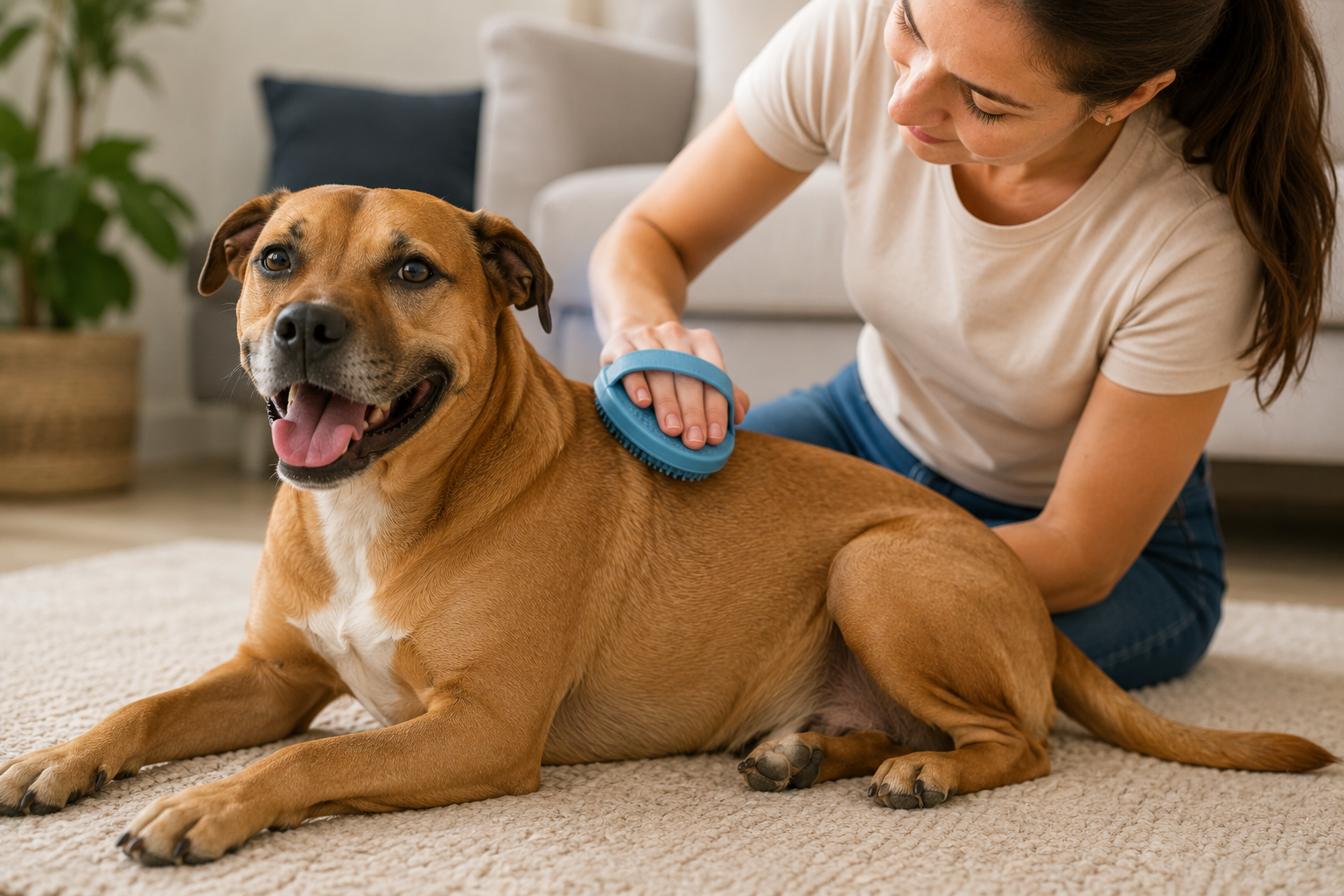
Double-coated dogs need brushing several times a week, daily during a coat blow, a bath every 4 to 8 weeks, regular deshedding of the undercoat, and they should never be shaved.
Breeds like the Husky, Golden Retriever and German Shepherd carry two coats at once, which changes how you groom them. Get it right and you control the shedding, prevent mats and keep your dog comfortable through the Australian heat.
This guide gives a simple weekly and monthly schedule, the right tools, a proper deshedding method, and a clear explanation of why shaving does more harm than good.
What is a double coat, and why it changes grooming
A double coat has two layers: a soft, dense undercoat for insulation and a longer, coarser topcoat, or guard coat, that repels dirt and moisture.
Those two layers work together to regulate temperature, trapping air near the skin to keep your dog warm in winter and, just as importantly, cool in summer, which matters in a country where heatstroke is a real risk for dogs. The topcoat also shields the skin from dirt, moisture and the sun. This is why a double coat is not simply “more hair” to remove: it is a working system, and grooming it well means keeping both layers clean, dry and free of dead undercoat rather than stripping it away.
The undercoat is the part that sheds, and it does so heavily at certain times of year. Left unbrushed, dead undercoat clumps against the skin, traps moisture and forms mats that cause irritation. That is why deshedding, not clipping, sits at the heart of a double-coated dog’s routine.
A simple weekly and monthly routine
Use this schedule as your baseline, then step it up during a coat blow.
| Task | Normal weeks | Coat-blow season |
|---|---|---|
| Brush and line-brush the coat | 2 to 3 times a week | Daily |
| Deshed with an undercoat rake | Weekly | Every day or two |
| Bath | Every 4 to 8 weeks | Once, to help release the coat |
| Nail trim | Every 3 to 4 weeks | Every 3 to 4 weeks |
| Ear check and clean | Weekly | Weekly |
| Teeth brushing | Ideally daily | Ideally daily |
The pattern is simple: steady brushing most of the year, then daily brushing and deshedding when the coat blows. Consistency is what keeps shedding, and mats, under control.
Grooming tools you need

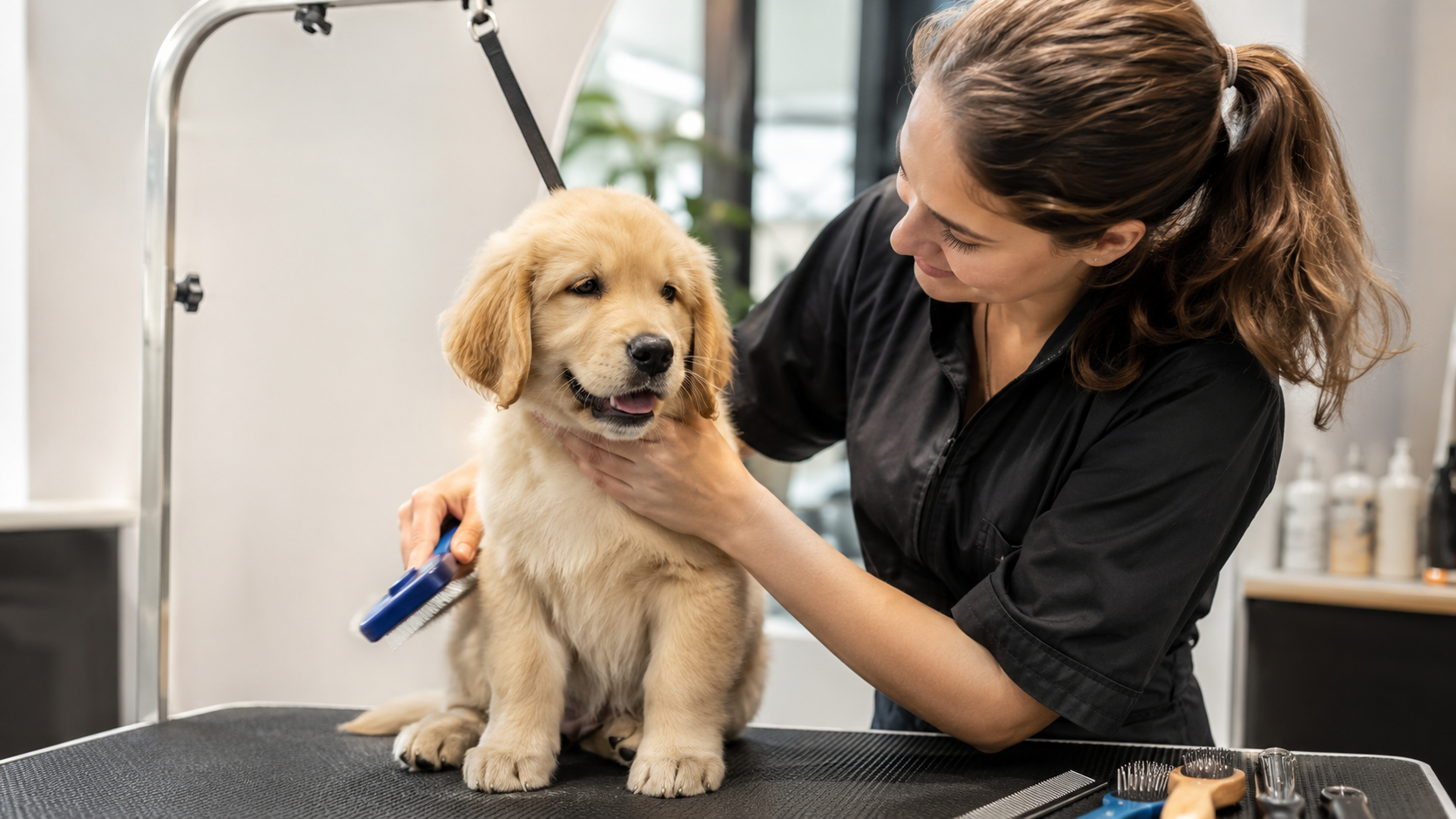
The right tools do most of the work on a double coat, so it is worth having a proper kit.
- An undercoat rake, the key tool for reaching and removing loose undercoat
- A slicker brush for tangles and loose hair in the topcoat
- A deshedding tool for heavy shedding seasons
- A wide-tooth steel comb to check for tangles and finish the coat
- A gentle deshedding or moisturising dog shampoo and conditioner
- A towel, plus a dryer, since a thick double coat must be dried right through
Avoid clippers and scissors for the body coat, and steer clear of human shampoos, which strip a dog’s skin. Brushes with sharp, rigid pins can scratch, so choose tools designed for double coats.
Deshedding and line brushing

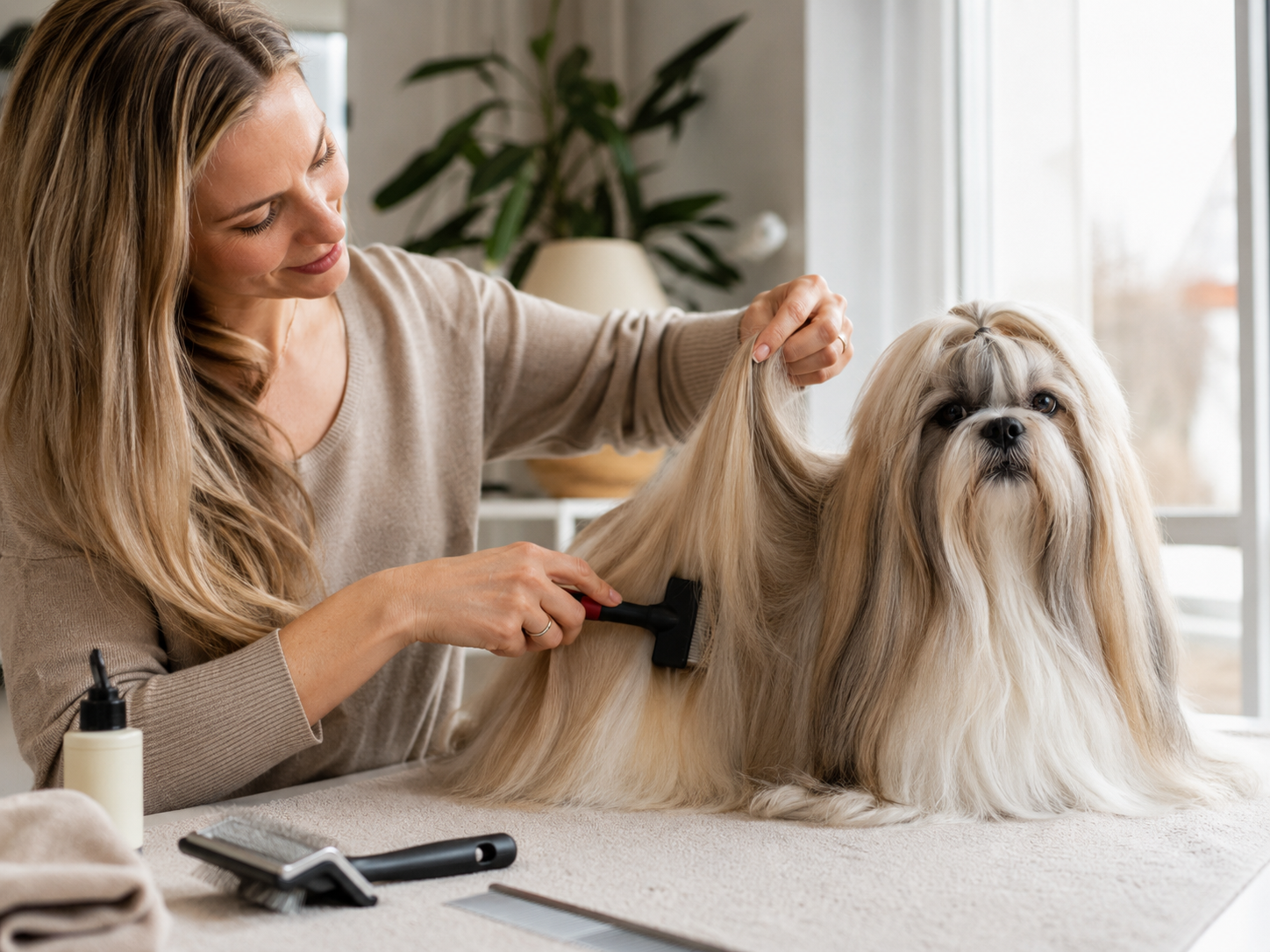
The most effective way to groom a double coat is to line brush in sections, working the undercoat first and then the topcoat.
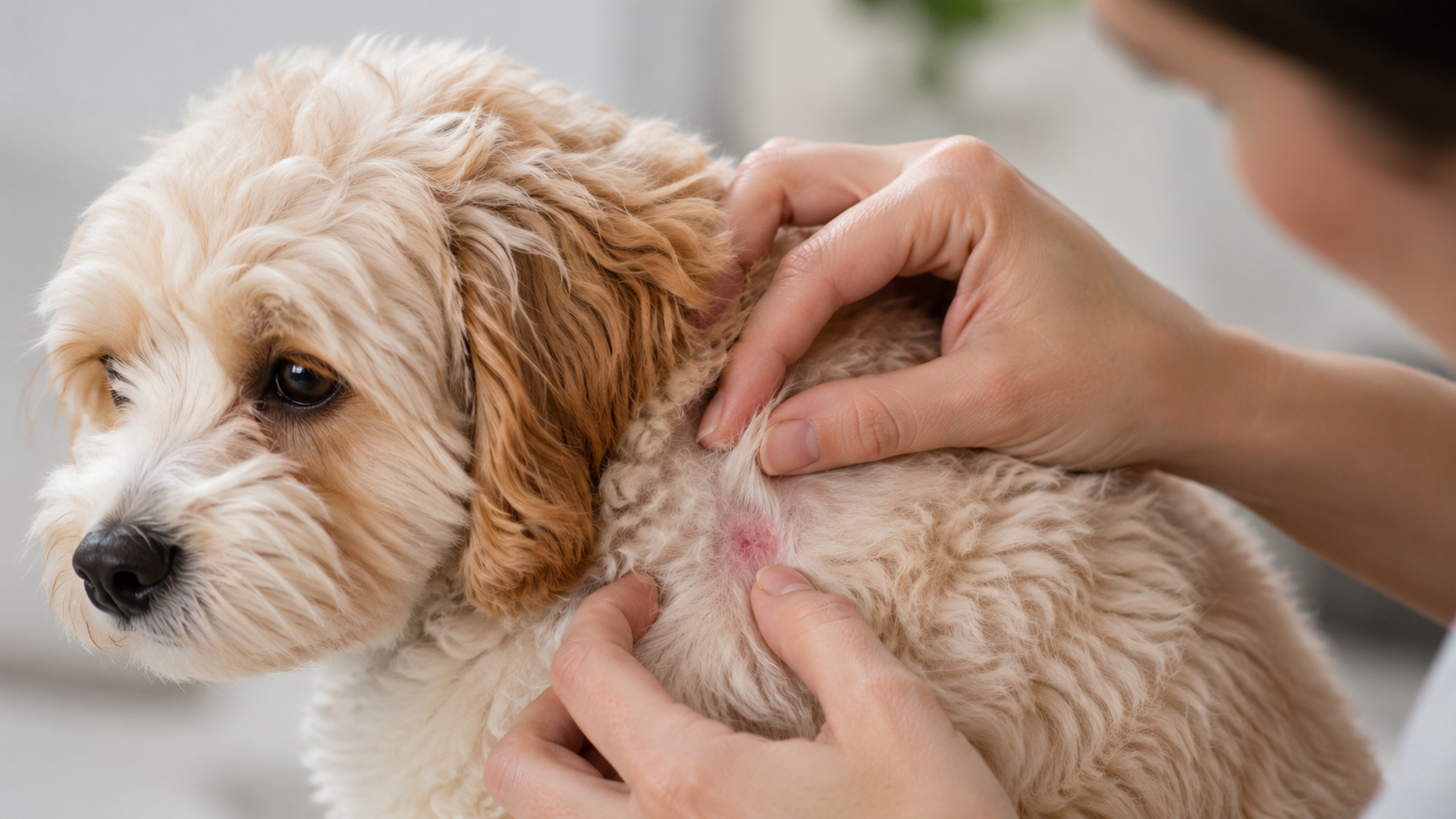
- Run your fingers through the coat to find any mats, grazes or grass seeds before you start.
- Part the coat into sections and work the undercoat rake gently through each one, in the direction the hair grows, lifting out the loose undercoat.
- Follow with a slicker brush on the topcoat to clear tangles and surface hair, using light strokes rather than digging at the skin.
- Focus on the friction zones where mats form fastest: behind the ears, under the collar, the armpits, the hindquarters and the tail.
- Finish with a steel comb to check each section is clear from the skin outward.
Take your time and keep the pressure light. Raking hard or “stripping” the same spot over and over can bruise the skin and damage the coat. If you hit a mat you cannot ease out gently, leave it for a groomer rather than cutting at it.
Bathing double-coated dogs

Bathe most double-coated dogs every 4 to 8 weeks, and brush the coat out well first so water does not tighten loose undercoat into mats.
Use lukewarm water and a gentle dog shampoo, ideally a deshedding or moisturising formula, and work it right down to the skin through both coat layers. Over-bathing strips the natural oils and dries the skin, so stick to the schedule unless your dog is genuinely dirty. Rinse until the water runs completely clear, because trapped shampoo irritates the skin under a dense coat.
Drying is the step owners most often rush, and it matters more with a double coat than almost any other. A thick undercoat holds water and takes a long time to dry, and a damp undercoat can trap moisture against the skin, leading to irritation or hot spots. Towel off the excess, then dry the coat thoroughly with a dryer on a cool or low-heat setting, brushing as you go, until the undercoat is dry to the skin.
Coat-blow season
Twice a year, usually in spring and autumn, double-coated dogs “blow” their coat, shedding the undercoat in large amounts over a few weeks.
This is normal and healthy: the old undercoat makes way for a new one suited to the coming season. Your job is to help it out. Brush daily during a coat blow and use the undercoat rake or deshedding tool more often, working through the coat in sections so the loose fur comes away in the brush rather than around the house or matting on your dog.
A warm bath followed by a thorough dry can help release a stubborn coat, and a diet with omega-3 helps support healthy skin and coat through the shed. Staying on top of the blow keeps your dog comfortable and prevents the trapped undercoat that so often leads to mats.
Why you should never shave a double coat
You should never shave a double-coated dog, because the coat is what regulates their temperature and protects their skin.
It is a common myth that shaving keeps a double-coated dog cool in summer. In reality the opposite is true. The coat insulates against heat as well as cold, and it shades the skin from the sun.
Shaving strips that protection, exposes the skin to sunburn, and often leaves the dog hotter, not cooler. Leading kennel and veterinary bodies, including the American Kennel Club, advise against shaving double coats for exactly these reasons. Shaving can also cause patchy, uneven regrowth, and in some dogs the undercoat grows back but the guard coat does not, permanently changing the coat’s texture and its ability to do its job.
Regular brushing and deshedding, not clipping, is how you keep a double-coated dog cool and comfortable. If your dog is struggling in the heat, cooling them down safely matters more than ever, and it helps to know the safe temperature limits for dogs in Australia.
Nails, ears and teeth
The rest of the grooming routine matters just as much as the coat.
Trim the nails every 3 to 4 weeks, or when you hear them clicking on hard floors. Check the ears weekly and clean them only when needed with a vet-approved solution and cotton wool, never cotton buds. Brush the teeth regularly, ideally daily, with dog toothpaste. A little light tidying of the hair around the paw pads and sanitary areas with blunt-tipped scissors is fine, but never take clippers to the body coat.
Double-coated breeds and their needs
Double coats vary in length and density, so adjust the routine to your dog.
- Northern breeds (Siberian Husky, Alaskan Malamute, Samoyed): thick, heavy coats that blow dramatically twice a year and need daily deshedding during a blow.
- Working and herding breeds (German Shepherd, Border Collie, Australian Shepherd): dense coats that shed year-round and benefit from regular undercoat raking.
- Retrievers and spaniels (Golden Retriever): longer double coats with feathering that needs brushing to prevent mats behind the ears and legs.
- Corgis: short but very dense double coats that shed heavily and still need regular deshedding.
Whatever the breed, the principle holds: brush and deshed regularly, bathe and dry thoroughly, and never shave. Many of these breeds sit among the most popular dog breeds in Australia.
The bottom line on grooming a double-coated dog
A double coat is a working system, not a job for the clippers: brush several times a week and daily during a coat blow, deshed the undercoat with a rake, bathe every 4 to 8 weeks and dry thoroughly, and never shave.
Do that and you control the shedding and keep your dog comfortable year-round. The same care applies beyond the coat, so it is worth keeping the rest of your grooming and hygiene routine just as consistent.
Frequently asked questions
1. How often should you brush a double-coated dog?
Two to three times a week normally, and daily during a coat blow in spring and autumn. Regular brushing with an undercoat rake removes dead undercoat, controls shedding and stops mats forming against the skin.
2. Should you ever shave a double-coated dog?
No. The coat regulates temperature and protects the skin, so shaving can leave a dog hotter, sunburnt and prone to patchy or permanent coat damage. Brush and deshed to keep them cool instead, never clip the body coat.
3. How do you deshed a double coat?
Work an undercoat rake gently through the coat in sections, in the direction of hair growth, then follow with a slicker brush on the topcoat. Do this weekly, and daily during a coat blow, keeping the pressure light.
4. How often should a double-coated dog be bathed?
Every 4 to 8 weeks for most dogs. Brush the coat out first, use a gentle deshedding shampoo, rinse until the water runs clear, and dry the thick undercoat completely to avoid trapped moisture and irritation.
5. Why does my double-coated dog shed so much twice a year?
This is a coat blow, when the undercoat is shed in bulk to make way for a new one suited to the season. It is normal. Daily brushing and deshedding during these weeks manages it and keeps the coat healthy.
6. Can I groom my double-coated dog at home?
Yes. Brushing, deshedding, bathing, drying, nails, ears and teeth can all be done at home with the right tools. See a groomer for heavy matting or if you would like help managing a big seasonal coat blow.
 Add us as a preferred source