Rhodesian Ridgeback
By James C. • Updated
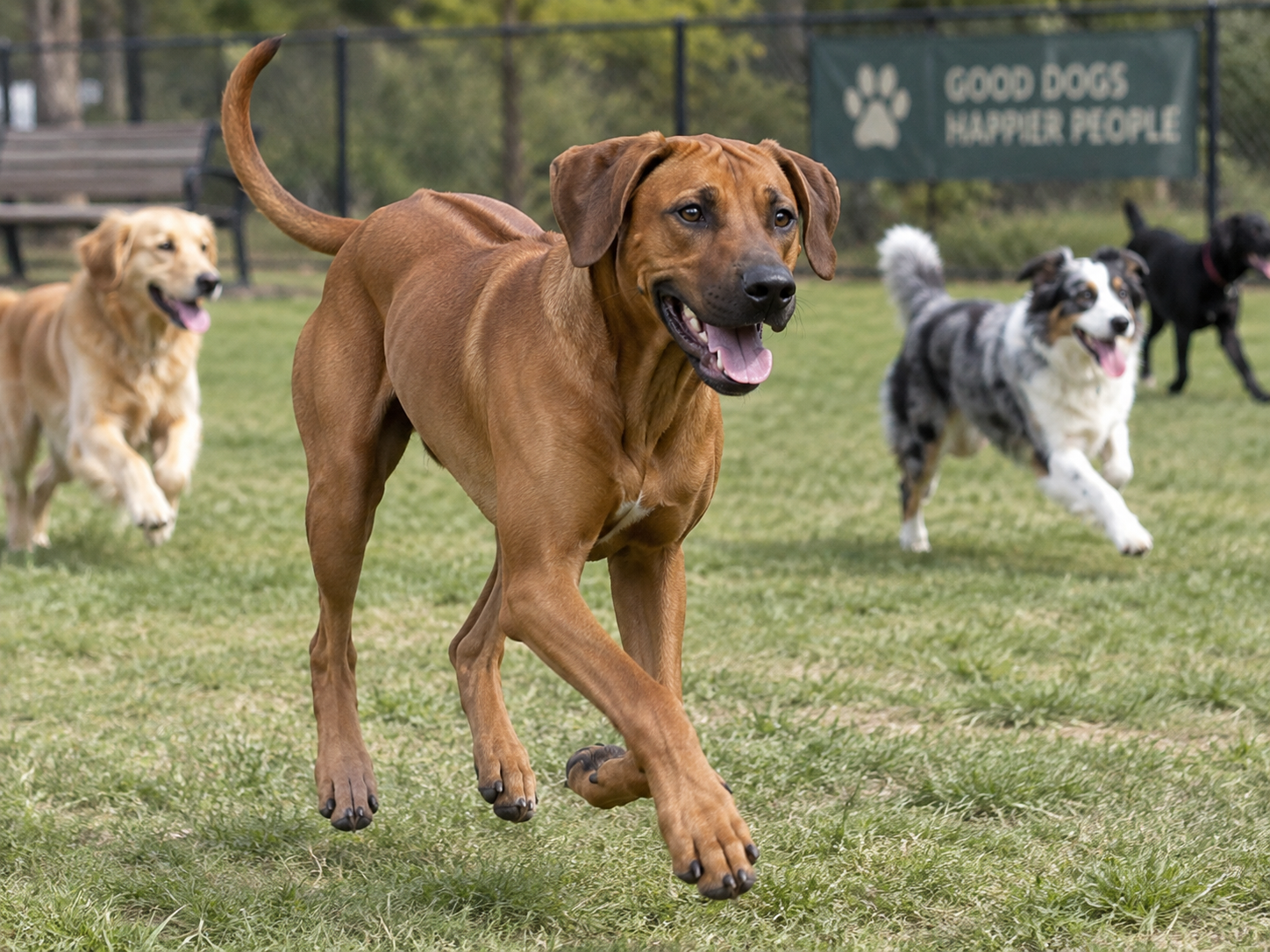
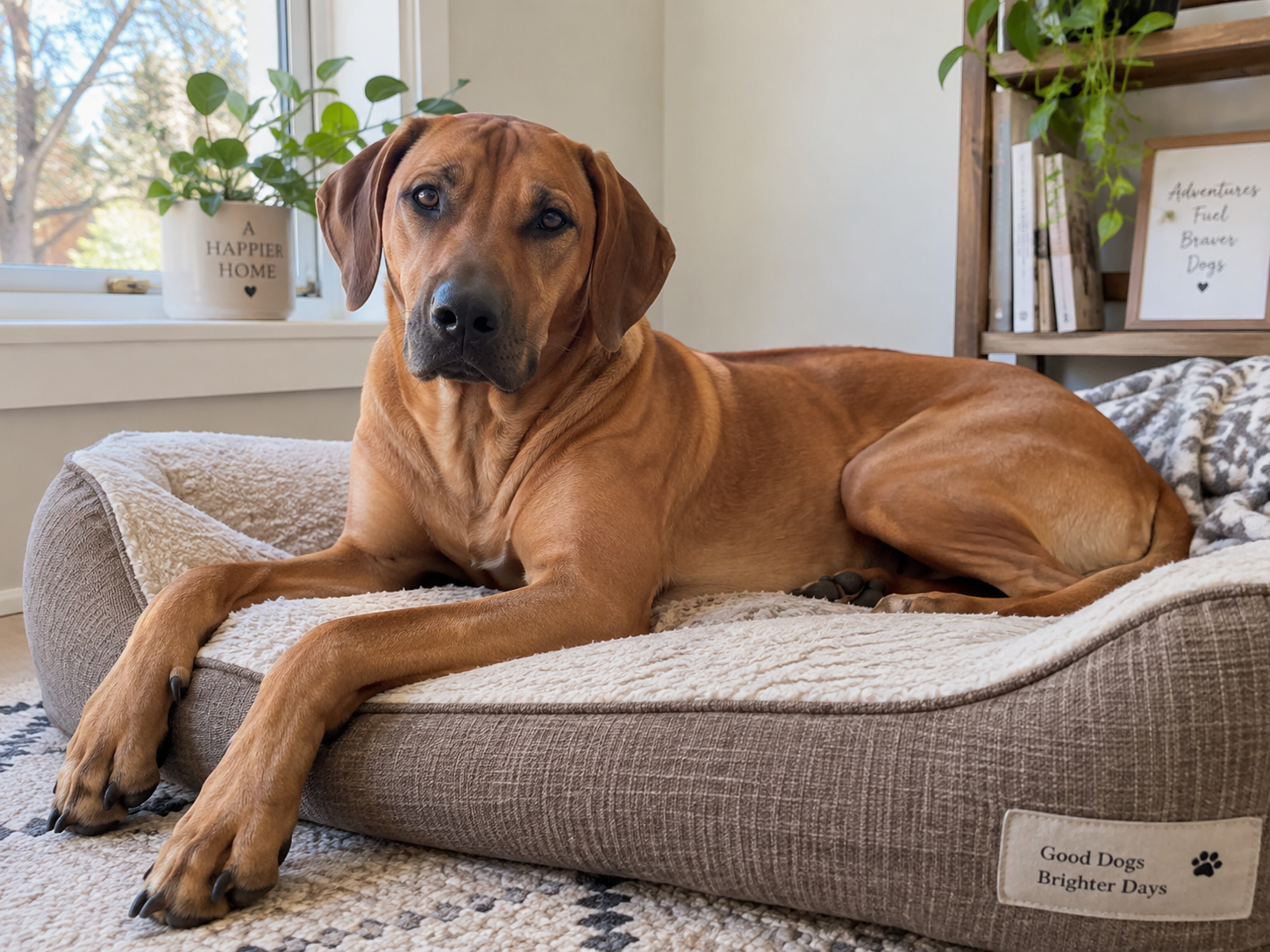
The Rhodesian Ridgeback is a large southern African hound developed to track and hold big game, distinguished by the ridge of backward-growing hair along its spine. It is powerful, independent and strongly territorial, while being notably quiet and undemanding indoors. Males stand 63 to 69 cm and females 61 to 66 cm, with a lifespan of 10 to 12 years. The short coat and African origin make it one of the better large breeds for Australian conditions, and it suits confident owners with space and a commitment to early training.
Breed Overview
Life Span
10 - 12 years
Average Price
AUD 2500 - AUD 4000
Weight
Male: 36 - 41 kg Female: 29 - 34 kg
Height
Male: 63 - 69 cm Female: 61 - 66 cm
Life Expectancy
Male/Female: 10 - 12 years
Breed Group
Hounds
Nicknames
Ridgeback, African Lion Hound
Breed Information
The Rhodesian Ridgeback is one of the few large breeds genuinely well suited to the Australian climate, and that is the most useful thing to know about it. Developed in southern Africa from European hounds crossed with the ridged hunting dogs of the Khoikhoi people, it was bred to work in heat, cover long distances and hold large game at bay until hunters arrived. A short dense coat, an efficient frame and real heat tolerance came with that job.
The ridge itself is the breed's signature: a strip of hair along the spine growing in the opposite direction to the rest of the coat, formed by a genetic trait inherited from the indigenous African dogs in its ancestry. It is not decorative, it is the defining breed characteristic and, as covered below, it is also connected to the breed's most important health consideration.
In Australia the Ridgeback has a well-established following. There are 75 registered Australian breeders, though litters are less frequently available than that number suggests, and buyers should generally expect to wait rather than choose from what is on the market.
Characteristics of the Rhodesian Ridgeback
The Rhodesian Ridgeback rates highly for heat tolerance and low grooming and moderately for trainability, with independence and strength the two traits owners most need to plan for.
| Trait | Rating | Star Rating | Meaning |
| Size | Large | ★★★★ | Males 36 to 41 kg of solid, athletic muscle. |
| Adaptability | Good | ★★★★ | Quiet indoors and copes well with heat, though needs real space. |
| Exercise Needs | High | ★★★★ | At least an hour daily, with genuine running preferred. |
| Easy to Train | Moderate | ★★★ | Intelligent and capable, but independent and slow to comply. |
| Amount of Shedding | Low | ★★ | Short coat with minimal seasonal change. |
| Grooming Needs | Very Low | ★ | A weekly rub over with a mitt is close to the entire job. |
| Good With Children | Good | ★★★★ | Tolerant with its own family, though large enough to knock them over. |
| Health | Good | ★★★★ | Generally sound, with dermoid sinus the breed-specific concern. |
| Cost to Keep | Moderate | ★★★ | No grooming costs, offset by a large dog's food and medication. |
| Tolerates Being Alone | Good | ★★★★ | More self-contained than most large breeds when properly exercised. |
| Intelligence | Very Good | ★★★★ | Thinks for itself, which is a strength and a training obstacle. |
History of the Rhodesian Ridgeback: From Khoikhoi Hunting Dog to Registered Breed
The breed's foundation is the ridged hunting dog kept by the Khoikhoi people of southern Africa, a hardy semi-domesticated dog adapted to the region's climate and terrain. European settlers arriving from the seventeenth century crossed these dogs with imported Great Danes, Mastiffs, Greyhounds and various hounds, seeking an animal with European size and scenting ability combined with African toughness and heat tolerance.
The resulting dogs were used across southern Africa for general farm work and for hunting large game, and it is from this period that the African Lion Hound name derives. The dogs did not fight lions, which is worth stating precisely because the myth persists. They worked in packs to track, harass and hold a lion at bay, keeping it occupied and in place until a hunter arrived. Baying, not fighting, was the job, and a dog that closed with a lion would not have lasted long.
The breed standard was drawn up in Rhodesia, now Zimbabwe, in 1922, drawing heavily on the Dalmatian standard for its structure. The Rhodesian Ridgeback reached Australia in the second half of the twentieth century and is now well established here, kept overwhelmingly as a companion and guardian rather than for any working purpose.
Appearance of the Rhodesian Ridgeback: Athletic, Sleek, and Ridged
Size and Build
Males stand 63 to 69 cm and females 61 to 66 cm at the withers, with males typically 36 to 41 kg and females 29 to 34 kg. The build is balanced and athletic rather than heavy, capable of both speed and endurance. A Rhodesian Ridgeback in correct condition looks muscular and lean, with visible definition through the shoulders and hindquarters.
Coat and Colours
The coat is short, dense and sleek, lying flat against the skin with a natural gloss. Colour ranges across the wheaten shades from light to red wheaten, sometimes with a small amount of white on the chest and toes, and a dark muzzle and ears are permitted. The coat needs almost no maintenance and sheds lightly year round.
The Ridge and Ridgeless Puppies
The ridge runs along the spine from behind the shoulders to the hip bones, formed by hair growing forward against the direction of the rest of the coat, and should be clearly defined and symmetrical with two identical crowns opposite each other. Some puppies in any litter are born without a ridge, and this is normal genetics rather than a sign of poor breeding. A ridgeless puppy is a perfectly healthy dog and makes an excellent pet. Under the Rhodesian Ridgeback Club of Queensland's code of ethics, ridgeless puppies are to be placed on the Limited Register, desexed and removed from the breeding pool, and the club notes that a mismark should be reflected in the price, though no figure is published.
Gender Differences
The difference between the sexes is marked in this breed, with males typically 5 to 8 kg heavier and noticeably more substantial through the head and neck. Males are often more overtly territorial while females can be more independent. For first-time large dog owners, a female is generally the easier proposition on strength alone.
Temperament of the Rhodesian Ridgeback: Independent, Territorial, and Quietly Confident
Core Personality Traits
The Rhodesian Ridgeback is dignified, self-assured and notably quiet. It is not a demonstrative breed and does not seek constant attention, but it is deeply attached to its household and will position itself where it can watch over the family. Indoors, a well-exercised Ridgeback is calm to the point of appearing lazy.
Social Behaviour
Reserved with strangers is the correct description. A sound Ridgeback is neither friendly nor hostile towards unfamiliar people, but watchful and slightly aloof until it decides the situation is acceptable. It is a natural guardian without being a trained one, and it will bark to announce arrivals but is not a nuisance barker. Poorly socialised dogs can become genuinely suspicious, which in a 40 kilogram dog is a real problem.
Working Instincts
The hound heritage produces strong prey drive and a tendency to follow a scent or a moving animal with complete disregard for recall. Off-lead work belongs in secure areas. The guarding instinct is territorial rather than possessive, and most Ridgebacks are far more concerned with the boundary of their property than with any individual resource.
Common Behavioural Challenges
Adolescence is the difficult period, roughly eight to twenty-four months, when a physically enormous but mentally immature dog begins testing boundaries. Under-exercised Ridgebacks become destructive and difficult, and most of what owners report as temperament problems traces to insufficient outlet. Understanding the problems that appear in an under-exercised young dog is more useful here than any correction-based approach, since this is not a breed that responds well to confrontation.
Intelligence and Trainability of the Rhodesian Ridgeback: Capable, Independent, and Slow to Agree
Intelligence and Learning Ability
Ridgebacks are intelligent and problem-solving, with the independence characteristic of hounds bred to work at distance from a handler. They learn quickly but they weigh instructions rather than following them, and they will test whether a rule applies consistently before accepting it.
Training Approach
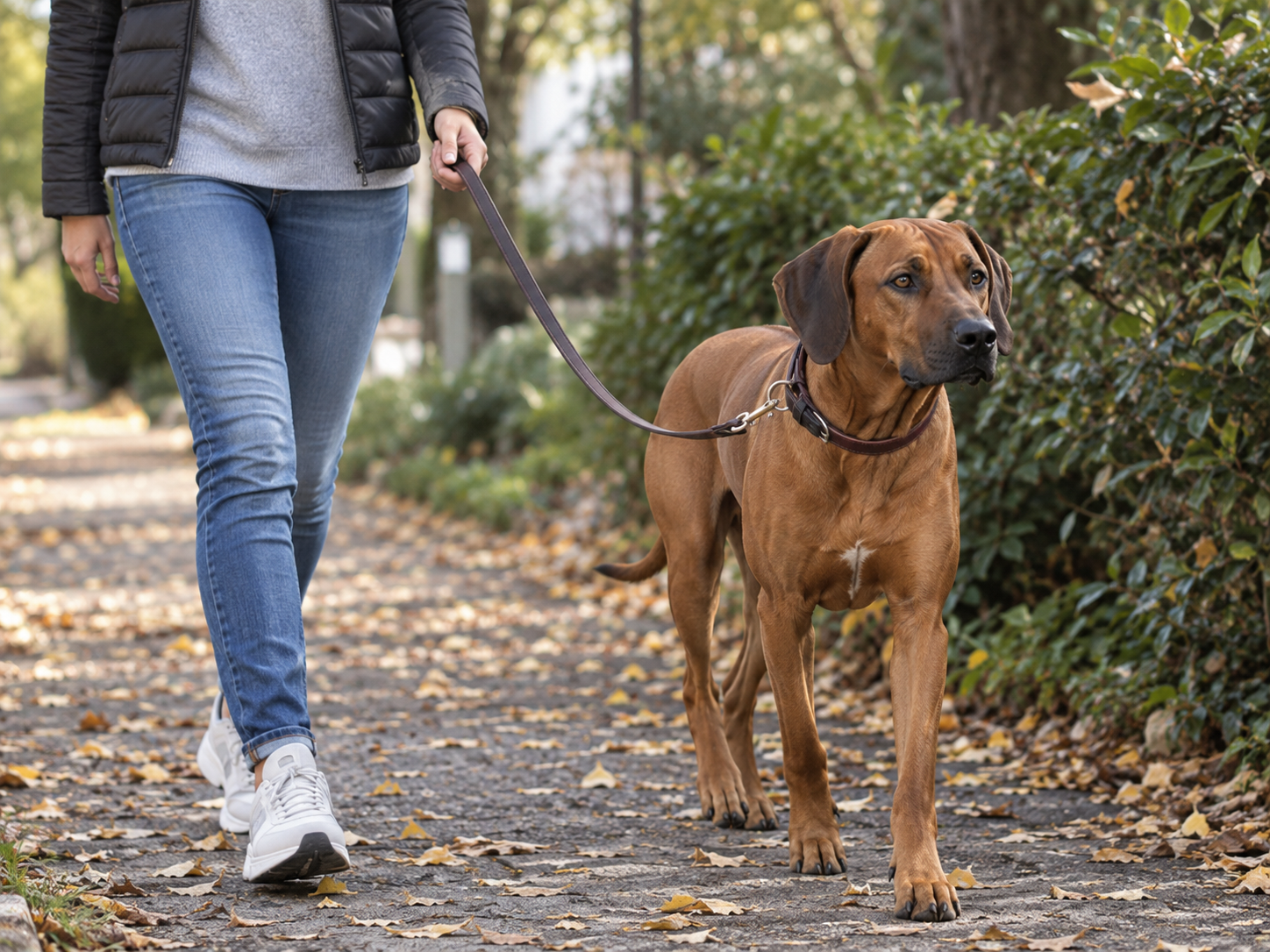
Establish everything before the dog reaches full size. A 20 kilogram six-month-old that pulls becomes a 40 kilogram adult that pulls, and at that point the problem is physical. Reward-based training works, in short sessions with genuine motivation. Harsh handling produces a Ridgeback that disengages or resists, and both outcomes are worse than where you started. Look at the right age to begin obedience training and make lead manners and recall the early priorities.
Early Socialisation
Broad, positive early exposure is essential given the breed's natural reserve and territorial instinct. The goal is a dog that is calmly neutral about strangers rather than one that greets them enthusiastically, which is a different target than for most breeds. Because the socialisation window overlaps the vaccination course, plan socialising safely during the vaccination window with your veterinarian.
Potential Training Challenges
Recall around scent and moving animals is the permanent limitation and should be managed rather than assumed. Boundary testing through adolescence is the second. The third is subtle: Ridgebacks are sensitive despite their toughness, and a handler who becomes frustrated will find the dog becomes less rather than more cooperative.
Rhodesian Ridgeback Family Life: Living with Children, Pets, and Households
Living with Children
Ridgebacks are typically tolerant and protective with children in their own family and are less likely than many large breeds to be reactive to noise and movement. The realistic caution is physical: this is a heavy, powerful dog that can knock a small child down without intent. Supervise, teach children to be calm around the dog, and give the dog a space it can withdraw to.
Living with Other Pets
Ridgebacks raised with other dogs generally live well with them, though same-sex pairs of this breed can become difficult as both mature, and that is worth planning around. Cats can work where the dog is raised with them. Smaller animals such as rabbits and poultry should be treated as incompatible given the prey drive.
Household Environment
Secure fencing is essential, both because the breed is territorial and because prey drive will take a dog through a weak boundary. A large yard is useful but not sufficient on its own, since Ridgebacks do not self-exercise. Indoors they are quiet and settled and want to be with the household rather than outside, and a dog kept permanently outdoors will be both louder and harder to live with.
Lifestyle Compatibility
The breed suits active households with space, physically confident handlers, and owners who want a calm indoor companion rather than a demonstrative one. It tolerates being alone better than most large breeds when properly exercised. It suits apartments, first-time dog owners, and households wanting reliable off-lead freedom poorly.
Health of the Rhodesian Ridgeback: Dermoid Sinus and Joints
Lifespan and Healthy Living
Rhodesian Ridgebacks typically live 10 to 12 years, which is good for a dog of this size, and the breed is generally sound. Keeping the dog lean, managing growth carefully through the first eighteen months and buying from screened parents are the practical levers most within an owner's control.
Common Health Conditions
Owners should be aware of several conditions that can be associated with the breed. It is best to discuss any concerns with a veterinarian.
- Dermoid sinus. The breed-defining condition, explained in full below because no other resource does so properly.
- Hip and elbow dysplasia. Reported in the breed. Dogs Australia names both alongside dermoid sinus as the conditions to ask about.
- Gastric dilatation volvulus. A sudden twisting of the stomach, an emergency in any deep-chested breed.
- Hypothyroidism. Reported in the breed and manageable once diagnosed.
- Degenerative myelopathy. A progressive spinal cord condition seen in the breed, for which DNA testing exists.
Genetic Health Testing
Dermoid sinus is the condition every Ridgeback buyer should understand, and it is described almost nowhere in usable terms. It is a congenital defect in which the skin fails to separate completely from the neural tube during embryonic development, leaving a narrow tube of skin running inward from the surface, usually along the midline of the neck, back or tail. Because it is a tube lined with skin, it collects hair and debris, and it can become infected. In some cases it connects to the spinal cord, which makes infection serious.
Two things matter practically. First, it is present from birth and is detectable at birth by an experienced breeder, who palpates every puppy along the midline before sale. Dogs Australia states this directly. Second, it is treated by surgical excision, and a dog that has had a dermoid sinus removed cleanly goes on to live a completely normal life. Ask the breeder whether every puppy in the litter was checked, who checked them, and whether any puppy in this or previous litters has had one.
Also ask for hip and elbow scores on both parents, and for degenerative myelopathy DNA results where available. A breeder who cannot discuss dermoid sinus checking is not screening to the standard this breed requires.
Preventative Health Care
Keep vaccinations current and maintain year-round parasite prevention including paralysis tick cover on the eastern seaboard, which is straightforward in a short-coated dog. Learn the signs of bloat before you need them: a distended abdomen, unproductive retching and rapid deterioration all constitute an immediate emergency. Run a hand along the midline of the neck and back periodically as part of routine handling. If you are unsure how often to schedule a routine check, annual checks are the baseline for a healthy adult.
Caring for the Rhodesian Ridgeback: Daily Care and Living Environment
Daily Care Routine
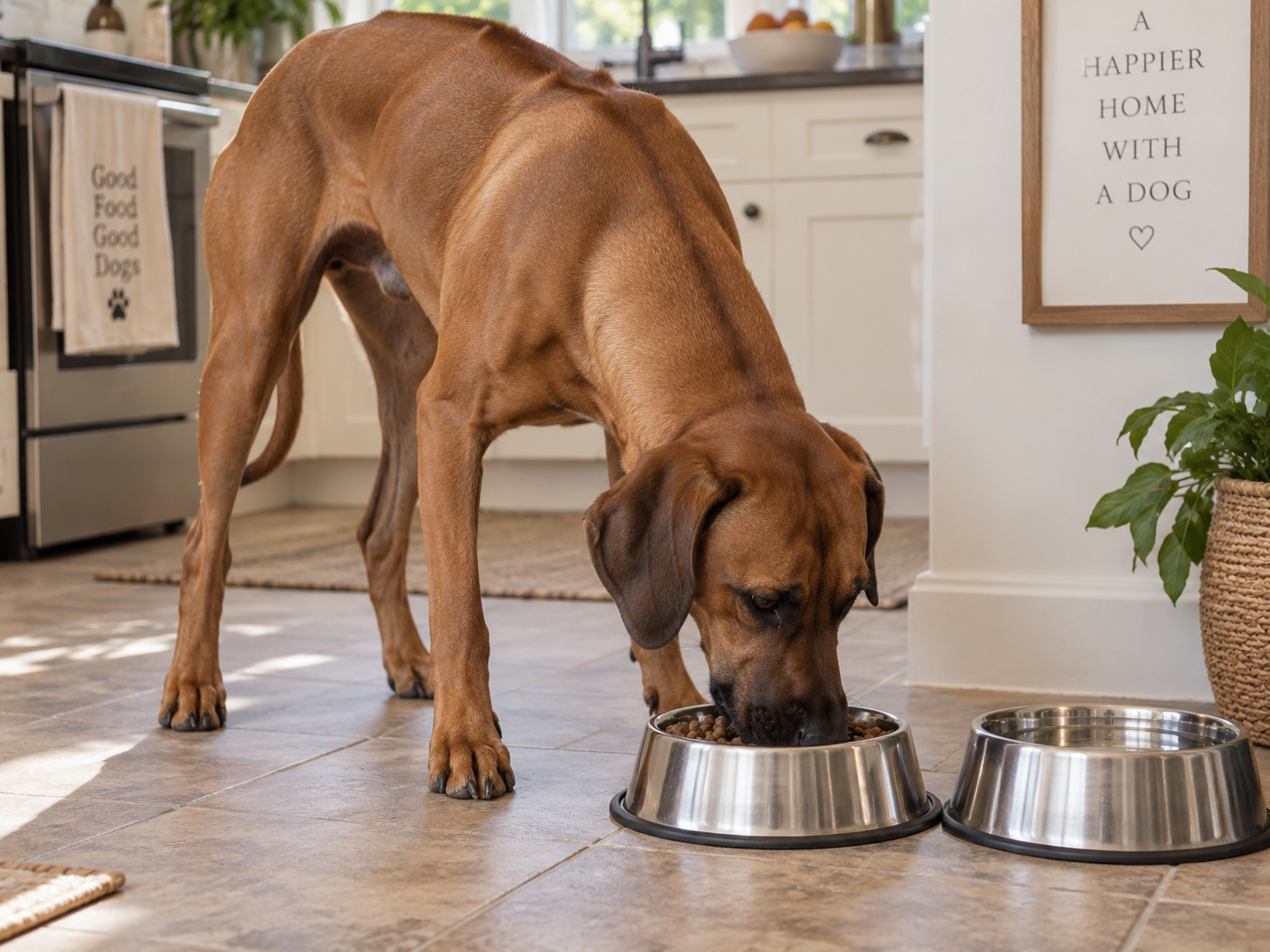
A workable day is a substantial walk or run, some free movement in a secure area, and a training or scent activity. Feed twice daily rather than once given the deep chest, and avoid vigorous exercise for an hour either side of meals. Grooming takes minutes rather than hours.
Living Environment Requirements
Fencing should be solid and at least 1.8 metres, since a motivated Ridgeback is athletic enough to clear less. Provide shade and water outdoors and a comfortable bed indoors, since the short coat and low body fat mean this breed genuinely prefers soft surfaces. Ridgebacks are notorious for claiming furniture, which is worth deciding a policy on early.
Climate Sensitivity
This is one of the few large breeds genuinely well suited to Australian conditions, and it is a point no ranking breed page makes. A short dense coat and an African working origin give the Ridgeback better heat tolerance than most dogs of its size. That is a real advantage, but it is not immunity. Provide shade and water, exercise in cooler parts of the day through summer, and test the pavement with the back of your hand before walking. Check how hot is too hot for a dog here and note that the wheaten coat offers little protection from sunburn on the nose and any thinly covered skin. At the other end, the same short coat means Ridgebacks feel southern winters and appreciate a coat on cold mornings.
Caring for Senior Rhodesian Ridgebacks
Older Ridgebacks often stay active well into double figures. Watch for stiffness in the hindquarters, changes in gait that might indicate degenerative myelopathy, and reduced exercise tolerance. Keep the dog lean, maintain regular gentle exercise, and provide traction on hard floors as strength declines.
Grooming of the Rhodesian Ridgeback: Among the Easiest Coats in Dogs
Coat Maintenance
A rubber grooming mitt or soft brush once a week removes loose hair and keeps the coat glossy. There is no undercoat to manage, no matting, no clipping and no seasonal blow. This is genuinely one of the lowest-maintenance coats of any breed.
Skin and Ridge Care
Check the skin during weekly grooming, paying attention to the midline along the neck and back where a dermoid sinus would present, and to the ears and paws where allergies typically show first. Wheaten dogs with pale noses can sunburn, so check exposed skin after time outdoors in summer.
Ear, Nail, and Dental Care
The pendulous ears are less ventilated than they look and should be checked weekly for redness or odour. Nails are thick and need trimming every three to four weeks, which is far easier if foot handling was established in puppyhood. Brush teeth several times a week.
Bathing and Professional Grooming
Bathe only when genuinely dirty, a few times a year. Professional grooming is not required for this breed at all, which removes a recurring cost that owners of most large breeds carry.
Exercise Needs of the Rhodesian Ridgeback: An Hour Minimum, With Room to Run
Daily Exercise Requirements
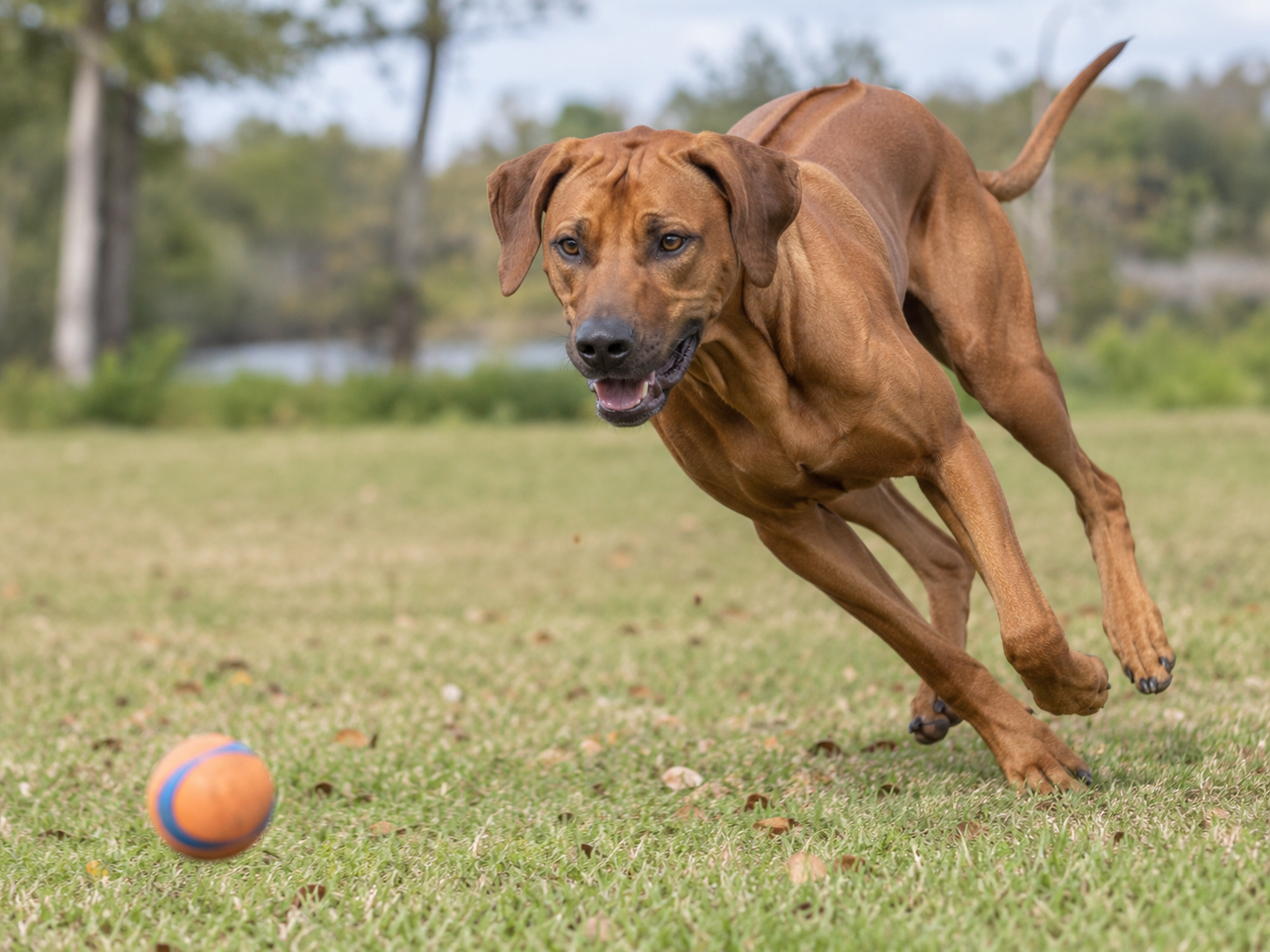
Plan on at least an hour a day for an adult, and more for a young dog. This is a breed built for covering distance in heat, and a walk around the block will not satisfy it. Access to a secure area where the dog can gallop makes a substantial difference to how settled it is at home.
Activities Rhodesian Ridgebacks Enjoy
Long steady walks, hiking, running alongside a bicycle for a fit adult, lure coursing and scent work all suit the breed. Ridgebacks are natural distance dogs rather than sprinters. Swimming is enjoyed by some. Avoid activities relying on close-range obedience around distraction.
Exercise by Life Stage
Puppies should not be run long distances, jumped or taken on repeated stairs while growth plates are open, since joint damage in a large breed during growth is permanent. Build duration gradually through the first eighteen months. Adults handle an hour or more comfortably and can be genuine endurance companions. Seniors need duration reduced rather than removed.
Importance of Mental Stimulation
Scent work suits this breed particularly well and is undervalued by most owners. Tracking games, scatter feeding and puzzle feeders all engage a hound's natural strengths and do more for a settled dog than extra distance alone. A Ridgeback that has walked but not thought is still restless.
Feeding the Rhodesian Ridgeback: Nutrition and Diet Needs
Nutritional Requirements
A complete diet formulated for large breeds matters during growth, where calcium and energy levels affect skeletal development. Adults do well on a good quality large breed maintenance diet, and the breed is not typically a fussy eater.
Feeding by Life Stage
Feed puppies three to four times daily until around four months, then twice daily for life, keeping it at twice rather than once given bloat risk. Growth should be steady rather than rapid, and a lean growing Ridgeback is better off than a well-covered one.
Portion Control and Weight Management
Keep the dog lean throughout life. Ribs should be easily felt and there should be a visible waist from above and a clear tuck-up from the side. Excess weight loads joints in a breed predisposed to dysplasia and reduces the heat tolerance that is one of the breed's advantages in this country.
Foods to Avoid
The standard toxic list applies: grapes, sultanas, chocolate, onion, garlic, macadamias and anything containing xylitol. Cooked bones should be avoided. Avoid large single meals and vigorous activity around feeding, both associated with bloat in deep-chested breeds.
Rhodesian Ridgeback Price in Australia: Purchase Cost and Ongoing Expenses
Puppy Purchase Price
Australian pricing for this breed is poorly documented, and buyers should know that before they start comparing. A national search on 8 September 2026 located only four priced listings from three sellers, with three of the five price points coming from a single breeder. That is not enough to state a market median honestly.
What the data does show clearly is the register split. One New South Wales breeder publishing both figures listed puppies at $2,500 on the Limited Register and up to $4,000 on the Main Register, a difference of up to 60 per cent for puppies from the same litter. The Limited Register price is what a pet buyer pays. The Main Register price reflects breeding rights and is not what most buyers need. Two classified listings sat at $2,000 and $2,500 with no register status stated.
Most registered Ridgeback breeders in Australia publish no prices at all, so expect to contact breeders directly and to be asked about your circumstances before a price is discussed.
Initial Setup Costs
Beyond the purchase price, Australian guidance from the RSPCA puts microchipping at $60 to $80, a puppy vaccination course at $280 to $420, desexing at $350 to $650, a collar, lead or harness at $40 to $100, and a bed at $100 to $200, with puppy school around $170. For a large breed, several of those sit at the top of their ranges, and fencing upgrades are worth costing before purchase rather than after the first escape.
Ongoing Monthly Costs
| Cost | Typical figure (AUD) | Source |
| Food | Above the $91 monthly average, given a 30 to 41 kg body weight | Animal Medicines Australia, Pets in Australia 2025 |
| Parasite prevention | Above the $122 annual average, since dosing is by weight | Animal Medicines Australia, Pets in Australia 2025 |
| Pet insurance | Around $1,461 per year for a large dog, accident and illness | Canstar, prepared March 2026 |
| Annual vet check and booster | $140 and upwards per year | RSPCA NSW |
| Professional grooming | Nil, the breed does not require it | n/a |
The Ridgeback is a comparatively economical large dog. It needs no grooming at all, is generally healthy, and its main costs scale predictably with body weight. Given large breed insurance loading, it is worth understanding how cover and running costs compare before deciding on cover.
Long-Term Financial Commitment
Across a 10 to 12 year lifespan the Ridgeback sits somewhat above the average of roughly $2,520 a year that Animal Medicines Australia reports dog-owning households spending, driven by food and weight-based medication rather than by grooming or chronic disease. The costs capable of moving the total are bloat surgery and orthopaedic treatment for a dysplastic dog.
Buying Advice for a Rhodesian Ridgeback: Choosing a Healthy Puppy
Choosing a Responsible Breeder
There are 75 registered Australian breeders but far fewer litters at any given time, so expect to wait. A good breeder checks every puppy for dermoid sinus at birth, hip and elbow scores breeding stock, places ridgeless and mismarked puppies on the Limited Register with a desexing requirement, keeps puppies to at least eight weeks and takes dogs back at any point. Work through what to ask a breeder before committing before making contact.
Health Checks Before Purchase
Ask to see the puppy with its mother and watch the litter move. Look for clear eyes, sound even movement and good condition. Run your hand along the midline of the neck and back yourself, and ask the breeder to show you how they check for dermoid sinus. Examine the ridge for symmetry and two matching crowns, while understanding that a mismarked or ridgeless puppy is a healthy dog and simply a pet-only proposition.
Questions to Ask the Breeder
- Was every puppy in this litter checked for dermoid sinus, and by whom?
- Has any puppy in this or previous litters had a dermoid sinus?
- What are the hip and elbow scores for both parents?
- Have the parents been DNA tested for degenerative myelopathy?
- Are the puppies on the Main or Limited Register, and what is the price difference?
- What is your registered prefix and which state body issued it?
- Are any puppies in this litter ridgeless, and how are they being placed?
- What socialisation will the puppies have had before they leave?
Considering Adoption
Ridgebacks appear in rescue periodically, most often as adolescents surrendered by households that underestimated the size and exercise requirement. An adult from rescue suits an experienced owner well, since temperament and size are already known. Assess how the dog responds to strangers and to other dogs of the same sex before committing.
Is the Rhodesian Ridgeback Right for You? A Large, Capable Dog for a Warm Country
Lifestyle Compatibility
This breed suits active households with space and secure fencing, physically confident owners, and anyone who wants a large dog that copes well with Australian heat and needs no grooming. It suits apartment living, first-time owners and households wanting an obedient off-lead companion poorly.
Time and Care Commitment
An hour or more of exercise daily and almost no grooming. The demanding period is the first two years, covering both careful growth management and a long adolescence in a dog that becomes very large before it becomes sensible.
Grooming and Health Awareness
Grooming is negligible. On health, buy from parents with hip and elbow scores, insist on dermoid sinus checking, learn the signs of bloat, and take advantage of the heat tolerance rather than assuming it means the dog is immune to Australian summers.
Ideal Owner Profile
The Rhodesian Ridgeback suits an owner who wants presence and capability rather than eagerness, has the space and confidence for a strong independent dog, and values a large breed that is genuinely low maintenance. It rewards early consistent training and frustrates anyone expecting compliance for its own sake.
Find Rhodesian Ridgeback Puppies for Sale
If the breed fits your household, you can browse Rhodesian Ridgeback listings on Pups4Sale. Prioritise sellers who can confirm dermoid sinus checking on every puppy, produce hip and elbow scores on both parents, and are clear about whether a puppy is on the Main or Limited Register.
Frequently Asked Questions
Related Breeds
Other hound breeds on Pups4Sale.
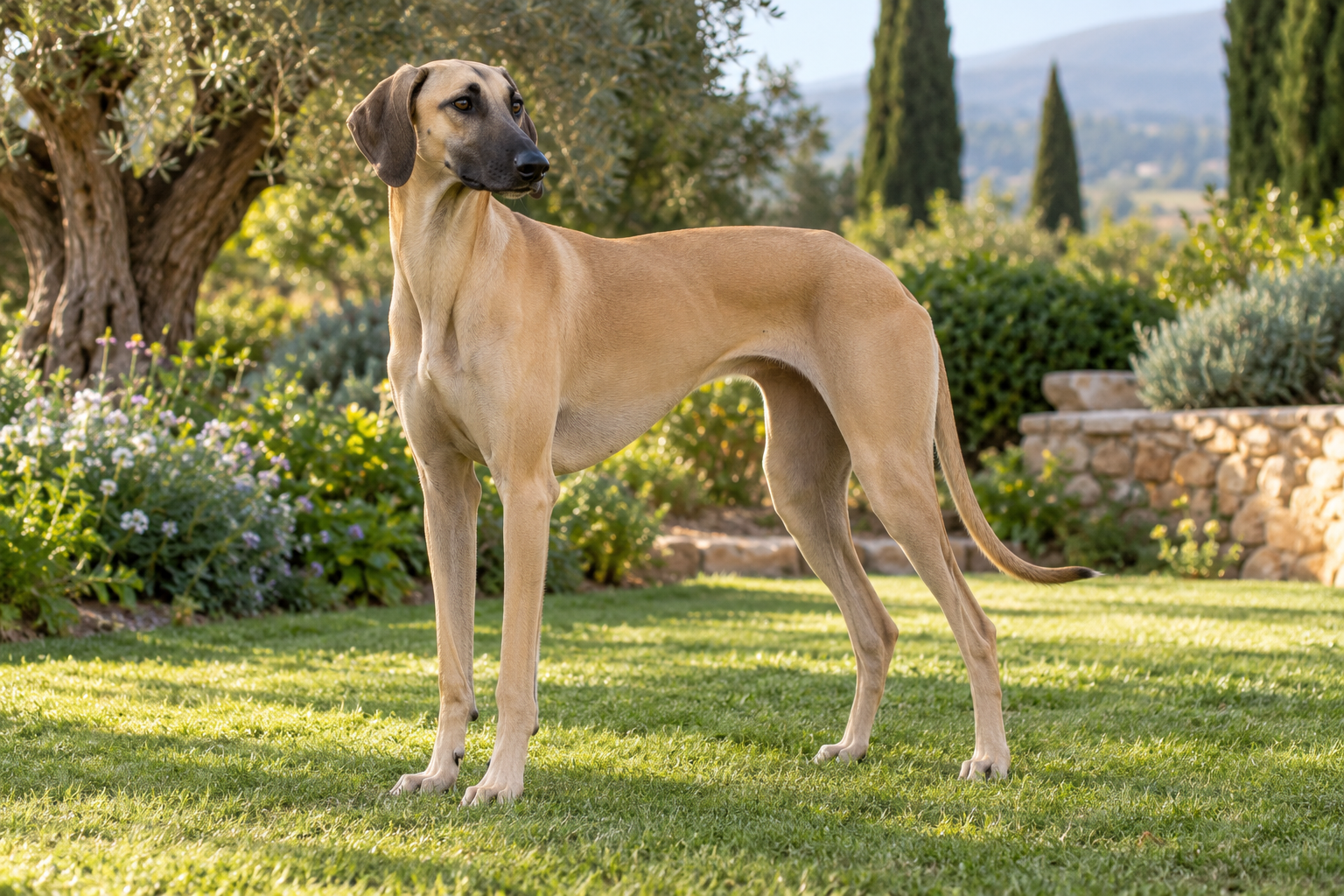 SloughiLarge • Hounds (Group 4)
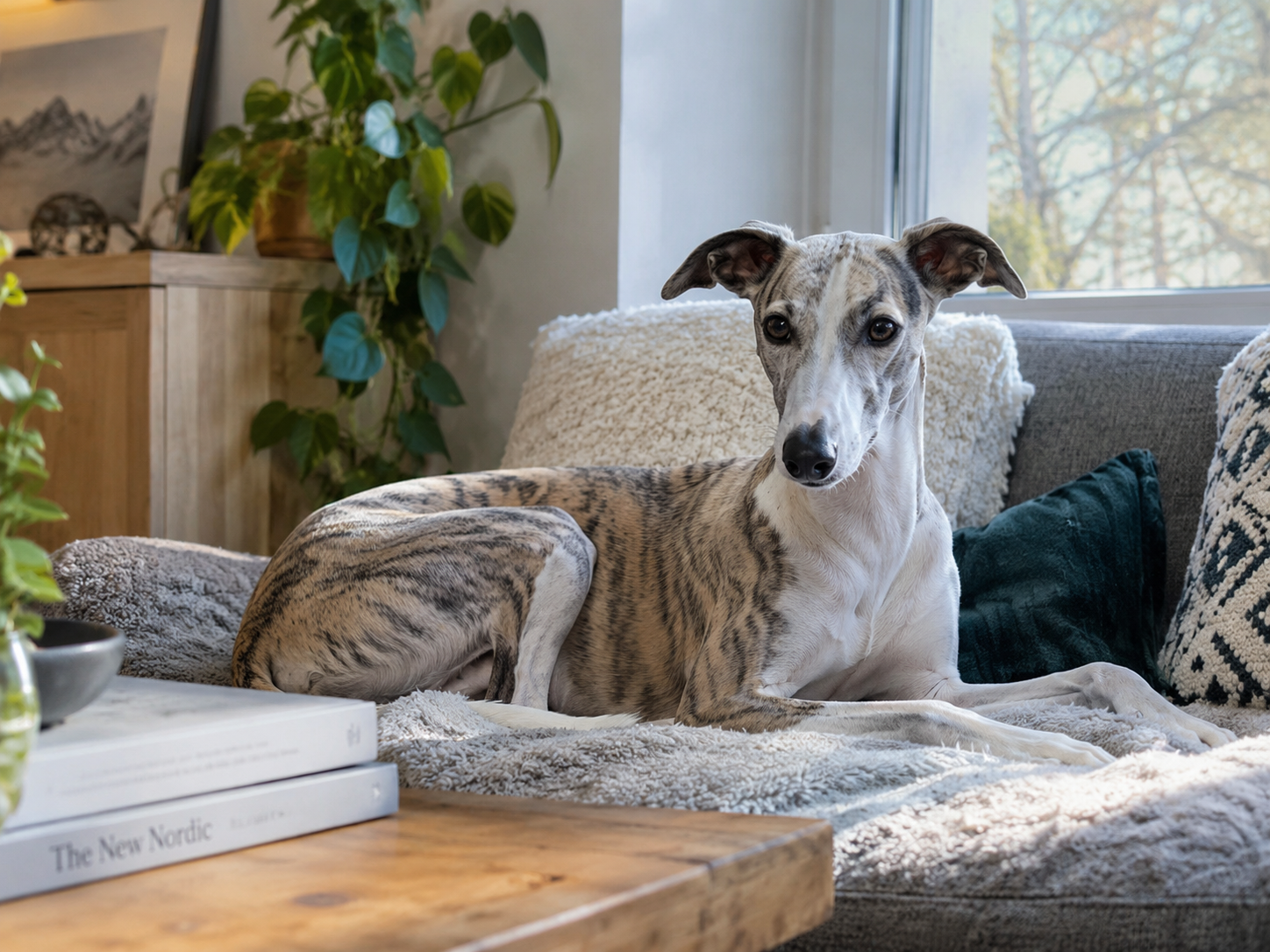 WhippetMedium • Hound
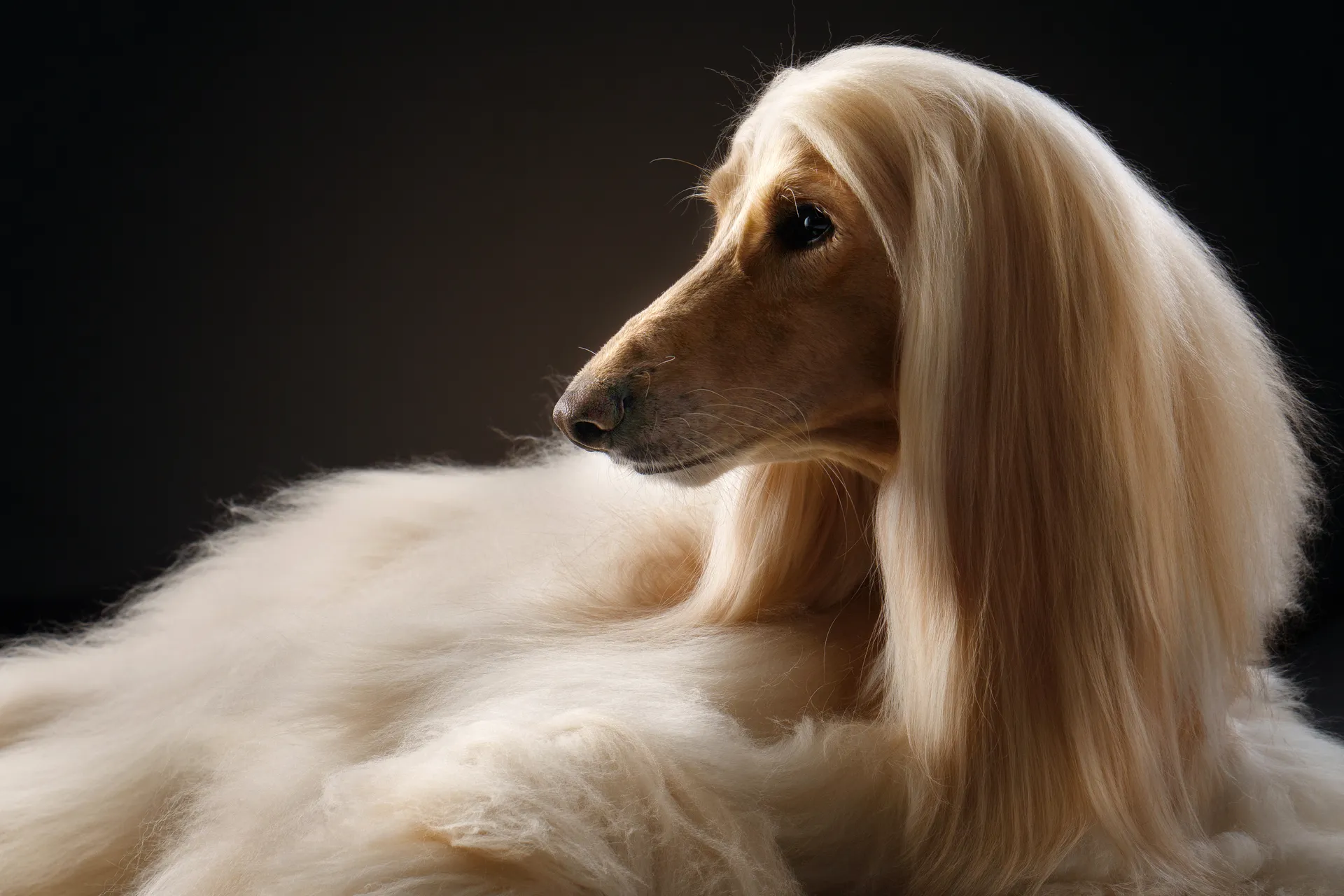 Afghan HoundLarge • Hound
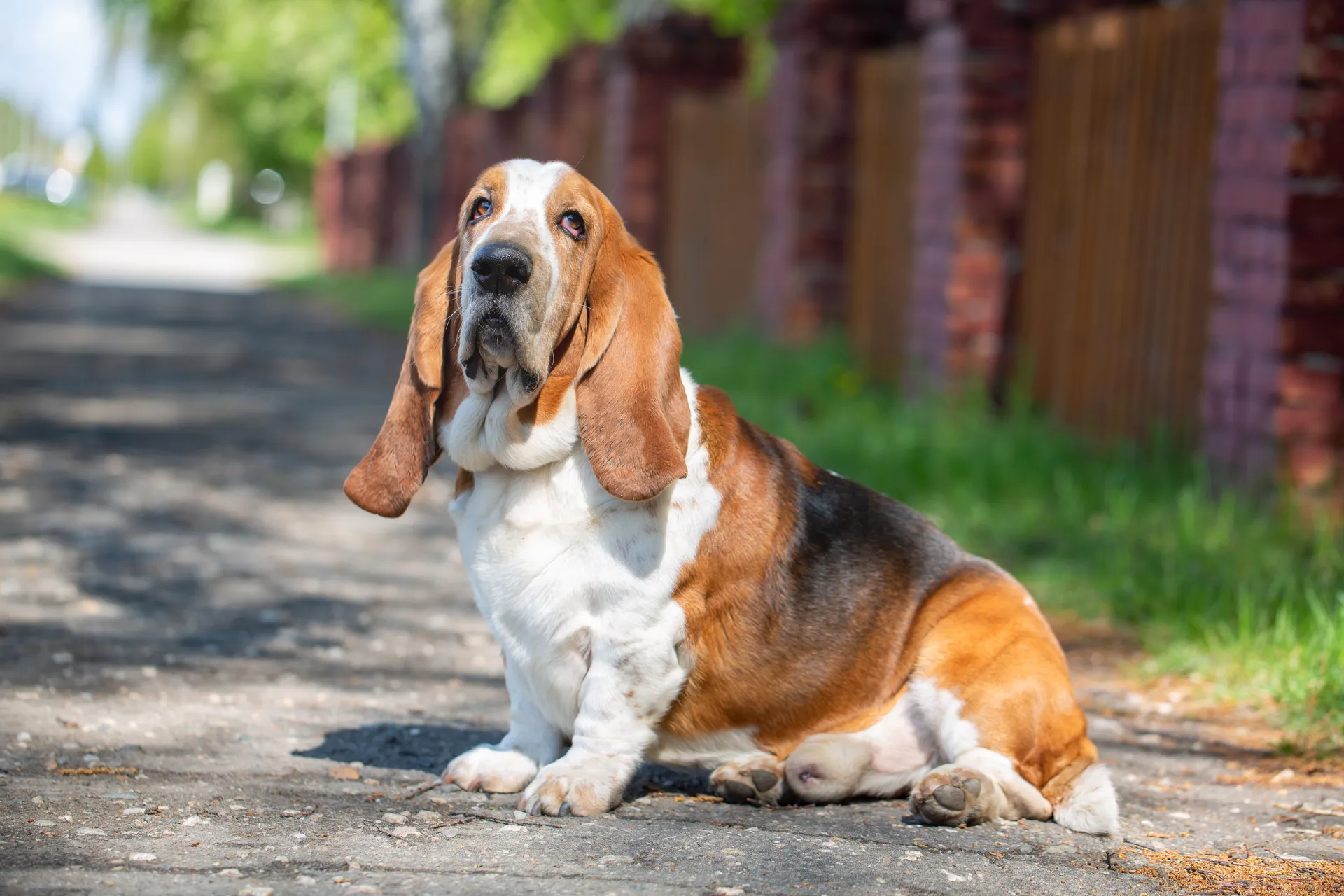 Basset HoundMedium • Hound
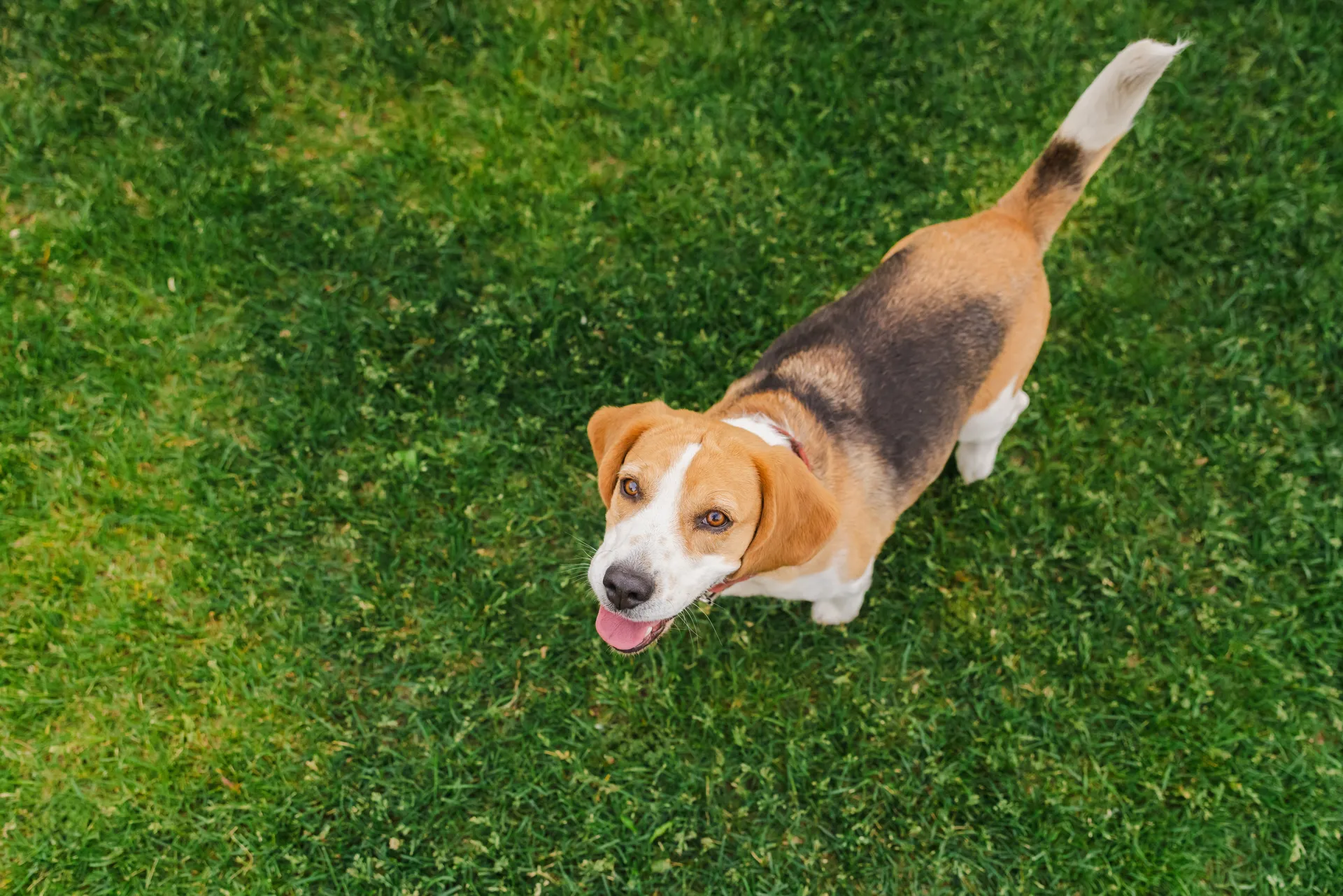 BeagleSmall • Hound
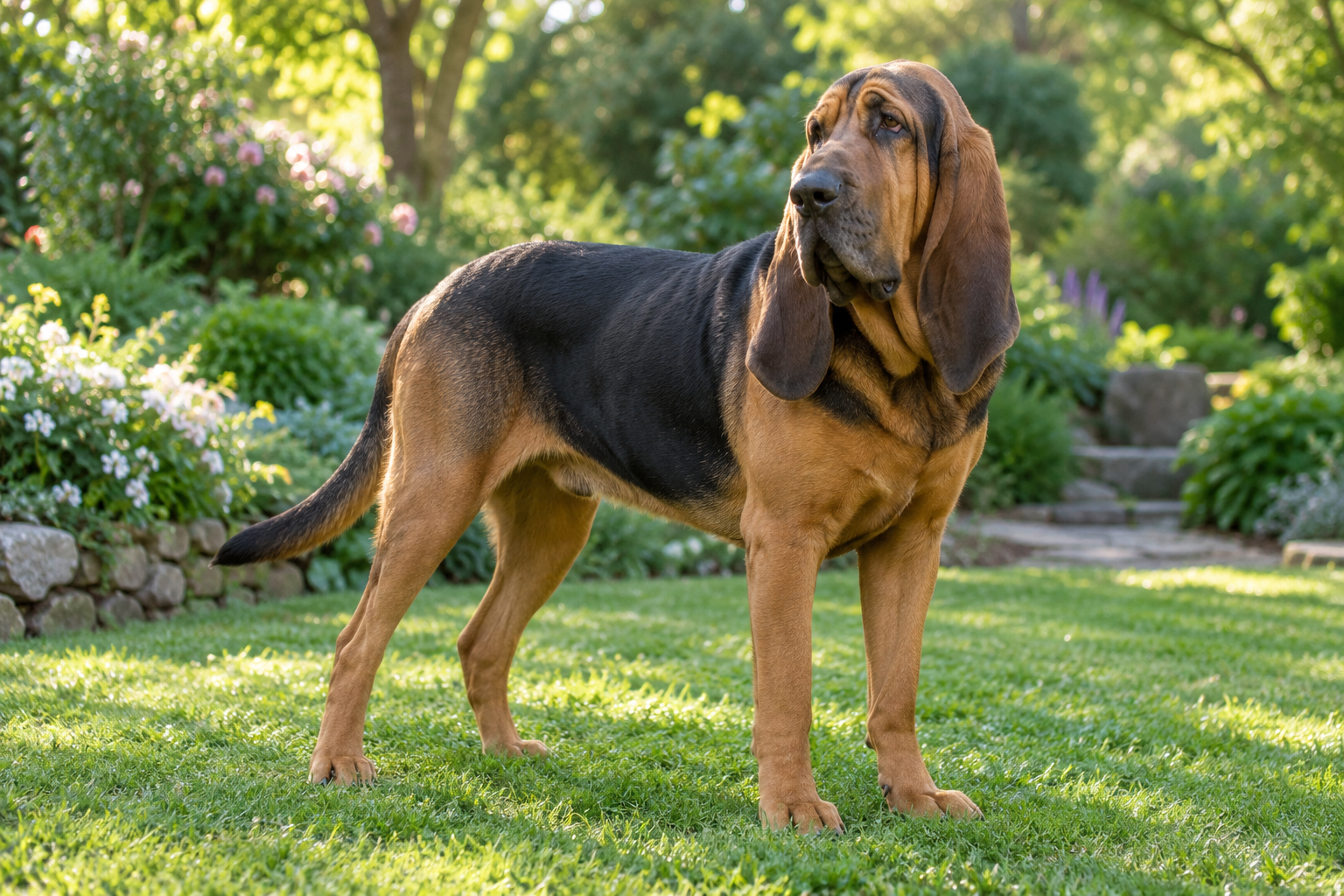 BloodhoundLarge • Hounds (Group 4)