Puppy Routine When You Work From Home: A Realistic Daily Schedule
Puppy Training & Behaviour By James C. • November 16, 2026
A good puppy schedule for work from home days repeats a simple cycle of toilet break, short activity and nap, fitted around your meetings and focus time.
Working from home with a puppy is a real advantage, but only if the puppy also learns to rest and spend time alone.
Below you will find a sample day, how the routine changes with age, a puppy-friendly office setup and a plan for hybrid work.
What Does a Good Puppy Schedule Look Like When You Work From Home?
A good work from home puppy routine is predictable: the puppy wakes, goes to the toilet, has a short burst of play, training or food, then goes back to sleep.
Young puppies need frequent toilet trips. RSPCA Tasmania advises giving puppies a chance to toilet every one to two hours, including overnight, and the most likely times are after waking, eating, drinking and play.
Puppies also need a lot of sleep. An overtired puppy is often the one biting ankles and zooming around at 3 pm, so naps are part of the training plan, not a break from it.
Routine helps toilet training, settling and your workday. When the puppy knows what comes next, it fusses less, and you can plan calls around predictable nap blocks.
Sample Work From Home Puppy Schedule (8 to 12 Weeks)
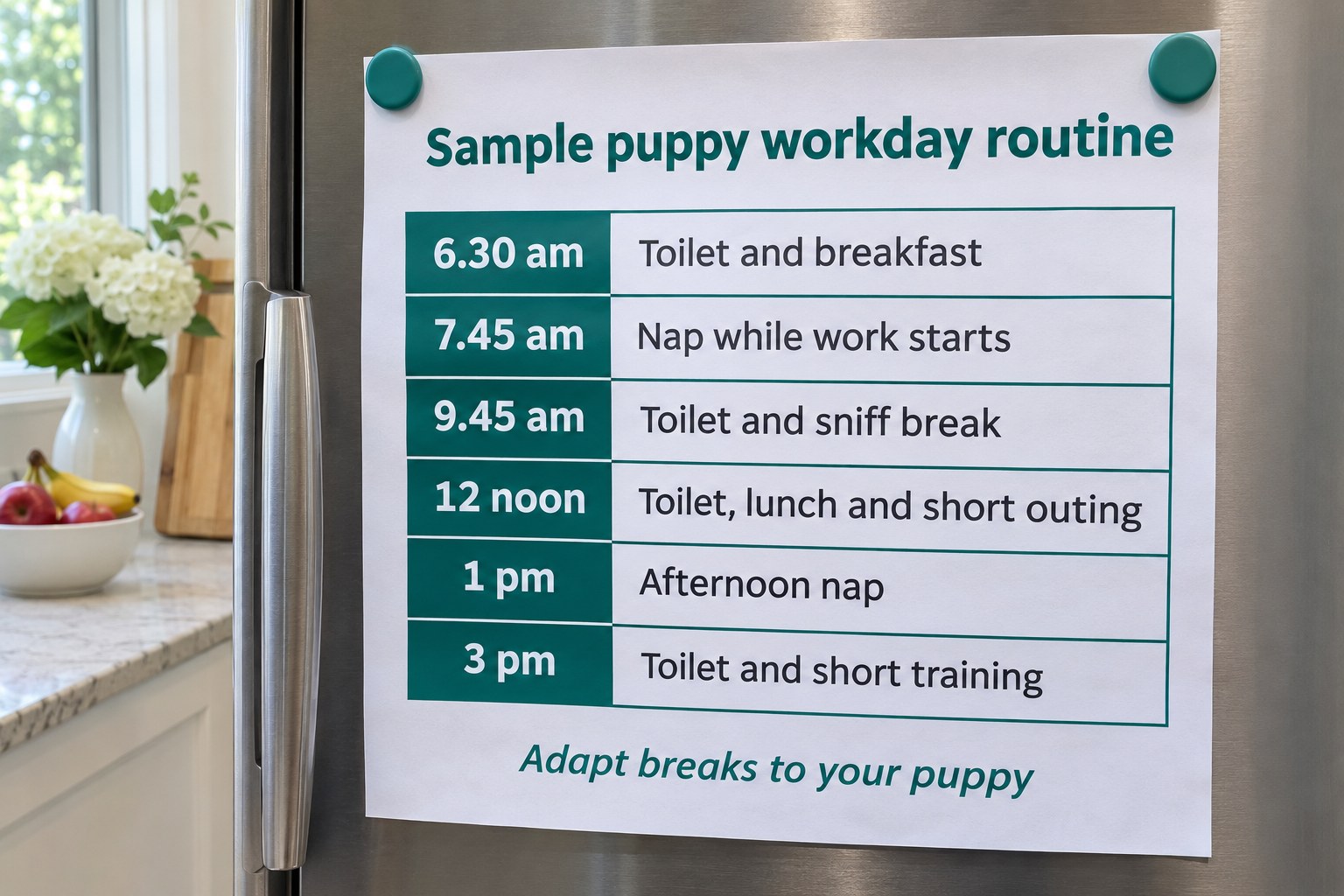
This example day suits a young puppy and a standard 9 to 5 workday, so adapt the times to your own meetings.
| Time | Puppy | What you are doing |
|---|---|---|
| 6.30 am | Toilet break, then breakfast | Up and straight outside |
| 7.00 am | Toilet, play and a short training session | Before work starts |
| 7.45 am | Nap in pen or crate | Start work, first focus block |
| 9.45 am | Toilet, short sniff in the yard | Coffee break |
| 10.00 am | Chew, then nap | Calls or deep work |
| 12.00 pm | Toilet, lunch, short outing | Lunch break |
| 1.00 pm | Long nap | Afternoon meetings |
| 3.00 pm | Toilet, five minutes of training | Short break |
| 3.30 pm | Small meal, toilet, then nap | Focus block |
| 5.30 pm | Toilet, play and a little alone time practice | Finish work |
| 7.00 pm | Dinner, toilet, calm play | Evening |
| 10.00 pm | Last toilet break, then bed | Bedtime |
Add a toilet break after every nap and play session, and expect at least one overnight trip with a very young puppy. The schedule is a guide, not a rule.
How the Schedule Changes as Your Puppy Grows
As your puppy grows, meals drop, toilet gaps lengthen and awake periods get longer.
RSPCA Australia recommends offering food at least four times a day to begin with, then gradually reducing meals as the puppy grows. Portion sizes depend on breed and weight, so check how much a puppy should eat by age.
| Age | Meals | Toilet breaks | Naps and alone time |
|---|---|---|---|
| 8 to 12 weeks | About 4 small meals | Every 1 to 2 hours while awake, plus after waking, eating and play | Many naps; alone for a few minutes at a time |
| 12 to 16 weeks | 3 to 4 meals | Gaps slowly lengthen | Several long naps; build alone time gradually |
| 4 to 6 months | Usually 3 meals | Longer gaps for most puppies | Fewer, longer naps; longer settled stretches with a chew |
Every puppy is different, and large breeds may stay on more meals for longer. Discuss your puppy’s feeding plan with your vet.
Setting Up a Puppy-Friendly Home Office
The right setup lets your puppy rest nearby without being underfoot or chewing your cables.
A pen, gate or crate near your desk
A playpen or gated area within sight of your desk works well for young puppies. Add a bed, water and a safe chew, and keep the space quiet so it becomes the default place to nap during the workday.
Puppy-proofing cables and chewables
Laptop chargers, headphone cords and bins are tempting for teething puppies. Cover or lift cables, and use the same checklist you would for puppy-proofing your home to clear the office.
Chews and enrichment for focus blocks
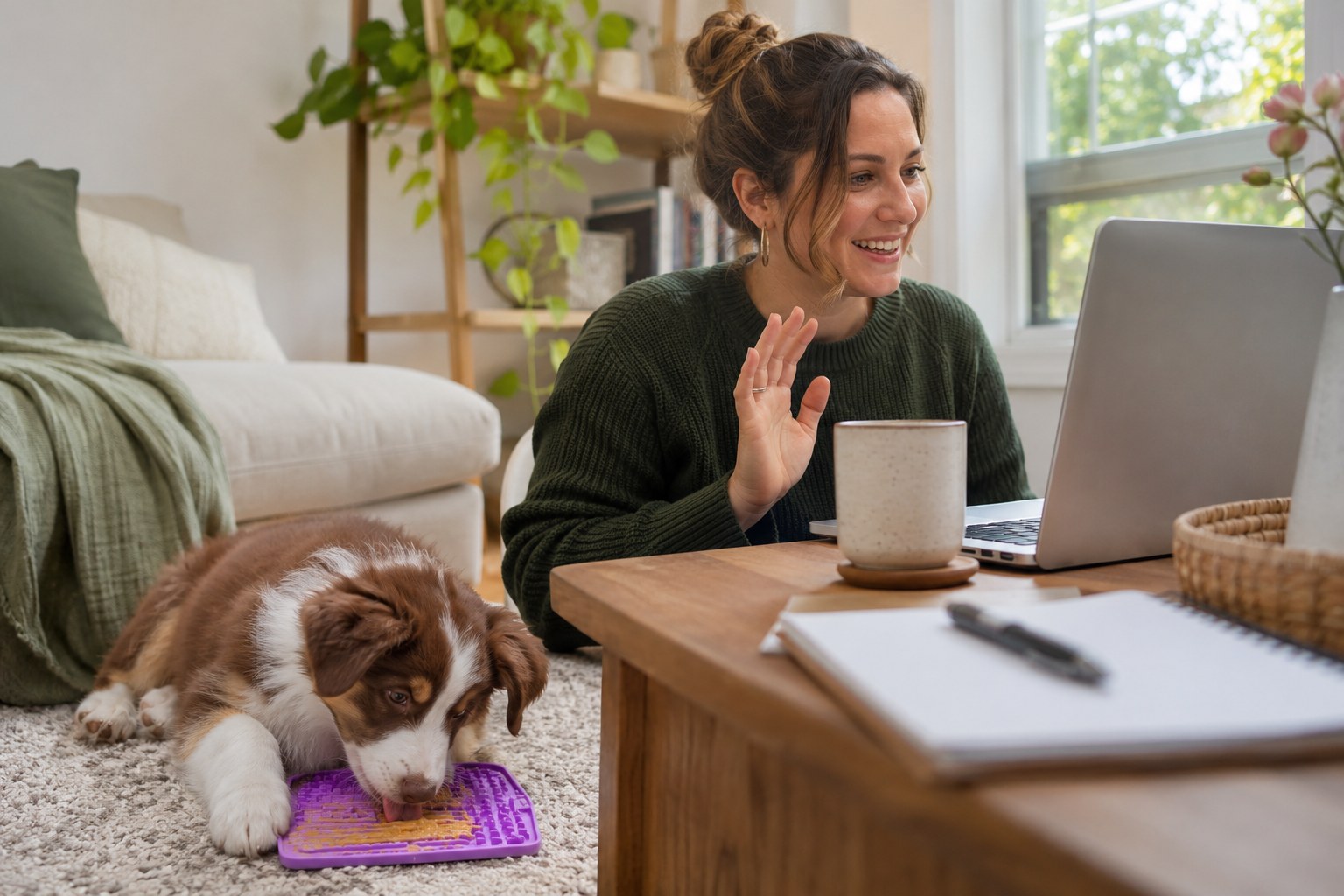
Lick mats, food puzzles and safe chews help a puppy settle for a call or a focus block. Rotate a few options so they stay interesting, and use some of each meal in enrichment toys.
Fitting Toilet Breaks, Training and Play Around Meetings
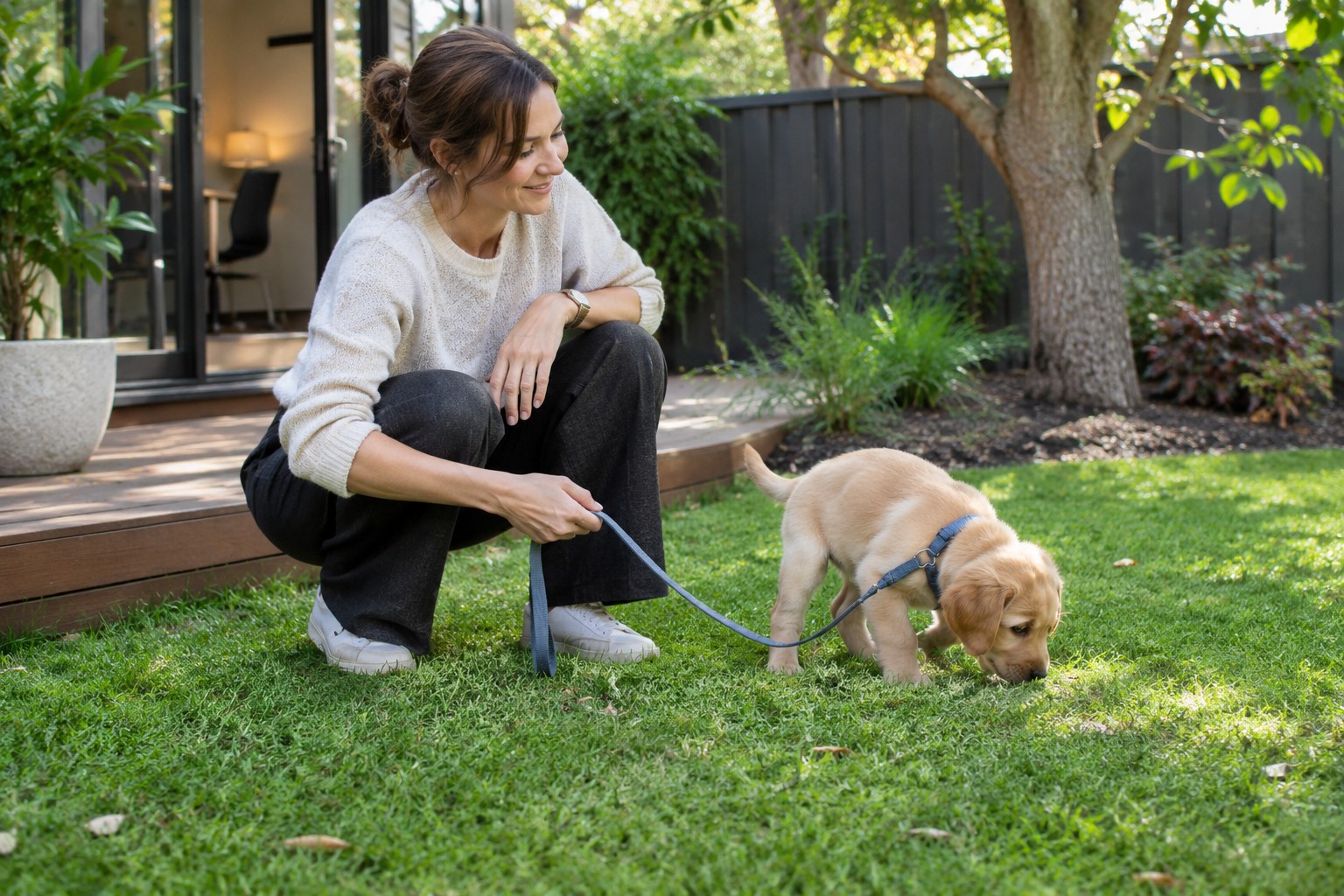
The trick is to schedule the puppy’s needs just before the times you need to concentrate.
Toilet breaks between calls
Take your puppy out right before every meeting and straight after it ends. Accidents are part of learning, and knowing how long toilet training usually takes helps set realistic expectations.
Five-minute training sessions
Short training sessions fit easily into breaks. Practise name, sit, settle on a mat and short stays. Starting obedience training early in small steps keeps it fun for both of you.
Nap time is deep work time
Protect naps and do your most demanding work then. Signs of an overtired puppy include sudden biting, zoomies, whining and refusing to settle, which usually mean it needs quiet time in its pen.
Handling video calls
Before a call, do a toilet break, a short play and give a long-lasting chew in the pen, ideally out of camera range. A quiet, tired puppy is far less likely to bark mid-meeting.
Teaching Alone Time Even When You Are Home

Being home all day can make it harder for a puppy to cope alone later, so practise short separations from the start.
Leave the room for a few seconds, then a few minutes, while the puppy has a chew behind a gate. Close a door between you for part of the day, and keep comings and goings low-key.
Build up slowly, and only lengthen the time while your puppy stays relaxed. If your puppy cries, drools or panics when you leave, go back a step. These ways to reduce separation anxiety can help if worries continue.
Socialisation and Outings on a Workday
Lunch breaks are a good time for short, safe socialisation outings.
Before full vaccination, carry your puppy to watch traffic, people and other sounds, or invite a calm, vaccinated dog over. Keep outings short so your puppy can nap afterwards.
In an Australian summer, plan walks for early morning or evening, and check the ground with your hand, since hot paths can be uncomfortable for paws.
Planning for Hybrid Work or a Return to the Office
If you will be back in the office some days, start preparing your puppy weeks beforehand.
RSPCA Queensland suggests building up time alone gradually and setting regular times for rest, play and exercise. Practise office-day routines on work from home days.
A dog walker or doggy daycare can break up a long day. Canstar’s research puts doggy daycare at around $60 to 65 a day in capital cities, though prices vary widely by area.
If your household will be out for long stretches in future, some breeds cope better when you work full time.
Common Work From Home Puppy Mistakes
The most common mistakes are too much attention, too little sleep and no practice at being alone.
- Constant play and cuddles, which leaves the puppy overtired and clingy.
- Skipping naps because the puppy seems awake, which often leads to biting.
- Keeping the puppy on your lap all day instead of in its own resting space.
- A completely different routine on weekends.
- Never leaving the puppy alone, then expecting it to cope on the first office day.
Making Your Work From Home Routine Work for Both of You
A realistic puppy schedule for work from home days is built on toilet breaks, short activities and plenty of protected naps.
Practise alone time early, and adjust the routine as your puppy grows.
If you are planning around your work, browse puppies for sale and choose a puppy whose energy suits your days.
Frequently Asked Questions
1. Can you work from home with a new puppy?
Yes, many people work from home with a new puppy successfully. It works best with a pen or gated area near your desk, a predictable routine of toilet breaks, short activities and naps, and regular practice at alone time so your puppy copes when you go out.
2. How often should a puppy go to the toilet when you work from home?
Young puppies usually need a toilet break every one to two hours while awake, plus straight after waking, eating, drinking and play. Schedule a trip outside before and after each meeting, and gradually lengthen the gaps as your puppy grows and shows more control.
3. How long can an 8-week-old puppy be left alone?
Only for short periods. An 8-week-old puppy needs frequent toilet breaks, meals and company, so start with a few minutes at a time and build up gradually. If you need to be away longer, arrange for someone to check on the puppy.
4. Should my puppy be in my office while I work?
Having your puppy nearby in a pen or gated area is helpful early on, since you can spot toilet signals and keep it safe. Also give it some time in another room behind a gate, so it does not rely on being near you all day.
5. How do I stop my puppy barking during video calls?
Plan ahead. Take your puppy to the toilet and play briefly before the call, then give a long-lasting chew or lick mat in its pen out of camera range. A tired, settled puppy is far less likely to bark during meetings.
6. How do I prevent separation anxiety if I work from home?
Practise short separations every day, even when you are home. Leave the room or house for brief periods while your puppy has a chew, keep departures low-key and build up time slowly. If your puppy shows ongoing distress, talk to your vet or a qualified trainer.
7. How much should a puppy sleep during the day?
Young puppies sleep for most of the day and night, and many need several long naps between short awake periods. If your puppy is biting, zooming or struggling to settle, it may be overtired, so offer quiet time in its pen or crate.
 Add us as a preferred source