How to Introduce a New Puppy to an Older Dog at Home
Puppy Training & Behaviour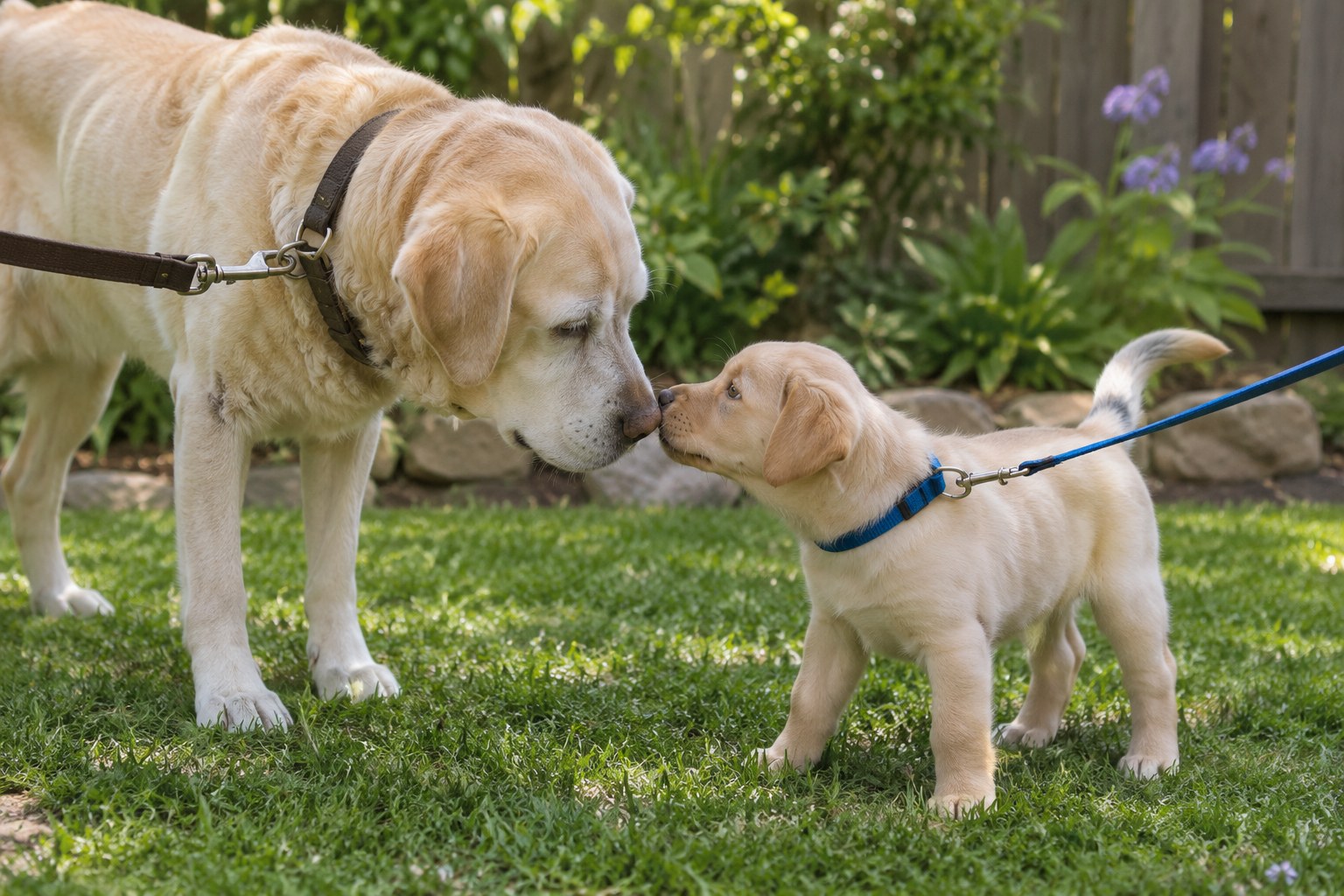 By James C. • November 16, 2026
The safest way to introduce a new puppy to an older dog is to prepare your home first, meet on calm neutral ground, keep early sessions short and supervise every interaction.
Getting this right protects your resident dog’s comfort and gives the puppy a safe start.
Below is a step-by-step plan for preparation, the first meeting, body language, the first two weeks and common problems.
How Do You Introduce a New Puppy to an Older Dog?
You introduce a new puppy to an older dog in stages, letting the older dog set the pace and rewarding calm behaviour at every step.
RSPCA Australia recommends a gradual introduction where you only move to the next stage once both dogs are relaxed. In practice, that looks like this:
- Book a vet check for your older dog and confirm the puppy’s vaccinations and worming.
- Set up separate zones with gates, crates, beds and bowls.
- Swap bedding so each dog learns the other’s scent first.
- Meet on safe neutral ground with both dogs on loose leads.
- Walk side by side, then allow a short sniff.
- Bring the older dog home first and keep the first indoor session brief.
- Supervise all together time and separate the dogs when you are out.
- Protect the older dog’s routine, rest and one-on-one time.
Most of the work happens before the dogs meet, and going slowly at the start usually saves time later.
Before the Puppy Comes Home: Preparing Your Older Dog
Preparation matters more than the first meeting, because most early tension comes from sharing space, food and attention.
Check your council’s limits too, since Brisbane City Council requires a permit to keep three or more dogs, for example.
Check health and vaccinations for both dogs
Book your older dog a check-up before the puppy arrives. Both dogs should be up to date with vaccinations, worming and parasite control, so ask the breeder for the puppy’s records.
Choose a puppy that suits your older dog
A good match makes everything easier. Think about size, energy and temperament, since a quiet ten-year-old may cope better with a calmer puppy. Looking for temperament signs when picking a puppy from a litter helps you choose well.
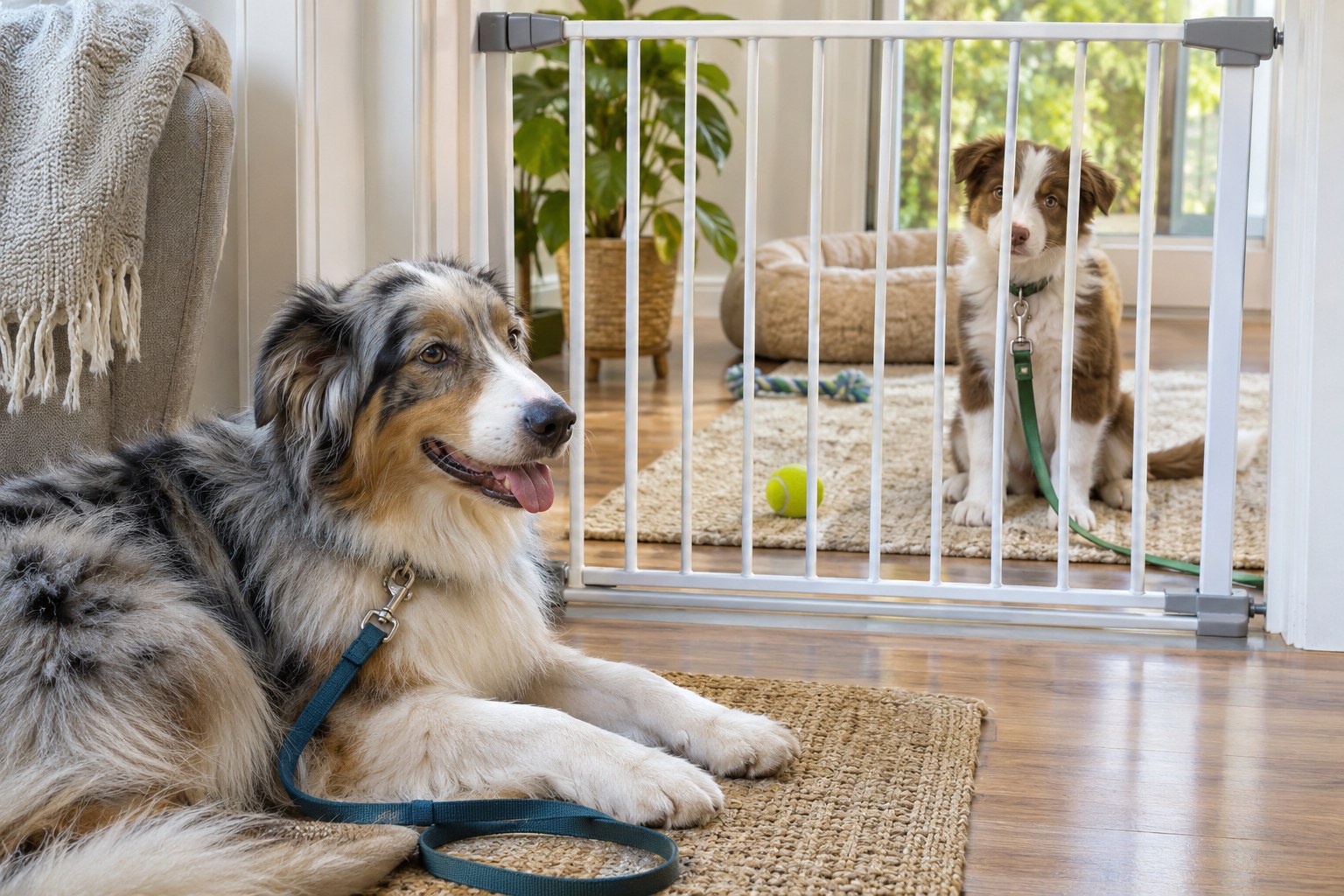
Set up separate zones, gates and crates
Give each dog its own retreat with a bed, water and toys, and use baby gates to limit contact. A crate gives the puppy a safe resting spot, and the right crate size for a puppy keeps it comfortable.
Swap scents before the first meeting
Rub a soft cloth on the puppy at the breeder’s and let your older dog sniff it at home. Once the puppy arrives, swap bedding so each smell is familiar before close contact.
The First Meeting, Step by Step
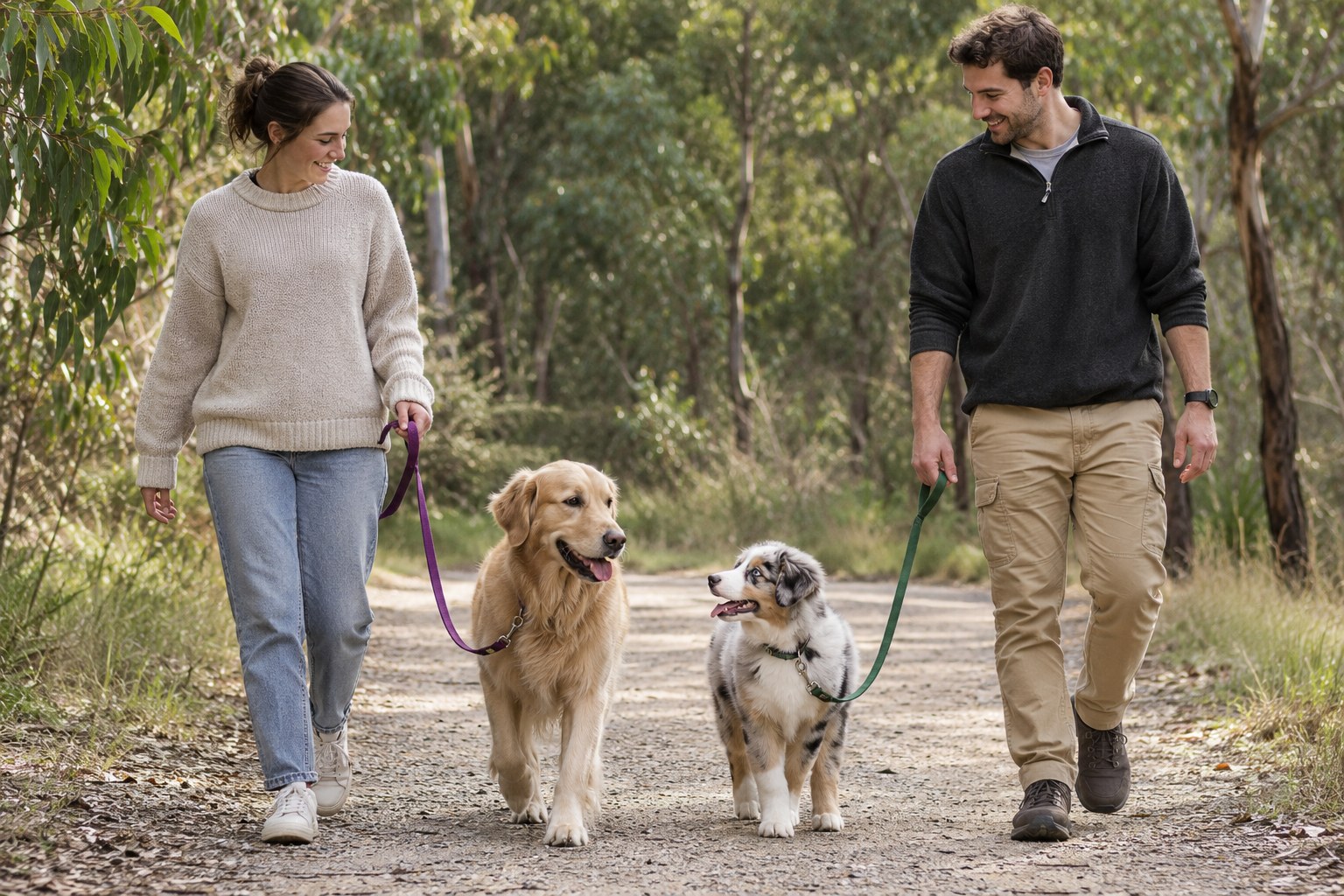
The first meeting should be short, calm and on leads, with one handler for each dog.
Pick a safe neutral spot
Neutral ground reduces territorial pressure, but it also needs to be low risk for a puppy that is not fully vaccinated. A friend’s clean, fenced yard is a better choice than a public park, and RSPCA Australia suggests dog parks once your puppy is fully vaccinated. The same thinking applies to socialising a puppy safely before full vaccination.
Walk side by side, then allow a short sniff
Exercise your older dog beforehand so it is settled. Start at a distance and walk both dogs in the same direction on loose leads, gradually moving closer. When both look relaxed, allow a sniff of a few seconds, then call them apart and reward calm behaviour.
Bringing both dogs home
Let the older dog enter first, then bring the puppy in on a lead. Start in an open area such as the backyard, away from the older dog’s bed and bowl, and keep it to a few minutes.
Reading Body Language: What Is Normal and When to Step In
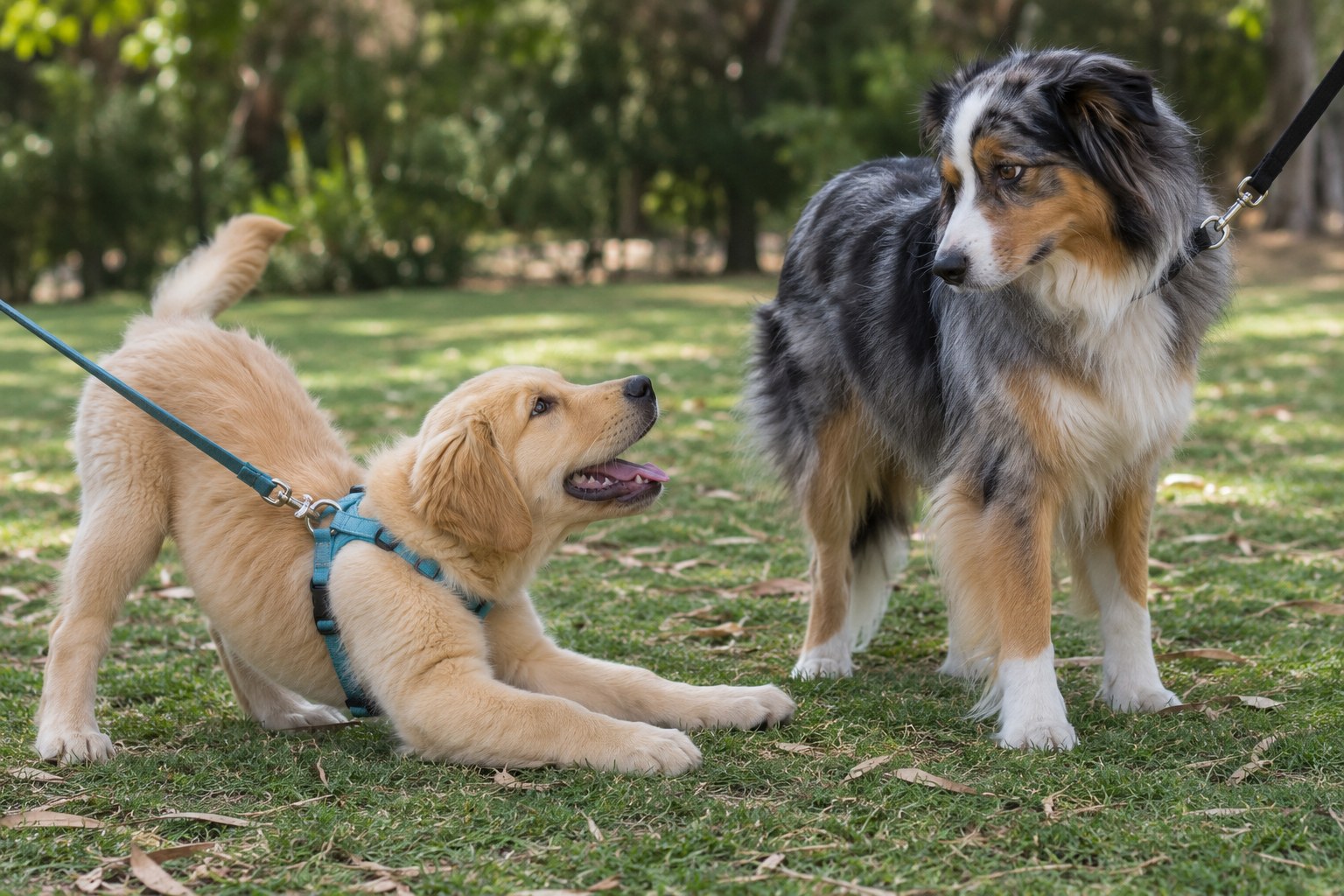
Most older dogs use small signals and the occasional growl to teach a puppy manners, and that is usually normal.
A growl is communication, and since growling is not always aggression, punishing it can remove the older dog’s early warning system.
| Signal | What it usually means | What to do |
|---|---|---|
| Play bow | An invitation to play | Allow short play, then give both dogs a break |
| Lip licking or yawning | Mild stress or appeasement | Give space and shorten the session |
| Turning the head or body away | The older dog wants a break | Calmly move the puppy away |
| Short growl or air snap, then moving on | A proportionate correction | Let it happen and redirect the puppy |
| Stiff body, hard stare or raised hackles | Rising tension | Calmly separate the dogs |
| Pinning or repeated snapping | Escalating conflict | Separate straight away and seek advice |
| Puppy keeps pestering after warnings | The puppy is overtired or overexcited | Pop the puppy in its crate or pen for a nap |
Step in early. If the puppy ignores several warnings, remove the puppy rather than leaving your older dog to escalate.
Managing the First Two Weeks Together
The first two weeks are about short, supervised contact, separate resources and a protected routine for your older dog.
On day one, keep together time to a few brief sessions. Across days two to seven, lengthen sessions while both dogs stay calm. In week two, keep supervising and separating the dogs when you are out.
Supervise together time, separate when you are out
Use gates, a pen or a crate whenever you cannot watch both dogs. Leave them unsupervised only once you are confident they enjoy each other’s company.
Feeding, toys and resource guarding
Feed the dogs in separate rooms or either side of a gate, and pick up bowls after meals. Remove high-value chews and favourite toys from shared areas, since these commonly trigger resource guarding.
Sleeping arrangements
Give each dog its own bed in the early weeks and keep the puppy in a crate or pen overnight. Planning the first night with a new puppy around the older dog’s usual sleeping spot helps both dogs rest.
Protecting your older dog’s routine
Keep your older dog’s walks, meals and quiet time with you on schedule, with short one-on-one outings to help it feel secure.
Introducing a Puppy to a Senior or Arthritic Dog
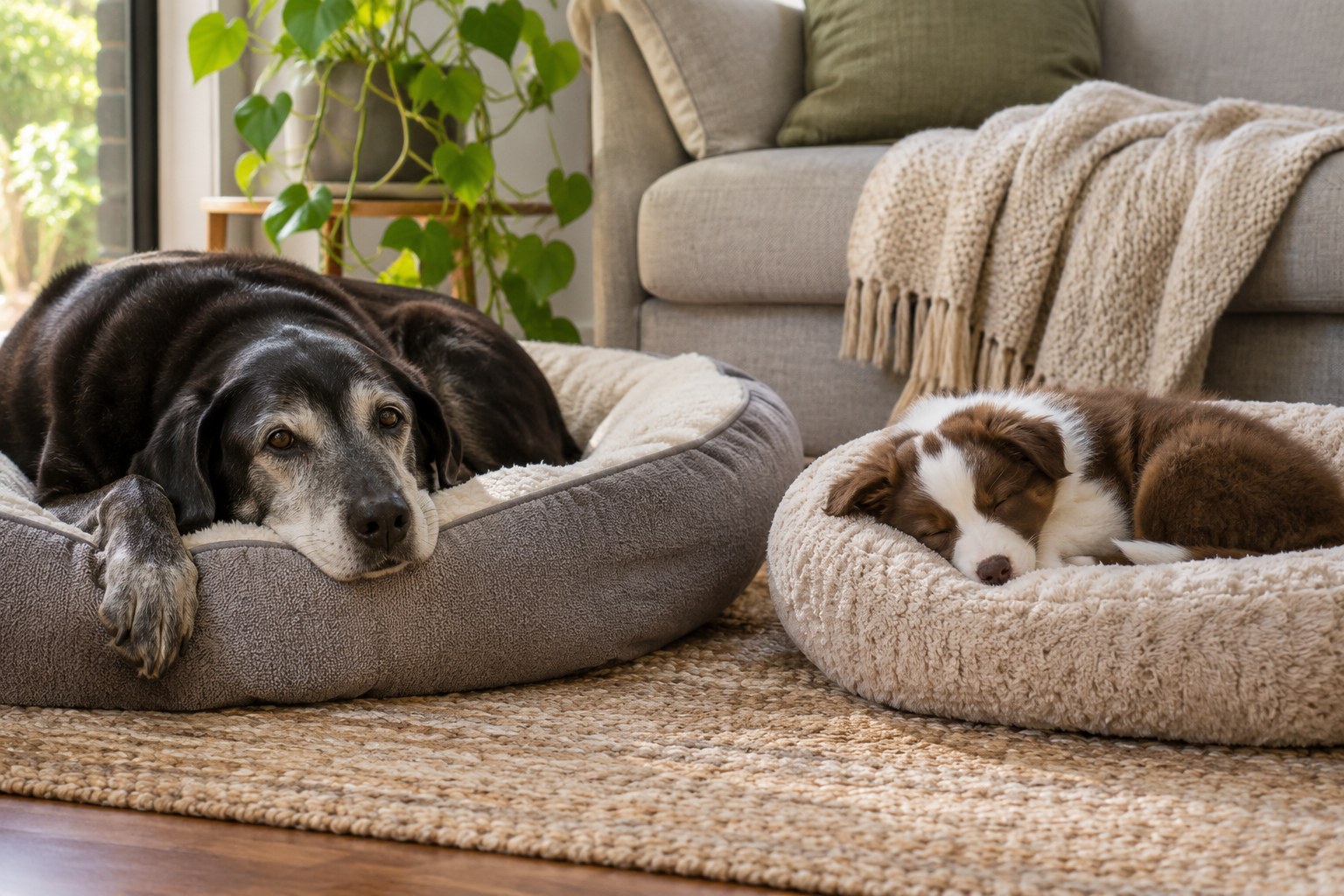
A senior or arthritic dog needs more rest, more space and shorter play sessions than a younger adult.
Older dogs may be prone to joint stiffness, reduced hearing or eyesight, and less patience. Pain can show up as grumpiness, so discuss your older dog’s comfort with your vet before the puppy arrives.
Give the senior dog a quiet room the puppy cannot reach, keep play to a few minutes, and add non-slip rugs on hard floors.
What If Your Older Dog and New Puppy Are Not Getting Along?
Most early friction settles with more management, more rest for the puppy and fewer forced interactions.
Mouthing, jumping and pestering irritate older dogs the most, so working on common puppy behaviour problems helps both dogs.
Older dog growling or snapping at the puppy
A short growl or air snap with no contact is usually normal teaching. Repeated snapping, chasing or contact means the dogs need more separation and a slower plan.
Older dog ignoring the puppy or seeming flat
Some older dogs ignore a puppy for days or weeks, which is often fine. If your older dog stops eating, hides or seems withdrawn, talk to your vet.
When to call your vet or a qualified behaviourist
Seek help if there are injuries, repeated fights, or either dog seems frightened in its own home. A vet or veterinary behaviourist can assess both dogs and build a safer, step-by-step plan.
How Long Does It Take for an Older Dog to Accept a Puppy?
Many older dogs accept a puppy within a few days to a few weeks, though some take a few months to fully relax.
There is no fixed timeline, and the pace depends on the older dog’s age, health and temperament.
Progress looks like the older dog lying near the puppy, playing briefly, or walking away calmly instead of growling.
Setbacks are common during teething or adolescence. If tension returns, go back a step and add rest time.
Helping Your Older Dog and New Puppy Settle
Introducing a new puppy to an older dog goes best when you prepare early, go slowly and supervise closely.
Protect your older dog’s rest, food and one-on-one time, and step in before small signals turn into conflict.
If you are still choosing a companion for your dog, browse puppies for sale across Australia and look for a temperament that suits your household.
Frequently Asked Questions
1. Should I introduce my puppy to my older dog before bringing it home?
Ideally, yes, if the breeder allows it and the setting is safe. A short meeting on neutral ground or a scent swap before pick-up day helps. If a meeting is not practical, swap bedding and hold a calm, leashed introduction on the day the puppy comes home.
2. Is it normal for an older dog to growl at a new puppy?
Yes, a short growl is often normal. Older dogs use growls, lip curls and air snaps to teach puppies boundaries. It becomes a concern if growling escalates to snapping with contact, pinning or repeated fights, which means you should separate the dogs and seek advice.
3. How long does it take for an older dog to accept a new puppy?
Many older dogs accept a new puppy within a few days to a few weeks, while some need a few months. Progress depends on age, health and temperament. Keep sessions short, supervise closely and only move forward when both dogs are calm together.
4. Should a new puppy sleep with my older dog?
It is usually best to keep them apart at night at first. Give each dog its own bed, with the puppy in a crate or pen near you. Once the dogs have been relaxed together for several weeks, sharing a room can work if both are comfortable.
5. Can an unvaccinated puppy meet my older dog?
Generally, yes, if your older dog is healthy and up to date with vaccinations, worming and parasite control. Meet at home or in a clean private yard rather than a public dog park, and check the timing with your vet while the puppy’s vaccination course is underway.
6. What should I do if my older dog attacks the new puppy?
Separate the dogs calmly using a barrier such as a gate or board, not your hands, and check the puppy for injuries. See your vet about any wound. Keep the dogs apart until you have spoken with your vet or a qualified behaviourist about a safer plan.
7. Will a new puppy help my older dog stay active?
Sometimes. Some older dogs enjoy short bursts of play and become more engaged, while others find a puppy tiring. A puppy should never replace your older dog’s own walks, so keep play short and watch for signs of fatigue or discomfort, especially in seniors.
 Add us as a preferred source


