How to Trim Puppy Nails Without Stress
Dog Grooming & Hygiene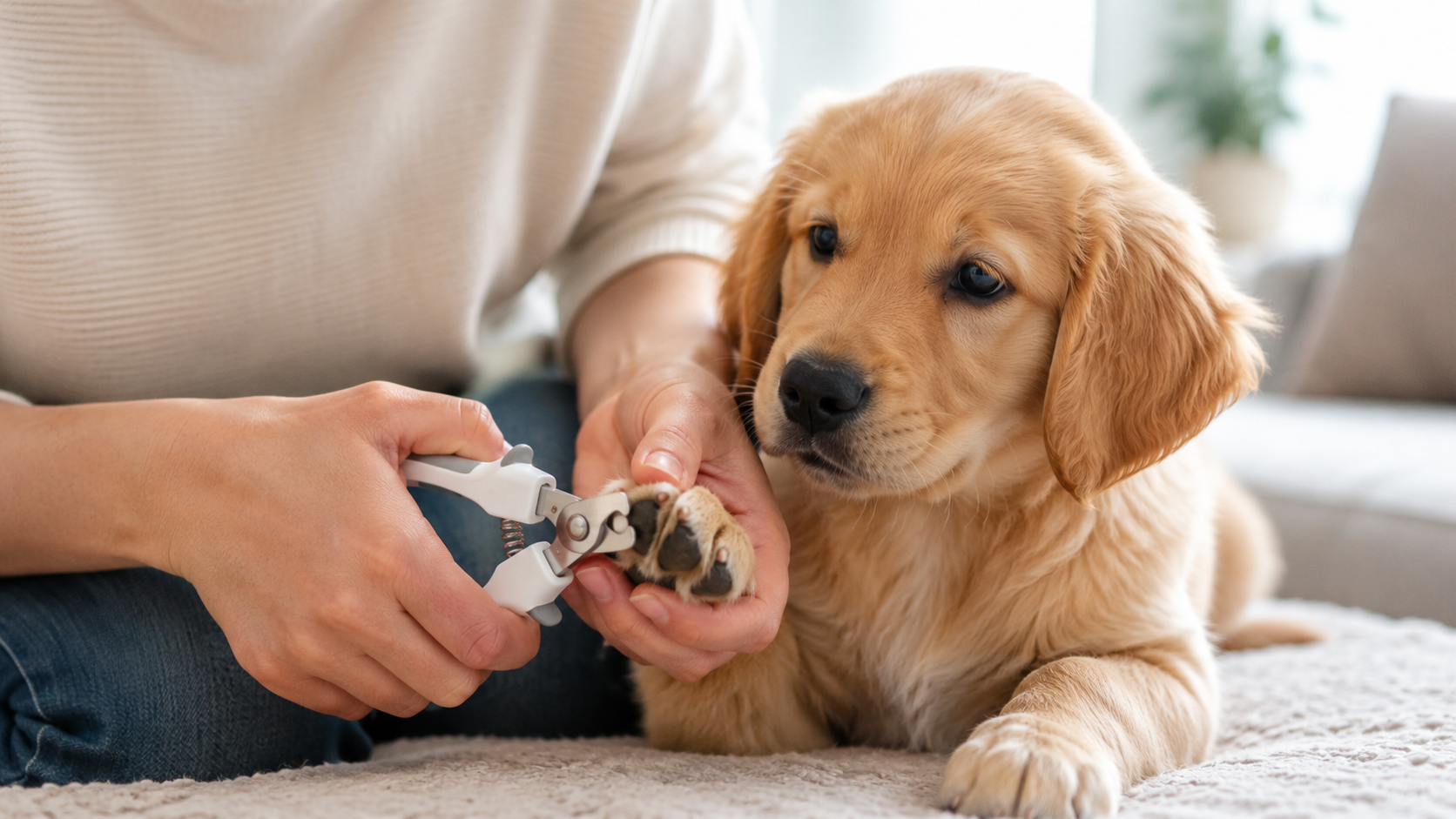 By James C. • July 24, 2026
To trim puppy nails without stress, take off only thin slivers to stay clear of the quick, use sharp puppy nail clippers or a grinder, and pair every session with treats.
Many owners dread nail trims, but with the right tools and a calm, little-and-often approach they quickly become routine. This guide covers what you need, a simple step-by-step method, how to avoid and deal with the quick, a short desensitisation plan, and how often to trim puppy nails as they grow.
What you need to trim puppy nails
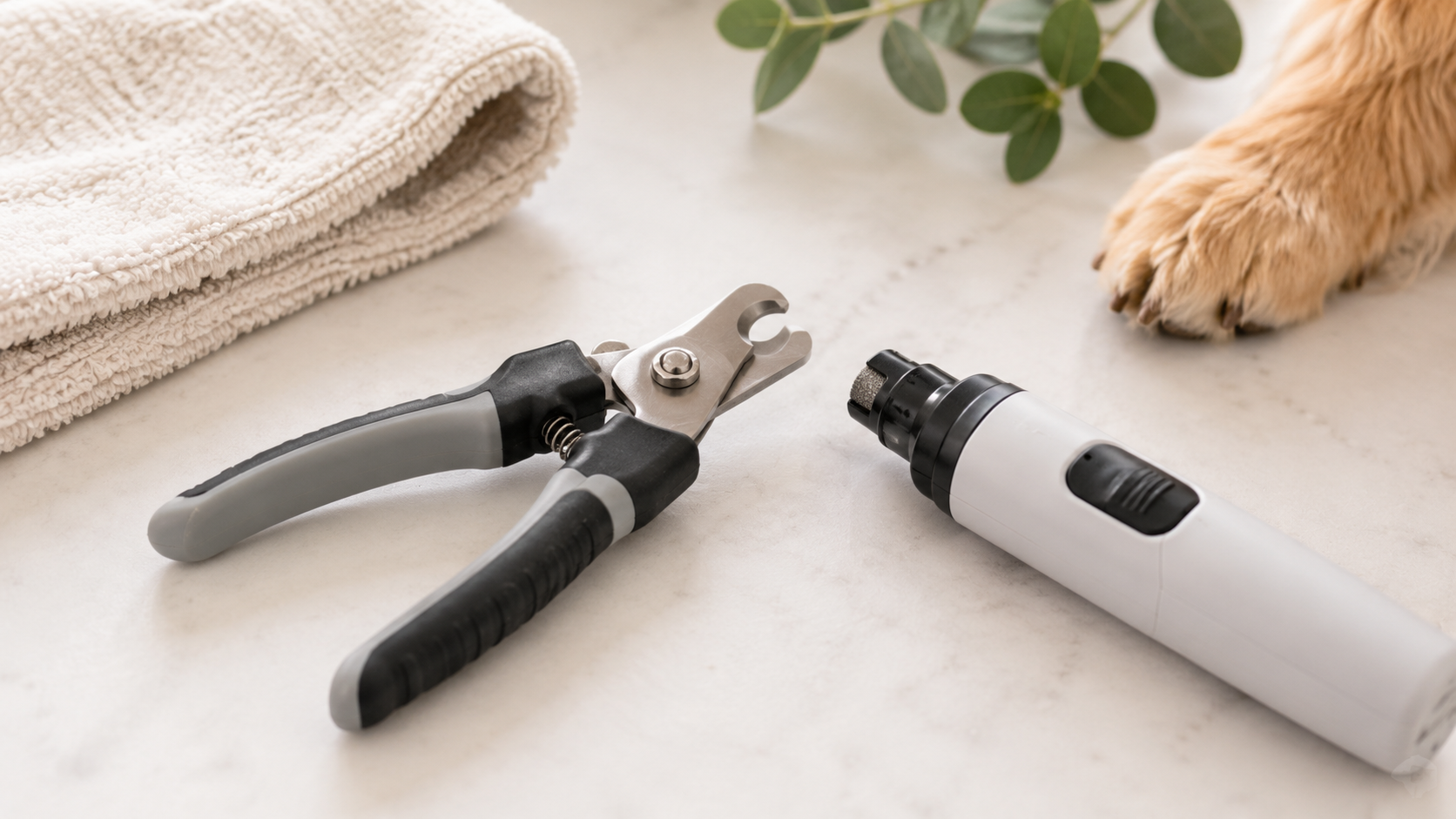
You only need a few tools to trim puppy nails safely at home.
The two main options are clippers and a nail grinder. Scissor-style or plier-style clippers are quick, quiet and ideal for most puppies, while a grinder files the nail down gradually and gives more control on thick or dark nails, though the noise and vibration take some getting used to. Choose whichever suits your puppy, and keep the blades sharp, since blunt clippers crush rather than cut.
Also keep styptic powder or a styptic pencil on hand to stop bleeding if you nick the quick, plus plenty of small, high-value treats. It helps to have these ready alongside the rest of your puppy supplies before your puppy comes home.
How to trim puppy nails, step by step
Once your puppy is calm and your tools are ready, trimming takes just a minute or two.
- Sit somewhere calm and hold your puppy gently, or have a helper offer treats.
- Hold one paw and press lightly to extend a single nail.
- Trim only the thin tip of the nail, taking a small sliver at a time and cutting straight across.
- On light nails, stop before the pink quick; on dark nails, trim tiny amounts until you see a small grey or black dot appear in the centre.
- Reward your puppy after each nail, or after each paw if they are settled.
- Trim the dewclaws too, on the inner side of the leg, since these do not wear down naturally.
- Finish with praise and a treat, even if you only managed a few nails.
You do not have to do all four paws at once. For a nervous puppy, a nail or two a day is a perfectly good pace, and stopping while your puppy is still relaxed makes the next session easier.
How to avoid cutting the quick
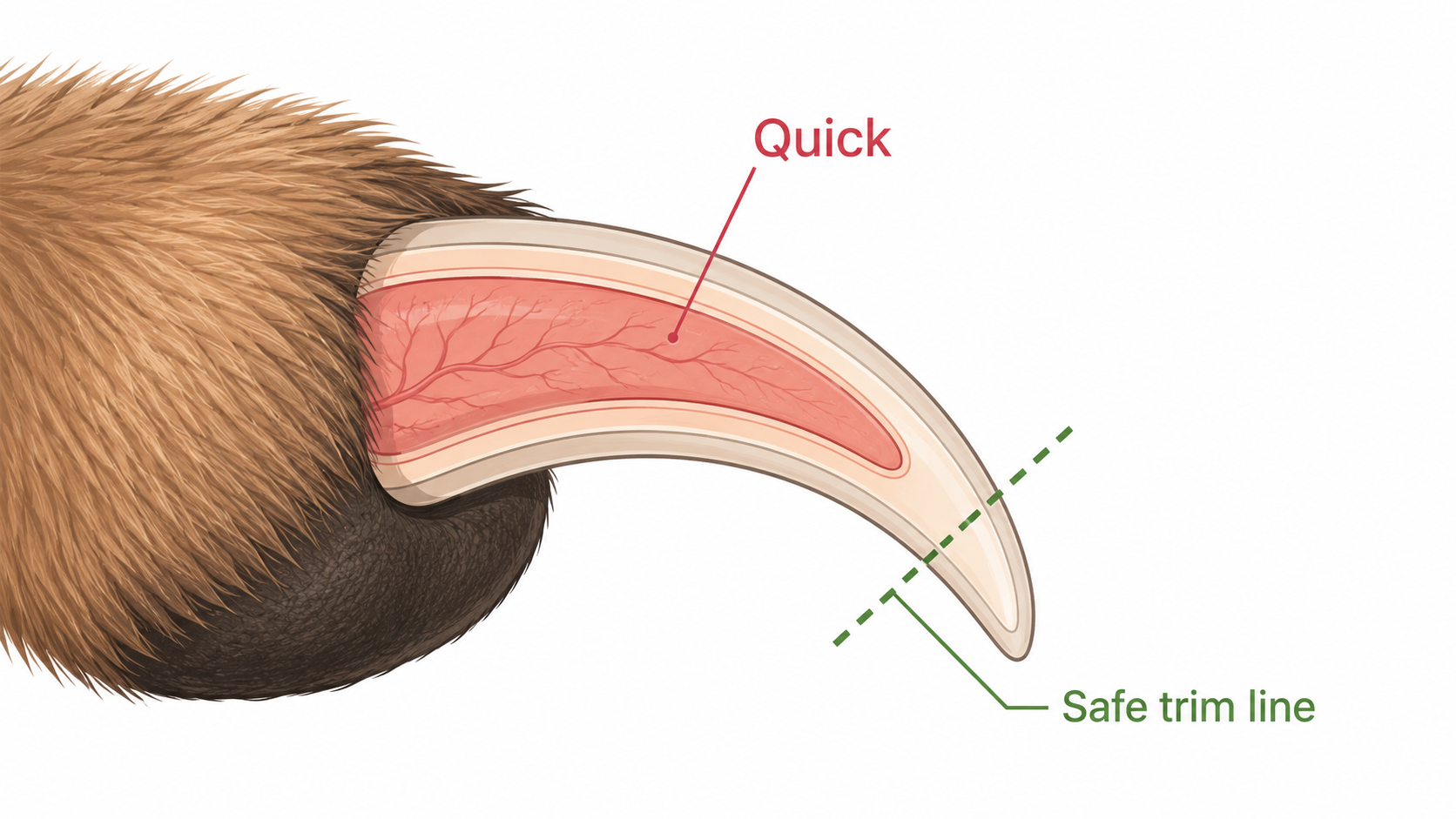
The quick is the pink, living part inside the nail that holds blood vessels and nerves, so avoiding it is the key to pain-free trims.
On light or clear nails, the quick is easy to see as a pink area, so trim the clear tip and stop a few millimetres short of it. Dark or black nails are trickier, since the quick is hidden. Trim these in very small slivers and look at the cut surface after each pass. A pale, chalky centre means you can take a little more, while a small dark or grey dot appearing in the middle means you have reached the quick and should stop.
Trimming little and often keeps the quick short over time, which makes future trims easier and safer. If you are ever unsure, it is better to leave a nail slightly long than to cut into the quick.
What to do if you hit the quick
If you do nick the quick, stay calm, since it looks worse than it is and is rarely serious.
Apply gentle, steady pressure to the nail tip with a clean cloth or cotton wool for a minute or two. If you have styptic powder or a styptic pencil, press a little onto the nail tip to stop the bleeding quickly, and a pinch of cornflour or plain flour can work if you have nothing else to hand. Most nicks stop bleeding within a few minutes.
Reassure your puppy, offer a treat, and end the session on a calm note rather than pushing on. Keep the paw clean and check the nail over the next day. If the bleeding does not stop after about 10 minutes, or the toe becomes swollen, painful or smelly, contact your vet. It can be hard to judge when a minor injury needs a closer look, so it helps to know the warning signs.
Making nail trims stress-free

The calmest trims come from teaching your puppy that paw handling means good things, well before you pick up the clippers.
Start by touching and holding your puppy’s paws for a second at a time, giving a treat each time, over several short sessions. Once they are comfortable, introduce the clippers or grinder without cutting: let your puppy sniff them, reward calm interest, and if using a grinder, turn it on nearby so they get used to the sound. Then touch the clippers to a nail and treat, building up to a single trim.
Keep sessions short and always finish on a positive note. This gentle, gradual approach, known as desensitisation, turns nail trims into something your puppy tolerates or even enjoys. The same reward-based method works across other puppy training and handling tasks, from grooming to vet visits.
How often should you trim puppy nails?
Most puppies need their nails trimmed every 2 to 4 weeks, though it varies with how quickly the nails grow and how much they wear down.
A simple test is to listen. If you can hear nails clicking on hard floors, or see them touching the ground when your puppy stands, they are due for a trim. Puppies walked mostly on soft grass need trimming more often than those exercised on concrete or footpaths, which wears the nails down naturally.
Nail growth also varies by breed and individual, so check your puppy’s nails weekly and trim on a little-and-often schedule. What to expect often comes down to breed, and it varies across the most popular dog breeds in Australia. Regular trims keep the quick short and prevent overgrown nails, which can affect how your puppy stands and walks.
The bottom line on trimming puppy nails
Trimming puppy nails is far less stressful with the right tools, a calm little-and-often routine, and treats at every step.
Take off thin slivers to stay clear of the quick, keep styptic powder handy just in case, and build good habits early. Nail care is just one part of a puppy’s everyday grooming and hygiene.
Frequently asked questions
1. When can you start trimming a puppy’s nails?
You can start from as young as 6 weeks, and early handling helps puppies accept it. Even when there is little to trim, gently handling the paws and touching the clippers builds a calm routine for later trims.
2. Is it better to cut or file puppy nails?
Both work well. Clippers are quick and quiet and suit most puppies, while a grinder files gradually and gives more control on thick or dark nails, though the noise takes getting used to. Choose whichever your puppy tolerates best.
3. What is the safest way to cut a puppy’s nails?
Trim thin slivers one at a time with sharp clippers or a grinder, stopping short of the quick, and reward after each nail. Little and often keeps the quick short and makes trimming safer over time.
4. How do I trim a very young puppy’s nails?
For very young puppies, a gentle emery board or fine grinder can smooth sharp tips safely. Handle the paws often, keep sessions short, and ask your breeder or vet to show you if you are unsure.
5. How often should I trim my puppy’s nails?
Most puppies need a trim every 2 to 4 weeks. If you can hear nails clicking on hard floors or see them touching the ground, they are due. Puppies on soft ground usually need trimming more often.
6. What do I do if my puppy’s nail bleeds?
Apply gentle pressure with a clean cloth and use styptic powder to stop the bleeding quickly. Reassure your puppy and end the session calmly. If bleeding does not stop after about 10 minutes, contact your vet.
 Add us as a preferred source