Italian Greyhound
By James C. • Updated
The Italian Greyhound is a miniature sighthound bred as a companion for European nobility rather than as a working dog. It combines the outline, speed and prey drive of a full-sized sighthound with a body small enough to sit on a lap. Most stand 32 to 38 cm and weigh 2.7 to 4.5 kg, with a lifespan of 14 to 16 years. The breed suits quiet indoor households that want constant company and can manage a genuinely fragile dog, and is poorly suited to homes with boisterous young children or slippery open-plan flooring.
Breed Overview
Life Span
14 - 16 years
Average Price
AUD 2500 - AUD 3500
Weight
Male: 2.7 - 4.5 kg Female: 2.7 - 4.5 kg
Height
Male: 32 - 38 cm Female: 32 - 38 cm
Life Expectancy
Male/Female: 14 - 16 years
Breed Group
Toys
Nicknames
Iggy, IG
Breed Information
The Italian Greyhound is a true sighthound shrunk to lap size, and it behaves like one. It is not a miniaturised version of a companion breed but a genuine coursing dog in a 4 kg frame, complete with the prey drive, the sprinting instinct and the sighthound build. That combination is what makes the breed charming and what makes it fragile.
The breed is ancient, with similar small sighthounds appearing in Mediterranean art more than two thousand years old. It found its lasting role in Renaissance Italy as a companion to nobility, which is where the name comes from, and it has been bred for company rather than for work for most of its recorded history.
In Australia the Italian Greyhound has a small but committed following. There are 55 registered breeders nationally with pups available from around eight of them at any given time, so supply is limited enough that buyers should expect a waitlist rather than an immediate purchase.
Characteristics of the Italian Greyhound
The Italian Greyhound rates highly for adaptability and affection and low for robustness, and its main demands are company and careful handling rather than exercise.
| Trait | Rating | Star Rating | Meaning |
| Size | Small | ★ | 2.7 to 4.5 kg, genuinely a lap dog despite the height. |
| Adaptability | Excellent | ★★★★★ | Well suited to apartments and small homes with warm indoor space. |
| Exercise Needs | Moderate | ★★★ | Around 45 minutes daily, ideally including a safe sprint. |
| Easy to Train | Moderate | ★★★ | Quick to learn but toilet training is notoriously slow in this breed. |
| Amount of Shedding | Very Low | ★ | Fine single coat with almost no visible hair loss. |
| Grooming Needs | Very Low | ★ | A wipe over weekly and regular nail trims covers it. |
| Good With Children | Moderate | ★★★ | Gentle by nature, but too fragile for households with toddlers. |
| Health | Good | ★★★★ | Long-lived, with fracture risk and dental disease the main concerns. |
| Cost to Keep | Low to Moderate | ★★ | Tiny appetite and no grooming, offset by dental work and coats. |
| Tolerates Being Alone | Low | ★★ | Bonds intensely and copes poorly with long days on its own. |
| Intelligence | Good | ★★★★ | Sharp and observant, with the independence typical of sighthounds. |
History of the Italian Greyhound: From Mediterranean Antiquity to the Renaissance Court
Small sighthounds closely resembling the modern Italian Greyhound appear in Mediterranean and Egyptian artefacts dating back thousands of years, which makes precise origin claims difficult. What is clear is that miniature coursing dogs of this type were established across southern Europe long before formal breeds existed, kept both for hunting small game and for company.
The breed took its recognisable modern form in Italy, where it became a fixture of noble households through the Renaissance and appears repeatedly in portraiture of the period. Unlike most breeds in the hound group, it was refined for companionship rather than function, and that long history of being bred to sit with people rather than work away from them explains the modern dog's intense attachment to its household.
The breed reached Britain in the seventeenth century and Australia as pedigree stock in the twentieth. It remains uncommon here relative to its visibility, which is worth knowing before starting a search, since demand from social media exposure has outpaced the number of registered litters bred each year.
Appearance of the Italian Greyhound: Fine-Boned, High-Stepping, and Curved
Size and Build
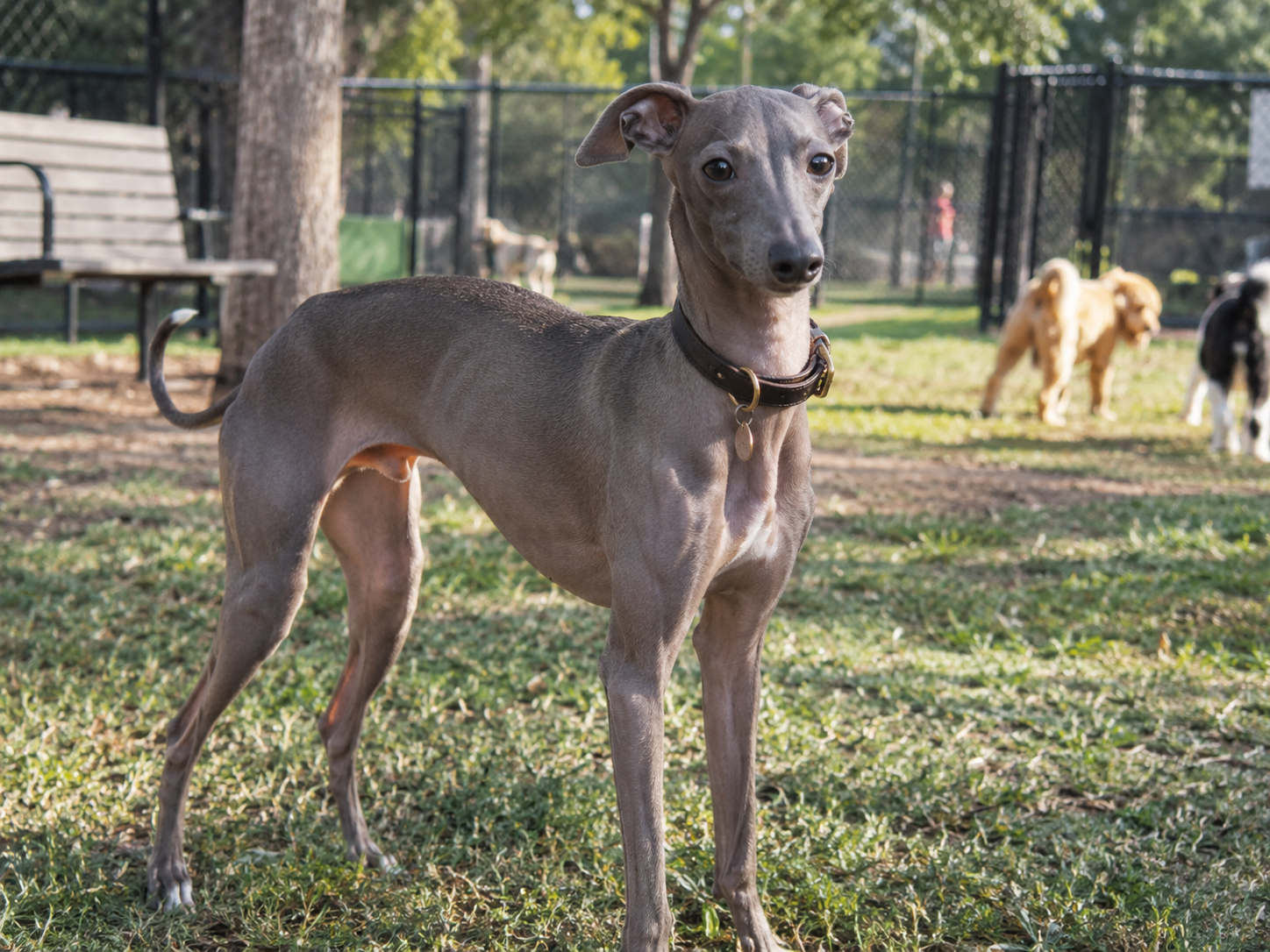
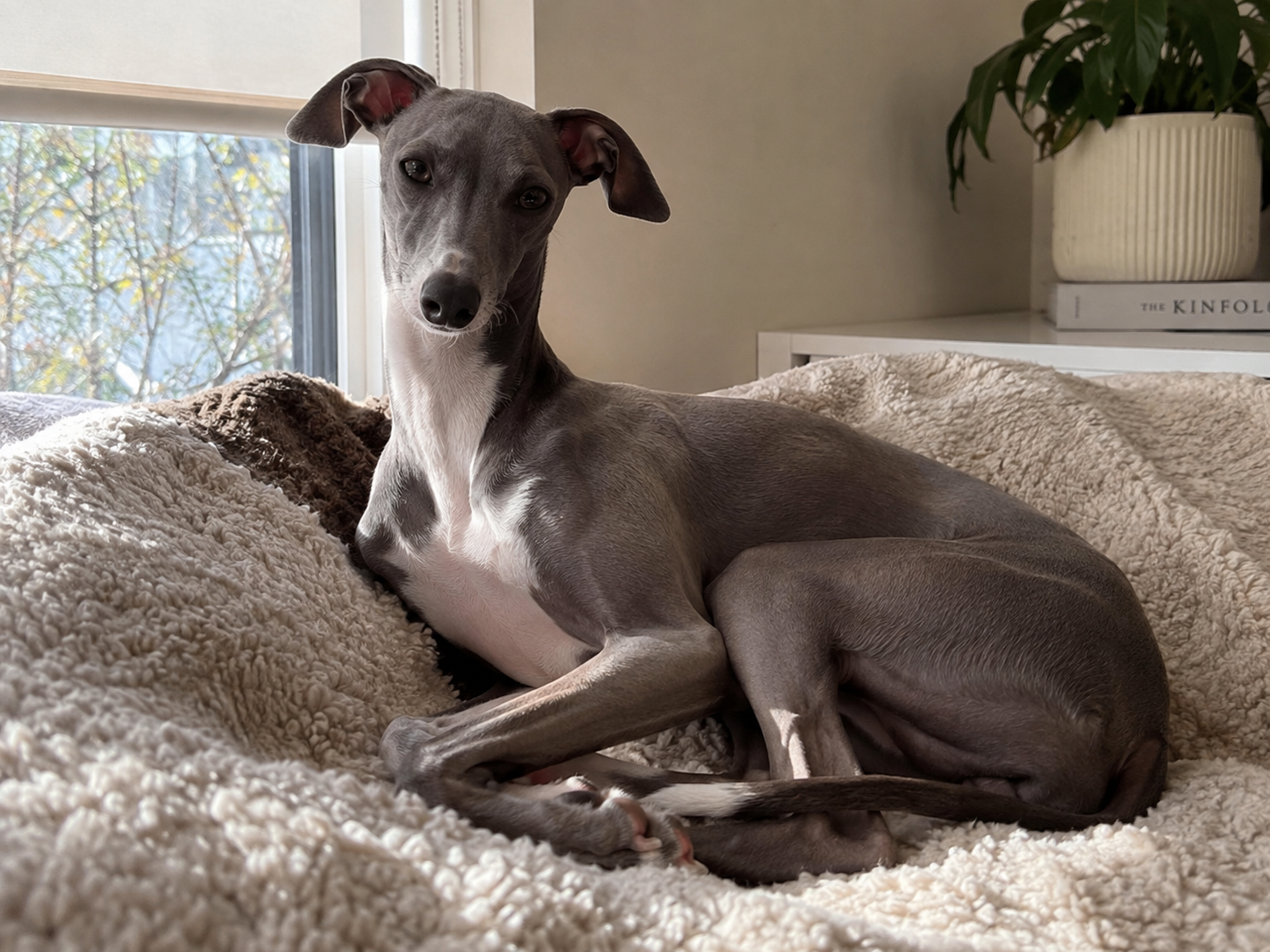
Italian Greyhounds stand around 32 to 38 cm at the withers and weigh 2.7 to 4.5 kg. The outline is a sighthound in miniature: deep narrow chest, pronounced tuck-up, arched loin and a long fine head. The legs are the defining feature and the source of most of the breed's problems, being exceptionally slender relative to the dog's height and stride length.
Coat and Colours
The coat is extremely short, fine and satin-like, with no undercoat whatsoever. Colours include fawn, blue, black, cream, red and combinations of these, often with white on the chest and feet. There is effectively no seasonal shedding and no odour, but also no insulation and no protection against sun or abrasion.
Distinctive Features
The gait is distinctive and worth watching before buying, since a correct Italian Greyhound has a high-stepping front action unlike any other toy breed. Ears are small and folded back at rest, rising when alert. Eyes are large, dark and expressive. The skin is thin enough that veins are visible through it in pale dogs, which is normal.
Gender Differences
Differences between the sexes are minimal in this breed. Males are marginally larger on average and are often described as slightly more affectionate, while females can be a little more independent, though individual temperament varies far more than sex does. Neither is easier to live with or noticeably healthier.
Temperament of the Italian Greyhound: Devoted, Sensitive, and Permanently Attached
Core Personality Traits
The Italian Greyhound is affectionate to an unusual degree even among companion breeds. It seeks constant physical contact, follows its person from room to room, and will burrow under blankets and cushions given any opportunity. Indoors it is quiet and low-energy, sleeping for much of the day.
Social Behaviour
Most Italian Greyhounds are friendly with familiar people and reserved with strangers. The breed is sensitive rather than bold, and poor early socialisation produces genuinely timid adults. Confident, well-socialised dogs greet visitors politely, but nervousness is a real and reasonably common outcome where socialisation has been neglected.
Working Instincts
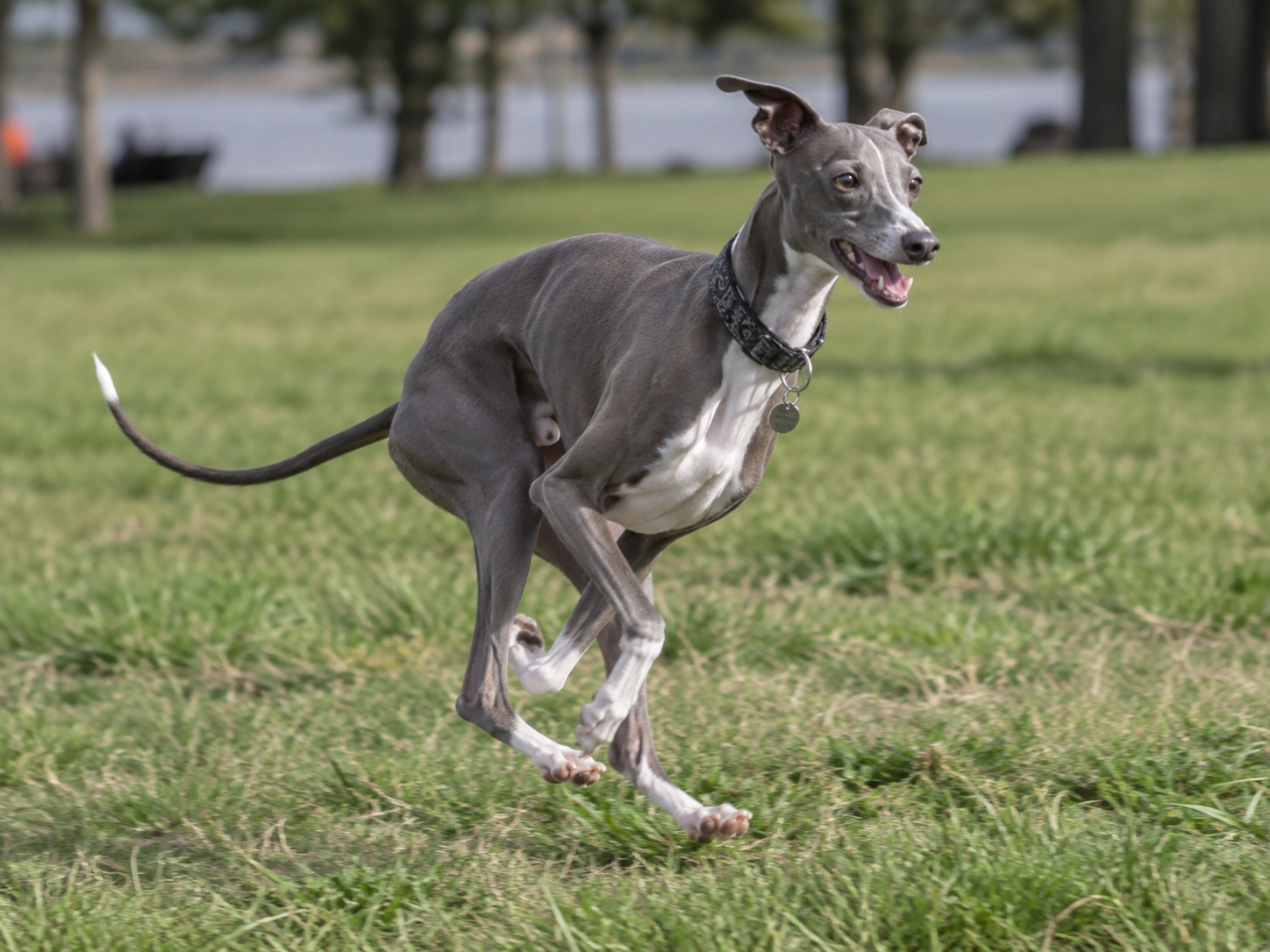
The prey drive is full strength despite the size. An Italian Greyhound will chase birds, lizards, cats and small dogs with the same commitment as a full-sized sighthound, and at close to the same speed for the first hundred metres. Off-lead exercise belongs in enclosed areas only, and the combination of prey drive, speed and a body this fragile makes an unfenced park a genuine risk rather than a theoretical one.
Common Behavioural Challenges
Toilet training is the most commonly reported difficulty and it is not a training failure. Italian Greyhounds have small bladders, hate cold and wet weather, and will frequently refuse to go outside in winter. Many owners use indoor toileting options as a permanent arrangement rather than a puppy phase. The other common issue is distress at being left, since this breed bonds harder than most, and the early warning signs of separation anxiety often appear as pacing, whining and refusing to settle rather than as obvious destruction.
Intelligence and Trainability of the Italian Greyhound: Clever, Sensitive, and Easily Discouraged
Intelligence and Learning Ability
Italian Greyhounds learn quickly and read their households closely. They are frequently underestimated because they show little interest in repetitive drills, but they pick up routines, cues and household rules with very little formal teaching, and they remember which behaviours have previously worked.
Training Approach
Reward-based training is essential. This breed is genuinely soft and responds to raised voices or physical corrections by shutting down entirely, after which progress stops. Keep sessions very short, use high-value food, and finish while the dog is still engaged. Many Italian Greyhounds are also motivated by warmth and a soft place to lie, which can be used as a reward in its own right.
Early Socialisation
Structured early exposure matters more in this breed than in most, because the default trajectory for an under-socialised Italian Greyhound is timidity rather than confidence. Introduce household noise, different surfaces, calm dogs and unfamiliar people gradually and positively. Owners who want to plan properly should look at when obedience work should begin for a puppy, and discuss the timing of outings relative to the vaccination course with their veterinarian.
Potential Training Challenges
Recall is unreliable around moving animals and should be treated accordingly. Toilet training takes longer than average and often needs an indoor option. The third challenge is subtler: because the breed is so eager to be close to its owner, many Italian Greyhounds never learn to settle alone, and building that tolerance deliberately from puppyhood is far easier than retrofitting it later.
Italian Greyhound Family Life: Living with Children, Pets, and Households
Living with Children
This is the section that should decide the purchase for many households. Italian Greyhounds are gentle and rarely snap, but they are among the most physically fragile dogs kept as pets. A dropped puppy, a child falling onto a dog, or a jump from a couch onto slippery flooring can break a leg. Homes with children under about eight should think seriously before buying, and homes with older children who understand how to handle a delicate dog usually do very well.
Living with Other Pets
Italian Greyhounds generally enjoy the company of other dogs, and a second dog of similar size helps enormously with the separation issues the breed is prone to. Larger boisterous dogs are a risk purely on physics rather than temperament. Cats are variable and often fine in the same household, while birds, rabbits and small animals should be considered incompatible.
Household Environment
The breed is exceptionally well suited to apartments. It is quiet, near odourless, sheds very little and needs limited space. The two household requirements that matter are warmth and flooring. Polished floorboards and tiles are a genuine fracture risk for a dog that sprints indoors, and rugs or runners through the main circulation areas are a sensible precaution rather than an over-reaction.
Lifestyle Compatibility
The best fit is a household with someone home for most of the day, a warm indoor environment, and access to a securely fenced area for occasional sprinting. Retired owners, people working from home and quiet adult households all suit the breed well. Homes empty from morning to evening suit it poorly, regardless of how much exercise is offered at either end of the day.
Health of the Italian Greyhound: Fractures, Teeth, and Anaesthetic Risk
Lifespan and Healthy Living
Italian Greyhounds are long-lived, commonly reaching 14 to 16 years, and many remain active well into old age. The practical determinants of a good outcome are preventing injuries, staying ahead of dental disease, and keeping the dog at a correct lean weight. This is a breed where owner management genuinely changes the health trajectory.
Common Health Conditions
The breed is reasonably sound, but owners should be aware of several conditions that can be associated with it. It is best to discuss any concerns with a veterinarian.
- Limb fractures, particularly of the radius and ulna. The single most significant practical risk in the breed. The long thin forelimb bones combine low trabecular density with a relatively poor blood supply, which makes fracture more likely and healing slower, with non-union a recognised complication. This is documented in the veterinary surgical literature on antebrachial fractures in small breeds.
- Dental and periodontal disease. Very common in the breed and a leading reason for repeated general anaesthesia.
- Luxating patella. A kneecap that slips out of position, ranging from occasional skipping to a condition needing surgery.
- Progressive retinal atrophy. An inherited degenerative eye condition, testable through the parents.
- Epilepsy. Reported in the breed and usually managed rather than cured.
- Cold sensitivity. With no undercoat and negligible body fat, these dogs genuinely suffer in cold weather.
Genetic Health Testing
The dental problem and the anaesthetic problem are connected, and almost nobody explains this to buyers. Italian Greyhounds accumulate dental disease faster than most breeds, so they tend to need repeated scaling under general anaesthesia across a long life. Sighthounds also process some anaesthetic agents differently from other dogs, largely because they carry very little body fat for those drugs to distribute into, and can be slower to recover. The combination means this breed goes under anaesthetic more often than average while tolerating it less well than average. Raise it explicitly with your veterinary practice before any procedure, including the desexing surgery, and if you are weighing up the timing of that, it is worth reading about how desexing age affects health and behaviour before booking.
When buying, ask breeders for eye examination certificates on both parents and for patella assessments. There is no hip scoring convention in this breed because hip dysplasia is uncommon at this size.
Preventative Health Care
Daily tooth brushing is not optional in this breed and is the single highest-value habit an owner can build. Keep vaccinations current and maintain year-round parasite prevention including paralysis tick cover on the eastern seaboard, which is straightforward here because the coat is short enough to check visually. Owners unsure how frequently a dog should be seen by a vet should plan on annual checks for a healthy adult, moving to twice yearly once dental disease appears.
Caring for the Italian Greyhound: Daily Care and Living Environment
Daily Care Routine
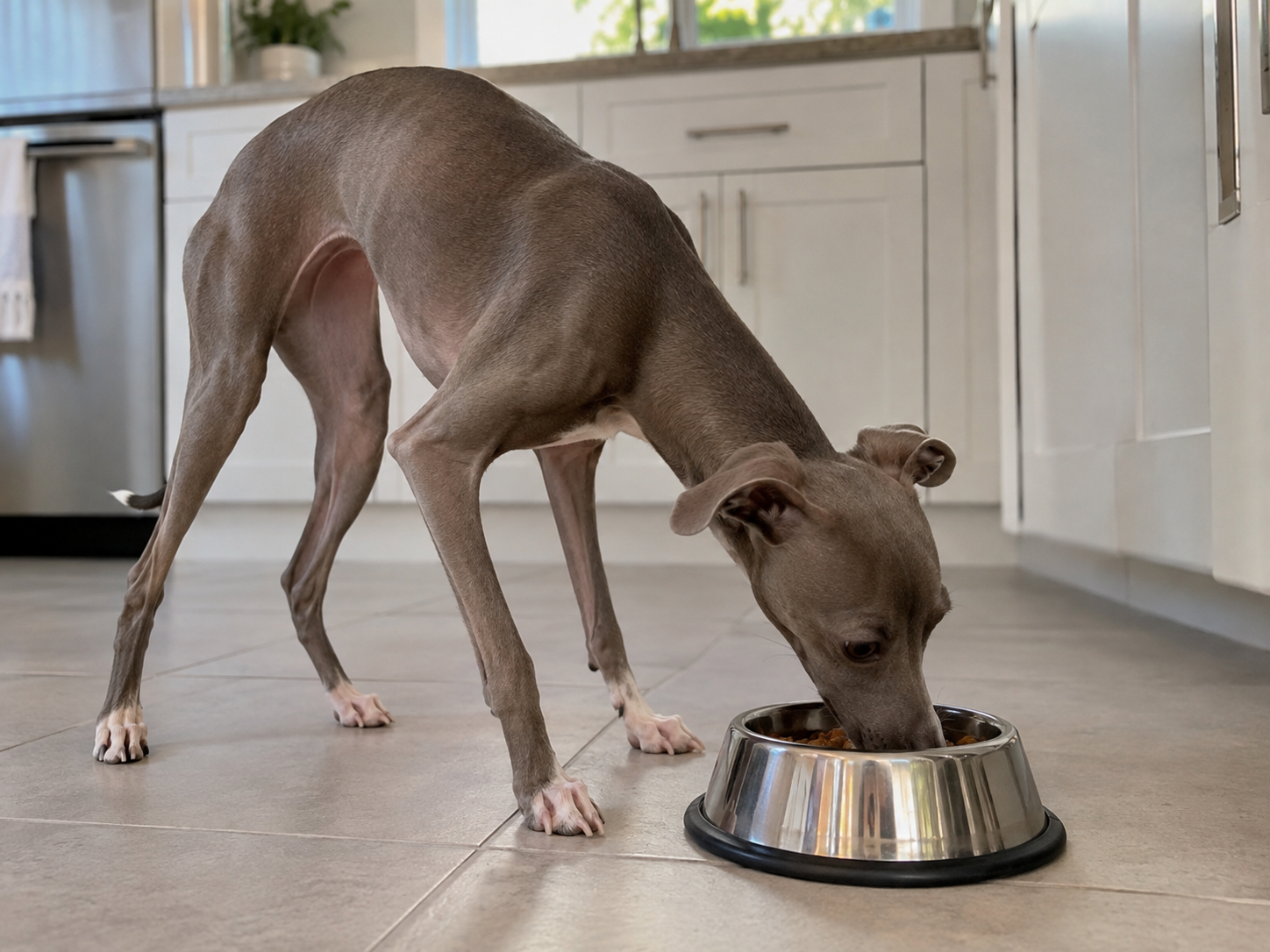
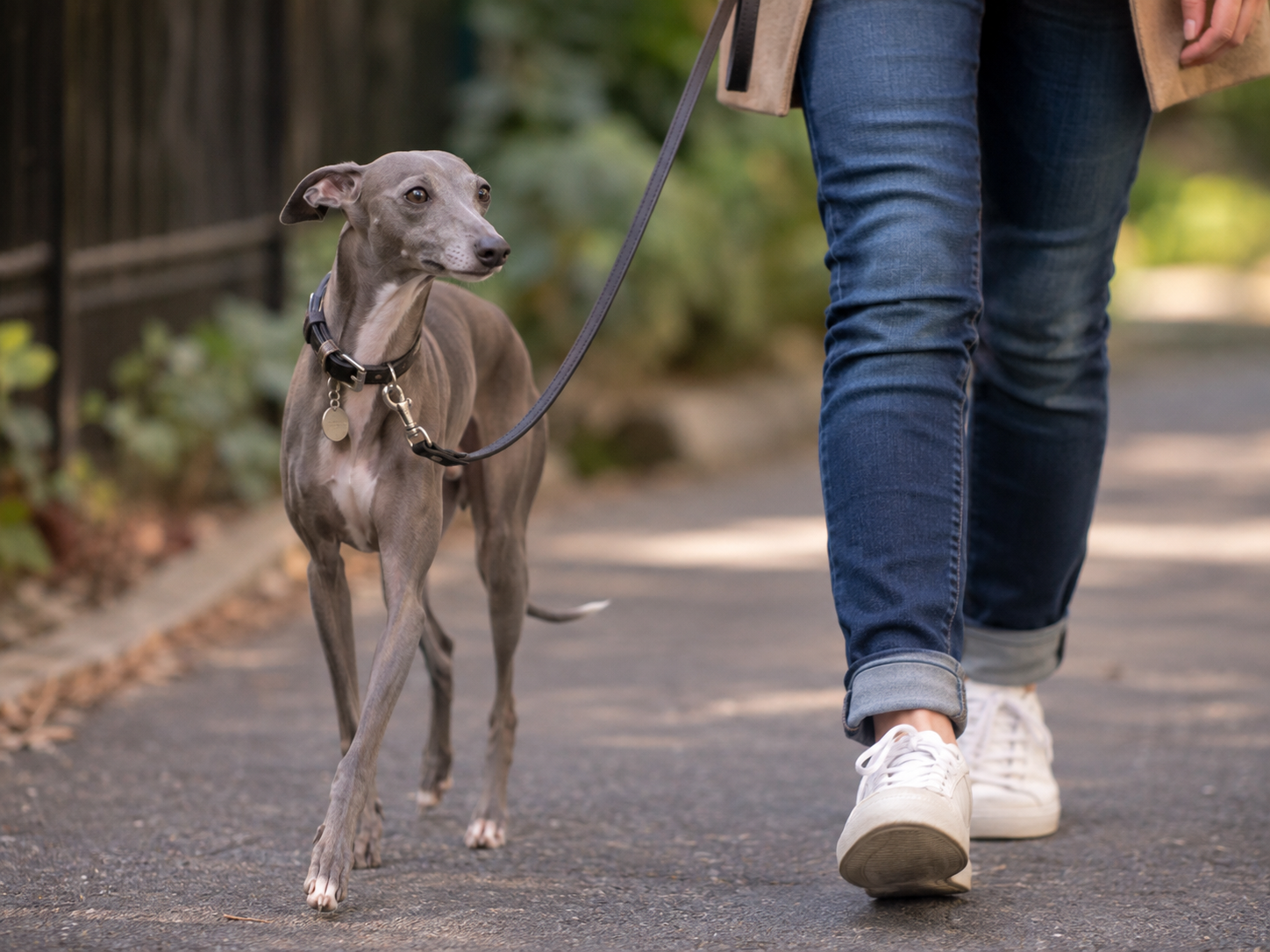
A workable day is a short lead walk, a play or sprint session in a safe enclosed space, and a great deal of sleeping in warm places. Feed twice daily and measure portions, since the margin between correct weight and overweight is small on a 4 kg dog. Many Italian Greyhounds are fussy eaters, which is usually behavioural but worth raising with a vet if accompanied by weight loss.
Living Environment Requirements
Warmth and traction are the two priorities. Provide multiple soft, covered, draught-free beds, and expect the dog to sleep under blankets rather than on top of them. Rugs or runners on hard flooring reduce fracture risk. Fencing should be solid and gap-free, since these dogs are small enough to squeeze through openings a larger sighthound could not.
Climate Sensitivity
Italian Greyhounds are vulnerable at both ends of the Australian climate. Coats are a genuine requirement rather than a fashion choice through winter in Melbourne, Canberra, Adelaide or Tasmania, and many owners use indoor jumpers as well. In summer the same lack of coat leaves pale skin exposed, and sunburn on the nose, ears and belly is common in dogs that sunbathe, which this breed does at every opportunity. Provide shade, consider a dog-safe sunscreen on exposed pink skin, and check the temperature thresholds that matter in an Australian climate before exercising on warm days.
Caring for Senior Italian Greyhounds
Seniors in this breed often stay bright and mobile well past twelve. Expect increased cold sensitivity, more dental work, and some loss of vision in dogs carrying eye conditions. Keep exercise going at a reduced pace, raise food and water bowls if arthritis appears, and treat any new lameness as an injury until proven otherwise given the fracture risk.
Grooming of the Italian Greyhound: Minimal Coat, Maximum Skin Care
Coat Maintenance
A soft cloth or grooming mitt once a week is the entire coat routine. There is no undercoat, no matting, no clipping and no seasonal moult to manage. The breed is close to odourless and rarely needs bathing.
Skin and Injury Care
The thin skin scratches and tears more readily than most breeds, and small wounds should be checked properly rather than left. Nails need particular attention because overlong nails alter the way the dog loads its forelimbs, which matters more in a breed already predisposed to fracture. Trim every three to four weeks.
Ear, Nail, and Dental Care
Ears are folded but well ventilated and infections are uncommon. Dental care is the exception to this breed's low-maintenance reputation and deserves daily attention, using a toothpaste formulated for dogs. Persistent bad breath, reluctance to chew or bleeding gums should be raised with a veterinarian rather than managed at home.
Bathing and Professional Grooming
Bathe only when genuinely dirty, a few times a year at most. Professional grooming is not required for this breed at all, which removes a recurring cost that owners of most small breeds carry and partly offsets the higher dental spend.
Exercise Needs of the Italian Greyhound: Short, Fast, and Safely Enclosed
Daily Exercise Requirements
Around 45 minutes a day suits most adults, split between lead walking and free play. As with larger sighthounds, quality matters more than duration: a few minutes of genuine sprinting satisfies this breed more than an hour of steady walking. Many Italian Greyhounds will simply refuse to walk in cold or wet conditions, and indoor play is a legitimate substitute on those days.
Activities Italian Greyhounds Enjoy
Secure off-lead running, flirt pole games, and short bursts of chase are the natural fits. Some do well at agility, though jump heights should be kept low given the fracture risk. Lure coursing exists for the breed but is best approached cautiously on surfaces with any hardness or unevenness.
Exercise by Life Stage
Puppies should be kept off high furniture and prevented from jumping down from height, which is the most common mechanism of injury in young dogs of this breed. Build exercise gradually and favour grass over hard surfaces. Adults handle sprinting well. Seniors benefit from continued short bursts at their own pace, with warmth and traction becoming more important each year.
Importance of Mental Stimulation
Mental demands are modest. Short training games, scent work and puzzle feeders are useful for wet weeks when outdoor exercise is unappealing to the dog, and are a better outlet than trying to force a reluctant Italian Greyhound out into the rain.
Feeding the Italian Greyhound: Nutrition and Diet Needs
Nutritional Requirements
A complete diet formulated for small breeds suits the Italian Greyhound, and kibble size matters given the fine jaw. Some owners find dental-formulated diets helpful given the breed's tendency to periodontal disease, though these supplement rather than replace tooth brushing.
Feeding by Life Stage
Feed puppies three to four times daily until around four months, then twice daily for life. Young Italian Greyhounds look extremely thin through adolescence, which is normal for the breed and should not be corrected by overfeeding.
Portion Control and Weight Management
On a dog this small, a hundred grams of excess weight is proportionally significant. You should be able to see the last two ribs faintly and feel the spine and hips easily. Excess weight loads limbs that are already the breed's weak point. Ask your vet to body condition score the dog rather than judging by eye against heavier breeds.
Foods to Avoid
The standard toxic list applies and matters more at this body weight, since a small quantity of grapes, sultanas, chocolate, onion, garlic, macadamias or anything containing xylitol represents a far larger dose relative to size than it would in a bigger dog. Cooked bones should be avoided entirely.
Italian Greyhound Price in Australia: Purchase Cost and Ongoing Expenses
Puppy Purchase Price
Expect to pay between $2,500 and $3,500 for an Italian Greyhound puppy in Australia. A survey of eight listings carrying ten stated prices on 8 September 2026, found a range of $1,500 to $3,500 with a median of $3,150. The upper end of that range was reached by both registered and unregistered sellers.
An unusual finding is worth reporting honestly: registered puppies did not command a premium in this survey. The three prices from an ANKC breeder ran $2,500 to $3,500 with a median of $3,000, while unpapered classified listings had a median of $3,300. That said, seven of the eight registered breeder listings published no price at all, so the papered figure rests on a single litter and should not be treated as representative. The practical implication is that in this breed you may pay classified prices for a registered puppy, which makes buying from a registered breeder an easier decision than in breeds where the gap is wide.
Initial Setup Costs
Budget for first-year essentials beyond the purchase price. Australian guidance from the RSPCA puts microchipping at $60 to $80, a puppy vaccination course at $280 to $420, desexing at $350 to $650, a collar, lead or harness at $40 to $100, and a bed at $100 to $200, with puppy school around $170. For this breed add several coats and jumpers, extra bedding, and rugs or runners if your flooring is hard and slippery.
Ongoing Monthly Costs
| Cost | Typical figure (AUD) | Source |
| Food | Well below the $91 monthly average, given a 4 kg body weight | Animal Medicines Australia, Pets in Australia 2025 |
| Parasite prevention | $122 per year average actual spend | Animal Medicines Australia, Pets in Australia 2025 |
| Pet insurance | Around $1,374 per year for a medium dog, typically less for a toy breed | Canstar, prepared March 2026 |
| Annual vet check and booster | $140 and upwards per year | RSPCA NSW |
| Dental scaling under anaesthetic | Recurring across the dog's life, quote locally | Not published, obtain a quote |
| Professional grooming | Nil, the breed does not require it | n/a |
Food and grooming are cheap in this breed, but dental work and the risk of a fracture repair are the two costs that can move the total sharply in any given year. It is worth understanding what pet insurance actually covers and what it costs before deciding whether cover makes sense, particularly given how predictable the dental spend is.
Long-Term Financial Commitment
Across a 14 to 16 year lifespan, this is one of the longer financial commitments in dogs, in line with the average of roughly $2,520 a year that Animal Medicines Australia reports dog-owning households spending. The Italian Greyhound is cheaper than average to feed and groom and more expensive than average to maintain dentally, and a single fracture repair can exceed a year of routine costs on its own.
Buying Advice for an Italian Greyhound: Choosing a Healthy Puppy
Choosing a Responsible Breeder
Supply is limited. There are 55 registered Italian Greyhound breeders in Australia with pups available from around eight at any point, so expect a waitlist and be wary of anyone offering immediate availability at an unusually low price. A good breeder will keep puppies until at least eight weeks, ask you as many questions as you ask them, and take the dog back at any stage of its life. Working through the questions worth putting to any breeder before you commit is the most useful preparation available.
Health Checks Before Purchase
Ask to see the puppy with its mother and watch the litter move on a non-slip surface. Look for clear eyes, clean teeth and gums, and free even movement with no skipping or hopping steps that might suggest patella problems. Request written vaccination, worming and microchipping records, and confirm the microchip number matches the paperwork.
Questions to Ask the Breeder
- Are the puppies registered, and on the Main or Limited Register?
- What is your registered prefix and which state body issued it?
- Have both parents had a recent ophthalmologist eye examination, and can I see the certificates?
- Have the parents been assessed for luxating patella, and what were the results?
- Has any dog in this line had a limb fracture, and at what age?
- What is the dental history of the parents?
- What is your breeder identification number?
- What socialisation will the puppies have had before they leave?
Considering Adoption
Italian Greyhounds appear in rescue occasionally, usually as adults surrendered when a household changes rather than for behavioural reasons. An adult is a reasonable option in this breed because temperament and size are already established, though check dental condition carefully since neglected teeth are the most common issue in surrendered dogs of this type.
Is the Italian Greyhound Right for You? A Fragile Companion for a Quiet Home
Lifestyle Compatibility
This breed suits quiet adult households, people who work from home, and owners who want a dog genuinely in the house rather than in the yard. It suits apartment living better than almost any other breed of its height. It does not suit busy homes with small children, households out all day, or anyone wanting a robust dog for outdoor activity.
Time and Care Commitment
The daily time commitment is low: under an hour of exercise, minimal grooming, small meals. The commitment that matters is presence. This breed expects company for most of the day and does not adapt well to being alone, and that is the factor that most often makes an Italian Greyhound placement fail.
Grooming and Health Awareness
Grooming is close to nil, and in exchange you take on daily tooth brushing, coats through winter, sun protection in summer, vigilance about jumping and slippery floors, and a lifelong responsibility to raise sighthound anaesthetic sensitivity before any procedure.
Ideal Owner Profile
The Italian Greyhound suits an attentive, home-based owner who wants a close companion and understands they are taking on a delicate animal. It rewards people who enjoy a dog underfoot and on the couch, and frustrates anyone hoping for a hardy, independent or outdoorsy dog.
Find Italian Greyhound Puppies for Sale
If the breed fits your household, you can browse Italian Greyhound listings on Pups4Sale. Given limited supply, prioritise sellers who state their registration status and prefix, publish eye and patella results on both parents, and welcome questions, and be cautious of any listing offering immediate availability well below the going rate.
Frequently Asked Questions
Related Breeds
Other toy breeds on Pups4Sale.
 LowchenSmall • Toy (Group 1)
 PomeranianSmall • Toy
 PugSmall • Companion
 Shih TzuSmall • Toy
 Yorkshire TerrierSmall • Toy (Group 1)
 AffenpinscherSmall • Toy