

Chow Chow
By James C. • Updated
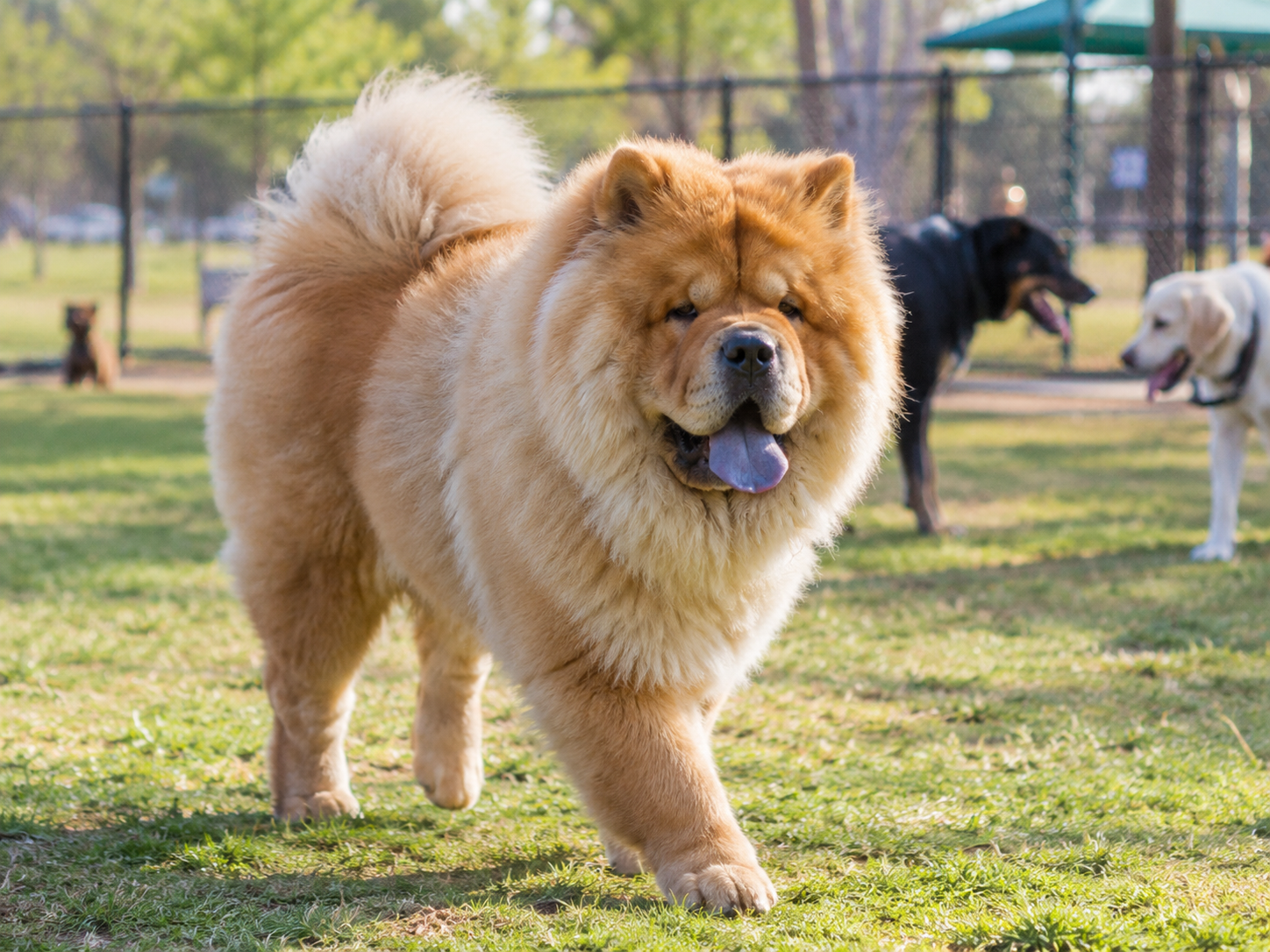
The Chow Chow is an ancient northern Chinese breed distinguished by a dense lion-like coat, a blue-black tongue and a famously independent temperament. It is dignified, aloof with strangers and deeply loyal to its own household, behaving more like a cat than a typical companion dog. Most stand 43 to 51 cm and weigh 20 to 32 kg, with a lifespan of 10 to 12 years. The breed suits experienced owners who want a self-contained dog and can commit to serious coat care and careful heat management in Australian conditions.
Breed Overview
Life Span
10 - 12 years
Average Price
AUD 2900 - AUD 5000
Weight
Male: 20 - 32 kg Female: 20 - 32 kg
Height
Male: 43 - 51 cm Female: 43 - 51 cm
Life Expectancy
Male/Female: 10 - 12 years
Breed Group
Non-Sporting
Nicknames
Chow, Songshi Quan
Breed Information
The Chow Chow is one of the most independent dogs kept as a companion, and buyers who expect a conventionally affectionate breed are usually disappointed. It is dignified, self-contained and selective, forming deep attachments to its own household while remaining indifferent or aloof towards everyone else. Owners who understand that describe it as the most rewarding breed they have kept. Owners who wanted a Labrador in a fluffier coat do not.
The breed is genuinely ancient, originating in northern China where it worked variously as a hunting dog, a guard and a sled dog. The blue-black tongue is its most famous feature and is shared with only a handful of breeds. Two coat varieties exist, rough and smooth, and both carry the same dense double coat underneath.
In Australia the Chow Chow is uncommon but steadily sought. There are around 26 registered breeders nationally, with roughly five advertising puppies at any given time, which is a healthier supply position than several breeds of comparable rarity. Pricing sits at the higher end of the market.
Characteristics of the Chow Chow
The Chow Chow rates very highly for grooming demands and independence and low for trainability, which is an unusual profile and the reason the breed suits so few households.
| Trait | Rating | Star Rating | Meaning |
| Size | Medium | ★★★ | 20 to 32 kg, compact but heavily built and strong. |
| Adaptability | Moderate | ★★★ | Copes with apartments if exercised, but struggles in heat and change. |
| Exercise Needs | Low to Moderate | ★★ | Around 45 minutes daily, and less in warm weather. |
| Easy to Train | Difficult | ★★ | Intelligent but genuinely uninterested in pleasing anyone. |
| Amount of Shedding | Very High | ★★★★★ | Constant shedding with two heavy annual moults. |
| Grooming Needs | Very High | ★★★★★ | Several sessions weekly plus professional grooming from $220. |
| Good With Children | Moderate | ★★★ | Tolerant of its own family but dislikes rough or intrusive handling. |
| Health | Moderate | ★★★ | Very high entropion rates plus joint and heat concerns. |
| Cost to Keep | High | ★★★★ | Grooming is the largest recurring cost of any breed in this range. |
| Tolerates Being Alone | Good | ★★★★ | One of the more genuinely independent breeds when left. |
| Intelligence | Good | ★★★★ | Bright and quick to learn, and equally quick to decline. |
History of the Chow Chow: From Northern China to the Western Show Ring
The Chow Chow is among the oldest identifiable dog types, with representations in Chinese art dating back around two thousand years. In northern China it was a working dog in the broadest sense, used for hunting, for guarding, for hauling and, at some periods, as a source of meat and fur, which is a blunt part of its history but explains why the breed was kept in numbers across ordinary households rather than only by nobility.
The name is European rather than Chinese, thought to derive from a term used by British merchants for miscellaneous cargo shipped from the East. The breed reached Britain in the late 1700s and became fashionable through the nineteenth century, with Queen Victoria's interest doing a great deal for its visibility.
Western breeding since then has emphasised coat volume and the heavy, scowling head, and the modern show type is considerably more profuse and more heavily wrinkled around the face than the original working dog. That drift matters practically, because the features most exaggerated by western breeding, the coat and the facial folds, are precisely the ones that cause difficulty in an Australian climate.
Appearance of the Chow Chow: Leonine, Scowling, and Blue-Tongued
Size and Build
Chow Chows stand roughly 43 to 51 cm and weigh 20 to 32 kg. The build is square, compact and heavily boned, with a broad chest and notably straight hind legs, which produce the stilted, short-strided gait characteristic of the breed. A Chow Chow does not move like other dogs and should not be expected to.
Coat and Colours
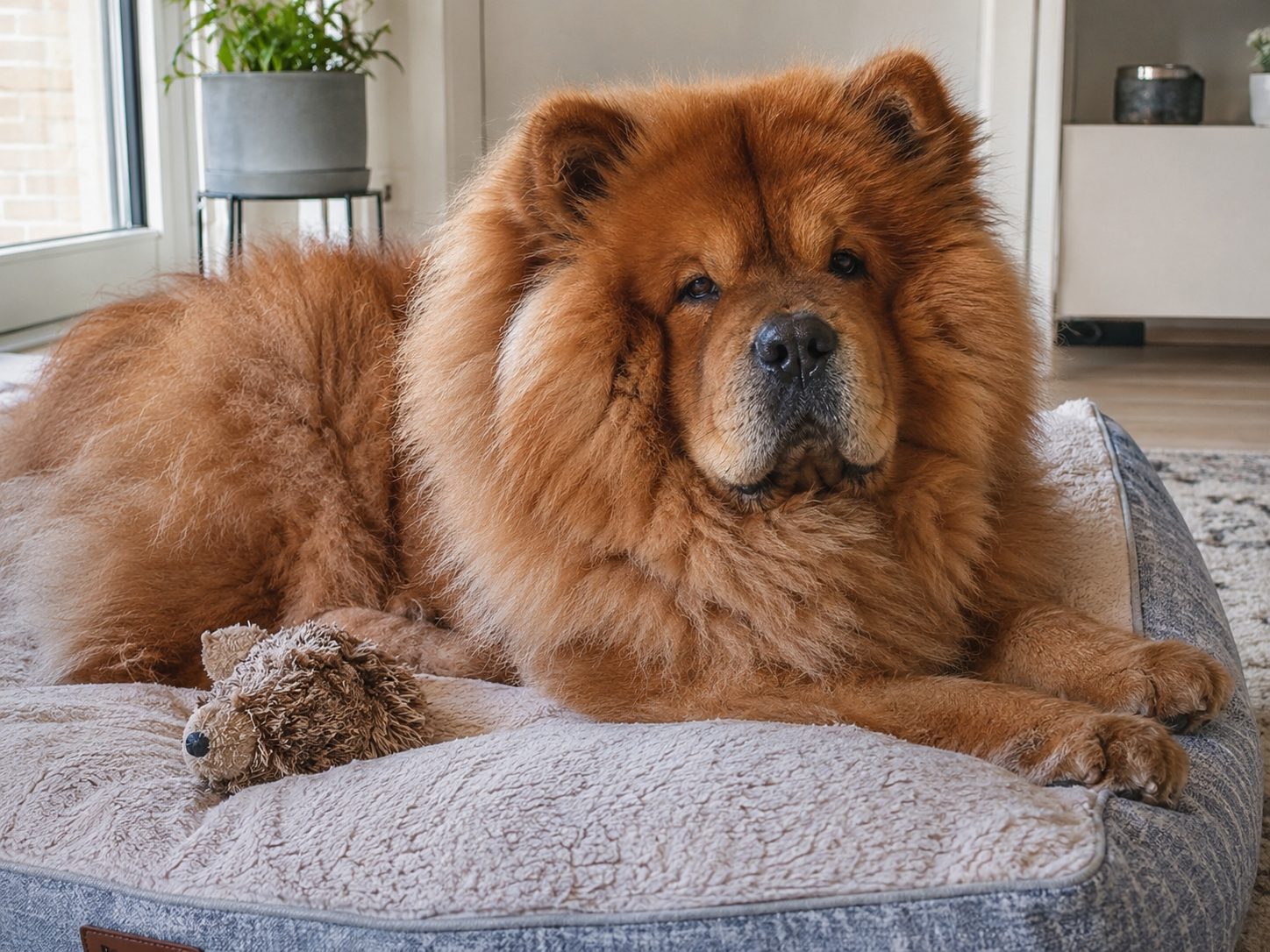
Two varieties exist. The rough coat is profuse and stands off the body, forming a pronounced ruff around the neck and head that gives the leonine outline. The smooth coat is short and dense but still double-layered, and is far less common in Australia though registered breeders do produce it. Colours include red, black, blue, cinnamon and cream, always solid, sometimes with lighter shading.
Distinctive Features
The blue-black tongue is unique to this breed and the Chinese Shar Pei, and puppies are born with pink tongues that darken over the first weeks. The scowling expression comes from the heavy brow and deep-set, small, almond eyes rather than from mood. Those small, deep-set eyes with heavy surrounding skin are directly linked to the breed's most common health problem, since the eyelid conformation predisposes strongly to entropion.
Gender Differences
Males are typically larger, more heavily coated and carry a considerably fuller ruff. Females are lighter and often described as marginally more approachable, though both sexes are independent by nature. The coat difference has a practical consequence, since a male in full rough coat is a materially larger grooming job and a more expensive one.
Temperament of the Chow Chow: Aloof, Loyal, and Entirely Its Own Dog
Core Personality Traits
The Chow Chow is calm, quiet and dignified indoors, and it is not demonstrative. It will often choose to be in the same room as its people rather than on them, and many owners describe a relationship built on mutual respect rather than adoration. It is one of the few breeds that genuinely does not seek constant attention.
Social Behaviour
Reserved with strangers is the standard description and it is accurate. A well-socialised Chow Chow ignores visitors politely. A poorly socialised one may become suspicious or defensive, and because the breed is naturally watchful and physically strong, that outcome is a real problem rather than a minor one. This is a breed where early socialisation is not optional.
Working Instincts
The guarding heritage is intact and expresses itself as territorial awareness rather than active aggression. Chow Chows are alert to their boundaries and to unfamiliar people approaching their household. Prey drive is moderate. Many Chow Chows are also intolerant of same-sex dogs, which is worth planning around in a multi-dog home.
Common Behavioural Challenges
The most common issue is not aggression but handling intolerance, and it is largely preventable. A Chow Chow that was not taught as a puppy to accept brushing, foot handling and face touching will resist it as a strong 30 kilogram adult, and that resistance is what leads to sedation for grooming and to a reputation the breed does not entirely deserve. The other challenge is boundary testing with owners who are inconsistent, since this is not a dog that complies out of eagerness.
Intelligence and Trainability of the Chow Chow: Clever, Independent, and Unmotivated
Intelligence and Learning Ability
Chow Chows are intelligent and learn quickly when they see the point. What they lack entirely is biddability, the desire to work with a handler for its own sake. Owners frequently describe them as cat-like, which is a fair comparison: the dog understands, considers, and decides.
Training Approach
Reward-based training with genuinely high-value food works, in very short sessions. Repetition produces disengagement rather than fluency. Harsh handling is counterproductive and, in a breed this physically capable and this reserved, potentially dangerous. Set clear consistent household rules early and enforce them calmly, because renegotiating them with an adult Chow Chow is far harder.
Early Socialisation
This is the single most important investment in a Chow Chow puppy. Broad, positive, controlled exposure to people, dogs, handling and environments in the first months determines whether you have a confident, aloof adult or a suspicious one. The window overlaps the vaccination course, so plan how to socialise a puppy before vaccinations are complete with your veterinarian rather than waiting until it is complete.
Potential Training Challenges
Recall is mediocre and should not be relied upon off lead in unfenced areas. Lead manners need establishing early given the strength. Grooming tolerance is the third and is best treated as a formal training goal rather than something the dog will accept in time.
Chow Chow Family Life: Living with Children, Pets, and Households
Living with Children
Chow Chows are generally tolerant of children in their own family but they are not a naturally playful or forgiving breed with rough handling. They dislike being grabbed, climbed on or cornered, and unlike some breeds they will move away rather than tolerate it indefinitely. Households with older children who understand how to leave a dog alone suit the breed far better than households with toddlers.
Living with Other Pets
Same-sex intolerance is reasonably common and worth planning for. Chow Chows raised with other dogs and cats often live with them without difficulty, but introducing an unfamiliar adult dog to an adult Chow Chow is not straightforward. Smaller pets are generally manageable given moderate prey drive, though supervision is sensible.
Household Environment
The breed's exercise needs are modest enough that apartment living is workable, but climate control is not optional. A dense double-coated dog in an un-airconditioned home through a Queensland or Western Australian summer is in genuine difficulty. Fencing should be secure, and the dog needs a cool, shaded, well-ventilated place to lie throughout the warm months.
Lifestyle Compatibility
The Chow Chow suits calm, orderly households with experienced owners, and it tolerates being alone better than most breeds, which suits people who work. It suits busy chaotic homes, first-time owners hoping for an easy dog, and anyone unwilling to budget for grooming poorly.
Health of the Chow Chow: Eyes, Joints, and Heat
Lifespan and Healthy Living
Chow Chows typically live 10 to 12 years. The factors most within an owner's control are keeping the dog lean, staying ahead of eye problems, managing heat carefully and maintaining the coat properly, since a neglected double coat causes skin disease underneath it.
Common Health Conditions
Owners should be aware of several conditions that can be associated with the breed. It is best to discuss any concerns with a veterinarian.
- Entropion. The eyelid rolls inward so lashes rub the cornea, causing pain, ulceration and, untreated, vision damage. Published veterinary data puts annual prevalence in the Chow Chow at around 9.28 per cent, among the highest of any breed. It usually requires surgical correction.
- Hip and elbow dysplasia. Reported in the breed and worth asking about, particularly given the straight-hocked hind construction.
- Heat intolerance. A function of both the coat and the somewhat shortened muzzle, covered in detail below.
- Hypothyroidism. Reported in the breed, and often presenting as coat and skin changes.
- Gastric dilatation volvulus. A sudden twisting of the stomach that is an emergency in any deep-chested breed.
- Patellar luxation. A kneecap that slips out of position.
Genetic Health Testing
Ask breeders for hip and elbow scores on both parents and for a current ophthalmologist eye examination. The eye examination matters more in this breed than in most, given how common entropion is and how directly it relates to the head conformation being selected for. A breeder who is producing dogs with more open eyes and less heavy surrounding skin is producing healthier dogs, and it is reasonable to ask directly whether any dogs in the line have needed entropion surgery.
Also ask about thyroid testing, and be aware that entropion and other hereditary eye conditions are commonly excluded from pet insurance policies as pre-existing or breed-related, which matters given the likelihood.
Preventative Health Care
Keep vaccinations current and maintain year-round parasite prevention including paralysis tick cover on the eastern seaboard. Tick searching in this coat is genuinely difficult and needs to be done by hand, systematically, rather than visually. Check the eyes daily for squinting, discharge or pawing, since early entropion is easily missed under a heavy brow. Monitor the skin beneath the coat, particularly through moults, and see how frequently a dog should see a vet if you are unsure, with annual checks as the baseline.
Caring for the Chow Chow: Daily Care and Living Environment
Daily Care Routine
A workable day is a walk in cool hours, a short training or handling session, a check of the eyes and face, and coat work several times a week. Feed twice daily with measured portions. The routine is not time-consuming but the coat work cannot be deferred, because a Chow Chow coat left for a fortnight is a materially harder job than one done twice weekly.
Living Environment Requirements
Provide deep shade, constant water and, in warmer states, air conditioning. Secure fencing matters given the territorial streak. Indoors the breed is calm and undemanding, and a cool tiled floor is often its preferred resting place through summer, which is worth accommodating rather than discouraging.
Climate Sensitivity
The Chow Chow carries two heat disadvantages at once, which is unusual. The dense double coat slows heat loss, and the somewhat shortened muzzle makes panting less efficient than in a long-nosed breed. Neither alone would be remarkable. Together they make this one of the less heat-tolerant breeds kept in Australia.
Exercise early morning and after dusk through summer, skip walks entirely on hot or humid days rather than shortening them, test the pavement with the back of your hand, and never leave the dog in a parked car. One Australian veterinary source suggests being cautious above 25 degrees for this breed, which is lower than most owners expect. Learn safe temperature limits for dogs in this country and treat them conservatively here. Do not shave the coat as a heat solution, for the reasons set out in the grooming section.
Caring for Senior Chow Chows
Older Chow Chows often become stiffer in the hindquarters, which the breed's straight construction tends to exaggerate. Keep exercise regular but gentle, maintain a lean weight, and provide good bedding and traction on hard floors. Eye problems and thyroid changes both become more likely with age.
Grooming of the Chow Chow: The Largest Recurring Cost of the Breed
Coat Maintenance
Brush thoroughly several times a week, and daily during the two heavy annual moults when the undercoat comes out in quantity. An undercoat rake, a slicker brush and a wide-toothed comb are the working tools. Concentrate on the areas that mat first: behind the ears, the ruff, the trousers behind the hind legs and the feathering on the tail. Our guide to a brushing routine for a heavy double coat sets out a schedule that suits this coat type well.
Why the Coat Should Not Be Shaved
Do not shave a Chow Chow for summer. The double coat insulates in both directions, and removing it exposes skin that has never seen sun to Australian UV, removes the layer that slows heat gain, and frequently causes the coat to regrow patchily or with altered texture. Owners struggling with summer shedding should book a professional de-shedding treatment rather than a clip.
Ear, Nail, Eye, and Fold Care
Check ears weekly, since the heavy coat around them traps moisture. Keep the hair around the eyes trimmed so it cannot contribute to irritation, and check the eyes themselves daily. Nails need trimming every three to four weeks and are thick. Brush teeth several times a week.
Bathing and Professional Grooming
Professional grooming is the single largest ongoing cost of owning this breed and should be budgeted before purchase, not after. As an Australian reference point, a Melbourne salon lists the Chow Chow specifically in its double-coated breeds table at $220 for a medium dog groom out and from $260 for a large one, with a feathering trim at $250 to $300 or more. A Sydney salon adds a double and long coat surcharge plus a per-quarter-hour charge for undercoat removal on top of a large dog groom. At six to eight weekly intervals this is comfortably the most expensive grooming commitment of any breed in this guide series.
One clarification is worth making, since it is among the most searched questions about the breed. No Australian salon located publishes a policy of refusing Chow Chows. What exists is coat-type and de-shedding surcharges that a Chow Chow attracts, and the standard right any groomer reserves to decline a dog that cannot be handled safely. A Chow Chow taught to accept handling as a puppy is groomed like any other double-coated breed. One that was not may be declined on behaviour, which is a training outcome rather than a breed policy.
Exercise Needs of the Chow Chow: Modest, and Weather Dependent
Daily Exercise Requirements
Around 45 minutes a day suits most adults, split into two walks in cool parts of the day. This is a low to moderate energy breed that does not need running, hiking or a large yard, and one of the few large-ish dogs genuinely suited to a smaller property. What it does need is that the walking happens when the temperature allows.
Activities Chow Chows Enjoy
Steady lead walks and sniffing time suit the breed best. Most are not interested in fetch and few enjoy dog sports. Short training sessions with food work for mental engagement. Forcing a Chow Chow into high-energy activity produces resistance rather than enthusiasm.
Exercise Limitations
Avoid exercise in heat entirely rather than reducing it. Avoid prolonged high-impact activity given the straight hind construction and joint predisposition. Puppies should not be over-exercised or jumped while growth plates are open. Seniors should keep moving but at reduced duration.
Importance of Mental Stimulation
Mental demands are modest, and a Chow Chow is generally content without a job. Puzzle feeders and short training sessions are useful during hot weeks when walking is not safe, and handling practice is worth building into daily routine as a form of engagement that also pays off at the groomer.
Feeding the Chow Chow: Nutrition and Diet Needs
Nutritional Requirements
A good quality complete diet for a medium to large dog suits the breed. Coat quality is a useful indicator of dietary adequacy in a heavily coated breed, and dull or brittle coat is worth discussing with a vet since it may also signal thyroid issues rather than diet.
Feeding by Life Stage
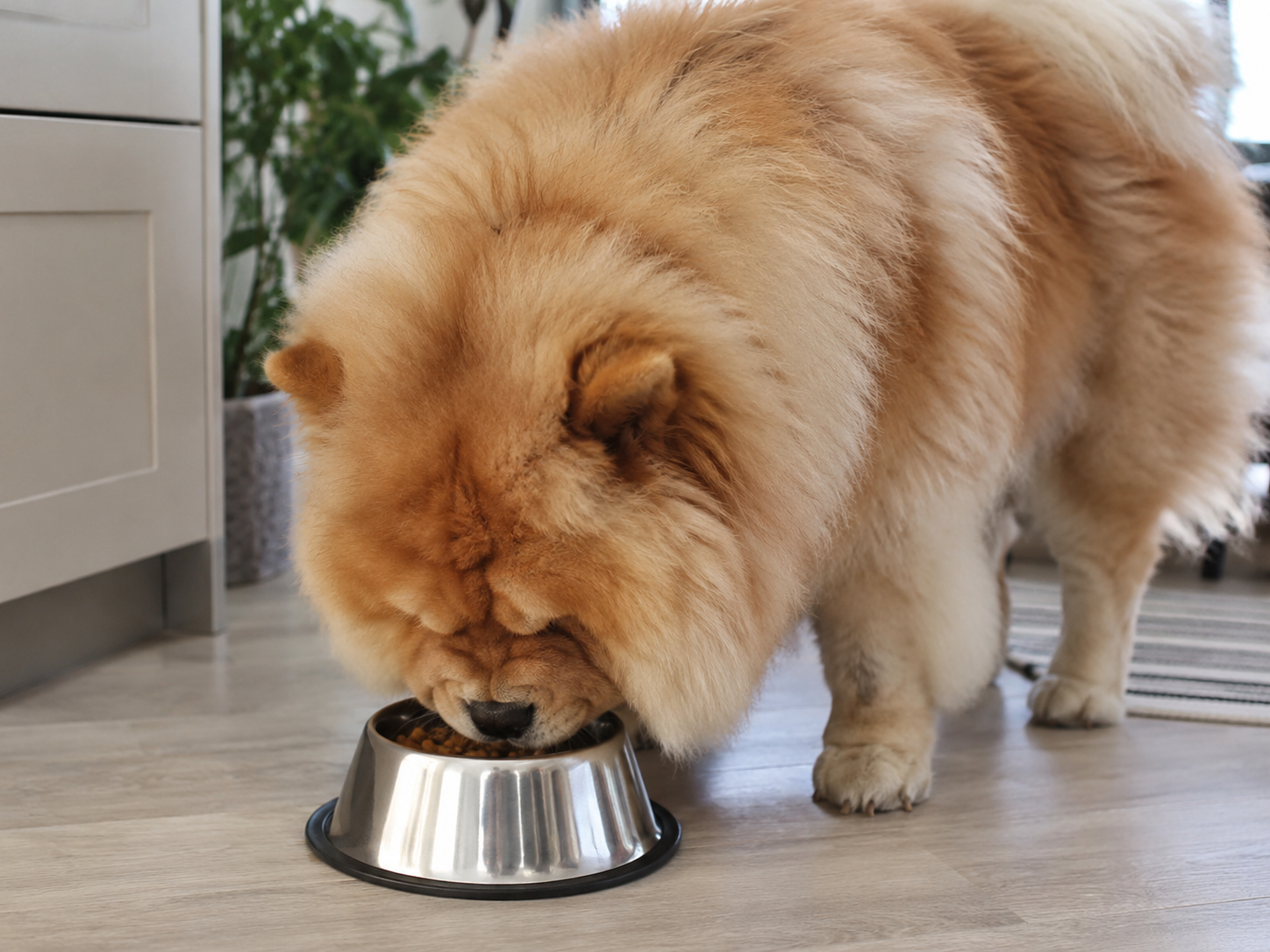
Feed puppies three to four times daily until around four months, then twice daily for life. Twice daily rather than once is preferable given the deep chest and bloat risk. Growth should be steady rather than rapid.
Portion Control and Weight Management
Weight is hard to assess under this coat and easy to let go. Judge by feel rather than sight: you should be able to feel the ribs without pressing. Excess weight worsens heat tolerance and loads joints in a breed already predisposed to dysplasia. Ask your vet to body condition score the dog, since the coat conceals a great deal.
Foods to Avoid
The standard toxic list applies: grapes, sultanas, chocolate, onion, garlic, macadamias and anything containing xylitol. Cooked bones should be avoided. Avoid large single meals and exercise around feeding given bloat risk.
Chow Chow Price in Australia: Purchase Cost and Ongoing Expenses
Puppy Purchase Price
Expect to pay between $2,900 and $5,000 for a Chow Chow puppy in Australia, with a median asking price of $3,350. That comes from a survey of six priced Australian listings on 8 September 2026. The sample is small, so treat it as indicative.
The one listing offering full pedigree papers through a state member body was also the dearest at $5,000, roughly $1,650 above the median of the unpapered listings. With a single papered data point that is directional rather than a reliable premium figure, but it is consistent with what registered breeding costs in a breed requiring eye and joint screening.
Worth noting: a competitor page currently ranking for this breed states a price of $4,000 to $7,000. This survey does not support that range, and buyers working from that figure would be overpaying against the observed market.
Initial Setup Costs
Beyond the purchase price, Australian guidance from the RSPCA puts microchipping at $60 to $80, a puppy vaccination course at $280 to $420, desexing at $350 to $650, a collar, lead or harness at $40 to $100, and a bed at $100 to $200, with puppy school around $170. For this breed add proper grooming equipment, an undercoat rake, slicker and comb, and book a first professional groom early so the puppy learns to accept it.
Ongoing Monthly Costs
| Cost | Typical figure (AUD) | Source |
| Professional grooming | $220 to $300 or more per visit, every 6 to 8 weeks | Australian salon price list, Melbourne, September 2026 |
| Food | $91 per month, or $1,090 per year | Animal Medicines Australia, Pets in Australia 2025 |
| Parasite prevention | $122 per year average actual spend | Animal Medicines Australia, Pets in Australia 2025 |
| Pet insurance, medium dog | $1,374 per year for accident and illness cover | Canstar, prepared March 2026 |
| Annual vet check and booster | $140 and upwards per year | RSPCA NSW |
| Entropion surgery, if needed | Not published, obtain a quote | Obtain a veterinary quote |
Grooming at six-weekly intervals runs well over $1,900 a year at the published rates above, which is more than most owners budget and considerably more than the food. Given how commonly entropion appears in this breed and how often hereditary eye conditions are excluded from cover, it is worth understanding what insurance and routine care actually cost and reading the exclusions before you buy.
Long-Term Financial Commitment
Across a 10 to 12 year lifespan the Chow Chow sits well above the average of roughly $2,520 a year that Animal Medicines Australia reports dog-owning households spending, almost entirely because of grooming. This is a breed where the purchase price is not the main financial decision.
Buying Advice for a Chow Chow: Choosing a Healthy Puppy
Choosing a Responsible Breeder
There are around 26 registered Chow Chow breeders in Australia, with roughly five advertising puppies at a time, so a buyer prepared to wait can generally find a registered litter. A good breeder screens for hip, elbow and eye conditions, socialises puppies heavily given the breed's reserve, keeps them to at least eight weeks and takes dogs back at any point. Work through the questions worth asking any breeder before making contact.
Health Checks Before Purchase
Look closely at the eyes of the puppies and both parents. Squinting, weeping, or eyelids that appear to roll inward are entropion indicators and are the most important thing to check in this breed. Watch the litter move for evenness and freedom in the hindquarters. Check the puppy accepts being handled and having its feet touched. Request written vaccination, worming and microchipping records and confirm the microchip number matches.
Questions to Ask the Breeder
- Have both parents had a recent ophthalmologist eye examination, and can I see the certificates?
- Has any dog in this line required entropion surgery?
- What are the hip and elbow scores for both parents?
- Have the parents been thyroid tested?
- Are the puppies registered, and on the Main or Limited Register?
- What is your registered prefix and which state body issued it?
- Is this litter rough or smooth coated?
- What handling and grooming has the puppy already been introduced to?
Considering Adoption
Chow Chows appear in rescue occasionally, often surrendered as adults with matted coats or handling difficulties, both of which stem from the same underlying issue of early handling never being established. An adult from rescue can work well for an experienced owner, but assess handling tolerance honestly before committing, since retraining it in a strong adult is demanding. Anyone buying instead should be alert to the signs of an online puppy scam, since high prices and limited supply make this breed a target.
Is the Chow Chow Right for You? An Independent Dog With a Serious Grooming Bill
Lifestyle Compatibility
This breed suits calm, experienced owners who want a dignified, self-contained dog and who genuinely like independence in an animal. It tolerates being left alone better than most breeds. It suits families with young children, first-time owners, and anyone in a hot climate without air conditioning poorly.
Time and Care Commitment
Exercise is modest at around 45 minutes daily. Coat care is several sessions a week plus a professional groom every six to eight weeks. Daily eye checks take seconds but matter. The total time is manageable, but the grooming money is not optional and should be settled before purchase.
Grooming and Health Awareness
You take on the highest grooming cost in this series, an unusually high likelihood of entropion, and a dog that carries two separate heat disadvantages in a hot country. In exchange you get a quiet, clean, low-odour, undemanding companion that asks very little emotionally.
Ideal Owner Profile
The Chow Chow suits an owner who wants a dog with self-possession rather than devotion, has the patience to build handling tolerance from puppyhood, and has budgeted honestly for the coat. It rewards consistency and respect, and frustrates anyone hoping for an affectionate, biddable or low-maintenance dog.
Find Chow Chow Puppies for Sale
If the breed fits your household, you can browse Chow Chow listings on Pups4Sale. Prioritise sellers who can produce eye examination certificates and hip and elbow scores on both parents, and who have already started handling and grooming the puppies.
Frequently Asked Questions
Related Breeds
Other companion breeds on Pups4Sale.
 DalmatianLarge • Utility
 Dandie Dinmont TerrierSmall • Terrier
 English Toy TerrierSmall • Toy
 Finnish SpitzMedium • Utility / Spitz type (Nordic hunting breed)
 Fox TerrierMedium • Terrier
 French BulldogSmall • Utility / Companion (Non-sporting)