Bullmastiff
By James C. • Updated
The Bullmastiff is a powerful, confident, and loyal guardian breed developed in England by crossing the Mastiff and Bulldog. Originally bred to protect estates from poachers, Bullmastiffs are known for their protective instincts, calm temperament, and strong devotion to their families. Despite their imposing appearance, they are typically gentle and affectionate with people they know.
Breed Overview
Life Span
7 - 9 years
Average Price
AUD 1200 - AUD 2500
Weight
Male: 50 - 59 kg Female: 41 - 54 kg
Height
Male: 64 - 69 cm Female: 61 - 66 cm
Life Expectancy
Male/Female: 7 - 9 years
Breed Group
Working
Nicknames
Gamekeeper’s Night Dog
Breed Information
The Bullmastiff is a powerful, imposing working breed developed in England during the 19th century to protect estates and deter poachers. Created by crossing the Old English Mastiff with the Bulldog, this breed was designed to combine strength, speed, and reliability with controlled restraint rather than aggression. Today, the Bullmastiff remains a calm yet vigilant guardian, valued as much for its steady temperament as for its physical presence.
Despite their formidable appearance, Bullmastiffs are typically quiet, composed, and deeply loyal to their families. They form strong bonds with their owners and are known for their instinctive protective nature rather than excessive barking. This makes them excellent watchdogs for experienced owners who appreciate a dog that observes first and acts only when necessary.
The breed is best suited to confident, experienced dog owners who can provide consistent leadership, early socialisation, and clear boundaries. Bullmastiffs thrive in homes with secure gardens and structured routines, where their need for both physical movement and mental engagement is met. While affectionate and devoted, they are not a low-effort breed and require commitment to training, health management, and responsible handling throughout their lives.
Characteristics: What Living With a Bullmastiff Is Really Like
The Bullmastiff is a powerful yet composed working dog whose behaviour reflects its original role as a silent guardian, and a giant puppy needs the right large breed feeding schedule to grow evenly. Life with this breed is defined by loyalty, restraint, and natural protectiveness, rather than high energy or constant demands for attention. Understanding these traits clearly is essential before committing to ownership.
| Characteristic | Rating | What This Means for You |
| Size | ★★★★★ | A large, heavy-boned dog that needs space and confident handling. |
| Exercise Needs | ★★★☆☆ | Requires daily moderate exercise, not endurance activity. |
| Easy to Train | ★★★☆☆ | Intelligent but independent-minded, responds best to calm, consistent leadership. |
| Amount of Shedding | ★★☆☆☆ | Low to moderate shedding thanks to a short, dense coat. |
| Grooming Needs | ★★☆☆☆ | Minimal coat care, but facial folds need regular attention. |
| Good With Children | ★★★☆☆ | Better suited to homes with older children due to size and strength. |
| Health of Breed | ★★★☆☆ | Generally robust but prone to large-breed and brachycephalic issues. |
| Cost to Keep | ★★★★☆ | Feeding, insurance, and vet care are higher than average. |
| Tolerates Being Alone | ★★☆☆☆ | Forms strong bonds and does not enjoy long periods of isolation. |
| Intelligence | ★★★★☆ | Thoughtful and observant, prefers to understand purpose before acting. |
Overall, the Bullmastiff suits owners seeking a quiet, confident protector rather than a highly active or overtly social dog. This breed thrives in calm, structured homes where expectations are clear and leadership is consistent. When properly matched, the Bullmastiff is a steadfast, deeply devoted companion with an impressive sense of responsibility toward its family.
Bullmastiff History: From Estate Guardian to Trusted Family Protector
The Bullmastiff was developed in 19th-century England during a time when large country estates required protection from poachers, and you can now find Bullmastiff puppies listed across Australia. Gamekeepers needed a dog that could work silently at night, track intruders, and restrain them without causing serious harm. To achieve this, breeders crossed the English Mastiff with the Old English Bulldog, combining size, strength, speed, and courage into one purposeful working dog.
Early Bullmastiffs became known as the “Gamekeeper’s Night Dog” due to their ability to pursue, knock down, and hold poachers until human assistance arrived. Unlike guard dogs that relied on barking, the Bullmastiff worked quietly and decisively, a trait that still defines the breed today.
Formal recognition followed in the early 20th century. The breed was officially accepted by The Kennel Club in 1924, with strict rules ensuring several generations of pure Bullmastiff lineage. The American Kennel Club recognised the breed in 1934, and international recognition continued through the mid-1900s.
Although their working role has changed, the Bullmastiff’s protective instincts, loyalty, and reliability remain central to the breed. Modern Bullmastiffs are valued less for estate guarding and more for their role as devoted family protectors, carrying forward the same steady temperament that once made them indispensable to gamekeepers.
Bullmastiff Appearance: Size, Strength, and Distinctive Features
Overall Build and Physical Presence
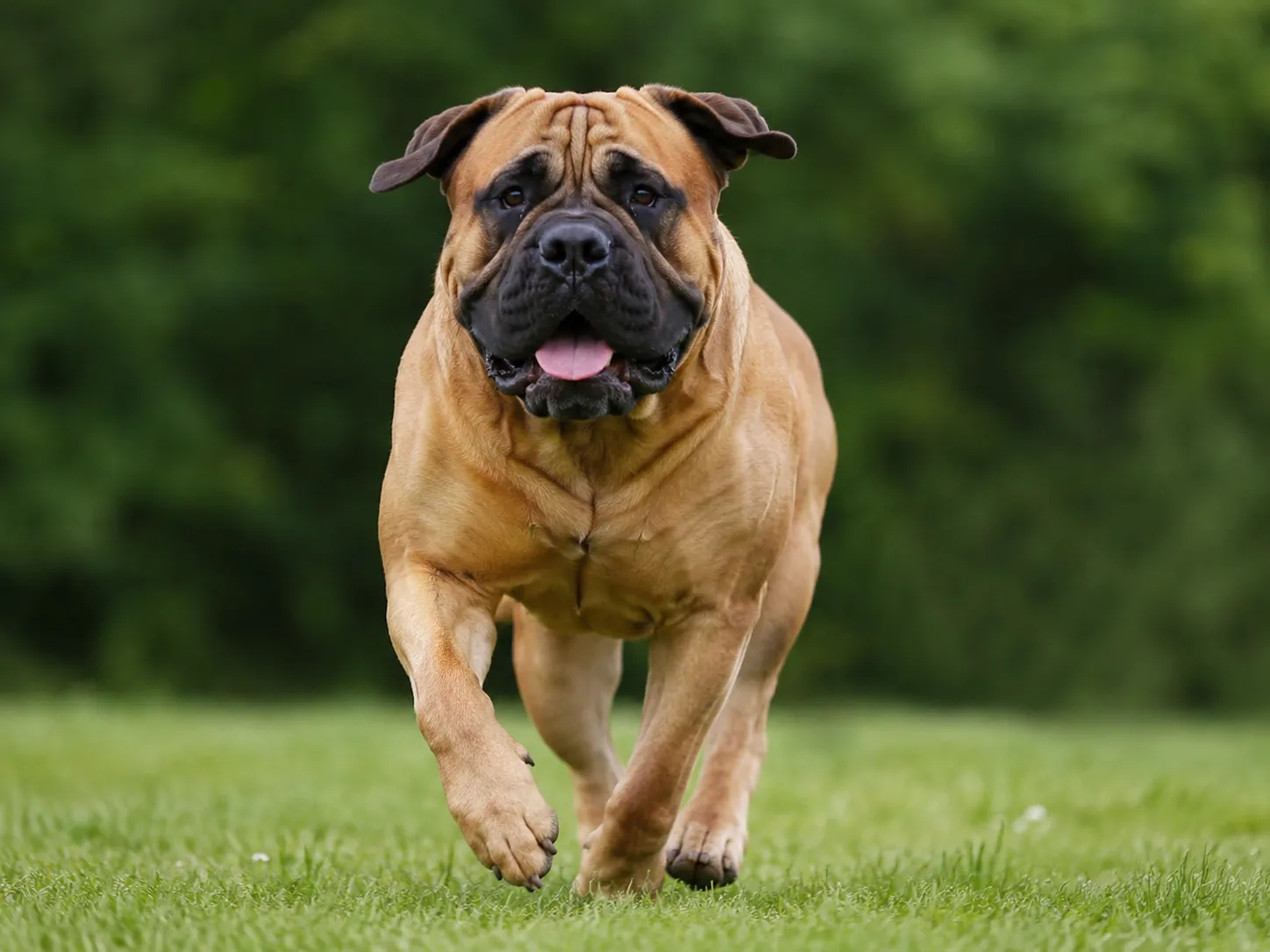
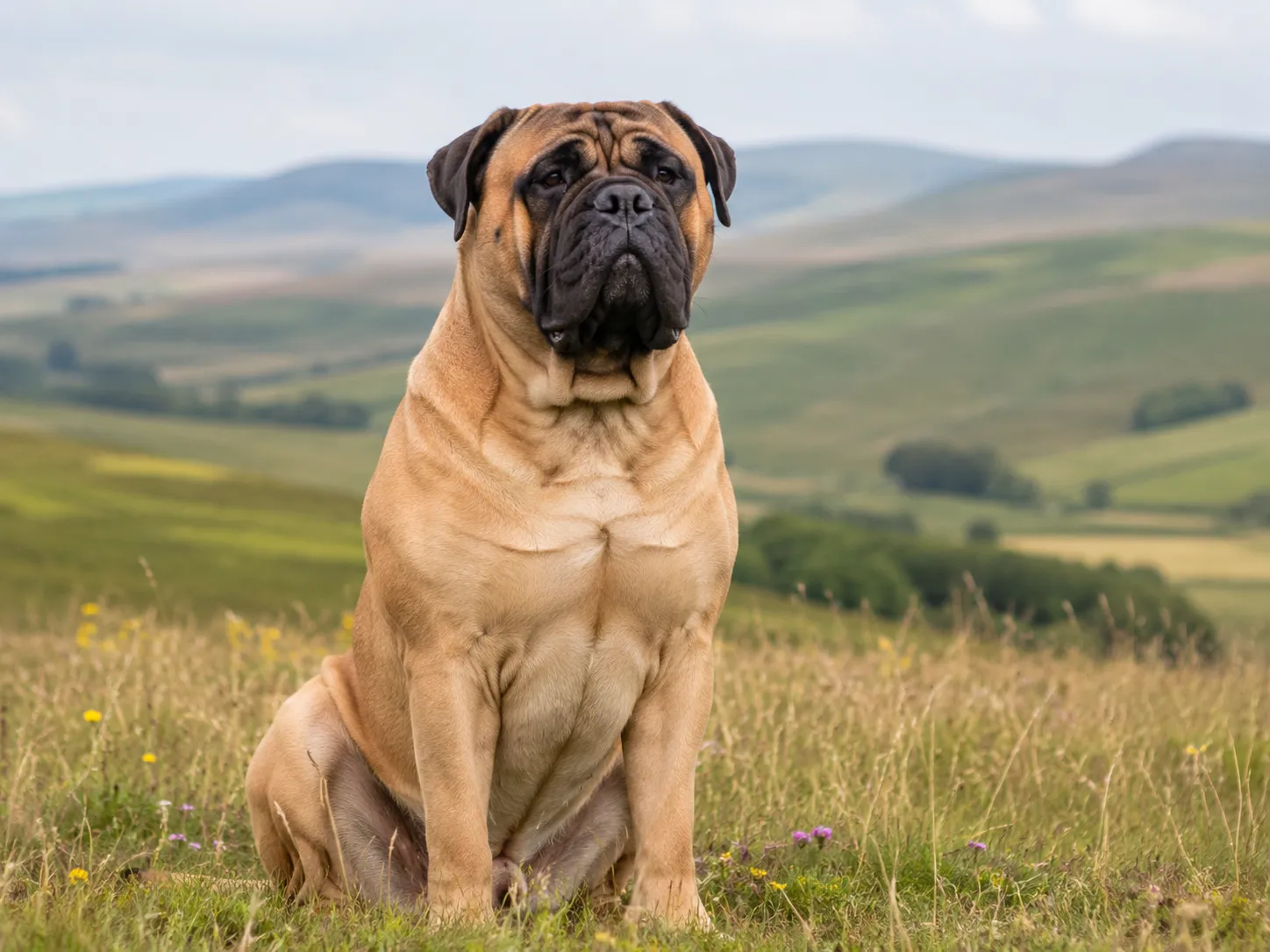
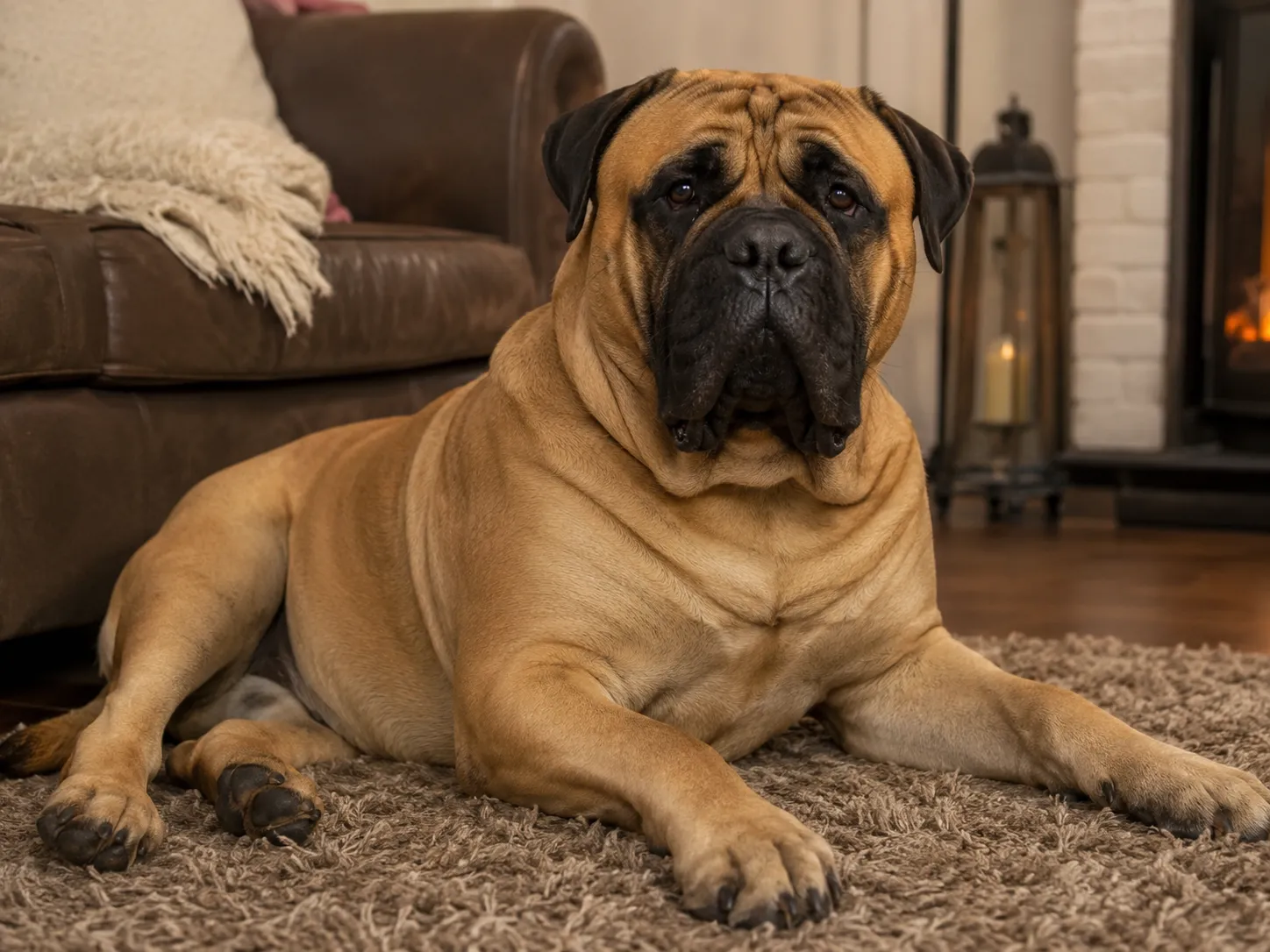
The Bullmastiff is a large, muscular, and compact dog, built for power rather than endurance, and heavier again than the Boxer, a quicker cousin of similar molosser stock. Males typically stand 64–69 cm at the shoulder and weigh 50–59 kg, while females are slightly smaller at 61–66 cm and 41–54 kg. The body is square and solid, giving the breed an imposing yet balanced presence.
Head Shape, Face, and Expression
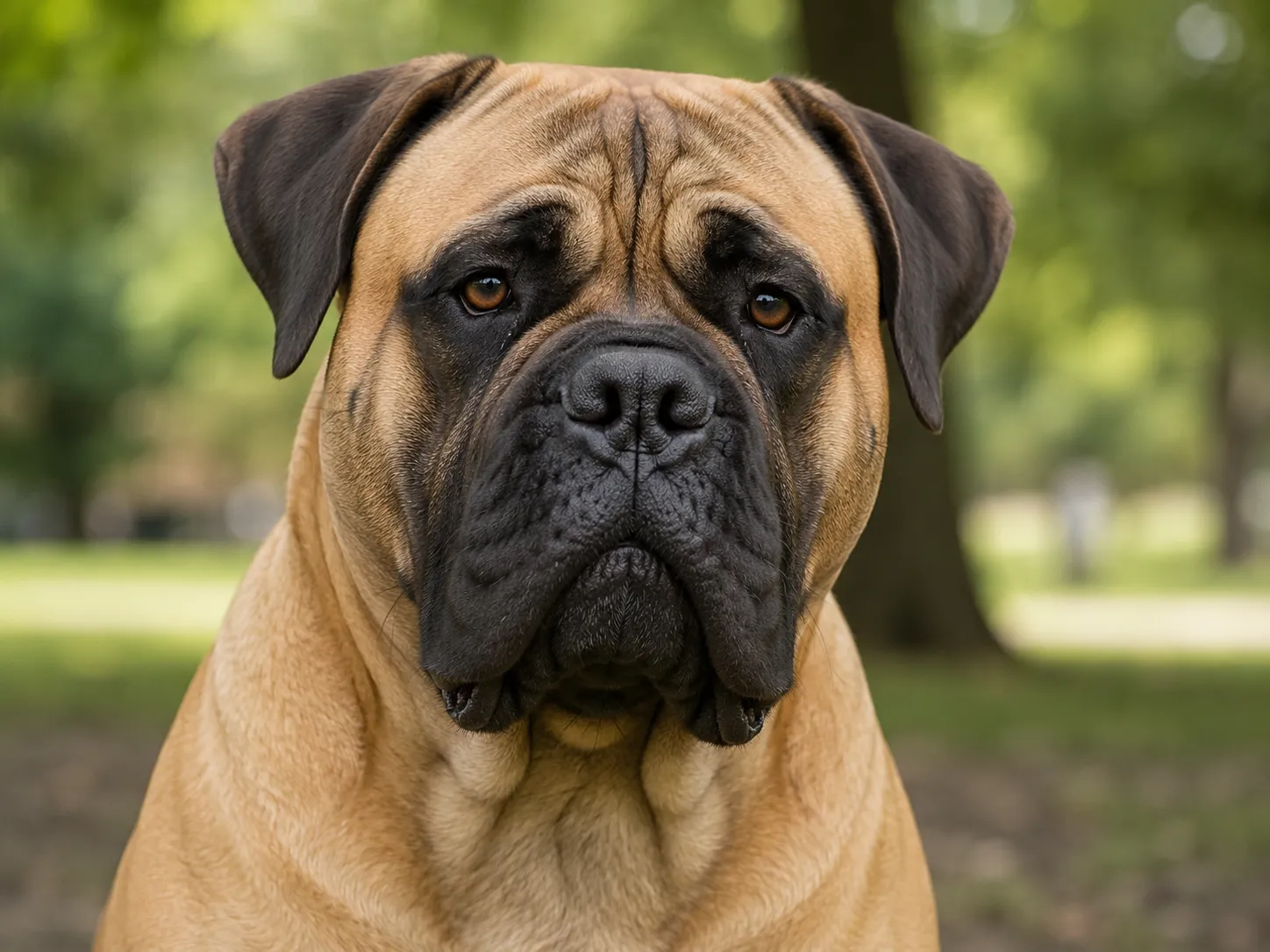
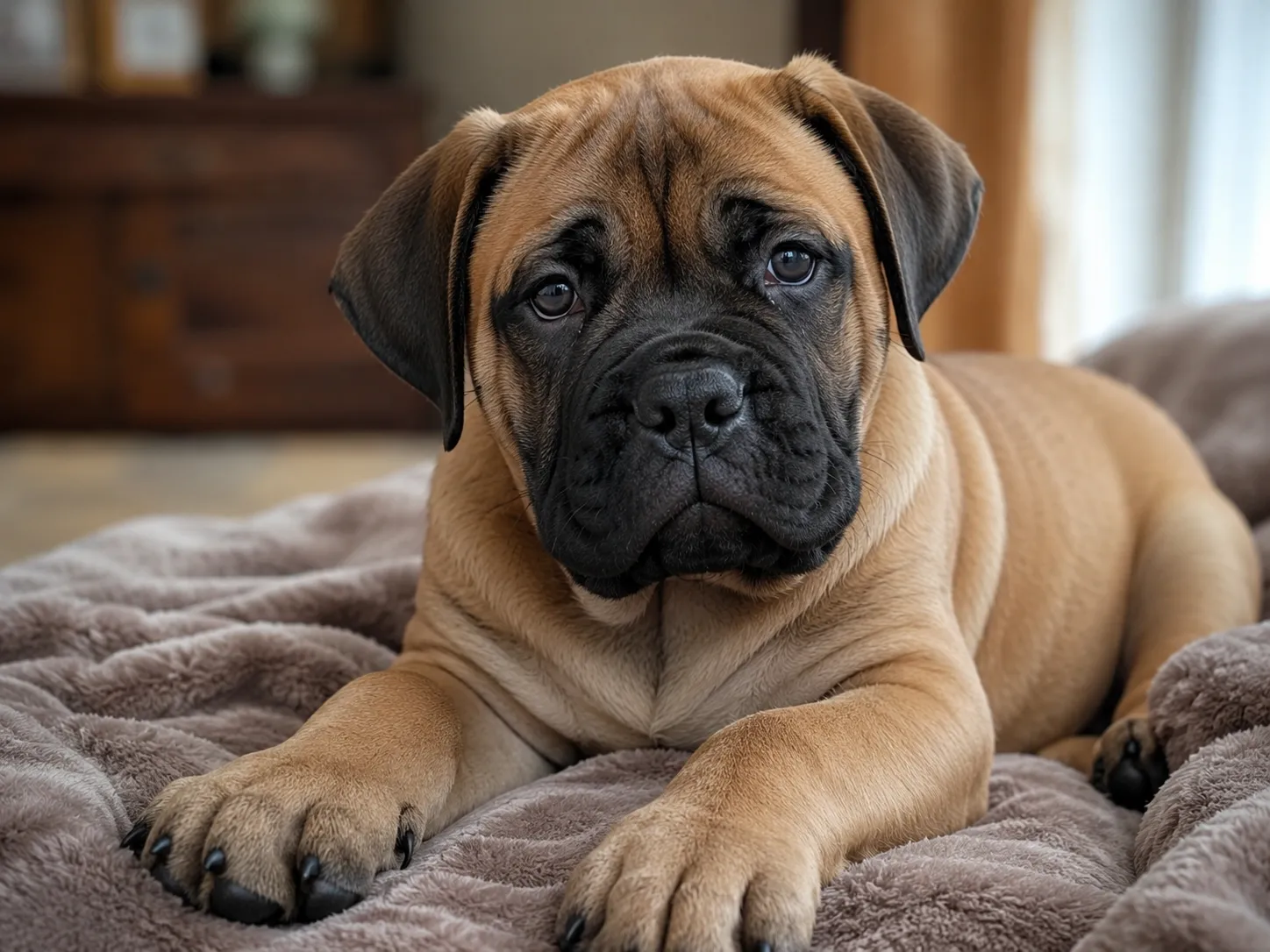
One of the Bullmastiff’s most recognisable traits is its broad, deep head with a pronounced stop and short, square muzzle. The muzzle is usually dark, forming the breed’s characteristic black mask. Eyes are dark hazel or brown and set wide apart, creating a calm, alert expression. Small, V-shaped ears are set high and lie close to the head, often appearing slightly darker than the coat.
Coat Type and Recognised Colours
The Bullmastiff has a short, dense, weather-resistant coat that lies flat against the body. Coat colours include fawn, red, and brindle, often accompanied by a black mask. A small white marking on the chest may appear but is not preferred under the breed standard.
Movement, Structure, and Balance
The chest is broad and deep, supported by straight, well-boned forelegs. Powerful hindquarters provide strong drive, reflecting the breed’s original working role. The tail is set high, thick at the base, and tapers toward the tip. Movement is purposeful and controlled, showing strength, balance, and stability rather than exaggerated speed or reach.
Bullmastiff Temperament: Calm Confidence and Natural Guarding Instincts
A Quietly Confident Nature
The Bullmastiff is known for its calm, self-assured temperament, shaped by generations of purposeful guarding work, so learning how to read a guarding dog's growl matters. Rather than being reactive or excitable, this breed is naturally composed and observant. In the home, Bullmastiffs are typically relaxed and settled, preferring to stay close to their family rather than seek constant stimulation.
Loyalty and Family Bonding
Strong loyalty is a defining trait of the Bullmastiff. These dogs form deep attachments to their household and take their protective role seriously. Affection is shown in a steady, dependable way rather than overt enthusiasm, making the breed well suited to owners who appreciate quiet companionship and presence.
Behaviour Around Strangers
Bullmastiffs are naturally reserved with unfamiliar people, a reflection of sound guarding instinct rather than fear. When properly socialised, they remain controlled and discerning, relying on body language and presence instead of excessive barking. This measured response is one of the breed’s most valued characteristics.
Temperament Considerations for Owners
Due to their size and confidence, Bullmastiffs require clear leadership and consistent boundaries. Without structure, they may become stubborn or overly protective. Early socialisation and calm, confident handling help develop a balanced adult dog that is trustworthy, steady, and reliable in a wide range of situations.
Bullmastiff Intelligence and Trainability: Firm Leadership and Purposeful Learning
How the Bullmastiff Thinks and Learns
The Bullmastiff is a highly intelligent yet independent-minded breed, which is why curbing mouthing without punishment works better than force. Rather than responding automatically, this dog tends to assess situations before acting. This trait comes directly from its history as a night guardian, where judgement and restraint mattered more than speed or repetition. As a result, Bullmastiffs often understand commands quickly but prefer meaningful direction.
Training Style That Produces Results
Bullmastiffs respond best to calm, confident, and consistent training. Positive reinforcement using praise, food rewards, and clear routines is far more effective than harsh corrections. Heavy-handed methods can cause resistance or disengagement, while steady leadership builds trust and cooperation. Training sessions should be short, focused, and purposeful.
Importance of Early Obedience Training
Early training is essential due to the breed’s size, strength, and protective instincts. Core commands such as sit, stay, recall, and lead manners should be introduced during puppyhood, while the dog is still physically manageable. Reinforcing these behaviours into adulthood helps maintain control as the Bullmastiff matures.
Common Training Challenges to Expect
Bullmastiffs can appear stubborn if leadership is inconsistent or expectations change. This behaviour usually reflects uncertainty rather than defiance. Owners who remain patient, predictable, and firm tend to achieve the best results. When trained correctly, the Bullmastiff becomes a composed, reliable companion that respects boundaries and works willingly with its owner.
Bullmastiff Family Life: Children, Other Pets, and Household Dynamics
Suitability for Family Living
The Bullmastiff can be a devoted and dependable family companion, but it is best suited to households that understand the demands of a large guardian breed. Calm environments with predictable routines suit this breed well. Bullmastiffs thrive when they feel securely integrated into family life rather than treated as an outdoor or occasional companion.
Interactions With Children
Due to their size and physical strength, Bullmastiffs are generally more appropriate for homes with older, dog-aware children. While typically patient and tolerant, even friendly play can be overwhelming for younger children. Supervision is essential at all times, particularly during puppyhood and adolescence when the dog may be clumsy or overly enthusiastic.
Living With Other Dogs
Bullmastiffs can live alongside other dogs when early socialisation and clear boundaries are in place. They may be selective, particularly with unfamiliar or same-sex dogs, and do best with controlled introductions. Confident handling and consistent rules help prevent dominance-related issues from developing.
Compatibility With Other Pets
This breed can coexist with cats and smaller animals if raised with them, but caution is advised. Their guarding instincts and size mean careful introductions and ongoing supervision are necessary, especially with pets outside the immediate household group.
Creating a Stable Household Environment
A structured home with clear expectations allows the Bullmastiff to settle comfortably. Consistent leadership, calm interactions, and predictable routines help the breed feel secure, resulting in a balanced, trustworthy dog that fits well into family life.
Bullmastiff Health: Lifespan, Common Conditions, and Preventive Care
Typical Lifespan and Overall Health Profile
The Bullmastiff has an average lifespan of 7 to 9 years, which is typical for large, heavy-boned working breeds. While generally robust, the breed’s size, structure, and brachycephalic features mean owners must take a proactive approach to health management throughout the dog’s life.
Breed-Specific Health Conditions to Be Aware Of
Bullmastiffs are predisposed to several inherited and structural conditions. Awareness and early intervention are essential.
- Hip and elbow dysplasia: Common in large breeds and can lead to arthritis and reduced mobility
- Bloat (gastric dilatation-volvulus): A life-threatening emergency requiring immediate veterinary care
- Cancers: Including lymphoma and mast cell tumours, which occur at higher rates in the breed
- Progressive retinal atrophy (PRA): A genetic eye condition that can lead to vision loss
- Entropion and eyelid issues: Caused by loose facial skin and eye structure
- Hypothyroidism: Can affect weight, coat condition, and energy levels
Importance of Health Testing and Responsible Breeding
Reputable breeders carry out health screening before breeding, helping reduce the risk of inherited disease. Recommended tests for the Bullmastiff include:
- Hip and elbow evaluations
- Eye testing for PRA and related conditions
- Cardiac assessments
- Thyroid testing
Choosing a breeder who provides clear health documentation significantly improves the likelihood of a healthier dog.
Preventive Care and Ongoing Health Management
Routine veterinary care plays a major role in maintaining long-term health. Regular check-ups, weight management, parasite prevention, and dental care are essential. Because Bullmastiffs are prone to bloat, feeding smaller, measured meals and avoiding vigorous exercise around feeding times is strongly advised.
Health Considerations for Owners
Due to the breed’s health profile, pet insurance is highly recommended, as veterinary costs can be higher than average. Owners who stay informed, monitor changes closely, and work with experienced veterinarians are best placed to support a Bullmastiff through every stage of life.
Caring for a Bullmastiff: Daily Routines, Environment, and Long-Term Needs
Daily Care and Routine Requirements
Caring for a Bullmastiff involves consistent daily structure rather than constant activity. This breed benefits from predictable routines that include regular walks, feeding times, and rest periods. While not overly energetic, Bullmastiffs still require daily physical movement and mental engagement to remain balanced and settled.
Home Environment and Space Needs
Bullmastiffs are best suited to homes with secure outdoor space, ideally a well-fenced garden where they can move freely and observe their surroundings. Apartment living is generally unsuitable unless owners can provide frequent outdoor access and controlled exercise. Inside the home, they prefer calm environments and often choose to rest near family members.
Managing Heat and Weather Sensitivity
Due to their brachycephalic structure, Bullmastiffs are sensitive to heat and humidity. Exercise should be limited during warmer parts of the day, and access to shade and fresh water is essential. In colder weather, their short coat provides limited insulation, so comfortable indoor sleeping areas are important, particularly for older dogs.
Supporting the Bullmastiff Through Life Stages
As Bullmastiffs mature, care needs will change. Puppies require controlled activity to protect developing joints, while senior dogs benefit from gentler exercise, joint support, and more frequent veterinary checks. Maintaining a healthy weight throughout life is critical, as excess weight places added strain on joints and internal organs.
Owner Commitment and Responsibility
The Bullmastiff thrives with owners who provide firm leadership, consistency, and presence. This is not a breed that does well when ignored or left alone for long periods. When cared for attentively, the Bullmastiff rewards its owners with loyalty, stability, and a calm, protective presence within the home.
Grooming the Bullmastiff: Coat Care, Skin Health, and Maintenance
Low-Maintenance Coat With Ongoing Skin Attention
The Bullmastiff has a short, dense, weather-resistant coat that is easy to manage compared to many large breeds. Weekly brushing with a rubber grooming mitt or soft brush is usually sufficient to remove loose hair and keep the coat in good condition. Shedding is generally light to moderate and increases slightly during seasonal changes.
Facial Folds and Skin Care
Although grooming demands are minimal, facial folds require regular attention. Dirt and moisture can collect around the muzzle and wrinkles, increasing the risk of irritation or infection. Gently wiping these areas with a damp cloth and drying them thoroughly helps maintain healthy skin and prevents odour.
Bathing and General Hygiene
Bullmastiffs only need bathing when visibly dirty or if skin issues arise. Overbathing can strip natural oils and lead to dryness. Nail trimming, ear checks, and dental care should be part of a regular grooming routine to prevent common problems such as overgrown nails, ear infections, and dental disease.
Grooming Considerations for Owners
Due to the breed’s size, grooming tasks can take longer simply because of scale, even if frequency is low. Owners should be comfortable handling a large dog during routine care. When maintained consistently, grooming remains straightforward and supports the Bullmastiff’s overall health and comfort.
Bullmastiff Exercise Needs: Daily Activity Without Overexertion
Balancing Exercise With Breed Limitations
The Bullmastiff requires regular daily exercise, but this is not a breed built for endurance or high-impact activity. Their ideal routine focuses on controlled movement that maintains muscle tone and mental balance without placing unnecessary strain on joints or breathing.
Recommended Daily Exercise Levels
Most adult Bullmastiffs do well with 60 to 90 minutes of activity per day, split into two walks. These walks should be steady rather than fast-paced, allowing the dog to move comfortably while remaining engaged with its surroundings. Secure garden time can supplement walks but should not replace them entirely.
Suitable Types of Activity
Bullmastiffs respond well to purposeful, low-impact activities, including:
- Structured leash walks at a calm, consistent pace
- Gentle play sessions in secure areas
- Short training sessions that combine movement and mental stimulation
- Scent-based games that engage the dog’s focus without physical strain
High-impact activities such as running alongside bicycles, long-distance jogging, or repetitive jumping are not recommended.
Exercise Considerations for Puppies and Seniors
Puppies require carefully controlled exercise to protect developing joints and bones. Free play should be limited and structured, especially during growth phases. Senior Bullmastiffs benefit from shorter, more frequent walks to maintain mobility while avoiding stiffness or fatigue.
Heat and Safety Awareness
Due to their brachycephalic structure, Bullmastiffs are sensitive to heat. Exercise should be avoided during hot weather, with walks scheduled for early morning or evening. Owners should watch for signs of overheating or laboured breathing and adjust activity levels accordingly.
Feeding the Bullmastiff: Nutrition, Portions, and Weight Control
Nutritional Needs of a Large Working Breed
Feeding a Bullmastiff requires careful attention to quality, portion control, and growth rate. As a large, heavy-boned breed, the Bullmastiff benefits from a balanced diet that supports joint health, muscle maintenance, and steady energy levels without encouraging rapid weight gain.
Choosing the Right Diet
Bullmastiffs generally do best on high-quality large-breed formulas designed to support controlled growth and adult maintenance. Protein levels should be adequate to maintain muscle, but not excessive. Diets rich in unnecessary fillers can contribute to weight gain and digestive issues, so ingredient quality matters more than quantity.
Feeding Schedule and Portion Control
To reduce the risk of bloat, Bullmastiffs should be fed two measured meals per day rather than one large serving. Puppies may require three smaller meals during early growth stages. Exercise should be avoided immediately before and after feeding to minimise digestive stress.
Managing Weight and Body Condition
Maintaining a healthy weight is critical for this breed. Excess weight places additional strain on joints, heart, and respiratory function. Owners should regularly check body condition by feeling for ribs beneath a light fat covering and monitoring changes in mobility or stamina.
Special Feeding Considerations
Some Bullmastiffs are prone to food sensitivities or allergies, which may show as skin irritation or digestive upset. Fresh water should always be available, and treats should be used sparingly, particularly during training. Consulting a veterinarian for tailored feeding advice is strongly recommended, especially during growth and senior years.
Bullmastiff Price and Ongoing Costs: What to Expect Financially
Bullmastiff Puppy Price in Australia
The purchase price of a Bullmastiff puppy in Australia typically ranges from AUD $1,200 to $2,500, depending on breeder reputation, lineage, health testing, and location. Puppies from fully health-tested parents, particularly those bred to Kennel Club standards, are usually priced at the higher end of this range.
Initial Setup Costs
Before bringing a Bullmastiff home, owners should budget for essential setup items. Due to the breed’s size and strength, equipment must be durable and well suited to a large dog.
Initial costs may include:
- Heavy-duty bedding and crates sized for a large breed
- Strong leads, collars, or harnesses
- Food and water bowls suitable for large dogs
- Grooming tools and basic care supplies
These setup costs typically fall between AUD $800 and $1,500, with a giant breed sitting at the upper end for bedding, crates and leads.
Monthly and Ongoing Expenses
Ongoing costs for a Bullmastiff are higher than average due to food consumption, insurance, and veterinary care. Monthly expenses commonly include:
- Premium large-breed dog food
- Routine veterinary care and parasite prevention
- Pet insurance, which is strongly recommended due to breed-specific health risks
Owners should expect monthly costs of AUD $150 to $300, depending on insurance coverage and food choices, and you can compare these against typical dog insurance and pet care costs in Australia.
Long-Term Financial Commitment
Over a lifetime, Bullmastiffs can incur significant veterinary costs related to joint issues, bloat, or other inherited conditions. Factoring in insurance excesses, specialist care, and senior dog needs is essential. This breed is best suited to owners who are financially prepared for long-term responsibility, ensuring consistent care throughout all life stages.
Buying a Bullmastiff: Responsible Ownership and Ethical Choices
Choosing a Reputable Bullmastiff Breeder
Finding the right breeder is essential when buying a Bullmastiff. Reputable breeders prioritise health, temperament, and correct structure over appearance or profit. They should be registered with The Kennel Club and willing to provide full health testing results for both parents, including hip, elbow, eye, and cardiac screenings.
What to Look for When Viewing Puppies
When visiting a litter, puppies should appear confident, clean, and well socialised. The environment should be calm and well managed, with clear evidence that the puppies have been exposed to everyday household sights and sounds. Meeting the mother is important, as her temperament often gives insight into how the puppies may develop.
Questions Every Buyer Should Ask
Prospective owners should feel comfortable asking detailed questions. Responsible breeders expect this and welcome informed buyers.
Key questions include:
- What health tests have been completed on the parents?
- How are the puppies socialised before leaving?
- What support do you offer after the puppy goes home?
- Are there any known health issues in the bloodline?
Clear, confident answers are a strong indicator of ethical breeding.
Avoiding Unethical Sellers and Scams
Buyers should avoid sellers who refuse home visits, cannot provide health documentation, or pressure buyers into quick decisions. Extremely low prices, vague paperwork, or requests for deposits before meeting the puppy are common warning signs. Bullmastiffs are a significant commitment and should never be purchased impulsively.
Considering Rescue and Rehoming
Breed-specific rescues can be an excellent option for experienced owners. Adult Bullmastiffs in rescue often need homes that understand their guarding instincts and size. Rehoming allows owners to offer a second chance while gaining a dog whose temperament is already established.
Making an Informed Decision
Buying a Bullmastiff should be approached with patience and preparation. When sourced responsibly and matched with the right household, the Bullmastiff becomes a loyal, steady, and deeply devoted companion, rewarding thoughtful ownership for many years.
Is the Bullmastiff the Right Breed for You?
The Bullmastiff is best suited to experienced dog owners who understand large guardian breeds and are prepared to provide structure, leadership, and long-term commitment. This is not a breed for first-time owners or households looking for an easy, low-responsibility companion.
Owners who thrive with a Bullmastiff typically have:
- A secure home environment with outdoor space
- The ability to commit to consistent training and socialisation
- An understanding of large-breed health and financial responsibilities
- A calm, confident approach to leadership and routine
In the right home, the Bullmastiff is a quietly devoted, deeply loyal protector. It does not seek constant activity or attention, but it values presence, trust, and stability. For owners who appreciate strength paired with restraint, the Bullmastiff offers a rare balance of dignity, reliability, and unwavering companionship.
If you are prepared for the responsibility and lifestyle this breed requires, the Bullmastiff can become an exceptional and rewarding addition to your home.
Frequently Asked Questions
Related Breeds
Other companion breeds on Pups4Sale.
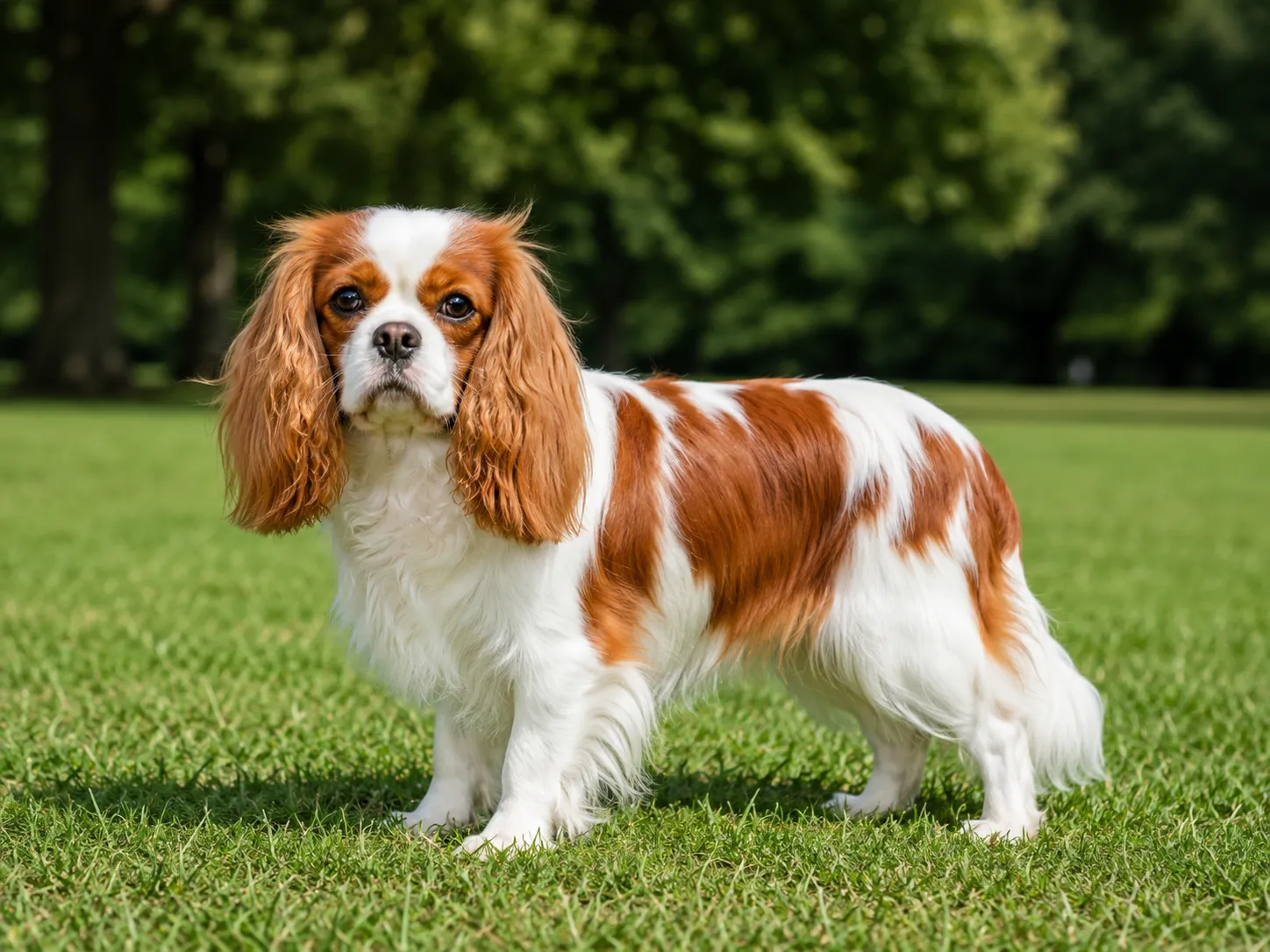 Cavalier King Charles SpanielSmall • Toy
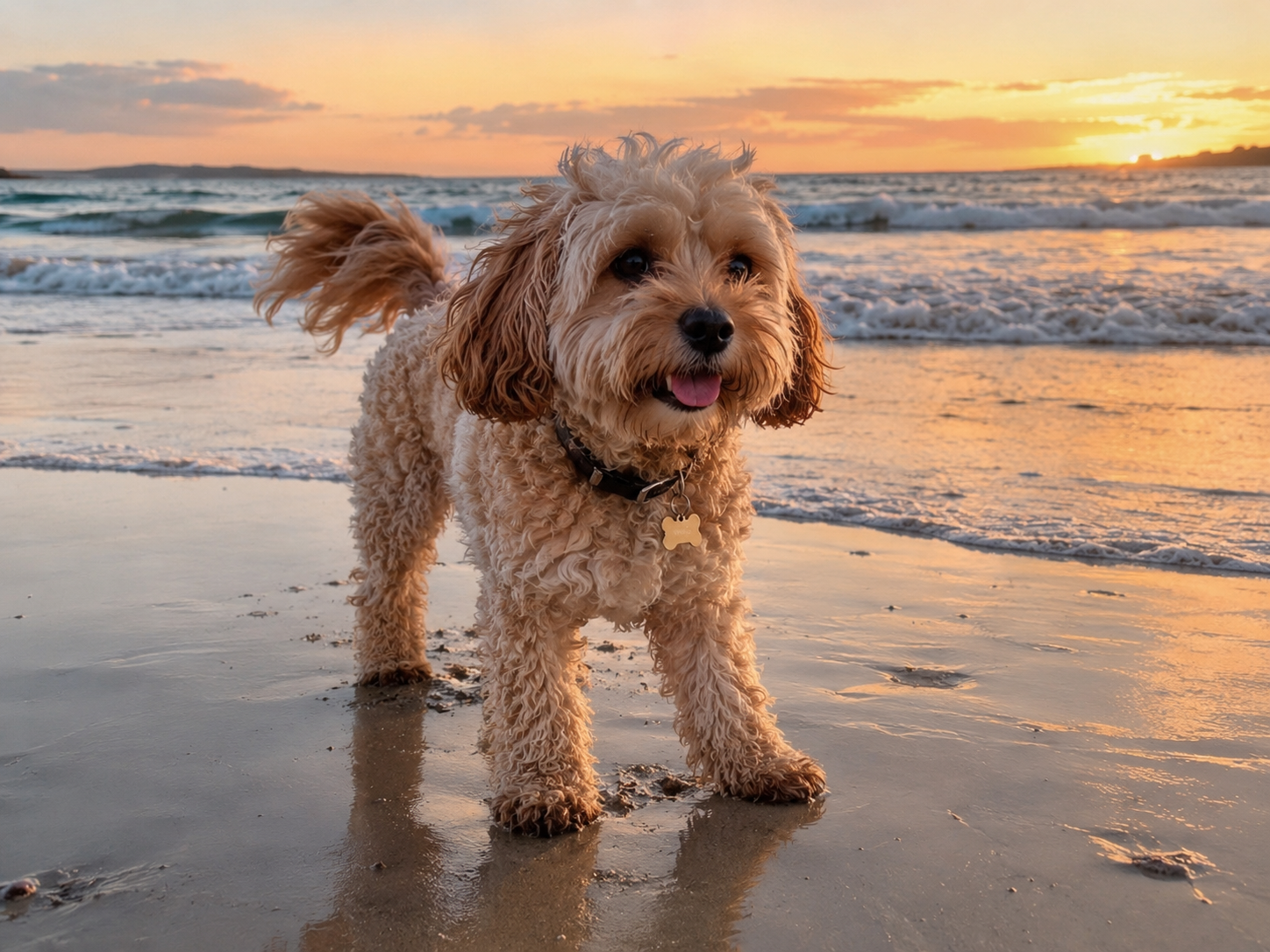 CavoodleSmall • Companion
 ChihuahuaSmall • Toy
 Chow ChowMedium • Non-Sporting
 DalmatianLarge • Utility
 Dandie Dinmont TerrierSmall • Terrier