Bouvier des Flandres
By James C. • Updated
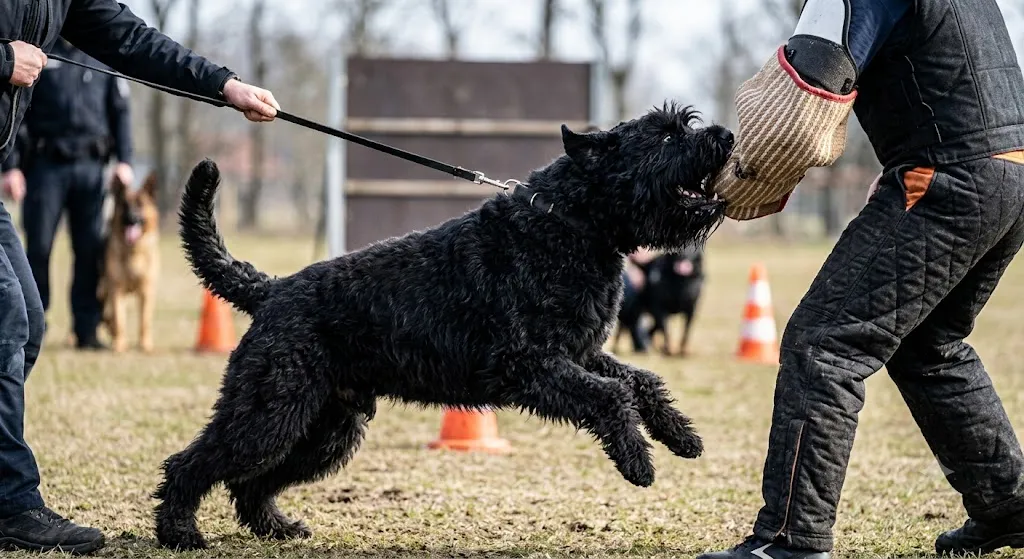
The Bouvier des Flandres is a large, powerful working dog originally bred for herding cattle, farm work, and guarding. It has a strong, rugged build, a dense rough coat, and a calm but protective nature. This breed is loyal, intelligent, and highly capable, but it suits experienced owners who can provide firm training, regular grooming, and plenty of structure.
Breed Overview
Life Span
10 - 20 years
Average Price
AUD 3500 - AUD 7000
Weight
Male: 32 - 40 kg Female: 27 - 35 kg
Height
Male: 62 - 68 cm Female: 59 - 65 cm
Life Expectancy
Male/Female: 10 - 12 years
Breed Group
Working
Nicknames
Vuilbaard, Koehond, Toucheur de Boeuf
Breed Information
The Bouvier des Flandres is a powerful, compact working dog developed for demanding farm work in the regions of Belgium and northern France. Originally bred as a cattle herder and all-purpose farm guardian, this breed combines physical strength, endurance, and sharp intelligence beneath its rugged, unkempt appearance.
Despite its imposing build and protective instincts, the Bouvier is known for a calm, steady temperament when mature. It is deeply loyal to its family, reserved with strangers, and naturally alert to its surroundings. This breed forms strong bonds with its owners and thrives when given structure, purpose, and regular engagement rather than passive companionship.
The Bouvier des Flandres is best suited to experienced owners who can provide space, consistent training, and meaningful work or activity. When its physical and mental needs are met, the breed offers dependable loyalty, strong guardianship, and a composed presence that reflects its working heritage.
Characteristics: What Living With a Bouvier des Flandres Is Really Like
The Bouvier des Flandres is a serious working dog with a calm, thoughtful nature and strong protective instincts. Life with this breed is structured, purposeful, and deeply rewarding for owners who understand working-dog behaviour and are prepared to meet its needs consistently.
| Characteristic | Rating | Star Rating (★ out of 5) | What This Means for You |
| Size | Large | ★★★★★ | A solid, heavy-boned dog that needs space and confident handling. |
| Adaptability | Moderate | ★★★☆☆ | Adjusts best to rural or suburban homes with routine and space. |
| Exercise Needs | High | ★★★★☆ | Requires daily physical work and mental engagement to stay balanced. |
| Easy to Train | High | ★★★★☆ | Intelligent and willing, but needs clear leadership and consistency. |
| Amount of Shedding | Low | ★★☆☆☆ | Minimal shedding, though coat care is frequent and time-consuming. |
| Grooming Needs | High | ★★★★☆ | Dense coat requires regular brushing and professional maintenance. |
| Good With Children | Moderate | ★★★☆☆ | Better suited to families with older children due to herding instincts. |
| Health of Breed | Moderate | ★★★☆☆ | Generally healthy, with some inherited risks requiring screening. |
| Cost to Keep | High | ★★★★☆ | Feeding, grooming, training, and vet care add to ongoing costs. |
| Tolerates Being Alone | Low | ★★☆☆☆ | Strongly people-oriented and dislikes long periods of isolation. |
| Intelligence | High | ★★★★★ | Sharp, observant, and task-driven rather than passively obedient. |
In summary, the Bouvier des Flandres suits owners who want a dependable working companion rather than a casual pet. This breed thrives in homes that value structure, training, and meaningful daily activity, and it rewards commitment with loyalty, steadiness, and protective devotion.
History of the Bouvier des Flandres: The Cowherd of Flanders
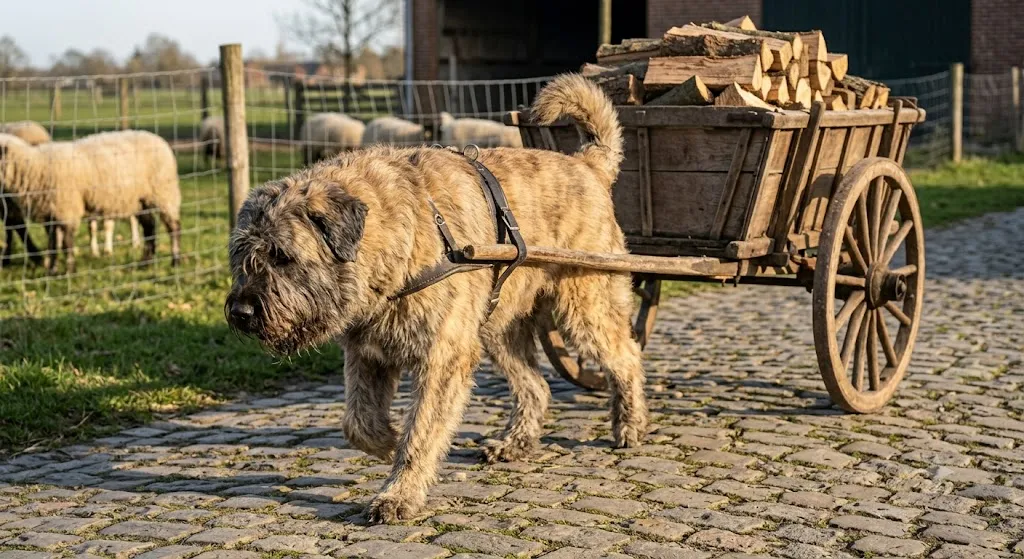
The Bouvier des Flandres originated in the agricultural regions of Flanders, an area spanning parts of modern-day Belgium, France, and the Netherlands. The breed’s name translates directly to “cowherd of Flanders,” a reflection of its original role as a versatile farm dog responsible for moving cattle, guarding property, and pulling carts loaded with milk churns or supplies.
In its early development, the Bouvier was not a single, clearly defined breed but one of several regional working dog types. Farmers selected dogs based on strength, stamina, intelligence, and reliability rather than appearance. As a result, Bouviers were valued for their ability to work long hours in harsh weather, make independent decisions, and remain calm under pressure.
The breed’s survival was threatened during both World Wars, particularly World War I, when much of Flanders became a battlefield. Farms were destroyed, and many dogs were lost. The Belgian army played a crucial role in preserving the breed, using Bouviers as messenger dogs, ambulance dogs, and guards. After the wars, dedicated breeders worked to stabilise the population and formalise a written breed standard.
By the mid-20th century, the Bouvier des Flandres gained recognition beyond rural Europe. Breed clubs were established, and the dog’s reputation grew as a capable working companion, police dog, and guardian. Despite this wider recognition, the modern Bouvier remains true to its origins: a serious, hardworking dog shaped by function, resilience, and an enduring work ethic.
Appearance of the Bouvier des Flandres: Rugged Strength and Purpose
The Bouvier des Flandres has a powerful, compact build that reflects its working origins, closer in bulk to the Old English Sheepdog than to the lighter herding breeds. Nothing about this breed is ornamental. Every physical feature serves a practical purpose, contributing to strength, endurance, and resilience in demanding environments.
Size, Build, and Structure
The Bouvier is a large, solidly built dog with heavy bone and a short-coupled body. Its frame is muscular rather than lean, giving the breed the strength needed for herding, guarding, and cart pulling. Males are noticeably broader and more imposing, while females are slightly lighter but still robust. The chest is deep and wide, supporting stamina and lung capacity for long working days.
Head, Expression, and Coat Texture
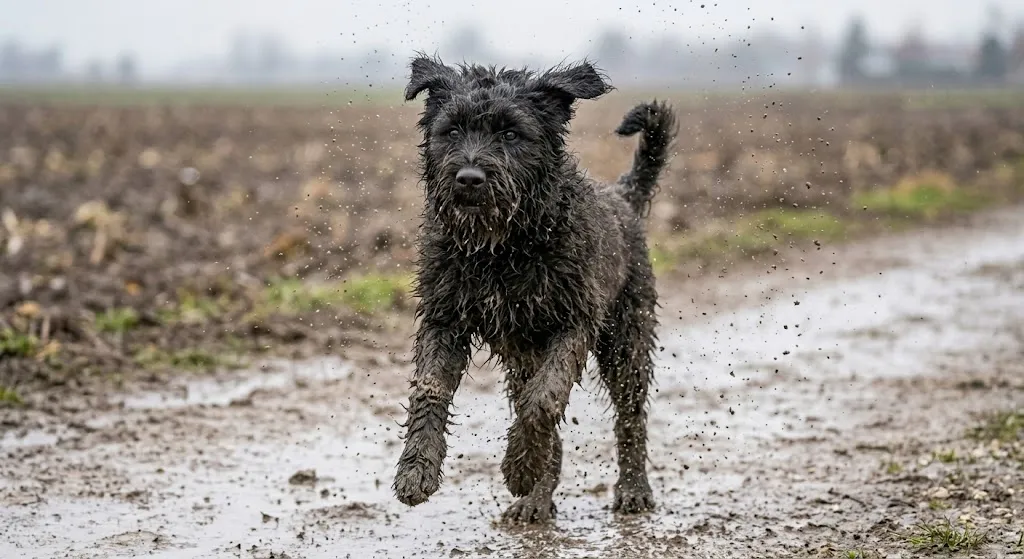
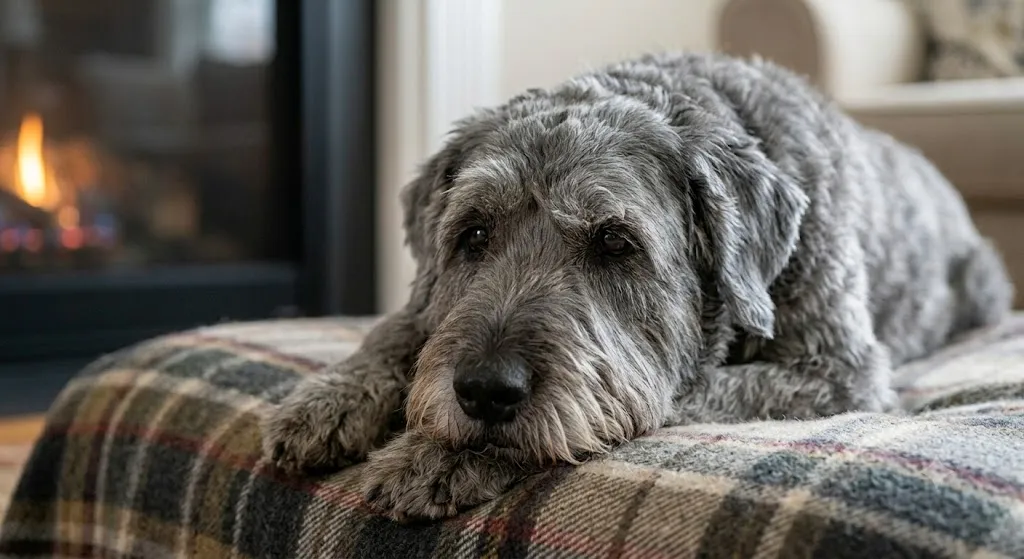
One of the Bouvier’s most distinctive features is its head, accentuated by heavy eyebrows, a full beard, and a pronounced moustache. The skull is broad and strong, with dark, alert eyes that convey intelligence and watchfulness. The coat is dense, rough, and weatherproof, designed to protect the dog from cold, wind, and rain rather than to appear polished or refined.
Coat Colour and Overall Presentation
Bouvier coats appear in shades ranging from black and dark grey to fawn and brindle. A small amount of white on the chest is permitted. The coat is typically kept at a functional length, maintaining its protective qualities while allowing free movement. Unlike many long-coated breeds, the Bouvier’s appearance is intentionally rugged rather than flowing.
Movement and Presence
Movement is steady, powerful, and purposeful. The Bouvier covers ground efficiently rather than quickly, with a confident stride that reflects strength and balance. Its overall presence is commanding without being aggressive, giving the impression of a capable working dog that is always aware of its surroundings and ready to respond when needed.
Different Types of the Bouvier des Flandres: One Breed, Distinct Working Influence
The Bouvier des Flandres is recognised as a single breed, but variations exist within the population due to its working origins and the practical way it was historically bred. These differences are subtle and relate more to function and environment than to formal sub-types.
Working Lines and Show Lines
Bouviers bred from strong working lines tend to emphasise strength, stamina, and mental resilience. These dogs often have a more utilitarian coat, heavier bone, and a serious, task-focused temperament. They are commonly seen in roles such as herding, guarding, police work, and search and rescue, where reliability and endurance matter more than appearance.
Show-line Bouviers follow a more standardised outline, with greater emphasis on coat presentation, balance, and overall symmetry. While visually more polished, well-bred show dogs retain the breed’s natural confidence, intelligence, and protective instincts. Temperament remains steady, but some may have slightly lower drive than heavily worked lines.
Size and Gender Differences
Differences within the breed are often more noticeable between males and females than between bloodlines. Males are larger, broader, and more imposing, often displaying stronger guarding instincts. Females are typically lighter, more agile, and may mature slightly faster, which can influence handling and training approaches.
Coat Density and Maintenance
Although all Bouviers have a dense, rough coat, texture and density can vary. Some dogs develop heavier undercoats that require more frequent grooming, while others have slightly coarser outer coats that are easier to maintain. These differences affect grooming commitment rather than temperament or working ability.
Regardless of these variations, all Bouvier des Flandres share the same defining traits: strength, intelligence, loyalty, and a strong desire to work alongside their owner.
Temperament of the Bouvier des Flandres: Steady, Protective, and Deeply Loyal
The Bouvier des Flandres is a serious, thoughtful dog with a calm and confident temperament, and reading what a dog is signalling when it growls matters with a guarding breed. This breed was shaped to work independently around livestock while remaining closely bonded to its handler, and that balance still defines its personality today. Bouviers are not excitable or impulsive dogs. They observe first, assess situations carefully, and respond with purpose.
Core Personality Traits
Bouviers are known for their steadiness and reliability. With their family, they are affectionate, loyal, and quietly devoted rather than demonstrative. They tend to form strong attachments to their household and prefer to stay close, often positioning themselves where they can keep watch without interfering.
Behaviour With Strangers
With unfamiliar people, the Bouvier is naturally reserved and watchful. This is not a fearful or aggressive response, but a measured caution rooted in the breed’s guarding history. A well-bred, well-socialised Bouvier should be calm and controlled, alerting when something feels unusual but responding appropriately to guidance from its owner.
Protective Instincts and Awareness
Protection comes naturally to this breed. Bouviers are instinctively territorial and alert, making them excellent watchdogs. They do not tend to bark without reason, but they will stand their ground if they perceive a genuine threat. Clear leadership and early socialisation are essential to ensure these instincts remain balanced and appropriate.
Common Temperament Challenges
Challenges usually arise when the breed’s working nature is underestimated. Without sufficient mental engagement or structure, Bouviers may become stubborn, controlling, or overly suspicious. Adolescents can be particularly strong-willed and benefit from consistent boundaries and ongoing training. When their needs are met, the Bouvier des Flandres is a calm, dependable companion with a strong sense of responsibility toward its people.
Intelligence and Trainability of the Bouvier des Flandres: Purpose-Driven and Highly Capable
The Bouvier des Flandres is an intelligent working breed that thrives when its mind is engaged and its role is clear. This is not a dog that responds well to repetitive drills or passive ownership. Training succeeds when it is purposeful, structured, and built around a strong working partnership.
How Bouviers Learn
Bouviers are quick to understand tasks, especially when they see practical value in what is being asked. Their intelligence is grounded in problem-solving and situational awareness rather than quick obedience responses. Once a behaviour is learned, it is usually retained well, provided the dog respects the handler and the task remains meaningful.
Training Style That Works Best
Consistent, fair, and confident handling produces the best results. Bouviers respond well to positive reinforcement combined with clear boundaries. They are eager to please once a bond is established, but they will test leadership if rules are inconsistent. Training sessions should be calm, structured, and regular, focusing on real-world skills rather than constant repetition.
Drive, Independence, and Control
As a breed developed to work independently around livestock, the Bouvier can be strong-willed. This independence is an asset in working roles but requires thoughtful management in a companion setting. Early training should focus on impulse control, recall, and calm behaviour around people and animals. Without guidance, a Bouvier may attempt to take control of situations it believes require management.
Long-Term Training and Mental Engagement
Training does not end after puppyhood with this breed. Bouviers benefit from ongoing learning throughout their lives, whether through advanced obedience, herding activities, scent work, or structured jobs around the home. Mental stimulation is as important as physical exercise. When their intelligence is properly engaged, Bouviers are confident, reliable, and deeply cooperative working partners.
Bouvier des Flandres and Family Life: Children, Other Pets, and the Home
The Bouvier des Flandres can be a devoted and reliable family companion, but only in households that understand its working instincts and protective nature. This is not a passive family dog. It thrives in structured homes where expectations are clear and leadership is consistent.
Living With Children
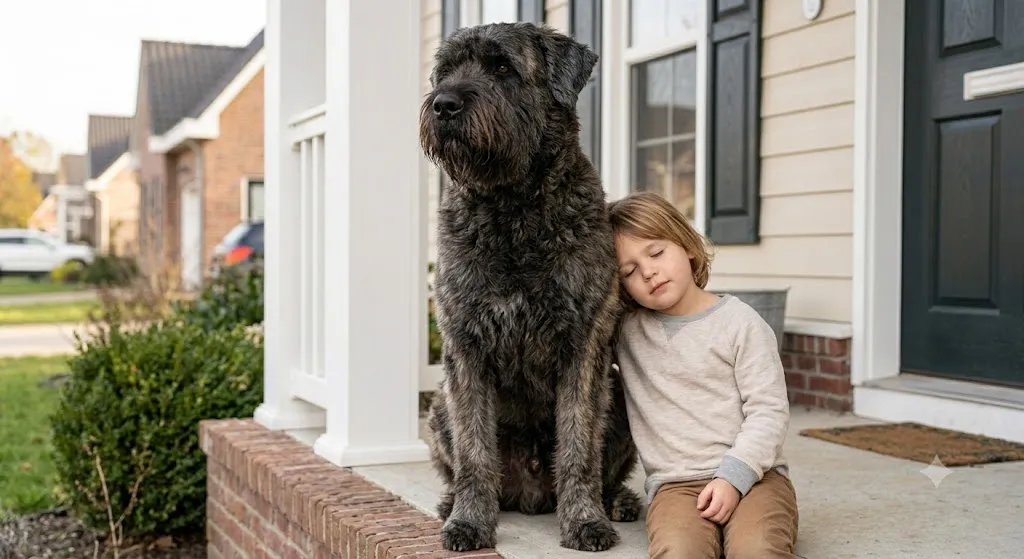
Bouviers are typically patient and tolerant with children in their own household, particularly when raised alongside them. However, their size, strength, and herding background mean they are better suited to families with older children or teenagers who understand boundaries and calm interaction.
Young children may trigger herding behaviours such as blocking, nudging, or rounding up, which can be stressful for both dog and child. Supervision is essential, and respectful interaction should be taught early on both sides.
Compatibility With Other Dogs and Pets
The Bouvier’s relationship with other animals depends heavily on early socialisation and ongoing management.
- Can live well with other dogs when properly introduced
- May be reserved or dominant with unfamiliar dogs
- Requires careful introductions with smaller pets due to herding instincts
Bouviers are not naturally dog-social in the way some breeds are. They tend to tolerate rather than seek out canine company, and they do best when interactions are structured rather than chaotic.
Home Environment and Daily Dynamics
This breed is best suited to larger homes with space to move and a securely fenced garden. Busy urban environments can be overstimulating, particularly for young or inexperienced Bouviers. They are happiest when they feel responsible for their home and people, often positioning themselves where they can observe and monitor activity.
A Bouvier does not cope well with frequent isolation. Strong attachment to family members means long periods alone can lead to frustration or unwanted behaviour. Homes where someone is present for much of the day, or where the dog has a defined role, suit this breed best.
When matched with the right family and environment, the Bouvier des Flandres becomes a steady, loyal, and deeply committed companion that takes its role within the household seriously.
Health of the Bouvier des Flandres: What Owners Should Know
The Bouvier des Flandres is generally a robust and capable working breed, but its size, strength, and genetic background mean there are specific health considerations owners should understand early. Responsible breeding, structured care, and regular veterinary oversight play a major role in maintaining long-term wellbeing.
Breed-Specific Health Considerations
While many Bouviers live healthy lives, the breed is known to be predisposed to several conditions that require awareness and proactive management:
- Hip and elbow dysplasia: Common in large, heavy-boned breeds. Screening of breeding stock and maintaining a healthy weight help reduce long-term joint stress.
- Gastric dilatation-volvulus (bloat): A serious and potentially life-threatening condition seen in deep-chested dogs. Feeding smaller meals and avoiding strenuous activity around meal times are important preventative measures.
- Eye conditions: Cataracts and glaucoma may occur in some lines, making routine eye examinations valuable.
- Cardiac issues: Conditions such as subaortic stenosis have been reported, reinforcing the importance of cardiac screening.
- Neurological and muscular conditions: Bouvier des Flandres myopathy and epilepsy are known breed-related concerns in certain bloodlines.
- Endocrine and organ-related conditions: Hypothyroidism, megaesophagus, ectopic ureters, and portosystemic shunts may also appear.
Genetic Testing and Health Screening
Ethical breeders prioritise comprehensive health testing before breeding. Recommended screening commonly includes hip and elbow evaluations, cardiac examinations, and ophthalmologist assessments. Reviewing documented health results for both parents helps reduce the risk of inherited disease and supports long-term soundness.
Veterinary Care and Preventative Management
Routine veterinary care is essential for early detection and management of health concerns. This includes regular vaccinations, parasite prevention, dental care, and weight monitoring. Because Bouviers mature slowly, careful management during growth is especially important to protect joints and overall development.
Long-Term Health Planning
Given the breed’s size and working nature, many owners choose comprehensive pet insurance to help manage unexpected veterinary costs. Ongoing monitoring, age-appropriate exercise, and nutritional adjustments support quality of life as the dog ages. With informed ownership and responsible breeding, the Bouvier des Flandres can enjoy an active, stable, and comfortable life well into its senior years.
Caring for the Bouvier des Flandres: Daily Needs and Long-Term Care
Caring for a Bouvier des Flandres goes beyond meeting basic needs, and that dense working coat makes heat stress indoors a genuine risk in an Australian summer. This is a working dog that thrives on structure, purpose, and close involvement with its family. When care is consistent and thoughtful, the breed is calm, reliable, and deeply settled in its environment.
Daily Care and Routine
Bouviers benefit from predictable daily routines that combine physical activity, mental engagement, and downtime. They prefer knowing what is expected of them and where they fit within the household. Daily walks, training refreshers, and time spent with their people help maintain emotional balance. Without structure, this breed may attempt to impose its own order, which can lead to controlling behaviour.
Living Environment and Space Requirements
A Bouvier is best suited to a larger home with space to move comfortably. While they can adapt to suburban living, cramped environments or constant noise can be stressful. A secure, well-fenced garden is essential, not for unsupervised exercise, but as an extension of their territory. This breed is naturally watchful and benefits from an environment it can clearly define and monitor.
Managing Separation and Social Needs
Bouviers form strong bonds with their families and do not cope well with long periods of isolation. They are happiest when included in daily life and given meaningful interaction. Occasional time alone is manageable with training, but frequent or prolonged separation can lead to frustration or unwanted behaviours.
Senior Care and Ageing Considerations
As Bouviers age, their care needs shift gradually. Joint stiffness, reduced stamina, and longer recovery times are common in senior dogs. Softer bedding, controlled exercise, and nutritional support help maintain comfort. More frequent veterinary check-ups allow age-related changes to be addressed early, supporting quality of life in later years.
With steady routines, appropriate space, and consistent involvement, the Bouvier des Flandres remains a dependable, confident, and deeply loyal companion throughout every stage of life.
Grooming the Bouvier des Flandres: Coat Care, Maintenance, and Commitment
The Bouvier des Flandres has a dense, rough coat designed to protect a working dog in harsh conditions rather than to be low maintenance. While the breed sheds very little, grooming is frequent and essential. Coat care is not optional with this breed and should be viewed as part of daily life rather than an occasional task.
Coat Type and Grooming Frequency
Bouviers have a coarse outer coat with a thick undercoat that easily traps dirt and forms mats if neglected. The coat is usually maintained at a practical working length of around six centimetres to balance protection and manageability. Regular grooming keeps the skin healthy and prevents discomfort.
Most Bouviers need attention several times a week, with some coats benefiting from light daily brushing, particularly in active dogs or those spending time outdoors.
Essential Grooming Tasks
Routine grooming focuses on keeping the coat functional, clean, and mat-free. Key tasks include:
- Brushing and combing: Using a slicker brush, pin brush, and wide-toothed comb to work through the coat down to the skin
- Mat prevention: Extra care around the legs, undercarriage, beard, and behind the ears where tangles form quickly
- Coat maintenance: Hand stripping or professional grooming once or twice a year, particularly during seasonal coat changes
Bathing and Hygiene
Bathing is required periodically, especially after muddy or wet conditions. Due to the coat’s thickness, drying can take time and proper ventilation is important to avoid skin issues. Many owners opt for professional grooming for full baths and trims.
Hygiene routines should also include:
- Beard and moustache cleaning: Regularly wiping food and debris to prevent odour and irritation
- Nail care: Trimming every one to two weeks to maintain correct posture and movement
- Ear checks: Weekly inspection and gentle cleaning as needed
- Dental care: Ongoing tooth brushing or suitable dental aids to support oral health
Long-Term Grooming Commitment
Grooming a Bouvier des Flandres requires consistency and patience. Introducing handling and grooming routines early helps the dog accept care calmly as it matures. For owners willing to commit the time, grooming becomes an effective way to monitor health, strengthen bonding, and keep this powerful working breed comfortable and well maintained.
Exercise Needs of the Bouvier des Flandres: Purposeful Work and Structured Activity
The Bouvier des Flandres is a powerful working breed that requires more than casual walks to remain balanced and content. Bred to work long days herding cattle and guarding property, this dog thrives when both its body and mind are challenged in meaningful ways.
Daily Exercise Requirements
Once fully mature, an adult Bouvier typically needs a minimum of two hours of daily exercise. This should be spread across structured walks, controlled free movement, and mentally engaging activities. Simple lead walks alone are rarely sufficient for this breed.
Puppies and adolescents require more careful management. Their exercise should be frequent but controlled to protect developing joints, with an emphasis on short walks, basic training, and supervised play rather than long-distance running.
The Importance of Mental Stimulation
Mental engagement is just as important as physical activity for the Bouvier. Without it, boredom can quickly lead to frustration and destructive behaviour. Activities that suit the breed particularly well include:
- Obedience and advanced training work
- Herding-style games or scent-based tasks
- Puzzle feeders and problem-solving exercises
- Structured play that reinforces focus and control
Off-Lead Activity and Safety
Bouviers enjoy freedom of movement but require secure environments. Their guarding instincts and physical strength mean off-lead exercise should only take place in safely enclosed areas. A reliable recall is achievable with training, but it should never be assumed in open or unfamiliar spaces.
Consequences of Under-Exercise
A Bouvier that does not receive enough stimulation may become restless, vocal, controlling, or destructive. These behaviours are not temperament faults but signs of unmet needs. When given sufficient work, structure, and engagement, the Bouvier des Flandres is calm, focused, and deeply satisfied in daily life.
Feeding the Bouvier des Flandres: Nutrition for Strength, Growth, and Longevity
The Bouvier des Flandres is a large, muscular working breed that benefits from carefully balanced nutrition throughout its life. Feeding should support steady growth, joint health, and sustained energy without encouraging excessive weight gain or digestive strain.
Nutritional Needs by Life Stage
Bouvier puppies grow slowly and should not be rushed through development. Diets formulated for large-breed puppies help support controlled growth and reduce stress on developing joints. Adult Bouviers require nutrient-dense food that supports muscle maintenance and daily activity, while senior dogs benefit from adjusted calorie intake and joint-supporting nutrients.
Protein, Fats, and Energy Balance
Although active, the Bouvier does not require extremely high protein levels compared to some other working breeds. A moderate, high-quality protein source combined with appropriate fat levels supports strength and stamina without promoting unnecessary bulk. Overfeeding can quickly lead to excess weight, which places strain on joints and overall mobility.
Feeding Practices and Digestive Health
Bouviers are prone to digestive issues, including bloat, making feeding routines particularly important. Owners are encouraged to:
- Divide daily food into two or more smaller meals
- Avoid vigorous exercise immediately before or after feeding
- Maintain consistent feeding times and portions
- Monitor weight regularly and adjust intake as needed
Clean, fresh water should always be available, especially after exercise.
Treats and Supplementation
Treats can be valuable training tools but should be used sparingly and factored into daily calorie intake. Joint supplements, such as glucosamine or omega-3 fatty acids, may be beneficial, particularly for active or ageing dogs. Any supplementation or home-prepared diets should be discussed with a veterinarian to ensure nutritional balance.
With thoughtful feeding and consistent routines, the Bouvier des Flandres can maintain strong condition, healthy digestion, and long-term vitality.
Training the Bouvier des Flandres: Structure, Purpose, and Partnership
Training a Bouvier des Flandres is most successful when it is built around mutual respect and clear purpose, which is why starting obedience work early pays off. This breed was developed to think independently while working closely with people, and that balance still shapes how Bouviers respond to training today.
Building the Right Foundation
Early training should begin as soon as the dog comes home. Bouviers are intelligent and observant, quickly learning both good and bad habits. Calm consistency, clear rules, and confident handling help establish trust and prevent power struggles as the dog matures.
Key early focus areas include:
- Basic obedience and impulse control
- Polite behaviour around people and animals
- Loose lead walking and calm greetings
Motivation and Learning Style
Bouviers are not robotic obedience dogs. They learn best when training feels meaningful rather than repetitive. Short, focused sessions that involve problem-solving or real-world application tend to hold their attention far better than drills.
Positive reinforcement works well, but it must be paired with firm boundaries. Inconsistent handling can encourage stubbornness, as the Bouvier will quickly identify gaps in leadership.
Socialisation and Environmental Exposure
Early and ongoing socialisation is essential for this breed. Exposure to different environments, people, dogs, and situations helps prevent excessive suspicion or overprotectiveness later in life. Controlled experiences are more beneficial than chaotic interactions, allowing the dog to build confidence without feeling overwhelmed.
Ongoing Training and Mental Work
Training should continue throughout adulthood. Bouviers thrive when given a role, whether that involves advanced obedience, scent work, guarding-style tasks, or structured activities around the home. Mental engagement helps maintain emotional balance and prevents boredom-related behaviours.
With thoughtful training and consistent leadership, the Bouvier des Flandres becomes a highly capable, reliable, and cooperative companion that takes pride in working alongside its owner.
Bouvier des Flandres Price and Ongoing Costs: What to Expect
Owning a Bouvier des Flandres is a long-term financial commitment that extends well beyond the initial purchase price, so it is worth seeing which Bouvier litters are listed in Australia before committing. As a large, working breed with specific care requirements, costs should be carefully considered before bringing one home.
Purchase Price
In Australia, a well-bred Bouvier des Flandres puppy from a reputable breeder typically sits in the higher price range. This reflects the breed’s rarity, health testing requirements, and the time-intensive nature of responsible breeding. Puppies from ethical breeders are usually raised with early socialisation and come with documented health screening.
Ongoing Care Costs
Day-to-day expenses for a Bouvier are higher than average due to size, diet, and maintenance needs. Owners should budget for:
- Quality nutrition: Large-breed diets tailored to age and activity level
- Grooming: Either regular professional grooming or investment in proper tools and time for home maintenance
- Veterinary care: Routine check-ups, vaccinations, parasite prevention, and potential breed-related health management
- Training and enrichment: Puppy classes, ongoing training, and mental stimulation activities
Insurance and Long-Term Planning
Many owners choose comprehensive pet insurance to help manage unexpected veterinary expenses, particularly given the breed’s size and predisposition to certain conditions. As the dog ages, costs may increase due to joint care, dietary adjustments, and more frequent veterinary visits.
Financial Readiness
The Bouvier des Flandres is not a low-cost breed to maintain. However, for owners who are financially prepared, the investment supports a stable, healthy, and well-cared-for dog. Planning ahead ensures the breed’s needs are met consistently throughout every stage of life.
Buying Advice for the Bouvier des Flandres: Choosing the Right Puppy or Adult Dog
Selecting a Bouvier des Flandres requires careful consideration and patience, and the warning signs are covered in this guide to red flags in a puppy contract. This is a powerful, intelligent working breed, and finding the right dog starts with choosing the right source. Responsible breeding and informed decision-making play a major role in long-term temperament, health, and suitability.
Choosing a Responsible Breeder
Reputable breeders focus on health, temperament, and functional structure rather than appearance alone. They will openly discuss the breed’s challenges as well as its strengths and will expect questions from prospective owners.
When speaking with breeders, look for:
- Documented health testing for hips, elbows, heart, and eyes
- Puppies raised in a home environment with early socialisation
- Breeders who assess owner suitability rather than selling to anyone
- Ongoing support after purchase
Avoid sellers who cannot provide health records, rush the process, or downplay the breed’s needs.
Considering Rescue or Adult Dogs
Adult Bouviers may occasionally be available through breed rescues. These dogs can be a good option for experienced owners who understand the breed and are prepared to work through transitional behaviours. Rescue organisations usually provide detailed assessments to help match dogs with suitable homes.
Assessing Your Readiness
Before committing, it is important to honestly evaluate lifestyle, space, time, and experience. The Bouvier des Flandres is not suited to first-time dog owners or those looking for a low-maintenance companion. This breed requires leadership, structure, and daily engagement.
Making an Informed Choice
Taking the time to meet adult Bouviers, speak with experienced owners, and understand daily life with the breed helps prevent mismatches. When chosen carefully, a Bouvier des Flandres becomes a deeply loyal, capable, and dependable partner for many years.
Bringing Home a Bouvier des Flandres: Is This the Right Breed for You?
The Bouvier des Flandres is a breed for owners who value structure, commitment, and partnership. Powerful, intelligent, and deeply loyal, this is not a dog that blends quietly into the background. Bouviers thrive with experienced owners who can provide leadership, meaningful activity, and a stable environment where the dog has a clear role.
For the right home, the reward is significant. A well-raised Bouvier becomes a steady guardian, a dependable working companion, and a deeply bonded family member. Space, time, grooming commitment, and ongoing training are not optional with this breed, but when those needs are met, the relationship is strong and lasting.
If you are considering adding a Bouvier des Flandres to your life, take the time to assess your lifestyle honestly and seek guidance from reputable breeders or trusted platforms like Pups4Sale, where responsible listings help connect serious owners with well-bred dogs. Choosing carefully ensures a better outcome for both you and the dog, setting the foundation for many years of loyalty and purpose together.
Frequently Asked Questions
Related Breeds
Other working breeds on Pups4Sale.
 BoxerLarge • Working
 Bracco ItalianoLarge • Gundog
 Bull ArabLarge • Working
 Cane CorsoLarge • Utility / Working
 Doberman PinscherLarge • Working
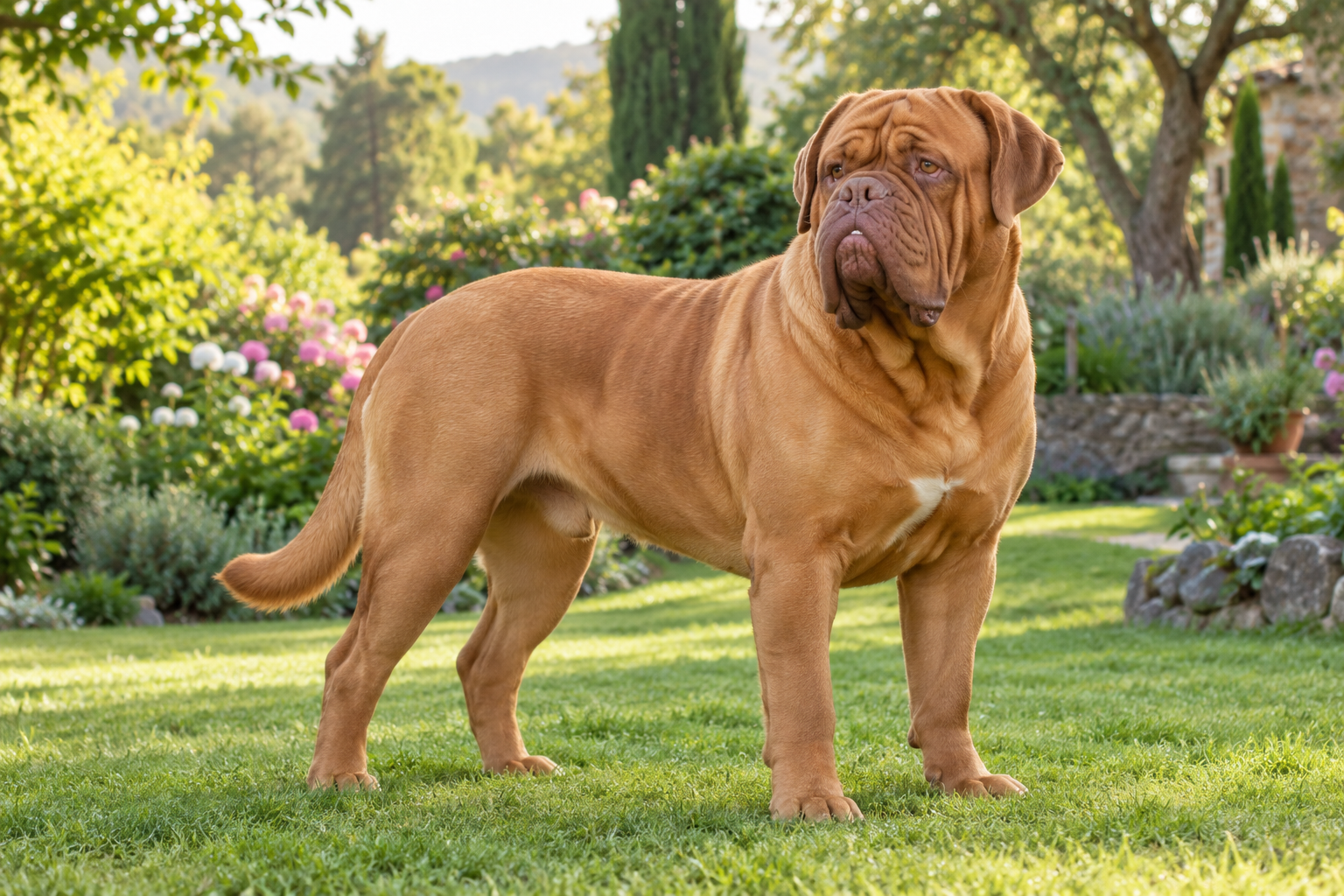 Dogue de BordeauxGiant • Utility (Group 6)