Australian Shepherd
By James C. • Updated
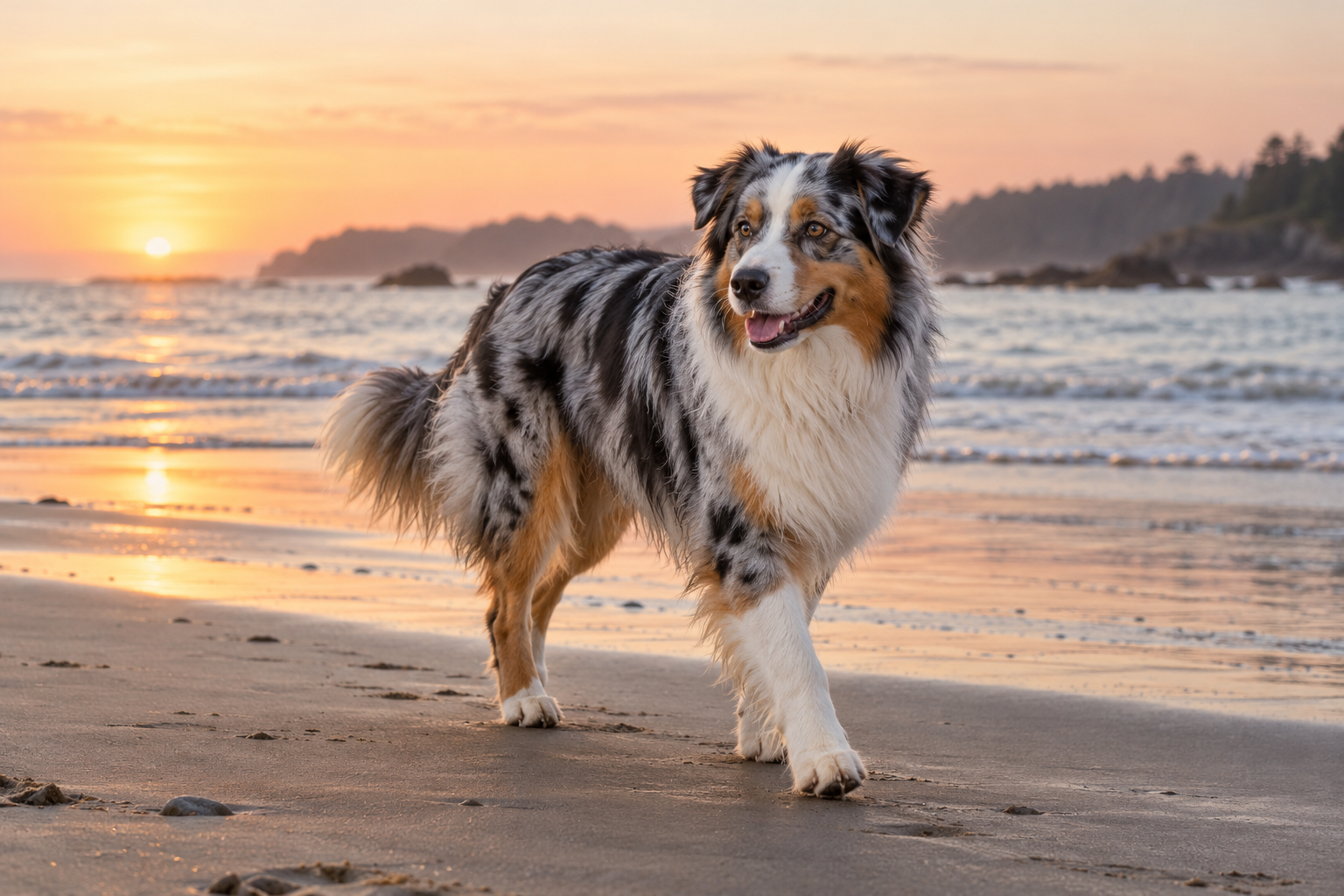
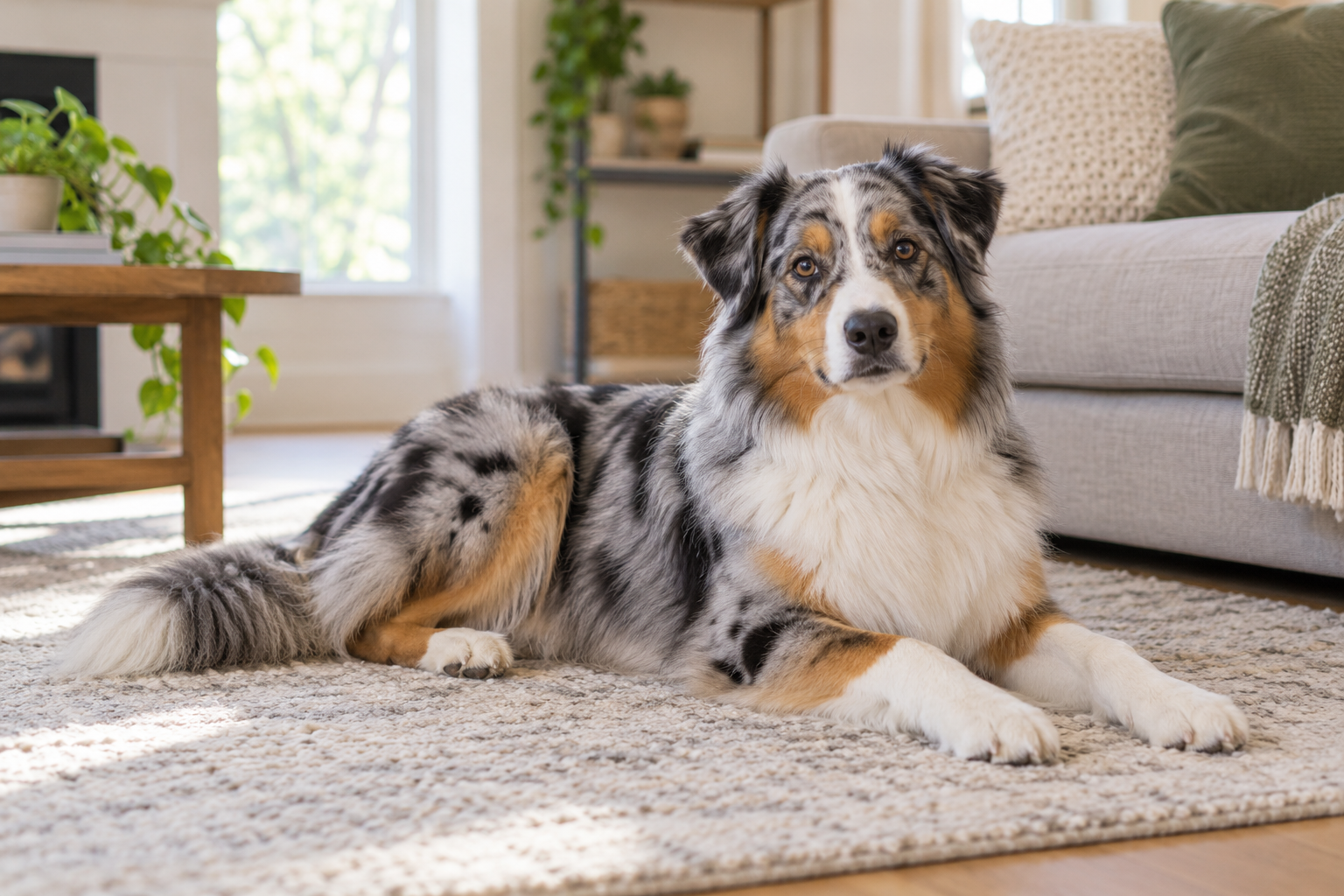
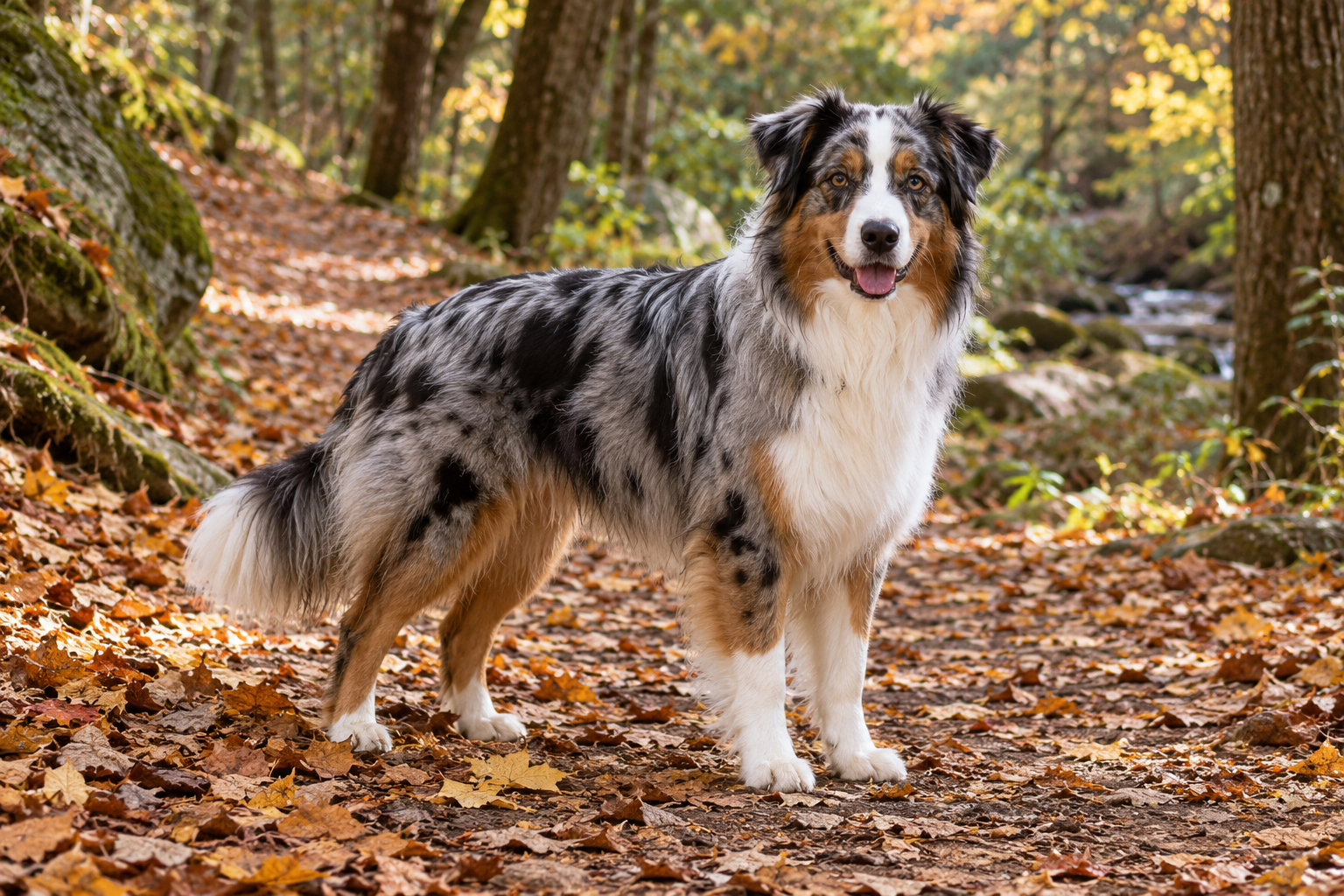
The Australian Shepherd is an American herding breed, classified by Dogs Australia in the Working Dogs group and developed on Californian ranches in the nineteenth century despite its name. It is a medium sized, double coated working dog known for high intelligence, strong herding drive and close attachment to its people. Coat colours include blue merle, red merle, black and red, usually with white and tan markings. The breed suits active Australian households that can provide daily physical work and mental engagement, and it struggles in homes that cannot. Two inherited issues, the MDR1 drug sensitivity mutation and merle coat genetics, matter more to buyers than anything else on the record.
Breed Overview
Life Span
12 - 15 years
Average Price
AUD 3500 - AUD 4500
Weight
Male: 25 - 32 kg Female: 18 - 25 kg
Height
Male: 51 - 58.5 cm Female: 45.5 - 53.5 cm
Life Expectancy
Male/Female: 12 - 15 years
Breed Group
Working Dogs
Nicknames
Aussie
Breed Information
The Australian Shepherd is not Australian. It was developed in the United States, largely on Californian ranches through the nineteenth century, and the name most likely traces back to the Australian sheep the dogs worked rather than to any Australian breeding programme. It is worth knowing before you buy, because the breed you are getting is an American stock dog with all the drive that implies.
That drive is the whole story. The Aussie was bred to move livestock all day across open country, think independently while doing it, and stay closely bonded to one handler. Modern Australian owners inherit every part of that: the stamina, the problem solving, the sensitivity to their person's mood, and the tendency to find work for themselves when none is provided.
Supply in Australia is healthy by breed guide standards. A national check on 8 September 2026 found 135 registered Australian Shepherd breeders and 23 puppies available nationally, which means a buyer can afford to be selective rather than taking the first litter offered. Use that leverage on health testing, because this breed carries two inherited issues that a careless purchase will not protect you from.
Characteristics of the Australian Shepherd
The Australian Shepherd scores at the top for intelligence and trainability and at the bottom for tolerating an empty house, which is exactly the combination that catches unprepared owners out.
| Trait | Rating | Star Rating | Meaning |
| Size | Medium | ★★★ | Males 25 to 32 kg, manageable in most homes with space outside. |
| Adaptability | Moderate | ★★★ | Copes with most climates, but not with small yards or long days alone. |
| Exercise Needs | Very High | ★★★★★ | Around 90 minutes daily, and walking alone will not satisfy it. |
| Easy to Train | Excellent | ★★★★★ | One of the quickest learners in any group, for better and worse. |
| Amount of Shedding | High | ★★★★ | Constant low level shedding plus two heavy seasonal coat blows. |
| Grooming Needs | Moderate to High | ★★★★ | Several brushing sessions weekly, more during a moult. |
| Good With Children | Good | ★★★★ | Affectionate and patient, but herding and heeling need managing. |
| Health | Moderate | ★★★ | Generally sound, with significant inherited drug and coat colour risks. |
| Cost to Keep | Moderate | ★★★ | Standard medium breed running costs, with grooming above average. |
| Tolerates Being Alone | Low | ★★ | Prone to separation distress and boredom driven destruction. |
| Intelligence | Exceptional | ★★★★★ | Learns fast, generalises fast, and needs a job to stay settled. |
History of the Australian Shepherd: From Californian Ranches to Australian Homes
The breed took shape in the western United States during the nineteenth century, refined by ranchers who needed a dog that could move sheep and cattle over long distances in hard country. The working stock behind it came from a mix of European herding dogs arriving with shepherds and imported livestock, and selection was driven entirely by what the dog could do rather than by how it looked.
The Australian part of the name is a misnomer that has stuck. The most widely accepted explanation is association with the Australian merino sheep that arrived in the United States through the same period, and with the shepherds who travelled with those flocks. No part of the breed's development happened here.
The Aussie's move from ranch to household came late and came fast, driven by the American rodeo and horse circuits where the dogs performed in front of large crowds. Dogs Australia now recognises the breed in the Working Dogs group, and its breed standard sets height at 51 to 58.5 cm for males and 45.5 to 53.5 cm for females. Most Australian Aussies today have never seen livestock, which is the central tension in owning one.
Appearance of the Australian Shepherd: Athletic, Merle-Coated, and Often Bobtailed
Size and Build
The Australian Shepherd is a medium sized dog built for endurance rather than power, slightly longer than tall, with moderate bone and a clean athletic outline. Males stand 51 to 58.5 cm and typically weigh 25 to 32 kg, with females at 45.5 to 53.5 cm and 18 to 25 kg. If you want the same temperament in a smaller package, the smaller Miniature Australian Shepherd is a separate breed rather than a size variety of this one, and Dogs Australia holds a separate breed standard for it.
Coat and Colours
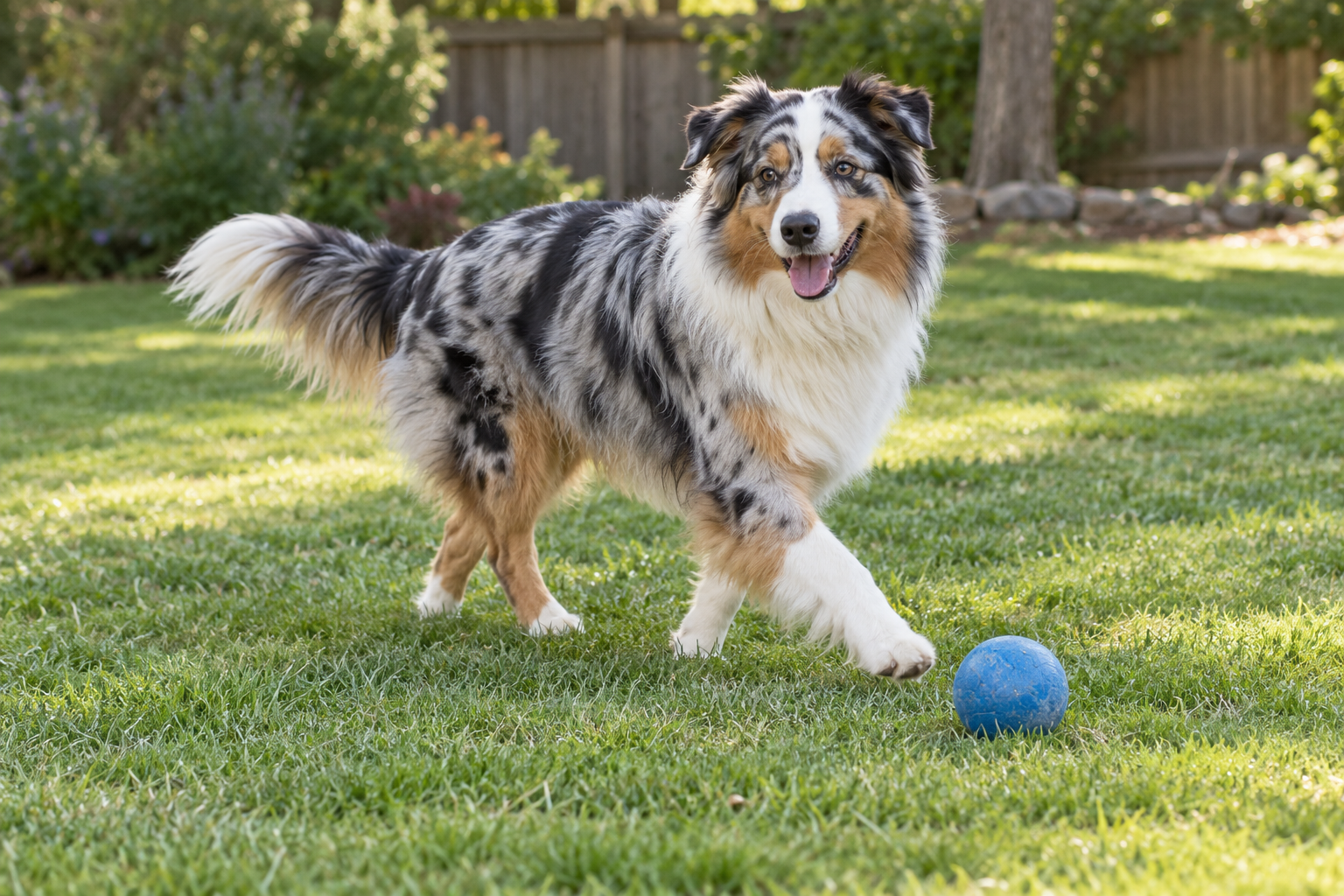
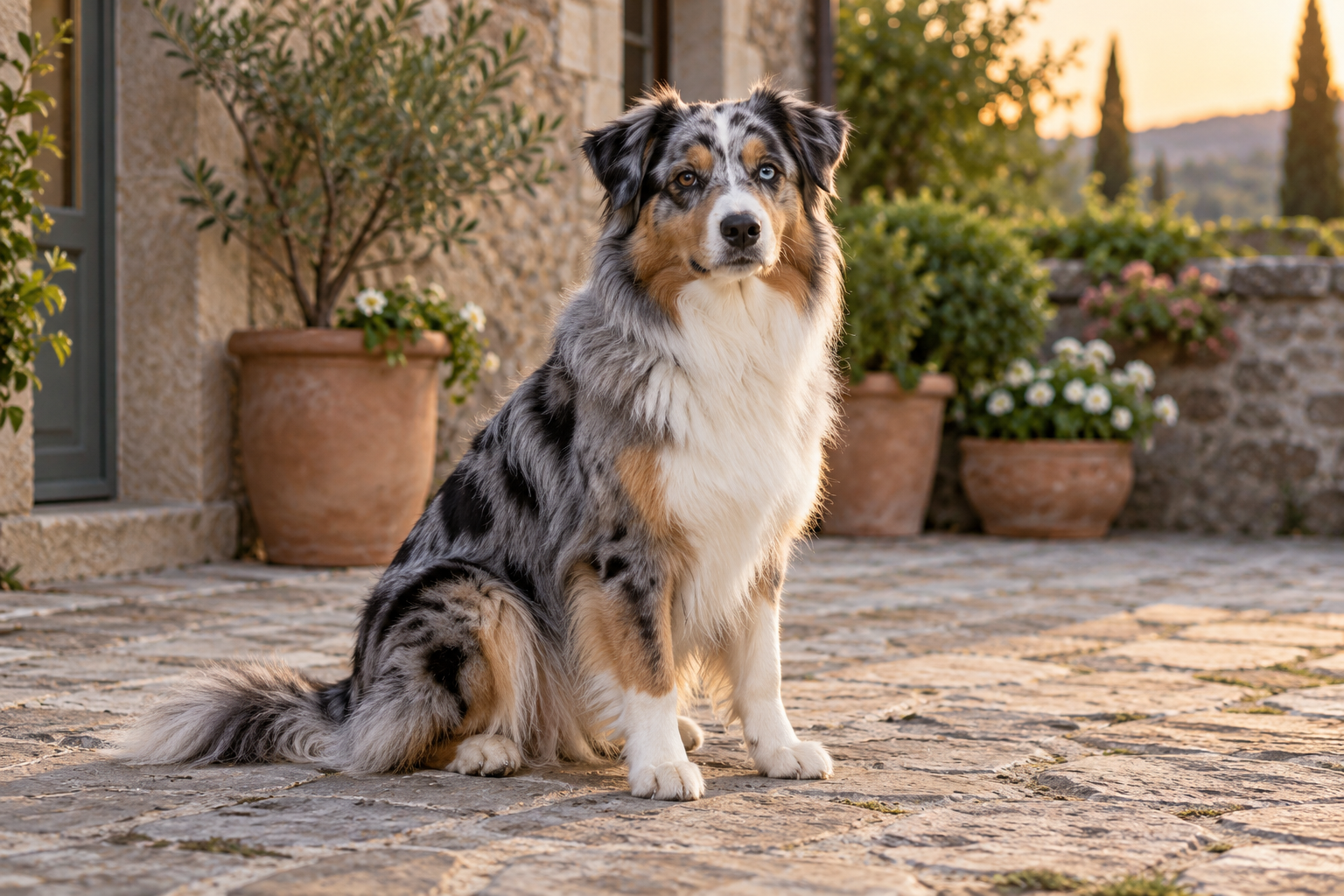
The coat is a medium length double coat, straight to slightly wavy, weather resistant, with feathering on the legs and a fuller ruff on males. Recognised colours are blue merle, red merle, solid black and solid red, each with or without white and tan markings. Merle is a coat pattern with genetic consequences, not just a colour preference, and it is covered properly in the health section below.
Distinctive Features
Eyes are the breed's signature, appearing in brown, blue, amber or any combination, including two different coloured eyes or marbled eyes within a single iris. Many Aussies carry a natural bobtail, which is an inherited short tail rather than a surgical one. This matters because cosmetic tail docking has been banned across Australia since 2004, so a docked tail on an Australian bred puppy is a red flag while a natural bobtail is not.
Gender Differences
Males are noticeably larger and heavier coated, particularly through the neck and ruff, and carry more substance overall. Females tend to be lighter, quicker to mature and slightly easier to manage through adolescence. The difference is meaningful for grooming time and for the physical demands of controlling a dog that pulls, but both sexes have the same drive and the same need for work.
Temperament of the Australian Shepherd: Driven, Vocal, and Deeply Attached
Core Personality Traits
Australian Shepherds are intense, willing and closely bonded. They watch their people constantly, read mood quickly, and want to be involved in whatever is happening. Alongside that comes an off switch that has to be trained rather than assumed, because the default state of an under-employed Aussie is looking for something to do.
Social Behaviour
The breed standard describes reserve with strangers, and that is accurate. A well socialised Aussie is polite rather than effusive with new people, and a poorly socialised one can be genuinely wary. They generally live well with other dogs when raised alongside them. Reserve is normal for the breed, but nervousness and reactivity are not, and they usually trace back to thin early socialisation.
Working Instincts
The herding instinct is intact in almost every Aussie, including those many generations from stock work. In a household it shows up as circling, staring, gathering and heeling, which means moving toward the back legs of whatever is running. Children on scooters, joggers and cyclists all trigger it. This is normal breed behaviour rather than aggression, and it needs redirecting into an outlet rather than punishing.
Common Behavioural Challenges
Barking is the most common complaint and the breed is genuinely vocal, alerting to movement, arrivals and boredom. The second is destruction, which in this breed is almost always a symptom of an unmet exercise or thinking requirement rather than a training failure. The third is separation distress, since a dog bred to work beside a person all day copes poorly with long solitary stretches.
Intelligence and Trainability of the Australian Shepherd: Fast to Learn, Fast to Learn the Wrong Thing
Intelligence and Learning Ability
This is one of the most trainable breeds available. Aussies pick up new behaviours in very few repetitions, retain them well, and excel at agility, obedience, herding trials and scent work. The same speed applies to unwanted behaviour, so a dog that gets attention for barking learns that in as few repetitions as it learns to sit.
Training Approach
Reward based training suits the breed and harsh handling backfires badly with a dog this sensitive. Keep sessions short, vary the task, and build a settle cue early, because teaching an Aussie to switch off is more valuable than teaching it another trick. Give the dog a defined job, whether that is a formal sport, a search game or carrying a pack on walks.
Early Socialisation
Broad, calm exposure through the first months produces the confident adult the breed should be. Include bikes, joggers, livestock if you have access, and children in motion, since all four trigger the herding response. Our guide to the age structured training should begin applies squarely here, and with this breed earlier is better.
Potential Training Challenges
Over-arousal is the main one. An excited Aussie stops thinking and starts moving, and owners often mistake the resulting frantic behaviour for a need for more exercise when the dog actually needs less stimulation and more rest. The second challenge is self-employment: a bored Aussie will invent a job, and the job it invents is rarely one you want.
Australian Shepherd Family Life: Living with Children, Pets, and Households
Living with Children
Aussies are affectionate and tolerant with children they are raised alongside, and they suit older children particularly well because there is a real dog to do things with. The honest caution is heeling: a herding dog watching running children will often try to control their movement by circling and nipping at heels. Manage it by teaching children not to run in circles, giving the dog a place to retreat to, and redirecting the instinct into a game with rules.
Living with Other Pets
The breed generally lives well with other dogs and can coexist with cats, especially when raised with them. Small animals that move quickly will attract herding attention, so introductions should be slow and supervised. Aussies often do best with a second dog that matches their energy, since a housemate absorbs some of the demand for engagement.
Household Environment
This breed needs space and secure fencing, and it is a poor fit for apartments. A yard alone is not exercise, and an Aussie left in one all day will bark, dig or patrol the fence line. The dog should live inside with the family, because isolation outdoors is the single most reliable way to produce the behaviour problems the breed is blamed for.
Lifestyle Compatibility
The Aussie suits a household where someone is home for much of the day, or where the dog goes with you. It suits runners, riders, farmers, dog sport competitors and families who are genuinely outdoors most days. It does not suit a household where the dog will be alone from eight in the morning until six at night, no matter how good the weekend walk is.
Health of the Australian Shepherd: MDR1, Merle Genetics, Eyes, and Joints
Lifespan and Healthy Living
Australian Shepherds typically live 12 to 15 years, which is good for a medium breed. Keeping the dog lean, managing growth carefully through the first year, screening for the inherited conditions below and staying on top of eye health are the factors most within an owner's control.
Common Health Conditions
Owners should be aware of several conditions that can be associated with the breed. It is best to discuss any concerns with a veterinarian.
- MDR1 drug sensitivity. An inherited mutation affecting how the brain excludes certain medications. It is the most important health fact about this breed and is covered in full below.
- Merle related deafness and eye defects. Associated with inheriting two copies of the merle gene, which is a breeding decision rather than bad luck.
- Hip and elbow dysplasia. Both reported in the breed and both testable through parental scoring.
- Hereditary eye disease. Including collie eye anomaly, cataracts and progressive retinal atrophy, all detectable through examination by a veterinary ophthalmologist.
- Epilepsy. Reported in the breed and usually first appearing in young adulthood.
- Obesity in under-exercised dogs. Common where the household cannot meet the breed's activity requirement.
Genetic Health Testing
MDR1 is the test result you must see before you buy, and most Australian breed pages do not even name it. The mutation affects the ABCB1 gene, which produces a protein that normally keeps certain drugs out of the brain. In an affected dog those drugs cross into the brain and can cause serious neurological effects at doses that are safe for other dogs. Cornell University's Riney Canine Health Center explains how the MDR1 mutation affects drug sensitivity in herding breeds, and it is common enough in Australian Shepherds that testing is standard practice among responsible breeders.
What this means practically: a simple DNA test gives a definitive result, dogs with two clear parents do not need testing, and an affected dog can live a completely normal life provided every vet who treats it knows the status. Put it on the dog's file, mention it before any anaesthetic, surgery, high dose parasite treatment or chemotherapy, and keep a copy of the result with the vaccination records. Ask the breeder for the parents' MDR1 results in writing, not a verbal assurance.
Also ask for hip and elbow scores on both parents and a current eye certificate from a veterinary ophthalmologist. Together with the MDR1 result and the merle status below, that is the full set for this breed.
Merle Genetics and Double Merle Risk
Blue merle and red merle are the two most searched Australian Shepherd colours, and they are also the two that carry a breeding risk buyers are rarely told about. Merle is an incompletely dominant pattern, described by the UC Davis Veterinary Genetics Laboratory merle test, which means a dog needs only one copy to show the pattern.
Breeding two merle dogs together gives each puppy roughly a one in four chance of inheriting two copies. Those double merle puppies are typically mostly white and are at substantially raised risk of deafness, of eye abnormalities including undersized or malformed eyes, and of both together. Responsible breeders therefore pair a merle dog only with a non-merle dog, which removes the risk entirely.
The practical buyer question is short: ask whether both parents are merle. If the answer is yes, walk away. Ask it even when the puppy you are looking at is solid black or red, because a merle to merle mating produces solid coloured littermates too.
Preventative Health Care
Keep vaccinations current and maintain year-round parasite prevention, flagging MDR1 status to your vet before any high dose parasite treatment. Standard heartworm preventives are given at doses considered safe for affected dogs, but the conversation should still happen. Book an eye examination if you notice bumping in low light, reluctance on stairs or a cloudy appearance to the eye, and discuss the timing of desexing with your veterinarian rather than defaulting to a standard age.
Caring for the Australian Shepherd: Daily Care and Living Environment
Yes, the Australian Shepherd is high maintenance, but the demand is mental far more than it is physical. A workable day is around 90 minutes of real activity split across morning and evening, two or three short training or thinking sessions, coat work several times a week, and a genuine rest period in between. Owners who provide only the walk usually end up with the barking and destruction the breed is known for.
Daily Care Routine
Feed twice daily, exercise in the cooler parts of the day through summer, and build in structured rest. Aussies do not self-regulate well, so a crate or a defined settle space is useful rather than restrictive. Check the coat for burrs and grass seeds after any run through paddocks or bush, since a medium double coat catches everything.
Living Environment Requirements
Secure fencing is the first requirement, because a bored Aussie is an escape artist with the athleticism to follow through. Provide shade and water outdoors, a comfortable bed indoors, and access to the household rather than isolation in a yard. Grass seed season is a genuine hazard for a feathered, medium coated dog, so check feet and ears through spring and summer.
Climate Sensitivity
The double coat insulates in both directions and the breed handles a broad range of Australian conditions, but it is still a heavily coated working dog and it overheats through exertion rather than through sitting still. The practical rule is to move exercise to early morning and evening from November through March, and to cancel rather than shorten sessions on very hot days. Check the temperatures that become unsafe for dogs here before planning summer activity, and never shave the coat as a cooling measure, since it removes the insulation that keeps heat out and exposes skin that has never seen sun.
Caring for Senior Australian Shepherds
Aussies often stay active well into their teens, which can hide developing arthritis. Expect a slower warm up, more stiffness after hard days, and reduced tolerance for heat. Keep the dog lean, swap high impact activity for swimming and steady walking, and keep the mental work going, because an older Aussie that loses its job declines faster than one that keeps one.
Grooming of the Australian Shepherd: Managing a Heavy Double Coat
Coat Maintenance
Brush thoroughly two or three times a week, working right down to the skin rather than skimming the top coat. An undercoat rake, a slicker brush and a wide toothed comb cover the job. Pay particular attention to the ruff, the trousers and behind the ears, where mats form first. Our guide to a working routine for a dense double coat sets out an approach that suits this coat type exactly.
Shedding and Seasonal Coat Blow
Australian Shepherds shed steadily year round and then drop undercoat heavily twice a year, usually in spring and autumn. During a moult, daily brushing is the difference between a manageable dog and a house full of hair. Understanding the difference between steady shedding and blowing coat helps owners judge whether what they are seeing is normal or a sign of a skin or health problem.
Ear, Nail, and Dental Care
Check ears weekly, since drop ears and feathering trap moisture and grass seeds. Trim nails every three to four weeks, more often for dogs exercised on soft ground. Brush teeth several times a week, and start all of this in puppyhood so that handling is routine rather than a wrestle in an adult dog with real strength.
Bathing and Professional Grooming
Bathe every six to eight weeks or when the dog is genuinely dirty, and dry the undercoat properly rather than leaving it damp against the skin. Professional grooming is optional for this breed, though a bath and blow out during a seasonal moult saves considerable work. Never allow a groomer to shave an Australian Shepherd, since the double coat often does not regrow correctly and the dog loses its heat protection.
Exercise Needs of the Australian Shepherd: High, and Not Negotiable
Daily Exercise Requirements
Plan for around 90 minutes of activity a day, and understand that a 90 minute walk on its own will not satisfy this breed. Aussies need work that involves decisions, not just distance. Two shorter sessions with a thinking element beat one long plod, and a dog that has used its brain settles better than one that has only used its legs.
Activities Australian Shepherds Enjoy
Herding, agility, obedience, flyball, scent work, canicross, hiking and trick training all suit the breed. Fetch is useful but should not be the whole programme, since repetitive high speed chasing builds arousal and joint wear without teaching self control. If you have access to stock, even occasional herding is the closest thing to what the dog was built for.
Exercise by Life Stage
Puppies should have free running play on soft ground rather than forced distance work, with jumping and repeated stair use limited while growth plates are open. Adults handle the full 90 minutes comfortably and will take considerably more if offered. Seniors need duration reduced and impact lowered, but should keep working, because mental engagement matters more to an ageing Aussie than the kilometres do.
Importance of Mental Stimulation
Mental work is the part owners underestimate and it is where most Aussie behaviour problems are solved. Ten minutes of training, a scent game or a puzzle feeder does more for a restless Aussie than another lap of the park. An Australian Shepherd that is physically exhausted but mentally bored is still a problem dog, and increasing exercise alone tends to build a fitter dog with the same behaviour.
Feeding the Australian Shepherd: Nutrition and Diet Needs
Nutritional Requirements
A complete diet formulated for medium breed dogs suits the Australian Shepherd well, adjusted for genuine activity level rather than for the breed's reputation. A working or competing Aussie needs more than a companion Aussie, and feeding a suburban pet like a stock dog is a common route to excess weight.
Feeding by Life Stage
Feed puppies three to four times daily until around four months, then twice daily for life. Use a puppy formula appropriate to medium breeds, since growth in this breed is steady rather than explosive. Adults do well on two meals, and older dogs often benefit from the same split with a modest reduction in total volume.
Portion Control and Weight Management
The double coat hides condition, so judge by feel rather than by eye: you should feel the ribs easily under light pressure without seeing them. Excess weight in a breed this active accelerates joint wear and reduces heat tolerance. Ask your vet to body condition score the dog at each check rather than relying on the number on the scales.
Foods to Avoid
The standard toxic list applies: grapes, sultanas, chocolate, onion, garlic, macadamias and anything containing xylitol. Cooked bones should be avoided. Be careful with high value treats during training, since an Aussie will happily work through far more food than it needs, and training treats should come out of the daily ration rather than on top of it.
Australian Shepherd Price in Australia: Purchase Cost and Ongoing Expenses
Puppy Purchase Price
Australian pricing for this breed is thinly published, and any figure quoted without a source should be treated with suspicion. A national survey of Australian breeder listings on 8 September 2026 found 135 registered breeders, 23 puppies advertised and one older dog, with a single publicly stated price: $4,000 in Victoria, offered on the Dogs Victoria Limited Register. Every other listing was price on request or by negotiation.
With one published figure there is no honest market average to give. Treat around $4,000 as the reference point for a registered, health tested puppy from a breeder who publishes a price, and expect most breeders to quote privately. Supply is good enough that you can compare several breeders on health testing before you compare them on price, which is the right order.
Initial Setup Costs
Beyond the purchase price, Australian guidance from the RSPCA puts microchipping at $60 to $80, a puppy vaccination course at $280 to $420, desexing at $350 to $650, a collar, lead or harness at $40 to $100, and a bed at $100 to $200, with puppy school around $170. For this breed, budget additionally for grooming tools, secure fencing if your yard is not already dog proof, and enrichment equipment, because all three are working costs rather than luxuries.
Ongoing Monthly Costs
| Cost | Typical figure (AUD) | Source |
| Food | Around the $91 monthly average, higher for a working or competing dog | Animal Medicines Australia, Pets in Australia 2025 |
| Parasite prevention | Around the $122 annual average for a medium dog | Animal Medicines Australia, Pets in Australia 2025 |
| Pet insurance | Below the $1,461 annual figure quoted for large dogs, since this is a medium breed | Canstar, prepared March 2026 |
| Grooming tools and occasional professional groom | Modest ongoing cost, rising during seasonal moults | Obtain a quote locally |
| Annual vet check and booster | $140 and upwards per year | RSPCA NSW |
| Training, sport or activity fees | Ongoing, and effectively unavoidable for this breed | Varies by club and discipline |
Long-Term Financial Commitment
The Australian Shepherd sits close to the average of roughly $2,520 a year that Animal Medicines Australia reports dog-owning households spending, with one important difference: the training, sport or activity line is not optional here. Over a 12 to 15 year life the total is substantial, and the costs most capable of moving it are orthopaedic treatment and eye disease.
Buying Advice for an Australian Shepherd: Choosing a Healthy Puppy
Choosing a Responsible Breeder
With 135 registered breeders nationally, an Australian buyer has real choice, and there is no reason to compromise. A good breeder tests for MDR1, holds hip and elbow scores and a current eye certificate, never breeds merle to merle, keeps puppies to at least eight weeks, matches puppies to households honestly and takes dogs back at any point in their lives.
Health Checks Before Purchase
See the puppy with its mother and watch the whole litter move and interact. Look for clear eyes, clean ears, sound movement and puppies that are curious rather than either frantic or withdrawn. Ask to see written test results rather than accepting a verbal assurance, and request the vaccination, worming and microchipping records before you pay a deposit.
Questions to Ask the Breeder
Work through what to put to a breeder before you commit, and add these breed specific ones.
- What are the MDR1 results for both parents, and can I see them in writing?
- Are both parents merle? If so, why was that pairing made?
- What are the hip and elbow scores for both parents?
- When were the parents last examined by a veterinary ophthalmologist?
- Has epilepsy appeared anywhere in the line?
- Are the puppies registered, and on the Main or Limited Register?
- What is your registered prefix and which state body issued it?
- How much daily exercise and training do you expect this puppy to need at twelve months?
Considering Adoption
Australian Shepherds and Aussie crosses do appear in rescue, usually surrendered at around twelve to eighteen months by owners who underestimated the drive. That makes an adult a realistic option for an experienced household, and often a good one, since the dog's temperament and energy level are already visible. Ask the rescue what the surrender reason was and whether MDR1 status is known.
Is the Australian Shepherd Right for You? A Working Dog in a Family Home
Lifestyle Compatibility
This breed suits active households with space, secure fencing and someone around for much of the day. It rewards owners who want a dog to do things with, and it frustrates owners who want a dog that fits quietly around a full working week. The climate question is minor here, which is unusual: the deciding factor is time, not temperature.
Time and Care Commitment
Budget around 90 minutes of activity daily plus short training sessions, coat work two or three times a week rising to daily during a moult, and an ongoing commitment to giving the dog something to think about. The demanding period runs from about six months to two years, when the drive is fully switched on and the judgement has not caught up.
Grooming and Health Awareness
You take on a heavy shedding double coat, an inherited drug sensitivity that every vet treating the dog needs to know about, and a coat colour pattern that makes breeder selection a genuine welfare decision. None of it is difficult once you know about it, which is precisely why the MDR1 and merle questions belong at the front of the buying process rather than at the end.
Ideal Owner Profile
The Australian Shepherd suits an experienced or well prepared owner who wants an intelligent working dog and has a real outlet for it, whether that is stock work, dog sport or a genuinely outdoor life. Buyers weighing this breed against the other obvious herding option should look at how the Border Collie compares on drive and biddability, since the Collie is more intense again and the Aussie is generally the more sociable of the two.
Find Australian Shepherd Puppies for Sale
If the breed fits your household and your week, you can browse current puppy listings on Pups4Sale and compare sellers. Prioritise breeders who can produce MDR1 results, hip and elbow scores and a current eye certificate for both parents, and who can tell you plainly that the litter is not merle to merle.
Frequently Asked Questions
Related Breeds
Other working breeds on Pups4Sale.
 Bernese Mountain DogLarge • Working
 Black Russian TerrierLarge • Utility (Group 6), registered as Russian Black Terrier
 Blue HeelerMedium • Working
 Border CollieMedium • Herding
 Bouvier des FlandresLarge • Working
 BoxerLarge • Working