Understanding Trauma Behaviours in Rescue Dogs
Dog Rescue & Welfare By James C. • October 18, 2026
Many behaviours that look like trauma in rescue dogs are fear responses that ease with predictability and time, and a veterinary check should always come first.
Understanding trauma behaviours in rescue dogs means reading what the dog is telling you, separating fear from anxiety, and knowing which signs improve on their own and which need professional support.
This article is written to help you recognise and respond, not to diagnose.
What Trauma Behaviour Looks Like in Dogs
There is no single picture. Dogs that have had frightening or depriving experiences may show avoidance, hypervigilance, an inability to settle, or sudden reactions to things that seem harmless. Others show almost nothing at all for weeks, which is its own signal.
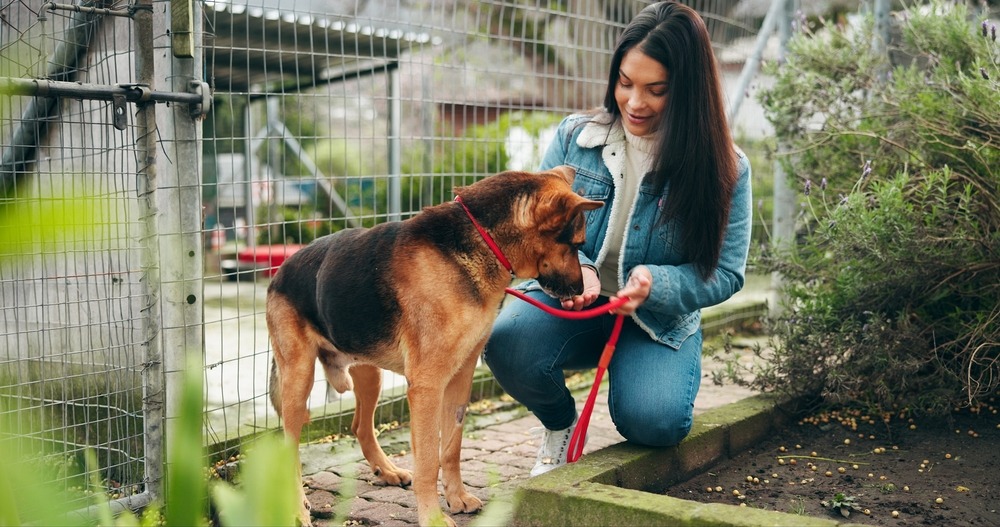
A neglected dog adjusting to a new home often shows several of these signs at once in the first weeks, then sheds them gradually as routines become familiar.
The table below is a reference rather than a diagnosis. Each behaviour has ordinary explanations as well as fear-related ones, and any behaviour that appears suddenly or worsens should be discussed with a veterinarian before it is treated as behavioural.
| Behaviour | What it may indicate | What usually helps | When to seek help |
|---|---|---|---|
| Freezing or shutting down | Being over threshold, unable to escape | Remove the trigger, give distance, do not coax | Persists beyond a few weeks, or happens daily |
| Hiding for long periods | Seeking safety in an overwhelming environment | An accessible retreat that is never disturbed | No improvement after two to three weeks |
| Cowering from hands | Learned association with handling | Approach side on, let the dog come to you | Any snapping or escalation |
| Fear of specific people or uniforms | Limited or negative past exposure | Distance, no forced greetings, calm neutrality | Fear generalises to more people |
| Guarding food or objects | Past scarcity or competition | Feed alone, do not approach or remove items | Any growling escalates to snapping |
| Startling at ordinary noise | Limited exposure to household life | Predictable routine, gradual quiet exposure | Startle becomes panic or flight |
| Refusing to walk | Fear of the outside world or of equipment | Shorter routes, quieter times, check the harness fits | No progress over several weeks |
| Restlessness at night | Unfamiliar setting, disrupted routine | Sleeping near you, consistent bedtime | Continues past a month, or worsens |
| Toileting indoors | Stress, or an unlearned routine | Routine toilet breaks, no punishment | Sudden onset in a trained dog, see a vet |
| Growling on approach | A clear warning, not aggression | Give space, work out the trigger | Any bite or attempted bite |
Fear, Anxiety and Stress Are Not the Same Thing
These three words get used interchangeably and they describe different things, which matters because the response differs. Fear is a reaction to something present. Anxiety is anticipation of something that has not happened yet. Stress is the physiological load that builds from either.
The distinction is practical. A dog afraid of the vacuum needs distance and gradual, positive exposure. A dog anxious about being left alone needs a different plan built around departures. A dog carrying high background stress from too much change needs less happening overall before either plan will work.
Trigger stacking explains a lot of apparently random reactions. Several small stressors in a short period can push a dog past the point where it can cope, so a dog that managed a delivery driver on Monday may react badly to the same driver on Thursday after a storm, a visitor and a missed walk.
Body Language Signals to Read
Whale eye showing the whites, repeated lip licking, yawning when not tired, a low or tucked tail, ears back, a stiff body and weight shifted backwards. These appear well before a growl and are the point to add distance.
Freeze, Flight, Fight and Fidget
Dogs under threat may freeze, try to escape, react defensively, or display displacement behaviours such as sudden sniffing or scratching. Freezing is often mistaken for calmness and is one of the more commonly missed signals.

Rule Out Pain and Illness First
Behaviour change is not always behavioural. Pain, dental disease, ear infections, thyroid conditions, deteriorating eyesight or hearing, and neurological problems can all present as fear, irritability, withdrawal or reactivity, and none of them will improve with training.
This matters most where the change is sudden. A dog that has been settled for months and becomes withdrawn, snappy or restless needs a veterinary examination before anything else is assumed. General background on companion animal welfare from the RSPCA can help you prepare questions, but it does not replace an examination.
Ask your vet specifically about pain during the first appointment. Old injuries, joint disease and untreated dental problems are common in dogs from difficult backgrounds, and pain is under-recognised because dogs conceal it well. A thorough veterinary health check should include a hands-on look at joints, teeth, ears, eyes and skin.
Common Triggers in an Australian Home
Some triggers are specific to living here, and they are worth planning for rather than discovering. Summer storms and the New Year and Australia Day fireworks periods are the two biggest, and both are predictable enough to prepare for in advance.
Heat is its own stressor. A dog that is hot, panting and unable to cool down has less capacity to cope with anything else, and behaviour deteriorates accordingly. Shade, water, indoor access and an eye on the safe temperature for dogs during the hotter months support behaviour as well as welfare.
Household triggers are often mundane. Hard floors that offer no grip, vacuum cleaners, delivery drivers at the door, bin day, and apartment noise through shared walls all feature regularly. Dogs from rural or confined backgrounds may also find lead walking past other dogs genuinely difficult, since it removes the option to create distance.
Plan for storms and fireworks before the season rather than during it. A prepared retreat, background noise, closed curtains and a conversation with your vet well in advance are far more useful than trying to manage a panicking dog on the night.
Behaviours That Usually Improve With Time
Plenty of what worries new adopters resolves without intervention. Startling at household noise, hiding in the first fortnight, poor appetite, restlessness at night and reluctance on early walks all tend to ease as the dog learns the environment is predictable.
Improvement usually looks like faster recovery rather than absence. A dog that used to hide for an hour after the vacuum and now reappears in five minutes is progressing, even though it still dislikes the vacuum. That trajectory matters more than whether the fear has gone.

Expect setbacks. A dog that has been improving steadily may regress after a thunderstorm, a house guest, a change of routine or a trip to the vet. Short-lived regressions are normal, and the usual response is simply to return to a quieter routine for a few days.
Healthy progress follows a recognisable pattern, and the signs a rescue dog is settling in shift week by week. Once a dog relaxes, everyday behaviour problems such as chewing or jumping up often appear, and these are training issues rather than signs of trauma.
Behaviours That Need Professional Support
Some signs should not be managed alone, and seeking help early is more effective than waiting. Contact your veterinarian promptly where you see aggression towards people or other animals, self-injury such as persistent licking or chewing that breaks skin, or a dog that cannot eat or sleep normally.
Also seek support where there is no measurable improvement after four to six weeks of consistent, low-pressure management, where fear is generalising to more situations rather than fewer, or where the dog’s quality of life is clearly poor. A dog that is frightened most of the time is suffering, and that warrants professional input rather than patience.
Severe distress when a dog is left alone is its own category and rarely resolves without a structured plan. Pacing, howling and destruction near exits are common signs of separation anxiety in dogs. Gradual departures and other ways to reduce separation anxiety work best alongside veterinary advice.
What Makes Trauma Behaviour Worse
A short list of common mistakes accounts for most avoidable setbacks. Each of them makes sense to a person and none of them makes sense to a frightened dog.
Flooding, which means exposing a dog to something it fears until it stops reacting, is the most damaging. A dog that stops reacting has often shut down rather than recovered. Forced greetings belong in the same category: making a fearful dog accept a stranger’s hand teaches it that retreat does not work.
Punishing a growl removes a warning you want the dog to keep giving. A dog that learns growling brings consequences may skip straight to snapping next time, with no signal in between. Understanding what dog growling means makes it easier to respond to the trigger rather than the noise.
Removing the ability to retreat is the other common error. Blocking a dog into a corner, following it into its safe space, or letting children approach it there all take away the one strategy the dog has. Inconsistent handling across a household has a similar effect, since the dog cannot predict what any given person will do.

Finding a Vet or Behaviourist in Australia
Start with your regular veterinarian. They can examine the dog, rule out medical causes, discuss options and refer you onwards where the situation warrants it. A referral is worth asking about directly if you are not offered one.
Registered veterinary behaviourists are veterinarians with specialist qualifications in behavioural medicine, and they are the appropriate referral for severe fear, aggression or anxiety. Your vet can advise who practises in your state, and some offer remote consultations where local access is limited.

If you are engaging a trainer rather than a behaviourist, ask what qualifications they hold, what methods they use and what happens when a dog gets something wrong. Rule out anyone who relies on punishment, physical corrections or aversive equipment with a fearful dog, since these approaches carry a real risk of making fear worse.
Expect a first behavioural consultation to be long and detailed, covering history, household routine, video of the behaviour where possible, and a written plan. Many rescue groups also offer post-adoption support, and the wider network of dog rescue and welfare in Australia can point you towards behaviour help in your area.
Conclusion
Most fear-based behaviour in rescue dogs eases with predictability, distance and time.
Improvement shows as faster recovery rather than a complete absence of fear, so judge progress by how quickly your dog bounces back.
Rule out pain first, avoid the approaches that make things worse, and involve your veterinarian early where the dog is not improving or is clearly distressed.
FAQs
1. Can dogs have PTSD?
Veterinary behaviour professionals do describe post-traumatic stress-like presentations in dogs, though it is not diagnosed the way it is in people. What matters practically is the pattern of behaviour and its severity. Any assessment should come from a veterinarian rather than from an owner or a trainer.
2. How long do trauma behaviours last in rescue dogs?
Many fear responses ease noticeably over three to six months of consistent, low-pressure management. Dogs from severe backgrounds can take a year or more, and some retain specific fears permanently without that preventing a good quality of life.
3. Why is my rescue dog scared of men?
Usually limited or negative past exposure rather than a specific incident. Avoid forced introductions, let the dog choose the distance, and ask men in the household to ignore the dog and let it approach. Seek advice if the fear is generalising rather than easing.
4. Should I punish a rescue dog for growling?
No. Growling is a warning and punishing it can remove the signal without changing the underlying fear, which makes a bite without warning more likely. Give the dog space, work out what triggered it, and discuss the pattern with your veterinarian.
5. Will my rescue dog ever be normal?
Most rescue dogs settle into ordinary family life within months. Some retain particular fears, such as fireworks or strangers at the door, which can usually be managed rather than cured. Judge quality of life by whether the dog is relaxed most of the time.
6. When should I see a veterinary behaviourist?
Ask your veterinarian for a referral where you see aggression, self-injury, severe distress when left alone, fear that is spreading rather than easing, or no improvement after four to six weeks of consistent management. Earlier referral generally produces better outcomes.
 Add us as a preferred source