Curly Coated Retriever
By James C. • Updated
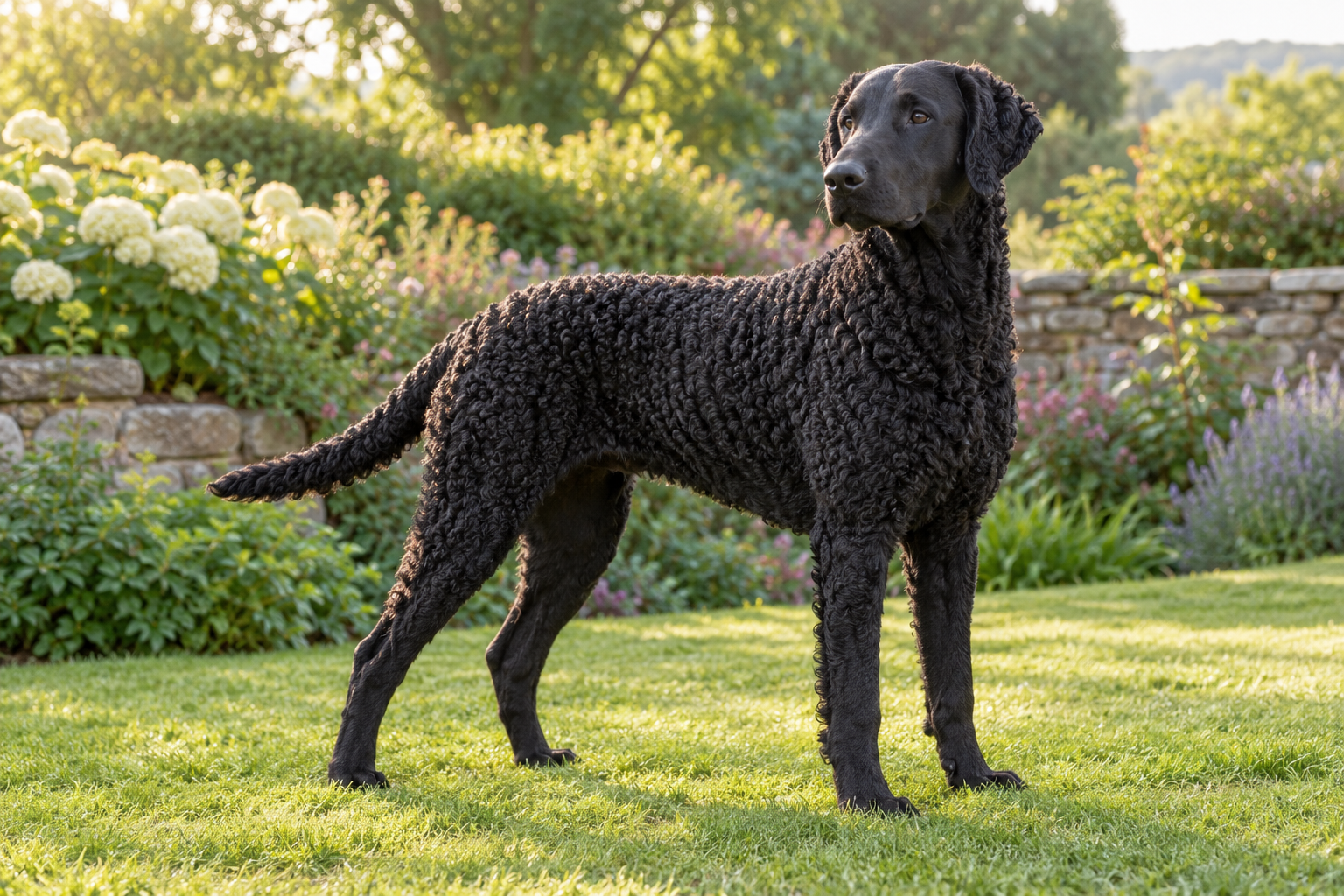
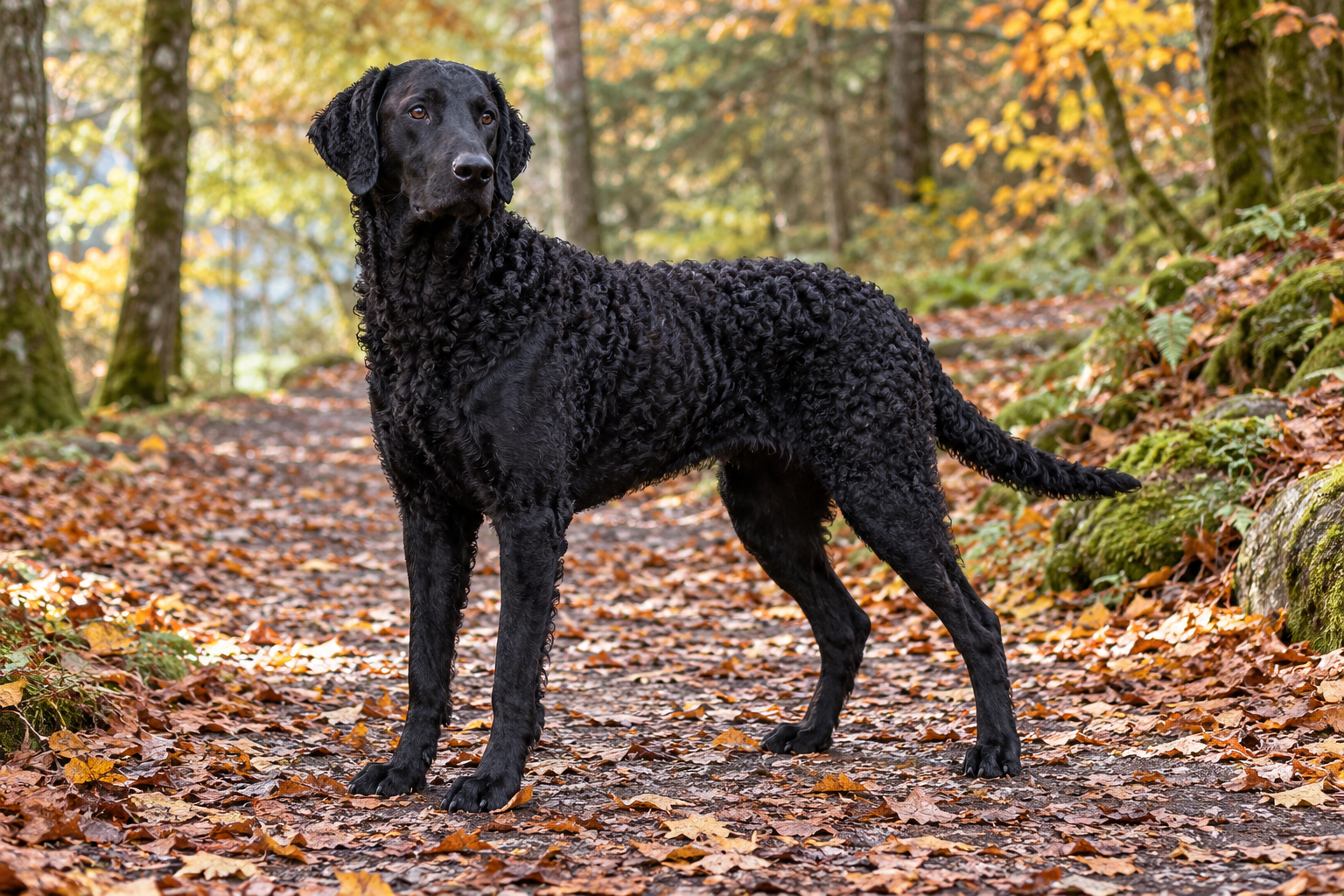
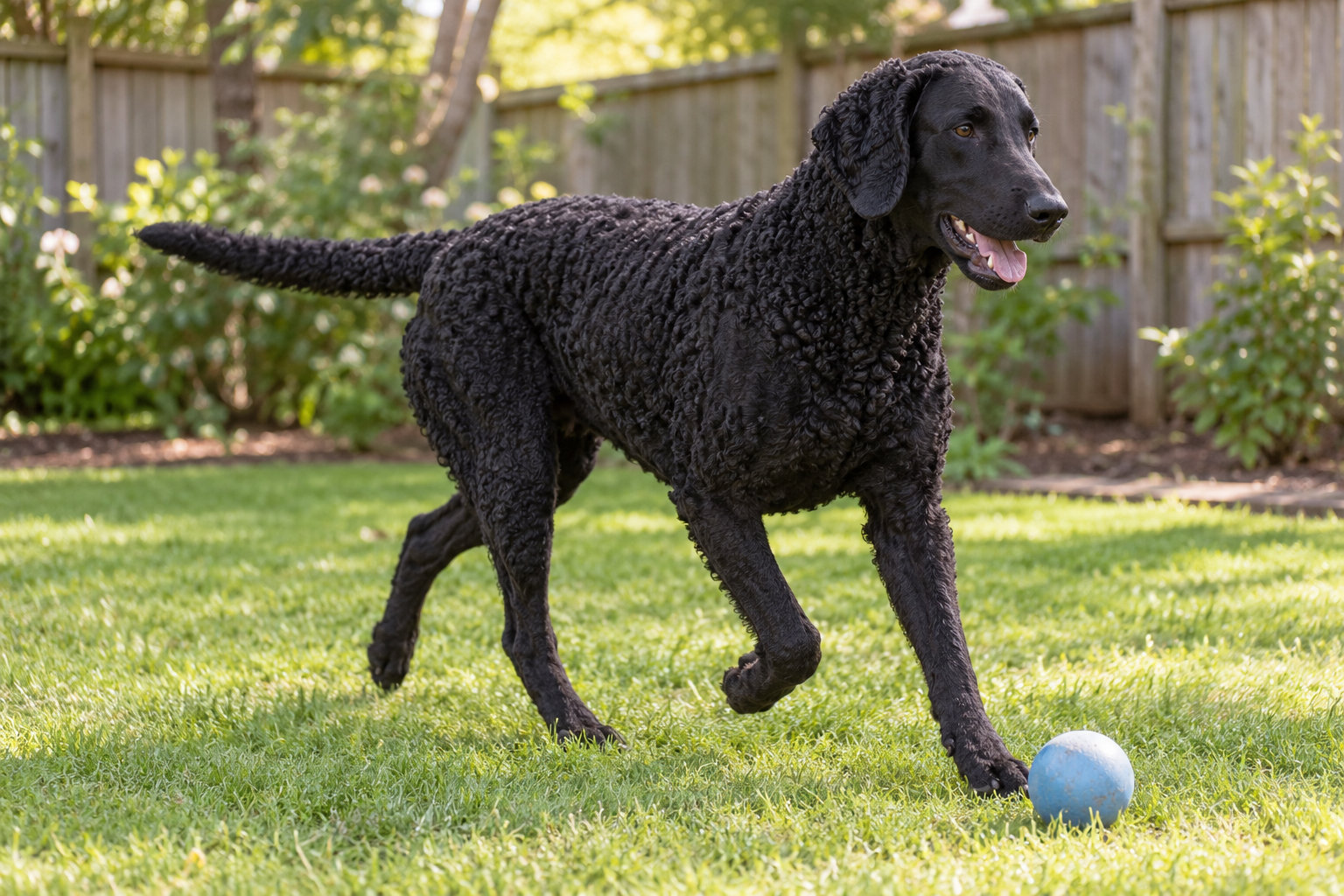
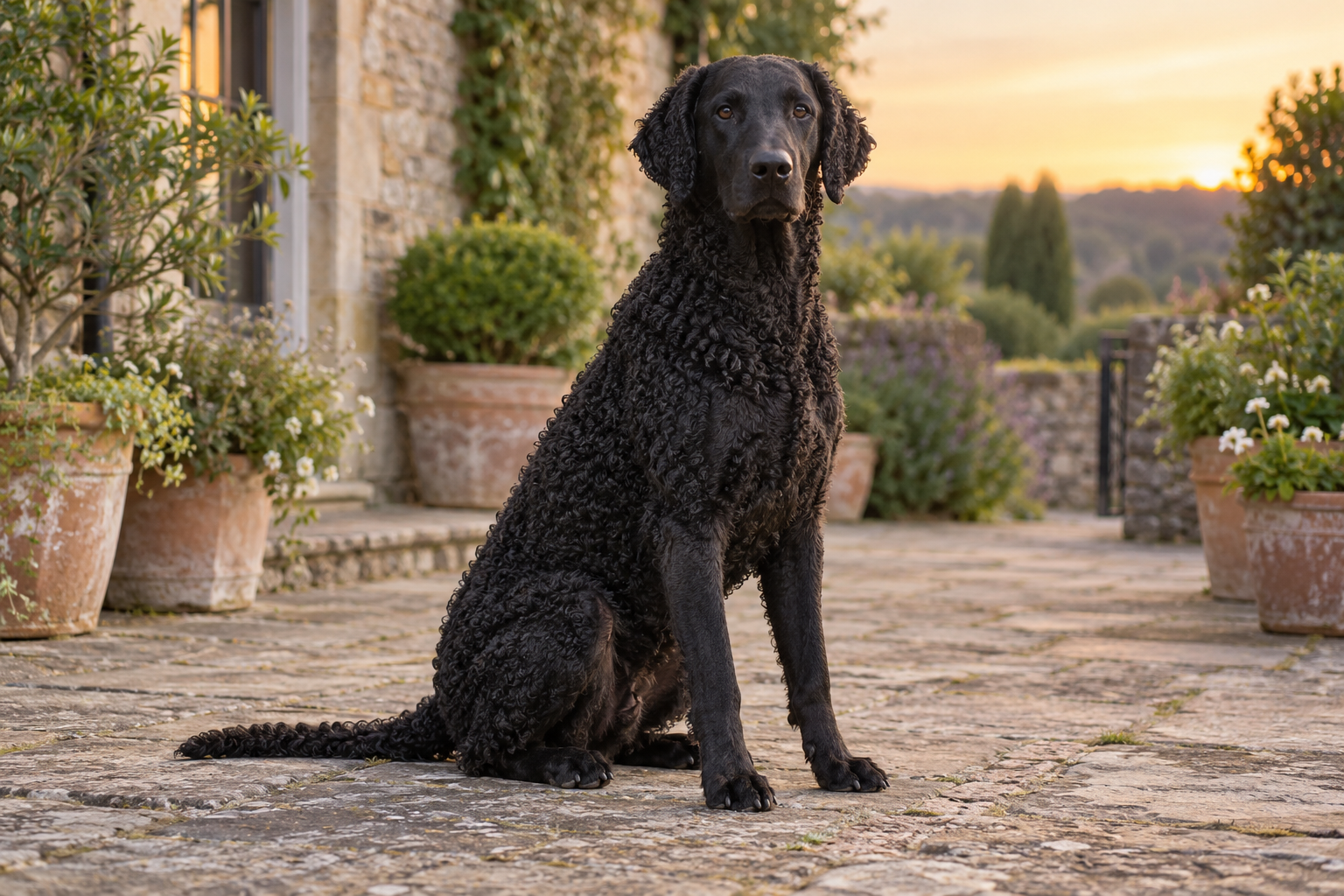
The Curly Coated Retriever is one of the oldest retriever breeds, developed in England for wildfowling and retrieving from cold water, and the tallest of the retrievers. Its coat is a dense mass of small, tight, crisp curls in black or liver, which sheds little and should not be brushed. Dogs stand about 66 to 69 cm and bitches about 61 to 64 cm, and most weigh 27 to 32 kg. It is intelligent, independent and slow to mature, more reserved with strangers than a Labrador, and needs plenty of exercise. It is a different breed from the Australian Murray River Retriever, and only a handful of breeders keep it in Australia.
Breed Overview
Life Span
10 - 14 years
Average Price
AUD 3000 - AUD 4000
Weight
Male: 27 - 32 kg Female: 27 - 32 kg
Height
Male: 66 - 69 cm Female: 61 - 64 cm
Life Expectancy
Male/Female: 10 - 14 years
Breed Group
Gundogs (Group 3)
Nicknames
Curly, Curly-Coat, Curly Retriever
Breed Information
The Curly Coated Retriever is one of the oldest retriever breeds, an English wildfowling dog with a coat of tight, crisp curls, and the tallest of the retrievers. It was bred to retrieve game from cold water and thick cover, and it still loves to swim. At home it is affectionate and gentle with its family, but more independent and reserved than a Labrador or Golden Retriever.
The breed is recognised by Dogs Australia in Group 3, Gundogs, and has been recorded here since the early 1880s. It is rare: Dogz Online listed nine breeders, a count that includes New Zealand, and a single litter on 18 October 2026. Most buyers join a waiting list and many arrange interstate transport.
It is not the same dog as the Murray River Retriever, an Australian breed long known informally as the Murray River Curly Coated Retriever. The Murray River dog is smaller and always liver coloured, and it was only recognised by Dogs Australia in 2022.
Characteristics of the Curly Coated Retriever
The Curly Coated Retriever rates highly for stamina, intelligence and low grooming needs, and moderately for ease of training, so it suits active owners who value independence over instant obedience.
| Trait | Rating | Star Rating | Meaning |
|---|---|---|---|
| Size | Large | ★★★★ | About 27 to 32 kg and tall, athletic and strong. |
| Adaptability | Moderate | ★★★ | Copes with suburban life if exercised; not an apartment dog. |
| Exercise Needs | High | ★★★★ | At least an hour daily, with swimming where possible. |
| Easy to Train | Moderate | ★★★ | Intelligent but independent, doing things in its own time. |
| Amount of Shedding | Low to Moderate | ★★ | Little everyday shedding, with periodic coat drops. |
| Grooming Needs | Low | ★★ | No brushing; occasional baths and a light trim. |
| Good With Children | Good | ★★★★ | Gentle and devoted with its own family. |
| Health | Good | ★★★★ | Generally sound, with several DNA tests available. |
| Cost to Keep | Moderate | ★★★ | Large dog food bills, but very little grooming cost. |
| Tolerates Being Alone | Moderate | ★★★ | Copes with support but becomes bored without exercise. |
| Intelligence | High | ★★★★ | A thinking dog that solves problems for itself. |
History of the Curly Coated Retriever: England's Original Wildfowling Retriever
The Curly Coated Retriever developed in England in the early nineteenth century, when wildfowlers needed a hardy dog to retrieve ducks from cold water and marsh. According to the DOGS NSW Curly Coated Retriever profile, the St John's Newfoundland, Irish Water Spaniel, Old English Water Dog and Poodle are generally thought to have contributed to its make-up. It was among the earliest retrievers shown in England, appearing in the ring from around 1860.
The breed was popular with gamekeepers for its toughness, nose and willingness to work in any conditions. As the Labrador and Flat-coated Retriever rose in popularity, the Curly declined, and it has remained a minority breed ever since.
In Australia the breed has been recorded since the early 1880s, and the Curly Coated Retriever Association of Victoria formed in 1977. The breed should not be confused with the Murray River Retriever, recognised by Dogs Australia from 1 January 2022. That Australian gundog developed along the Murray River system, stands 46 to 53 cm and is solid liver, whereas the Curly is taller and comes in black or liver.
Appearance of the Curly Coated Retriever: Tall, Upstanding and Tightly Curled
Size and Build
The breed standard published by DOGS NSW gives an ideal height of 69 cm for dogs and 64 cm for bitches. Hill's Pet Australia's breed profile gives 66 cm and 61 cm, with a weight of about 27 to 32 kg for both sexes. The build is strong and upstanding with a degree of elegance, longer in the leg than a Labrador.
Coat and Colours
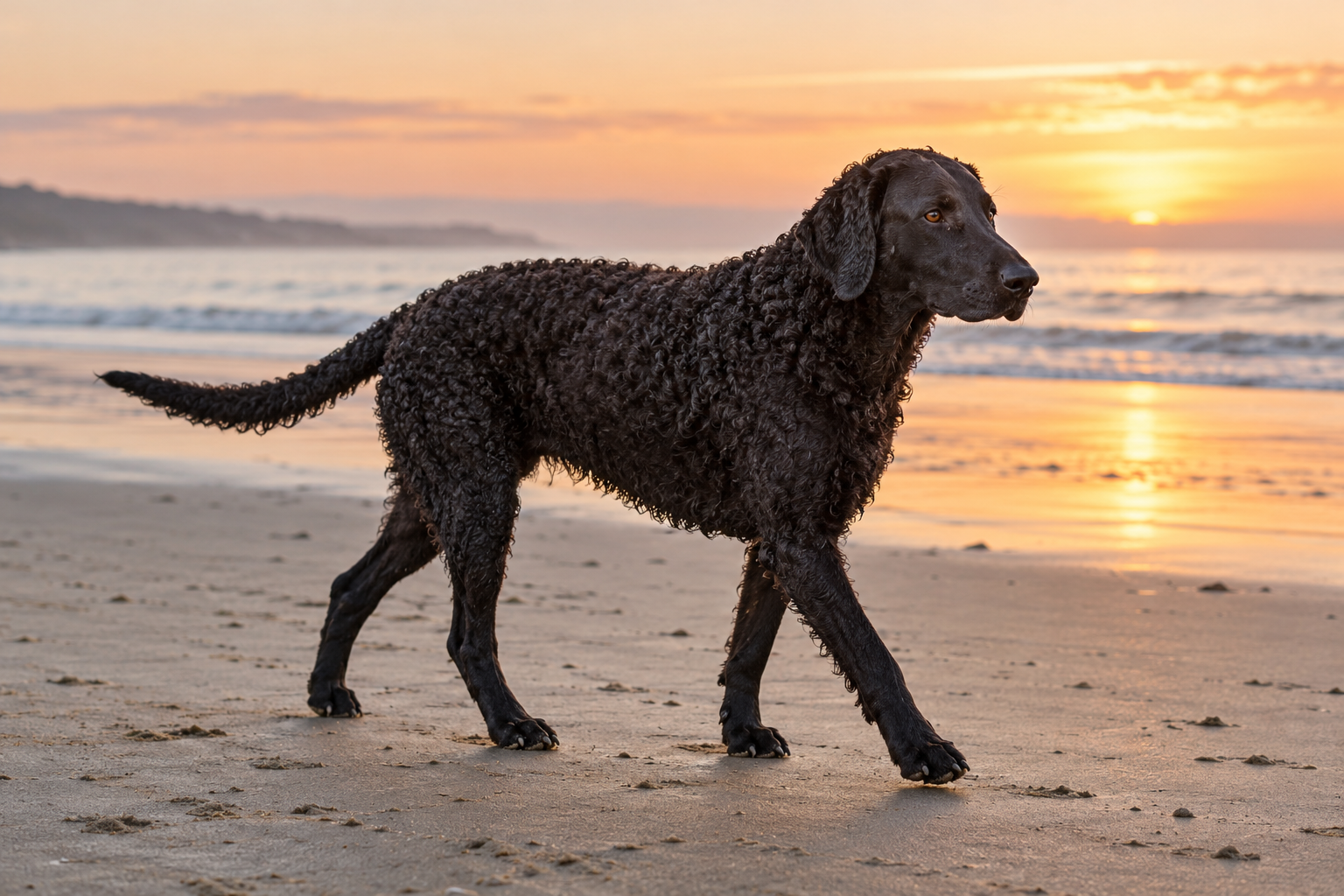
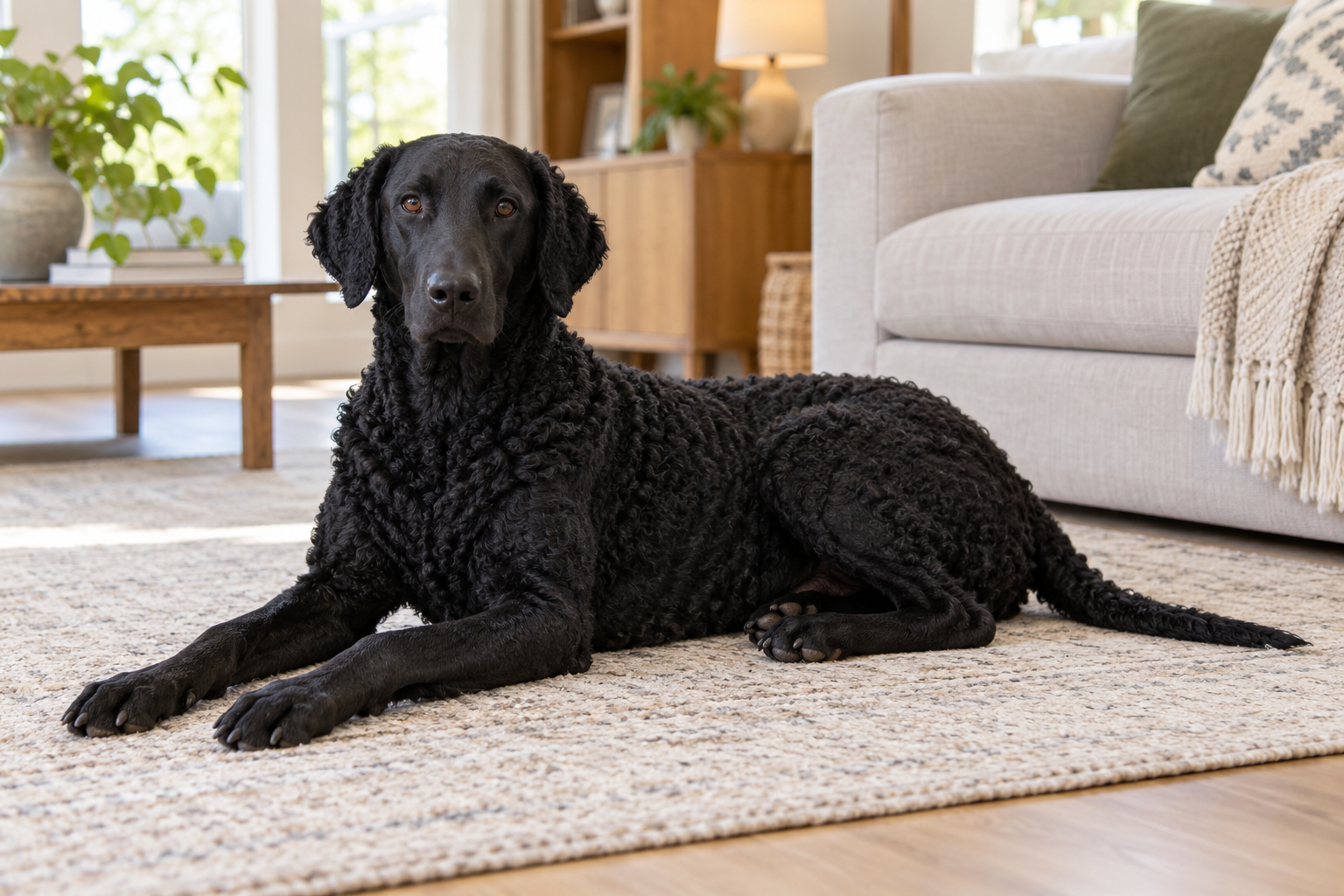
The coat is the breed's signature: a thick mass of small, tight, crisp curls lying close to the skin over the body, with smooth short hair on the face and front of the legs. There is no undercoat. Accepted colours are solid black or solid liver.
Distinctive Features
The long, wedge-shaped head, smooth face and close-lying curled ears give a distinctive outline. The tail is curled to the tip and carried fairly straight. Movement is effortless and powerful.
Gender Differences
Males are taller and usually heavier through the chest and head. Females are finer and a little smaller. Both sexes share the same independent, gentle temperament.
Temperament of the Curly Coated Retriever: Gentle, Independent and Slow to Mature
Core Personality Traits
The breed standard describes the Curly as intelligent, steady and reliable, and bold, friendly, self-confident and independent. Owners often describe a dog that is affectionate and playful at home but thinks for itself. It is a dog that likes to be praised.
Social Behaviour
Curlies are devoted to their family and may seem aloof with strangers, which the standard acknowledges. They are not prone to barking but can be protective of home and family if required. Most get on well with other dogs.
Working Instincts
Retrieving and swimming are hard-wired. A Curly will carry things, seek water and work willingly in rough cover. Many still work as gundogs, and the breed's pace and endurance suit hunting, retrieving trials and tracking.
Common Behavioural Challenges
Slow maturity is the trait most likely to catch owners out. DOGS NSW puts full maturity at up to three years, so expect a long, boisterous adolescence. Bored dogs may dig, chew or roam, and their independence means training takes patience.
Intelligence and Trainability of the Curly Coated Retriever: Clever, Independent and Patient Work
Intelligence and Learning Ability
Curlies are bright and learn quickly, but they are less eager to please than a Labrador. They tend to do what is asked, in their own time, once they see the point.
Training Approach
Short, varied, reward-based sessions work best, because repetition bores this breed. Use food, toys and retrieving games as rewards, and keep a calm, consistent tone. Harsh handling is counterproductive with a sensitive, independent dog.
Early Socialisation
Because the breed can be reserved with strangers, broad early socialisation with people, places and other dogs helps produce a confident adult. Puppy school and regular outings matter.
Potential Training Challenges
Recall around water and wildlife, lead pulling in a strong adolescent and a selective response to commands are the main challenges. Steady, patient work through the teenage period pays off.
Curly Coated Retriever Family Life: Living with Children, Pets, and Households
Living with Children
Curlies are generally gentle and devoted with children in their own family. Young dogs are large and bouncy, so supervise around toddlers and teach children calm play.
Living with Other Pets
The breed adapts well to other pets, including cats and other dogs, according to DOGS NSW. Early introductions help, and pet birds should still be supervised around a retriever.
Household Environment
A house with a securely fenced yard suits the breed. Access to water for swimming is a real bonus. Curlies want to live with their family rather than be left outdoors alone.
Lifestyle Compatibility
The Curly suits active owners who hike, swim, hunt or train in dog sports. It is less suited to busy households wanting a highly biddable, easy family dog, where a Labrador may be a better fit.
Health of the Curly Coated Retriever: Joints, Coat, Bloat and Lifespan
Lifespan and Healthy Living
Published lifespans vary widely. DOGS NSW gives 13 to 14 years, while Hill's gives 8 to 12. The small population means estimates rest on limited data, so 10 to 14 years is a reasonable expectation for a well-bred, well-kept dog.
Common Health Conditions
The breed has relatively few health problems, but owners should be aware of several conditions that can be associated with it. It is best to discuss any concerns with a veterinarian.
- Hip and elbow dysplasia. DOGS NSW notes hip dysplasia can affect the breed and that responsible breeders hip score and eye test their dogs.
- Gastric dilatation volvulus (bloat). A sudden, life-threatening stomach twist; deep-chested breeds such as the Curly are listed as susceptible by Embrace Pet Insurance.
- Follicular dysplasia. Symmetrical, non-itchy patchy hair loss or frizzy coat, often starting before 18 months. A UK and Swedish study of the breed found current or previous episodes in 39 of 90 dogs surveyed.
- Exercise-induced collapse. Weakness or collapse after intense exercise; The Royal Kennel Club now records results for a Curly-specific EIC DNA test, treated as a measure of risk rather than certainty.
- Glycogen storage disease type IIIa. An inherited metabolic disease affecting energy and the liver; the mutation was identified in 2007, with carriers found in Australia among other countries.
- Eye conditions. Responsible breeders have eyes examined, since inherited eye diseases including forms of progressive retinal atrophy can occur.
Genetic Health Testing
Ask for hip and elbow scores on both parents, a current eye examination and DNA results for EIC and GSD IIIa. Combined breed panels offered by veterinary laboratories also include degenerative myelopathy and a form of PRA. Ask whether either parent or close relatives have shown coat loss, since follicular dysplasia has no simple DNA test yet.
Preventative Health Care
Keep vaccinations, worming, heartworm and year-round flea and tick prevention current, and check the coat for paralysis ticks after walks, particularly around the face and ears. Feed two meals a day and avoid hard exercise around meals because of bloat risk. Dry the ears after swimming.
Caring for the Curly Coated Retriever: Daily Care and Living Environment
Daily Care Routine
A typical day includes a long walk or run, a swim or retrieving game, two meals and a quick check of ears and feet. A Curly that has worked its body and mind is calm and settled at home.
Living Environment Requirements
Provide a well-fenced yard, shade, fresh water and a comfortable bed indoors. Curlies are happiest living inside with their people.
Climate Sensitivity
A dark, dense coat absorbs heat, so plan around Australian summers. Exercise early or late, use swimming as a cooling outlet and keep the dog in shade or indoors during the heat of the day. Knowing when the temperature is too hot to walk a dog helps avoid heat stress.
Caring for Senior Curly Coated Retrievers
Older Curlies need gentler exercise, swimming being ideal for stiff joints. Keep them lean, provide a supportive bed and book six-monthly vet checks.
Grooming of the Curly Coated Retriever: Caring for the Curls
Coat Maintenance
Do not brush a Curly Coated Retriever. Brushing breaks up the tight curls into frizz, and DOGS NSW says a brush should not be used at all. Instead, run your hands over the coat to remove debris. A grooming routine built for curly coats can be adapted, leaving out the brushing step.
Setting the Curls
Wetting the coat and letting it dry naturally helps the curls tighten and set. Bathe occasionally to manage the build-up of natural oils, but there is no need to blow dry. A quick ten-minute trim of scraggly hair on the ears, tail and feet is usually all that is needed.
Ear, Nail, and Dental Care
Check ears weekly and dry them after swimming to reduce infection risk. Trim nails every three to four weeks and brush teeth several times a week.
Shedding and Allergies
Do Curlies shed a lot? No. They shed less visibly than a Labrador, though many drop coat seasonally and bitches often lose coat after a litter. DOGS NSW describes the coat as suitable for some allergy sufferers, but no dog is truly hypoallergenic, so spend time with the breed before committing. Understanding the difference between shedding and a coat drop helps owners know what is normal.
Exercise Needs of the Curly Coated Retriever: Stamina and a Love of Water
Daily Exercise Requirements
The DOGS NSW quick-glance guide gives about 40 minutes a day, but most adult Curlies are happiest with an hour or more of varied exercise. Like all large working dogs, they need plenty of activity to stay in good condition.
Activities Curly Coated Retrievers Enjoy
Swimming, retrieving, hiking, tracking and gundog trials all suit the breed. Many also enjoy obedience and rally once they see the point.
Exercise by Life Stage
Puppies need short play sessions, not long runs, while joints develop. Build up gradually to full exercise by about 18 months. Seniors benefit from swimming and gentler walks.
Importance of Mental Stimulation
Scent work, retrieving games and puzzle feeders help satisfy a thinking dog. In tick and snake country, keep to open areas and check the coat after outings.
Feeding the Curly Coated Retriever: Nutrition and Diet Needs
Nutritional Requirements
A complete, balanced diet for large, active dogs suits the breed. Working dogs may need a higher energy formula during the hunting season.
Feeding by Life Stage
Feed puppies three to four times a day, then twice daily from around six months. Following a large breed puppy feeding schedule supports steady growth.
Portion Control and Weight Management
The curly coat hides fat, so check the ribs by hand. Keep the dog lean to protect joints, and adjust portions for activity.
Special Dietary Considerations
Because of bloat risk, avoid one large meal a day and vigorous exercise straight after eating. Avoid grapes, onions, chocolate, cooked bones and other toxic foods.
Curly Coated Retriever Price in Australia: Purchase Cost and Ongoing Expenses
Puppy Purchase Price
Expect to pay about $3,000 to $4,000 for a Curly Coated Retriever puppy from a registered Australian breeder. No Australian price was published on 18 October 2026, when Dogz Online listed nine breeders and one litter, so this is a derived range. US estimates from iHeartDogs' regional price survey sit around USD 1,500 to USD 2,500, roughly AUD 2,250 to AUD 3,750, and Australian prices for rare gundogs typically sit at or above the top of that because so few litters are bred.
Waiting lists are normal, and interstate or trans-Tasman transport may add to the cost. Buyers searching for a "curly golden retriever" are often really looking for a Groodle, the Golden Retriever and Poodle cross, which is far easier to find.
Initial Setup Costs
RSPCA NSW's breakdown of dog ownership costs puts microchipping at $60 to $80, puppy vaccinations at $280 to $420, desexing at $350 to $650 and puppy school at around $170. Add a large crate, bed and secure fencing.
Ongoing Monthly Costs
| Cost | Typical figure (AUD) | Source |
|---|---|---|
| Food | $600 to $1,000 a year, toward the top for a large active dog | RSPCA NSW |
| Flea, tick and worming | $200 to $250 a year, plus up to $250 for heartworm | RSPCA NSW |
| Pet insurance | Around $1,834 a year for a large dog, accident and illness | Canstar, 2026 |
| Annual vet check and vaccination | From $140 a year | RSPCA NSW |
| Professional grooming | Rarely needed | Breed standard care |
Grooming costs are minimal, but large dog insurance premiums rose sharply in 2026, so compare policies before bringing a puppy home.
Long-Term Financial Commitment
Over a 10 to 14 year life, a Curly is a moderate cost large dog. Joint surgery or bloat treatment are the main financial risks, which insurance can help cover.
Buying Advice for a Curly Coated Retriever: Choosing a Healthy Puppy
Choosing a Responsible Breeder
Choose a breeder registered with Dogs Australia, and contact the state breed clubs in Victoria and New South Wales for introductions. Expect to wait for a planned litter.
Health Checks Before Purchase
Ask for hip and elbow scores, current eye examinations and EIC and GSD IIIa DNA results for both parents. Ask whether either parent has had permanent coat loss, and meet the mother if possible.
Questions to Ask the Breeder
- What are the hip and elbow scores for both parents?
- Can I see the eye examination and DNA results for EIC and GSD IIIa?
- Has either parent or a close relative had follicular dysplasia or permanent coat loss?
- Have any relatives had bloat?
- Are the parents from working or show lines?
- Will you take the dog back at any age if needed?
A broader checklist of questions worth asking every dog breeder helps with the rest.
Considering Adoption
Curly Coated Retrievers rarely enter rescue in Australia. Breed clubs occasionally rehome adults, and these dogs can suit owners who want to skip the long adolescence.
Is the Curly Coated Retriever Right for You? A Rare Retriever for Active, Patient Owners
Lifestyle Compatibility
The Curly suits active owners who hike, swim or work gundogs.
It is less suited to apartments or households wanting a highly biddable dog.
Time and Care Commitment
Plan for an hour or more of exercise daily for 10 to 14 years.
Grooming is minimal, but training takes patience through a long adolescence.
Grooming and Health Awareness
Never brush the coat, and dry the ears after swimming.
Ask for hip, elbow, eye and DNA results before buying.
Ideal Owner Profile
The ideal owner is outdoorsy, calm and consistent, and enjoys an independent dog.
First-time owners may find a Labrador easier.
Find Curly Coated Retriever Puppies for Sale
If the breed suits you, look through puppies for sale on Pups4Sale and contact registered breeders early.
Be ready to wait for the right litter.
Frequently Asked Questions
Related Breeds
Other sporting breeds on Pups4Sale.
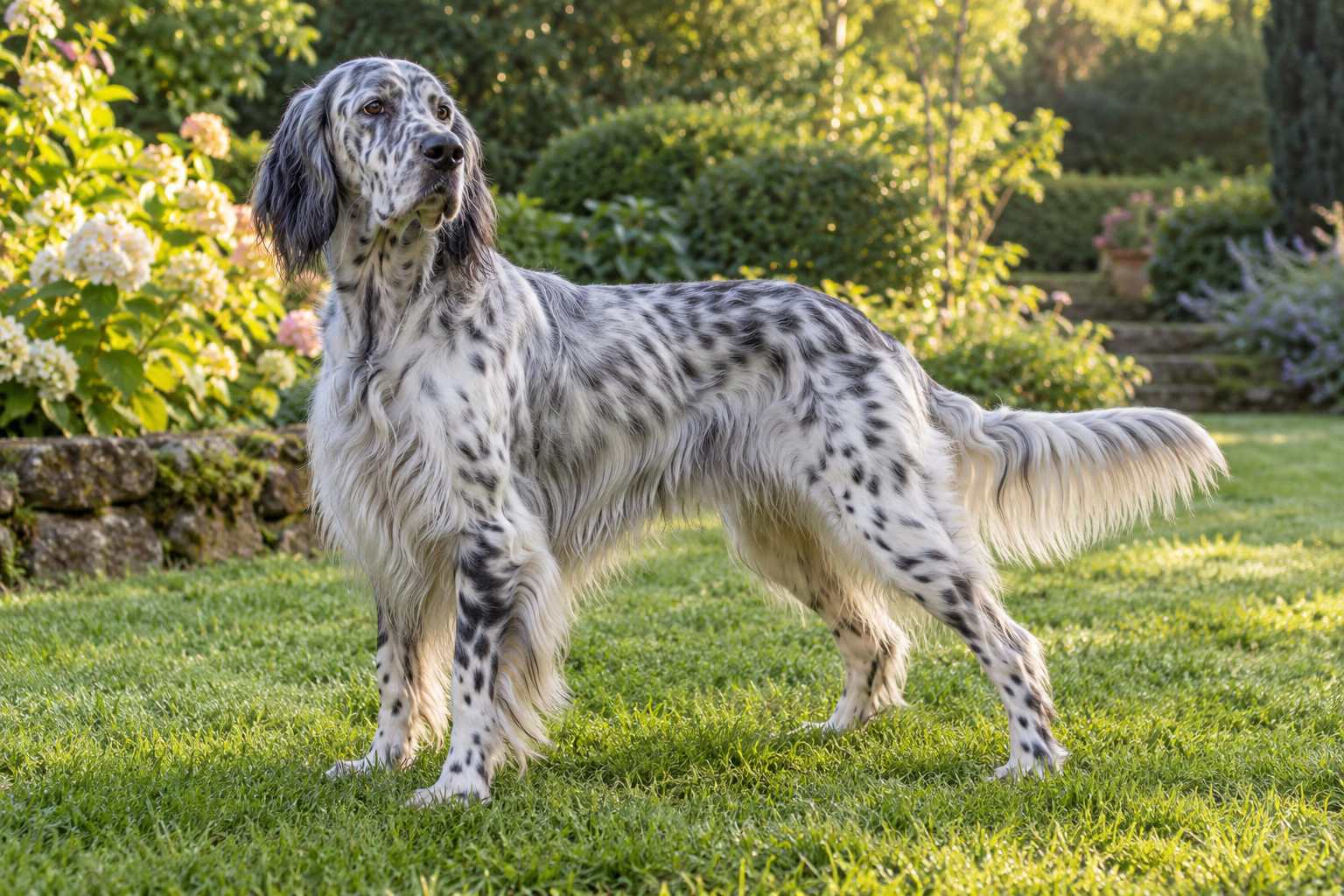 English SetterLarge • Gundogs (Group 3)
 English Springer SpanielMedium • Gundogs (Group 3)
 Field SpanielMedium • Gundog / Sporting
 German Shorthaired PointerLarge • Gundogs (Group 3)
 German Wirehaired PointerLarge • Gundogs (Group 3)
 Golden RetrieverLarge • Sporting / Gundog