Deerhound
By James C. • Updated
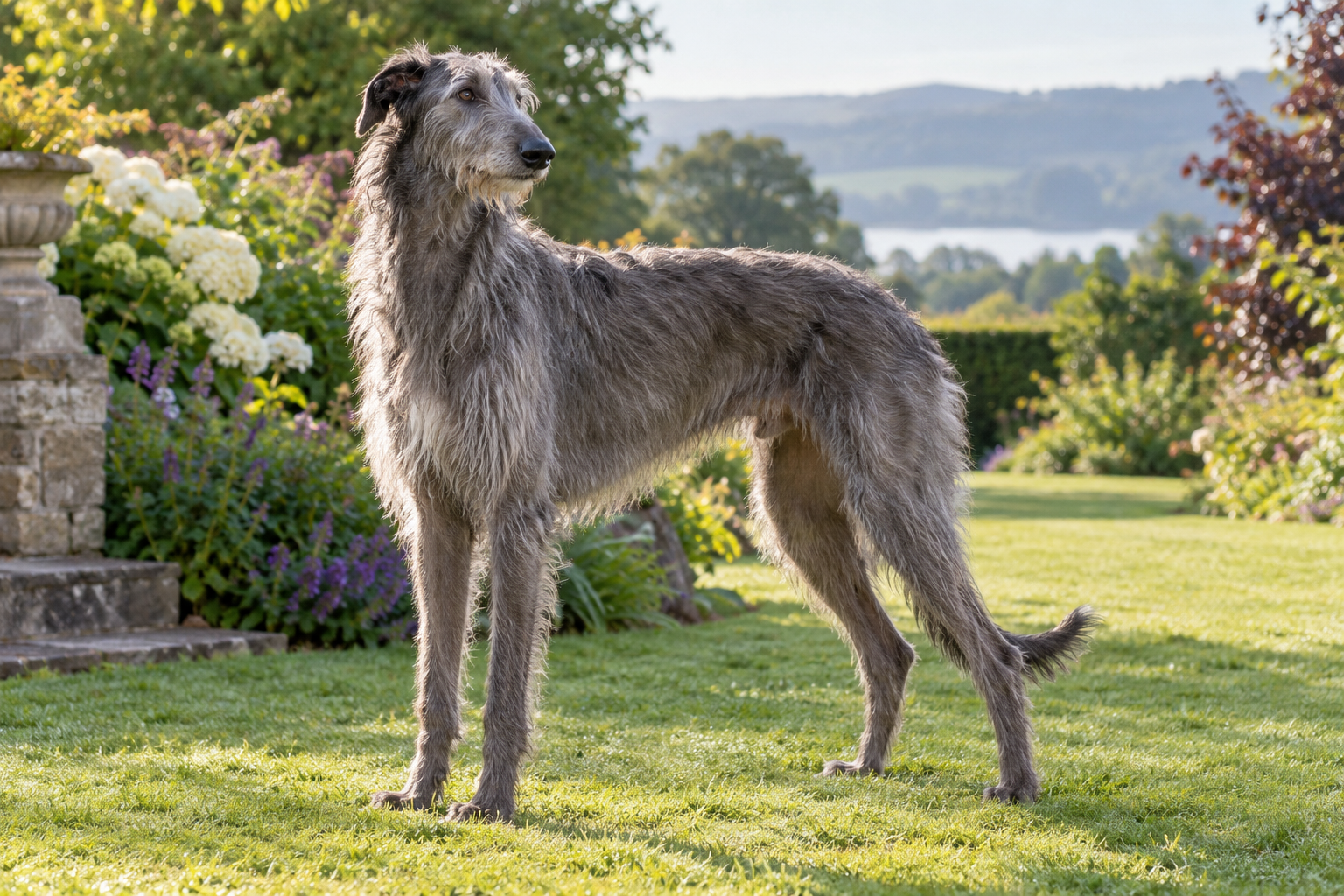
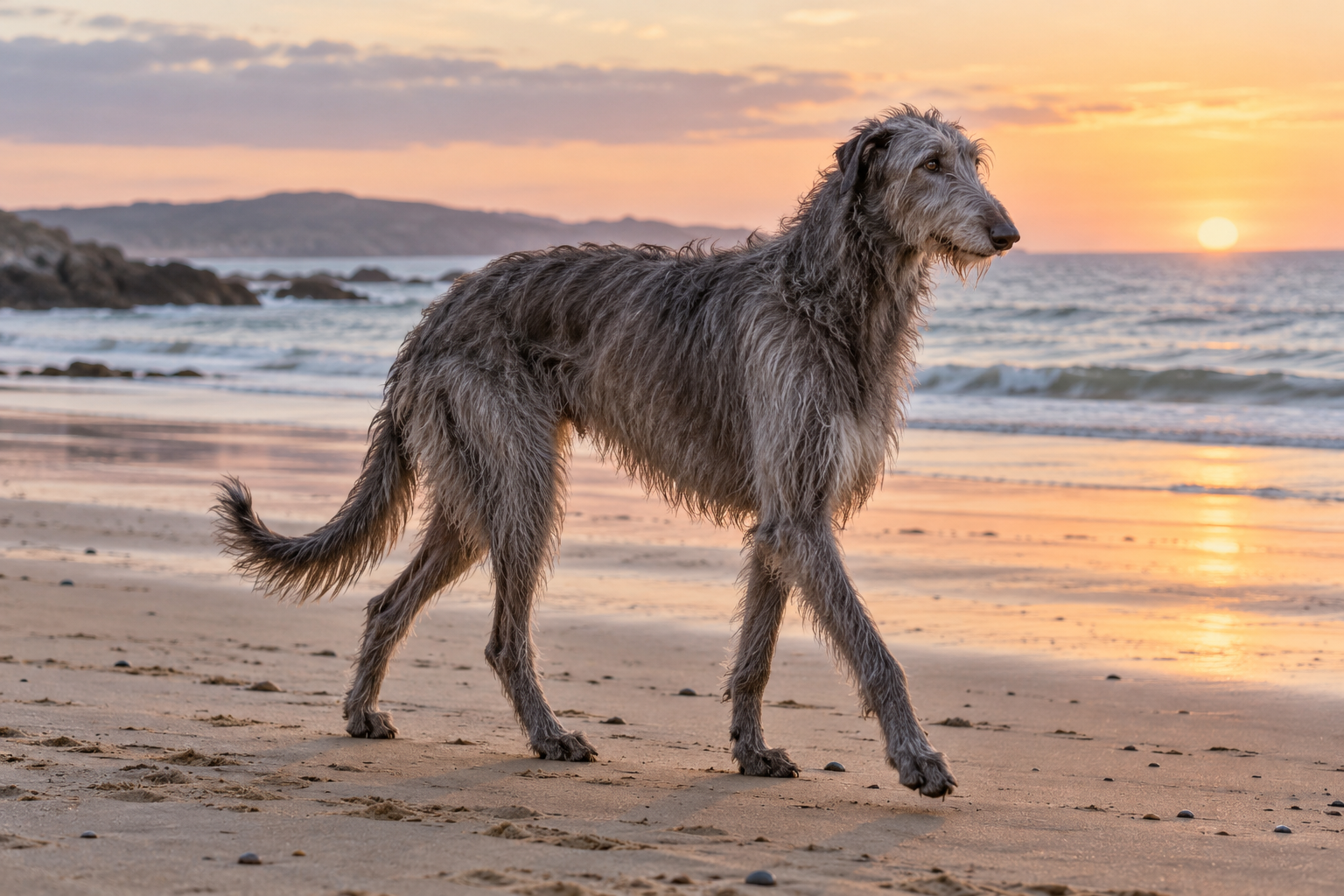
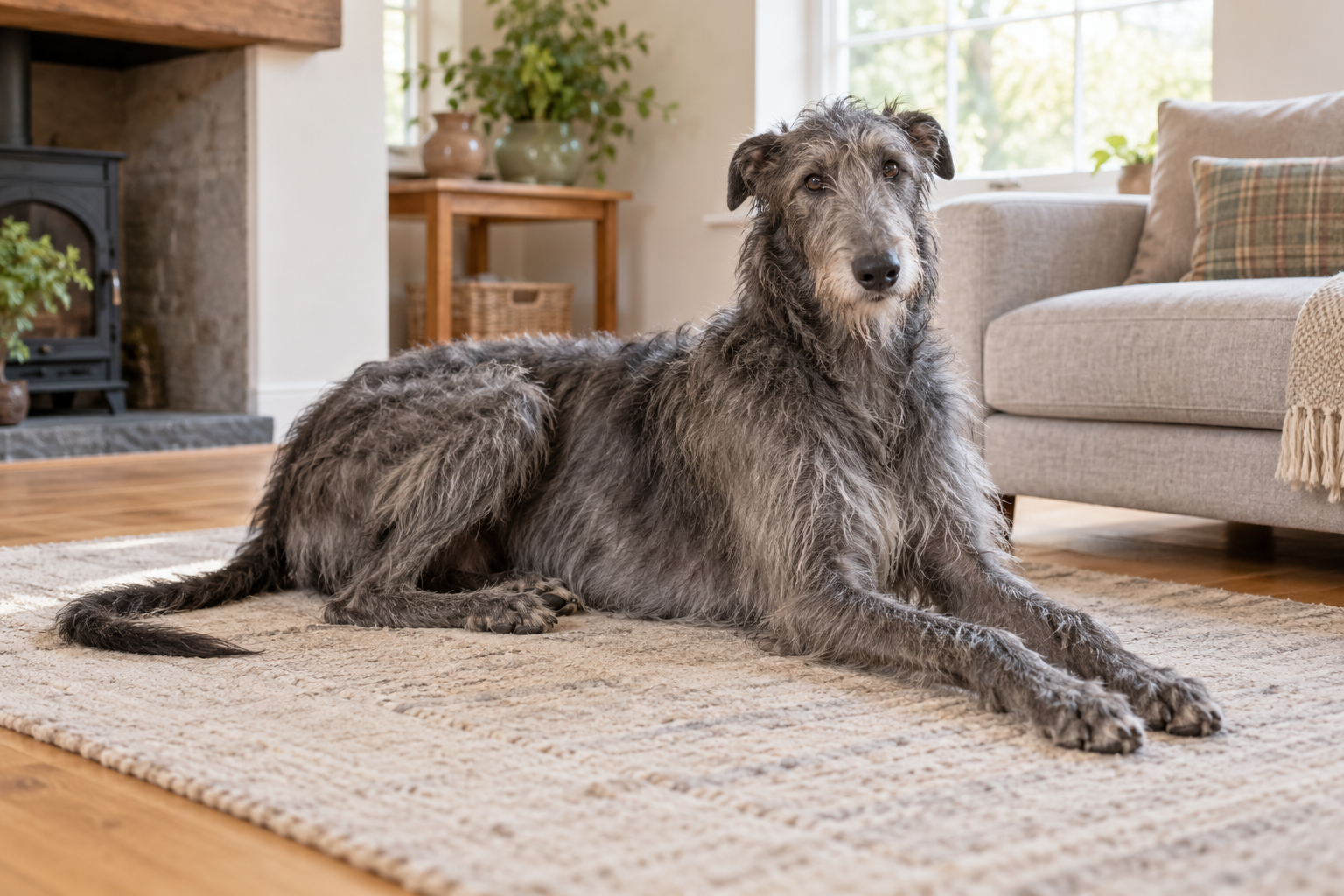
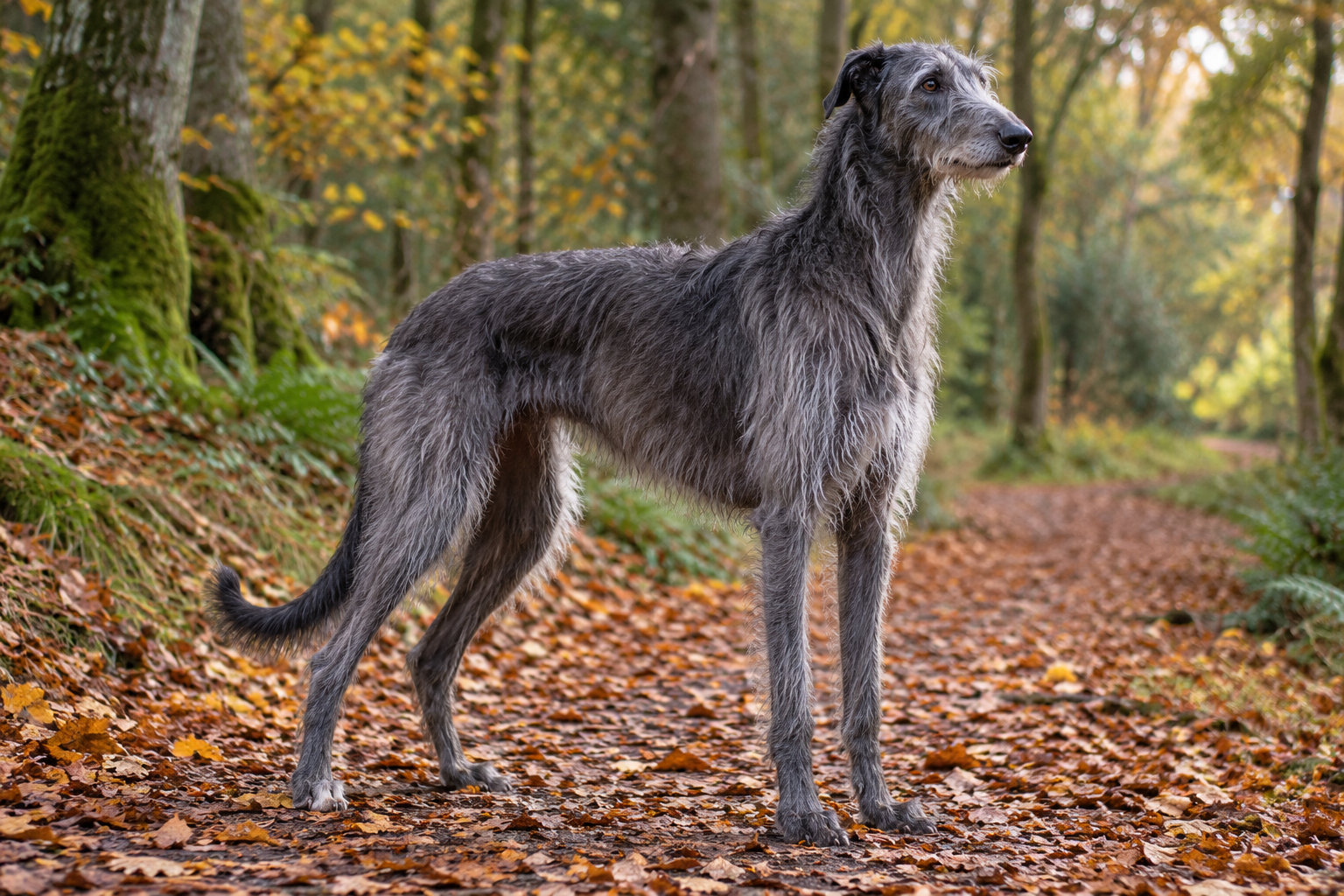
The Deerhound, widely known as the Scottish Deerhound, is a giant, rough-coated sighthound bred in the Scottish Highlands to course red deer. It is gentle, dignified and quiet at home, often sleeping for much of the day, yet capable of explosive speed and a strong chase instinct outdoors. Males stand at least 76 cm and usually weigh 39 to 50 kg, with females a little smaller. Like most giant breeds it has a short lifespan of around 8 to 11 years, and owners should be aware of heart disease, bloat and bone cancer. Breeders are few in Australia and litters are infrequent, so waiting lists are normal.
Breed Overview
Life Span
8 - 11 years
Average Price
AUD 3500 - AUD 4500
Weight
Male: 39 - 50 kg Female: 30 - 43 kg
Height
Male: 76 - 81 cm Female: 71 - 76 cm
Life Expectancy
Male/Female: 8 - 11 years
Breed Group
Hounds (Group 4)
Nicknames
Scottish Deerhound, Royal Dog of Scotland, Highland Greyhound, Scottish Staghound
Breed Information
The Scottish Deerhound is a giant, gentle, rough-coated sighthound, bred to run down red deer and now valued as a quiet, dignified companion. Dogs Australia recognises it in the Hound group simply as the Deerhound, but most people search for it as the Scottish Deerhound. There is no separate "Irish Deerhound": that name usually reflects confusion with the Irish Wolfhound, its closest relative.
The breed is rare in Australia. On 18 October 2026, Dogz Online listed 15 Deerhound breeders and no puppies for sale, so most buyers will need to contact breeders directly and wait for a planned litter. The most recent priced Australian litter found asked $4,000 to $4,500.
At home, a Deerhound is calm, affectionate and often asleep. Outdoors it is a coursing hound that can reach high speed in seconds and will chase anything that runs. Living safely with that contrast, alongside a short lifespan and giant-breed costs, is the real commitment.
Characteristics of the Deerhound
The Deerhound rates highly for gentleness, calm indoor manners and low grooming, and lower for recall, longevity and suitability for small homes.
| Trait | Rating | Star Rating | Meaning |
|---|---|---|---|
| Size | Giant | ★★★★★ | At least 76 cm for males, tall and long-legged but lightly built. |
| Adaptability | Moderate | ★★★ | Calm indoors, but needs room to stretch out and run. |
| Exercise Needs | Moderate to High | ★★★★ | Daily walks plus free running in a secure area. |
| Easy to Train | Moderate | ★★★ | Willing and sensitive, but recall fails when prey appears. |
| Amount of Shedding | Low | ★★ | The wiry coat sheds lightly. |
| Grooming Needs | Low | ★★ | Weekly brushing and occasional hand stripping. |
| Good With Children | Good | ★★★★ | Gentle and tolerant, but a giant puppy can knock over toddlers. |
| Health | Fair | ★★ | Short lifespan, with heart, bloat and bone cancer risks. |
| Cost to Keep | High | ★★★★ | Giant-breed food, insurance and vet costs. |
| Tolerates Being Alone | Moderate | ★★★ | Usually sleeps well, but prefers company and often another dog. |
| Intelligence | Good | ★★★★ | Perceptive and quick to read people, independent in the field. |
History of the Deerhound: From Highland Coursing Hound to Australian Kangaroo Dog
The Deerhound was bred in the Scottish Highlands and Western Isles to course and pull down red deer, and it has long been called the Royal Dog of Scotland. Highland chiefs prized their hounds highly, and the Dogz Online breed history records a leash of Deerhounds sent as a gift from James VI of Scotland to the King of Denmark in the sixteenth century.
The breed declined sharply as the clan system collapsed and large deer forests were broken up, and by the early nineteenth century few pure Deerhounds remained. Enthusiasts rebuilt it during that century, and photographs from the 1800s show dogs that look remarkably like today's.
The breed also has a genuine Australian story. Deerhounds arrived in Australia in early colonial times, according to Dogs NSW, and were kept as companions and used to hunt kangaroos and control dingoes and foxes. Deerhound blood went into the rough-coated colonial kangaroo dogs and staghounds, which is why "deerhound vs staghound" is still a common Australian search.
Appearance of the Deerhound: Tall, Rough-Coated and Built for Speed
Size and Build
The breed standard sets minimum heights of 76 cm for dogs and 71 cm for bitches, with weights of about 45.5 kg and 36.5 kg. Hill's Australia gives typical heights of 76 to 81 cm for males and 71 to 76 cm for females. The build resembles a large, rough-coated Greyhound, with a deep chest, long legs and an arched loin designed for speed and stamina.
Coat and Colours
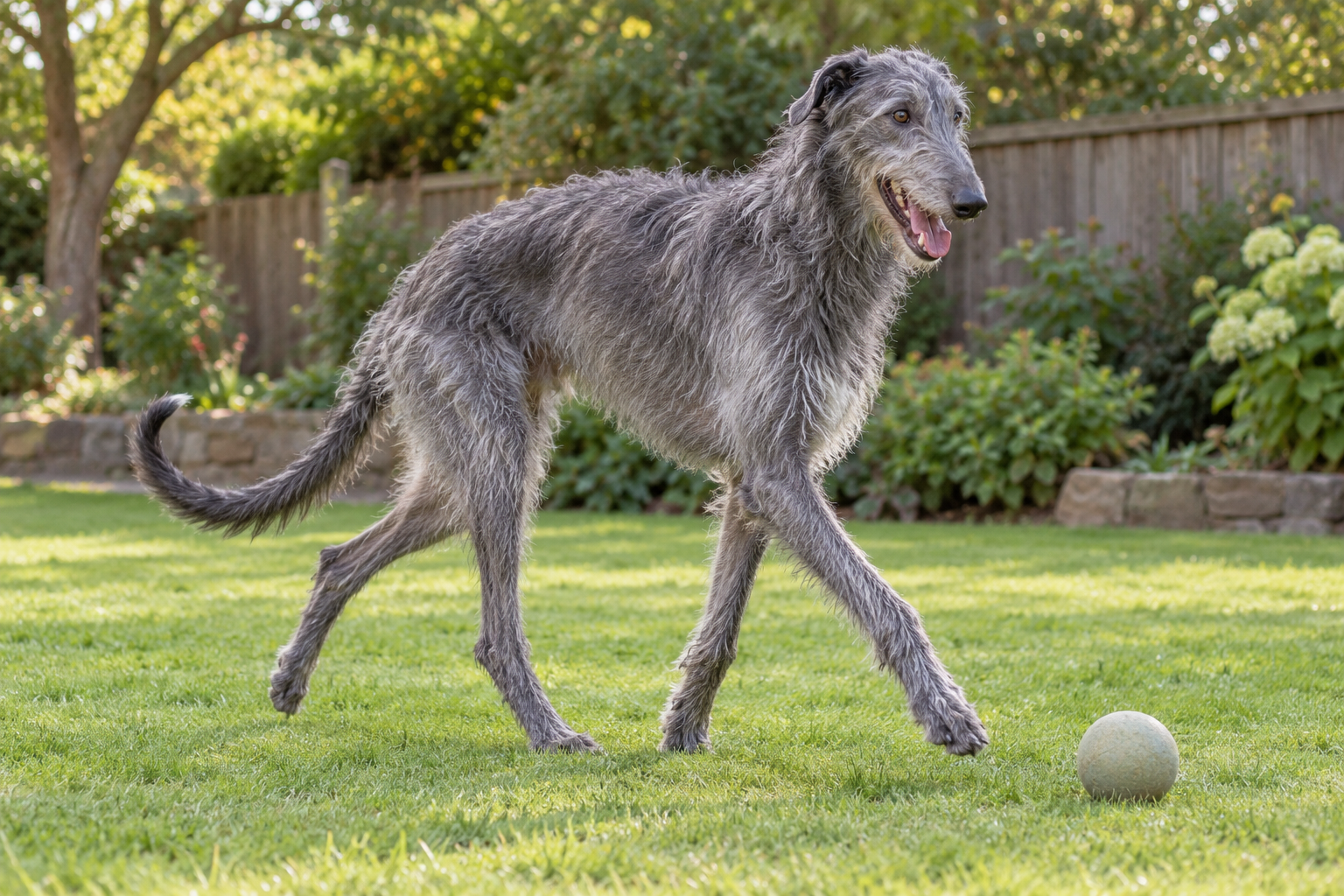
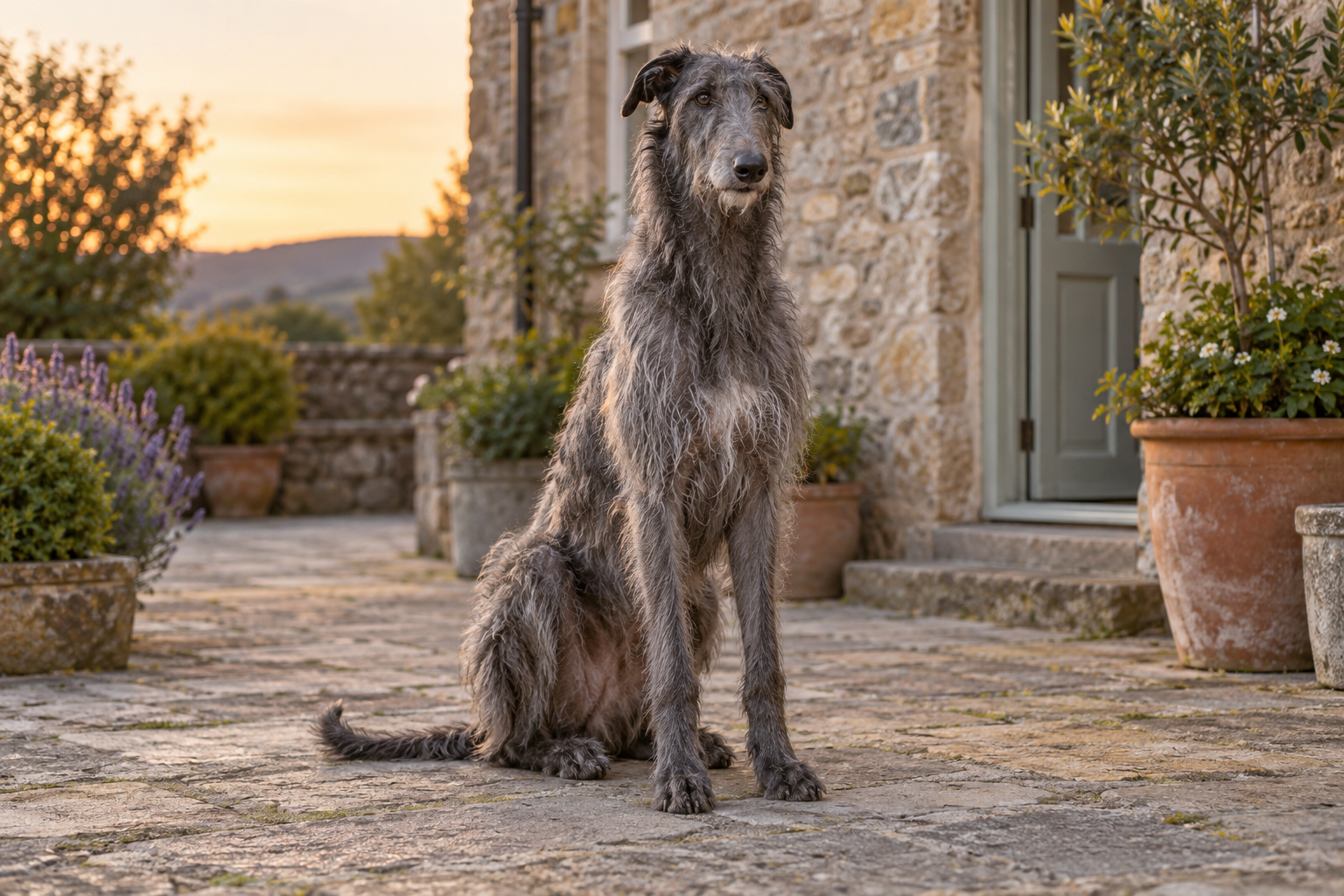
The coat is harsh and wiry, longer on the body and softer on the head and chest, with a beard and moustache. It comes in shades of grey, from dark blue-grey to lighter grey and sandy tones, and Dogs NSW notes that it is easy to manage and does not readily hold dirt.
Distinctive Features
Small, soft, folded ears, a long head and a long, curved tail complete the outline. Compared with the Irish Wolfhound, the Deerhound is usually lighter in bone and more Greyhound-like, while the Wolfhound is generally taller and markedly heavier and more massive. The Irish Wolfhound's size, build and temperament are the most useful comparison for anyone choosing between the two.
Gender Differences
The size difference between the sexes is marked. Males are taller, heavier and more heavily coated, while females are lighter and finer. Dogs NSW notes that females tend to live longer than males.
Temperament of the Deerhound: Gentle, Dignified and Quietly Affectionate
Core Personality Traits
The breed standard describes the Deerhound as gentle and friendly, and Dogz Online adds that it is never suspicious, aggressive or nervous. Adult Deerhounds are calm and sleep for much of the day, waking for walks, meals and company. Puppies and adolescents are a different story, and can be boisterous and clumsy.
Social Behaviour
Deerhounds are usually friendly with people and other dogs, and many enjoy the company of another sighthound. They are poor watchdogs, rarely barking at strangers. Some can be sensitive or reserved, and they respond badly to harsh handling.
Working Instincts
The coursing instinct is strong, and a Deerhound will chase kangaroos, rabbits, cats and anything else that runs. Once in pursuit it can reach high speed very quickly and will not hear a recall. This makes unfenced areas near roads or livestock genuinely dangerous, and breeders with long experience in the breed name road accidents as a leading cause of early death.
Common Behavioural Challenges
The most common issues are chasing, counter-surfing in tall youngsters, and adolescent exuberance. A bored young Deerhound may also dig or chew. Most of these settle with maturity, secure fencing and enough daily running.
Intelligence and Trainability of the Deerhound: Sensitive, Willing and Independent
Intelligence and Learning Ability
Deerhounds are perceptive and quick to understand what is wanted. Dogz Online describes them as obedient and eager to please, and many learn household manners easily. Like most sighthounds, though, they were bred to make decisions on their own while hunting.
Training Approach
Use gentle, reward-based training with short sessions. Harsh corrections can make a sensitive Deerhound shut down. Focus on loose lead walking early, since a tall dog lunging after a rabbit is hard to hold, and practise settling calmly in new places.
Early Socialisation
Introduce puppies to people, children, dogs, traffic and household noise early and gently. Dogs NSW notes that young Deerhounds without consistent guidance can become headstrong. Well-socialised dogs grow into relaxed, confident adults.
Potential Training Challenges
Recall is the permanent weak point, and no amount of training makes it reliable when prey appears. Teach a solid recall anyway for use in secure areas, but plan walks around a lead or a fully fenced space.
Deerhound Family Life: Living with Children, Pets, and Households
Living with Children
Dogs NSW describes the breed as loyal, dignified and fond of children. Adults are gentle and tolerant, but a gangly puppy or adolescent can knock over a small child without meaning to. Supervise all interactions and teach children not to run and squeal around a young hound.
Living with Other Pets
Most Deerhounds live happily with other dogs, especially other sighthounds. Some accept cats they are raised with indoors, but may still chase cats outside. Small pets such as rabbits and guinea pigs are a genuine risk.
Household Environment
Secure fencing is essential, and many owners aim for around 1.8 m, since a Deerhound can clear lower fences easily. Indoors, the breed needs room to stretch out and soft bedding. A large house and yard suits it better than an apartment.
Lifestyle Compatibility
The breed suits calm households with large, secure yards and access to fenced running areas. It suits experienced owners who understand sighthounds. It is a poor fit for small homes, unfenced rural properties near roads or stock, or homes with small pets.
Health of the Deerhound: Heart, Bloat, Bone Cancer and a Short Lifespan
Lifespan and Healthy Living
Hill's Australia gives a lifespan of 8 to 11 years and notes that very large breeds are not generally long-lived. Dogs NSW says Deerhounds can live to 9 or 10, sometimes more, with females tending to live longer. Keeping your dog lean, preventing road accidents and acting quickly on signs of illness give the best chance of a full life.
Common Health Conditions
Owners should be aware of several conditions that can be associated with the breed. It is best to discuss any concerns with a veterinarian.
- Dilated cardiomyopathy. A weakening of the heart muscle that can cause sudden death or gradual heart failure, mostly in mature dogs.
- Gastric dilatation volvulus (bloat). A life-threatening twisting of the stomach, common to deep-chested giant breeds.
- Osteosarcoma. An aggressive bone cancer. Insurer breed data rates the risk as high in Scottish Deerhounds.
- Cystinuria. An inherited problem with urine formation that can cause bladder stones and blockage, especially in males.
- Factor VII deficiency. An inherited clotting disorder that can cause excessive bleeding from minor wounds or surgery.
- Portosystemic shunt. An inherited liver blood vessel abnormality that can cause poor growth and illness in young dogs.
Genetic Health Testing
Ask breeders about heart screening of both parents, factor VII status, and bile acid testing of puppies for liver shunt. Ask too about the longevity of dogs in the line and what they died of, which is one of the most useful questions in a short-lived breed.
Preventative Health Care
Lean sighthounds can respond differently to some anaesthetic drugs, and veterinary anaesthesia guidance for sighthounds recommends choosing drugs and doses with this in mind. Use a vet familiar with sighthounds, learn the signs of bloat, and treat any lameness in an older dog promptly given the bone cancer risk. Keep vaccinations and year-round parasite prevention current, including paralysis tick control on the east coast.
Caring for the Deerhound: Daily Care and Living Environment
Daily Care Routine
A typical day includes a lead walk, a free run in a fenced area, two meals and long periods of rest. Check feet and pads after running, and look over the coat for ticks and burrs. Wash the beard after meals if it gets messy.
Living Environment Requirements
Provide thick, padded bedding. Deerhounds often lie on hard, cool surfaces, which Hill's notes can produce calluses that do not heal easily, so tiled Australian homes need soft beds or mats in favourite spots. A raised or orthopaedic bed helps older dogs.
Climate Sensitivity
A thin-skinned, low body fat coursing hound from a cold climate needs careful management in Australian heat. Exercise at dawn or dusk in summer, provide shade and water, and check safe temperatures for dogs in Australia before running your dog hard. In winter, the lean frame may need a coat and warm bedding.
Caring for Senior Deerhounds
Deerhounds may be considered seniors from around six or seven. Shorten runs, keep weight lean and provide soft bedding and non-slip floors. Watch closely for lameness, breathing changes or reduced stamina, and see your vet promptly.
Grooming of the Deerhound: Caring for the Wiry Coat
Coat Maintenance
Brush and comb the coat about once a week to remove loose hair and tangles. Hill's suggests pulling out dead hair by hand around twice a year. The coat should look natural and slightly shaggy, not trimmed.
Ear, Nail, and Dental Care
Check the soft folded ears weekly. Trim nails regularly and tidy the hair between the toes, as Dogz Online recommends. Brush teeth several times a week.
Bathing and Professional Grooming
Bathe only when needed, since frequent washing softens the harsh coat. Professional grooming is rarely necessary, though show dogs may have longer ear hair stripped.
Exercise Needs of the Deerhound: Free Running in a Safe Space
Daily Exercise Requirements
Dogs NSW lists around 40 minutes a day, and Hill's suggests 20 to 40 minutes with a chance to run hard once a day. Adults need a daily walk plus regular free running in a securely fenced area, and short bursts of sprinting suit them better than long lead walks alone.
Activities Deerhounds Enjoy
Lure coursing, free running in fenced dog parks, and relaxed walks with other sighthounds all suit the breed. Many also enjoy a soft toy and a sunny spot afterwards.
Exercise by Life Stage
Dogz Online advises limiting free exercise while a puppy is growing, since giant breeds develop slowly. Avoid forced running and jumping until growth is complete. Adults can run hard, while seniors need shorter, gentler outings. In tick regions on the east coast, check the whole dog after walks in bush or long grass.
Importance of Mental Stimulation
Deerhounds are not demanding mentally, but they enjoy sniff walks, new places and gentle training. Variety in walking routes keeps them engaged.
Feeding the Deerhound: Nutrition and Diet Needs
Nutritional Requirements
Feed a complete and balanced diet for large or giant breeds. Deerhounds are naturally lean, and a healthy adult shows the outline of the last few ribs and hip bones. Discuss the right body condition with your vet.
Feeding by Life Stage
Puppies need a giant or large-breed puppy food that supports slow, steady growth. A structured large breed puppy feeding schedule helps avoid growth that is too fast for developing joints. Adults should eat at least two meals a day.
Portion Control and Weight Management
Weigh food and adjust to activity. Extra weight adds strain to joints and the heart, while too little leaves a sighthound with no reserves.
Special Dietary Considerations
Split meals and avoid heavy exercise around feeding to reduce bloat risk. Keep water available, but avoid large amounts gulped straight after running. The usual toxic foods apply, including grapes, chocolate, onion, macadamias and xylitol.
Deerhound Price in Australia: Purchase Cost and Ongoing Expenses
Puppy Purchase Price
Expect to pay around $3,500 to $4,500 for a registered Deerhound puppy in Australia, and expect a wait. On 18 October 2026, the Dogz Online Deerhound puppy listings showed 15 breeders and no litters for sale. The most recent priced Australian listing found, from Western Australia in late 2024, asked $4,000 on limited registration and $4,500 on the main register.
Litters are rare and breeders usually keep waiting lists, so apply early and be prepared to travel or arrange transport. A Deerhound offered cheaply, without papers or without health information on the parents, deserves careful questions.
Initial Setup Costs
RSPCA NSW puts first-year setup costs for a dog at about $60 to $80 for microchipping, $280 to $420 for vaccinations, $350 to $650 for desexing, $40 to $100 for a collar, lead or harness, $100 to $200 for a bed and about $170 for puppy school. For a Deerhound, add a giant crate, padded beds for several rooms, a winter coat and, often, higher fencing.
Ongoing Monthly Costs
| Cost | Typical figure (AUD) | Source |
|---|---|---|
| Food | Well above the $91 monthly dog average, given a 30 to 50 kg giant breed | Animal Medicines Australia, Pets in Australia 2025 |
| Parasite prevention | Above the $122 annual average, since dosing is by weight | Animal Medicines Australia, Pets in Australia 2025 |
| Pet insurance | From around $1,461 per year for a large dog, often more for giant breeds | Canstar, prepared March 2026 |
| Annual vet check and booster | From $140 per year | RSPCA NSW |
Animal Medicines Australia reports that dog-owning households spend about $2,520 a year on average, and a Deerhound will cost more. Canstar's pet insurance premium figures rise with age, which matters for a breed with heart and cancer risks.
Long-Term Financial Commitment
Over an 8 to 11 year life, food, insurance and vet care add up quickly. Working through the lifetime cost of owning a large dog gives a realistic budget, and a Deerhound will sit towards the top of that range.
Buying Advice for a Deerhound: Choosing a Healthy Puppy
Choosing a Responsible Breeder
Look for a breeder registered with their state Dogs Australia body, and contact Deerhound clubs for referrals. Good breeders talk openly about lifespan, heart disease and the realities of living with a sighthound. Expect to be interviewed and placed on a waiting list.
Health Checks Before Purchase
Ask for heart screening results on both parents, factor VII status and whether puppies have been bile acid tested. Meet the mother, watch the puppies move, and check eyes, skin and coat. Request vaccination, worming and microchip records.
Questions to Ask the Breeder
- Have both parents been heart screened, and when?
- What is the factor VII status of both parents?
- Have the puppies been bile acid tested for liver shunt?
- How long have dogs in this line lived, and what did they die of?
- Has any related dog had bloat, cystinuria or bone cancer?
- How tall is your fencing, and what do you recommend for mine?
- Will you take the dog back if my circumstances change?
Considering Adoption
Adult Deerhounds occasionally need new homes through breeders or sighthound rescue groups, which also rehome Greyhounds and Deerhound crosses. An adult lets you see its temperament, size and chase drive first. Ask about its health history and how it behaves around cats and small dogs.
Is the Deerhound Right for You? A Gentle Giant That Needs Room to Run
Lifestyle Compatibility
The Deerhound suits calm homes with large, secure yards. It fits experienced sighthound owners best. It is a poor fit for apartments or homes with small pets.
Time and Care Commitment
Expect daily walks plus free running in a fenced area. Grooming is light. The commitment runs for 8 to 11 years.
Grooming and Health Awareness
Know the signs of bloat and heart trouble. Choose a vet familiar with sighthounds. Insure early given the giant-breed risks.
Ideal Owner Profile
The ideal owner is gentle, patient and safety-conscious. They enjoy a quiet companion at home. They accept that recall will never be reliable outdoors.
Find Deerhound Puppies for Sale
If the breed suits your household, you can browse puppies for sale on Pups4Sale while you contact Deerhound breeders directly. Expect to join a waiting list for a planned litter.
Frequently Asked Questions
Related Breeds
Other hound breeds on Pups4Sale.
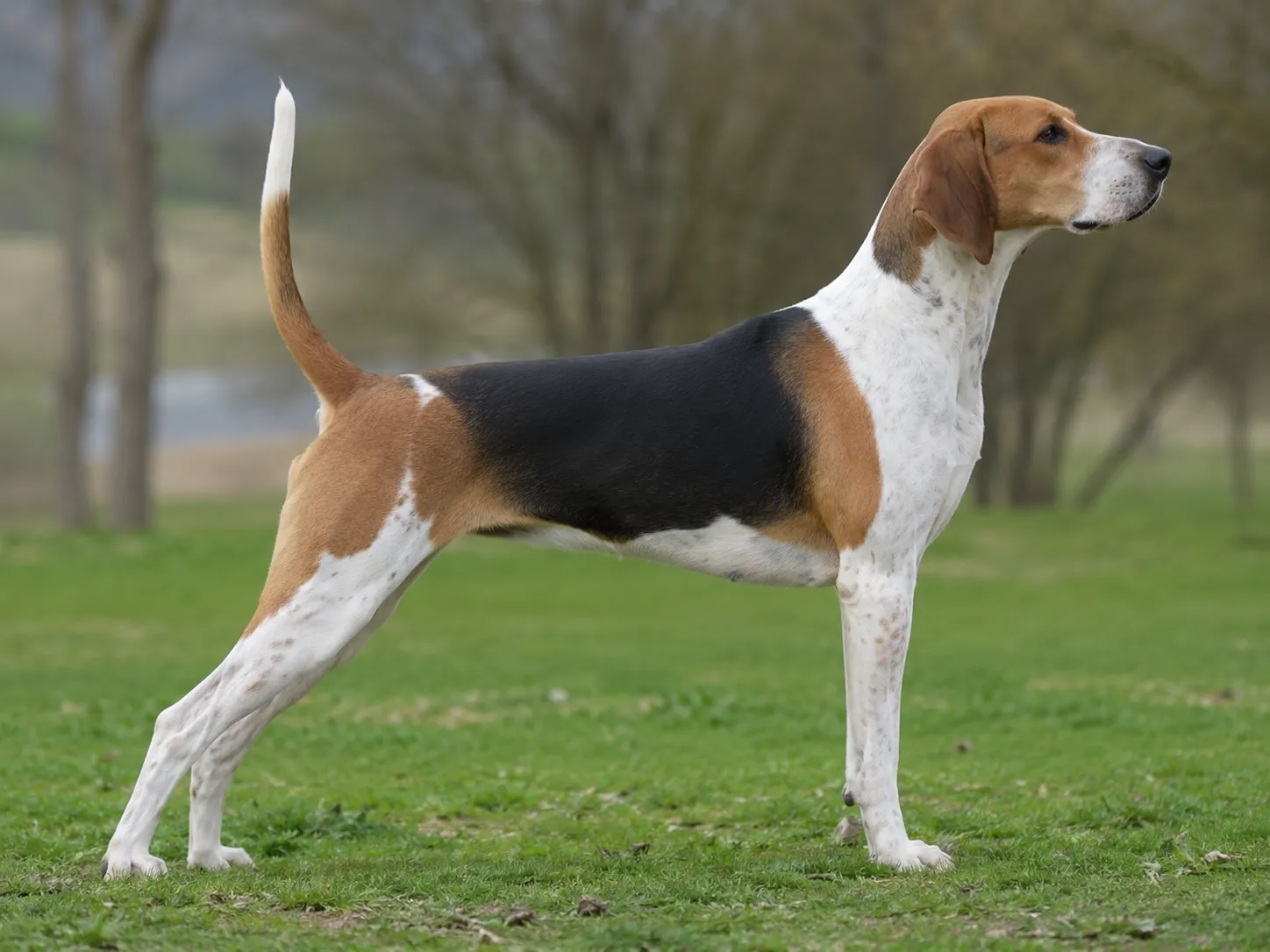 English FoxhoundLarge • Hound
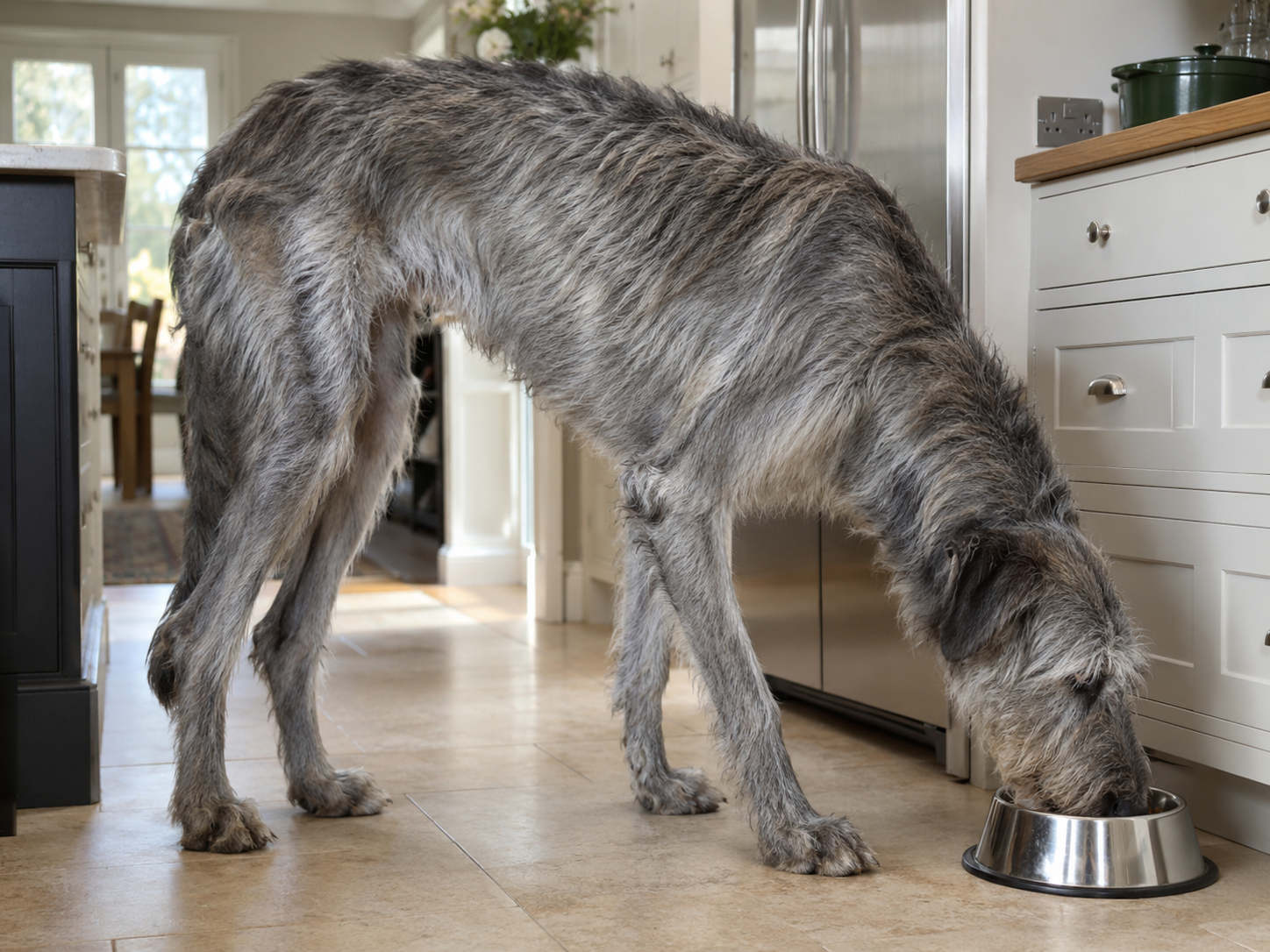 Irish WolfhoundGiant • Hounds
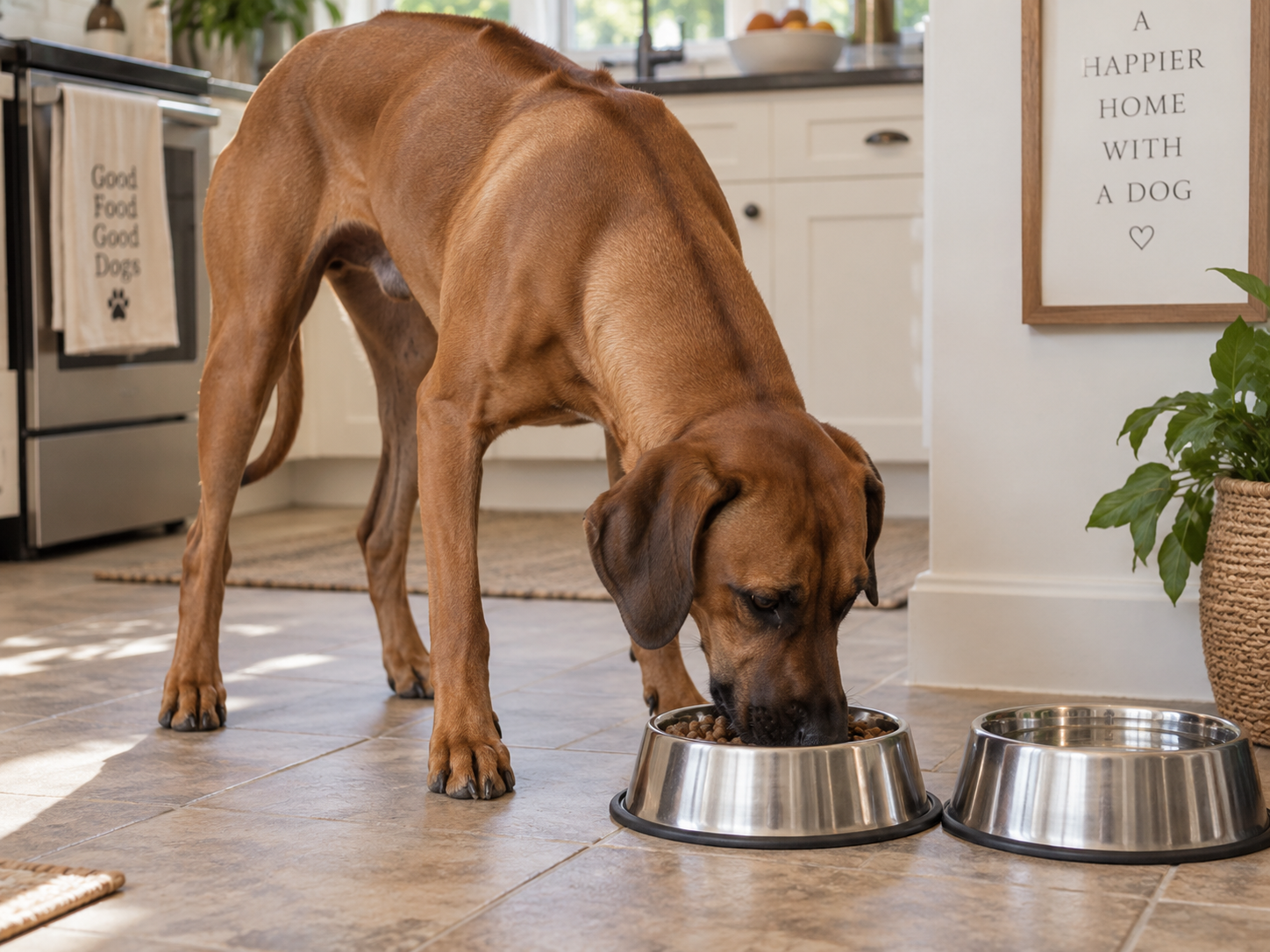 Rhodesian RidgebackLarge • Hounds
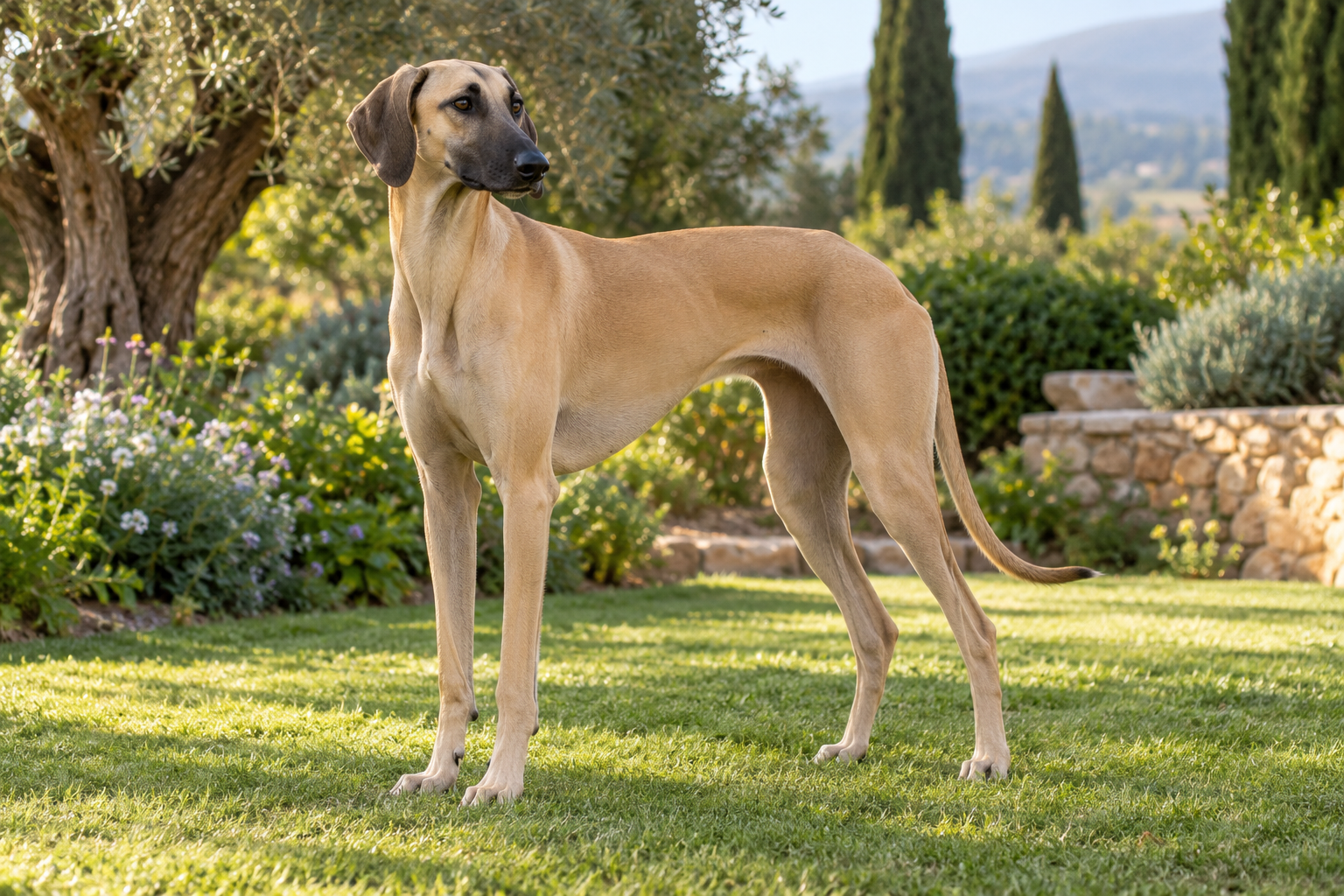 SloughiLarge • Hounds (Group 4)
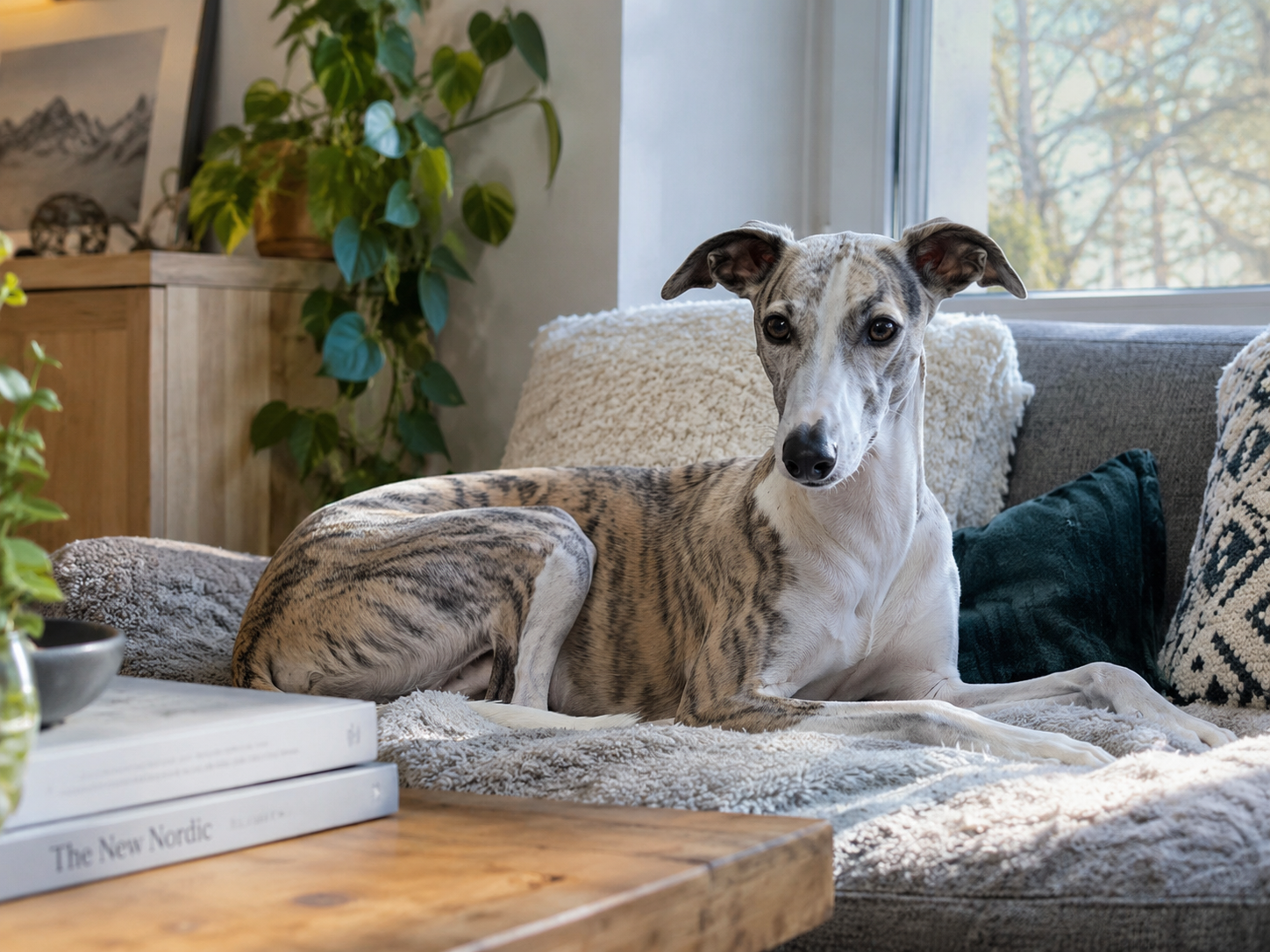 WhippetMedium • Hound
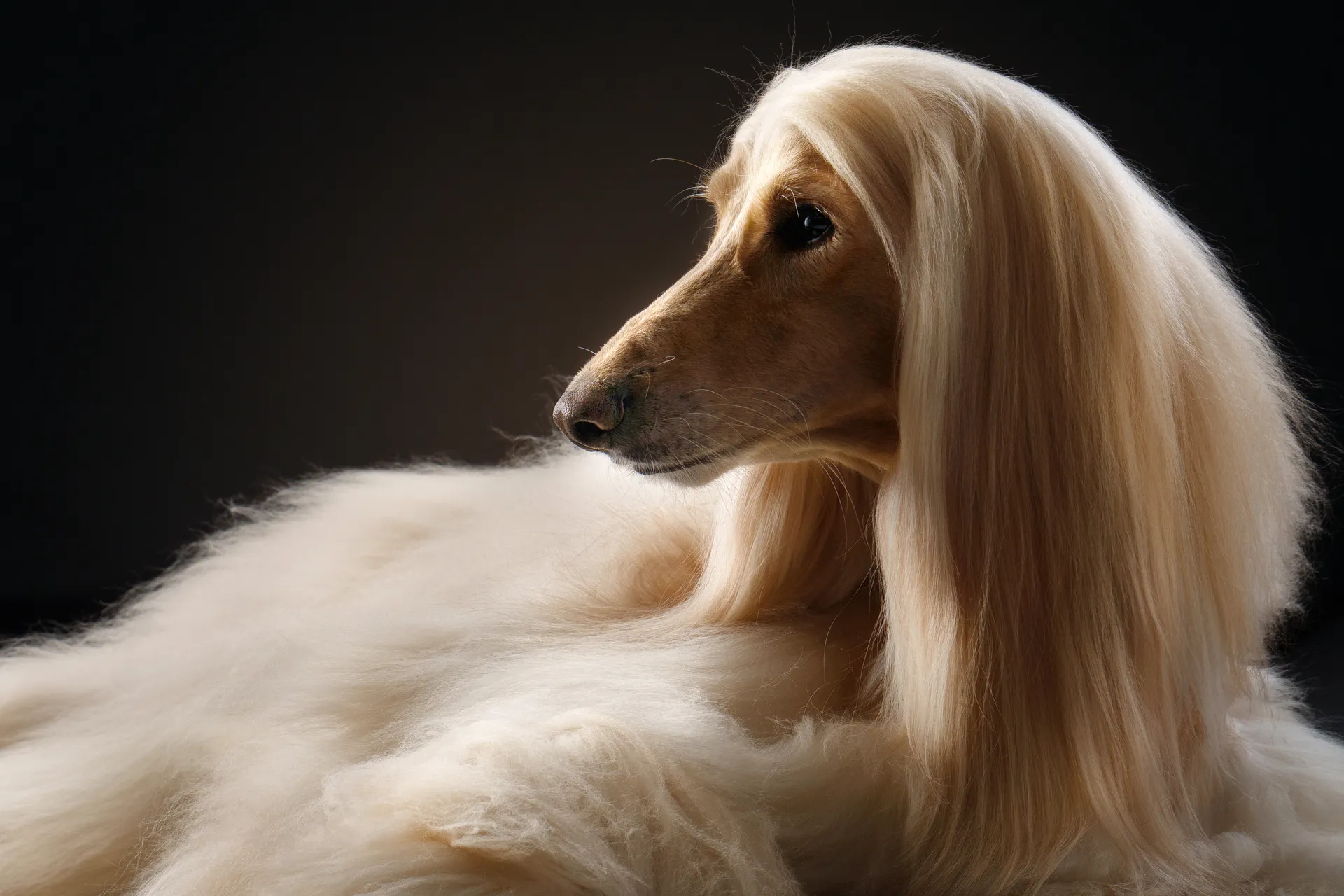 Afghan HoundLarge • Hound