What to Feed a Pregnant Dog by Trimester
Breeding & Whelping By James C. • February 26, 2026
Pregnancy in dogs moves quickly, and what you feed during those nine weeks can shape everything from litter size to puppy survival. Many breeders either increase food too early or wait too long to adjust the diet. Both mistakes can cause problems.
If you’re serious about responsible breeding, feeding a pregnant dog correctly is one of the most important things you’ll manage. In this guide, we’ll break it down by trimester so you know exactly what to feed, how much to increase, and what to avoid at each stage.
How Should You Be Feeding a Pregnant Dog?
Feeding a pregnant dog should follow a staged approach rather than a blanket increase in food from day one. In the first three weeks, keep her on a high-quality adult maintenance diet without increasing portions. From week four, gradually transition to a premium puppy formula to support fetal development.
In the final trimester, increase her total food intake by around 25–50% and divide meals into smaller, more frequent servings. This supports rapid puppy growth while preventing digestive discomfort as abdominal space becomes limited.
Understanding the Stages of Canine Pregnancy
Before adjusting her food, it helps to understand how pregnancy progresses. A dog’s gestation typically lasts around 63 days, or just over nine weeks. While that may sound simple, her nutritional needs do not rise evenly across that time.
In the first trimester, embryos are developing but remain very small. During the second trimester, organs form and steady growth begins. In the final three weeks, nearly 70% of fetal growth takes place, which is when calorie demands increase sharply.
This staged growth pattern explains why feeding a pregnant dog should not involve immediate overfeeding. The biggest nutritional jump happens late in pregnancy, not at the beginning. Adjusting her diet according to these stages reduces the risk of early weight gain and late undernourishment.
Feeding a Pregnant Dog in the First Trimester (Weeks 1–3)

The first three weeks of pregnancy are internally active but externally subtle. Fertilisation occurs, embryos travel through the uterus, and implantation takes place around day 17–21. Despite this activity, her calorie requirements remain almost identical to normal maintenance levels.
This is where many people overfeed, which is one of the more common first-time breeder mistakes. They assume pregnancy automatically means more food. In reality, feeding a pregnant dog in the first trimester is about stability, not increase. Overfeeding now can cause unnecessary fat gain, which raises the risk of difficult labour later.
Should You Increase Her Food Yet?
In most healthy dogs, the answer is no.
Calorie needs do not significantly increase during weeks 1–3. Continue feeding her normal maintenance portion unless she is underweight or recovering from illness. Increasing food too early does not benefit embryo development and may lead to obesity before whelping.
Instead of increasing quantity, focus on diet quality.
What Type of Food Is Best in Early Pregnancy?
A complete, balanced adult maintenance diet with high-quality animal protein is usually sufficient during this stage.
Look for:
- Clearly named animal protein sources
- Moderate fat levels
- Balanced calcium and phosphorus
- No excessive fillers
If she was previously on a low-quality diet, this is the time to upgrade to a better formula. However, there is no need to move to puppy food yet unless advised by a veterinarian.
Appetite Changes and Morning Sickness
Some dogs experience mild nausea between days 14–21 due to hormonal shifts. You may notice:
- Slightly reduced appetite
- Temporary food refusal
- Mild lethargy
This is usually short-lived and resolves naturally. Avoid force-feeding. Offer smaller meals if needed and ensure constant access to fresh water.
If appetite loss continues beyond a few days or she shows vomiting or weakness, consult a veterinarian.
Body Condition: What Should She Look Like?
During the first trimester, she should look the same as before pregnancy.
You should still:
- Feel her ribs easily without pressing hard
- See a defined waist from above
- Notice an abdominal tuck from the side
There should be no visible abdominal enlargement yet. If she is gaining noticeable weight this early, portions may be too high.
Common Feeding Mistakes in Weeks 1–3
Early pregnancy errors can create problems later. The most common include:
- Increasing food immediately after mating
- Adding calcium supplements without veterinary direction
- Switching diets abruptly
- Feeding excessive treats
Extra calcium is especially risky. Supplementing too early can interfere with the body’s natural calcium regulation and increase the risk of eclampsia after birth.
When Should You Speak to a Vet?
Consider veterinary guidance if:
- She is underweight before pregnancy
- She carries a large or giant breed
- She has a history of pregnancy complications
- You suspect a large litter
Early professional advice can help you personalise the feeding plan rather than relying on general guidelines.
Weeks 1–3 set the foundation for the entire pregnancy. The goal is not to accelerate growth but to maintain excellent body condition and nutritional stability before demands rise in the second trimester.
Feeding a Pregnant Dog in the Second Trimester (Weeks 4–6)
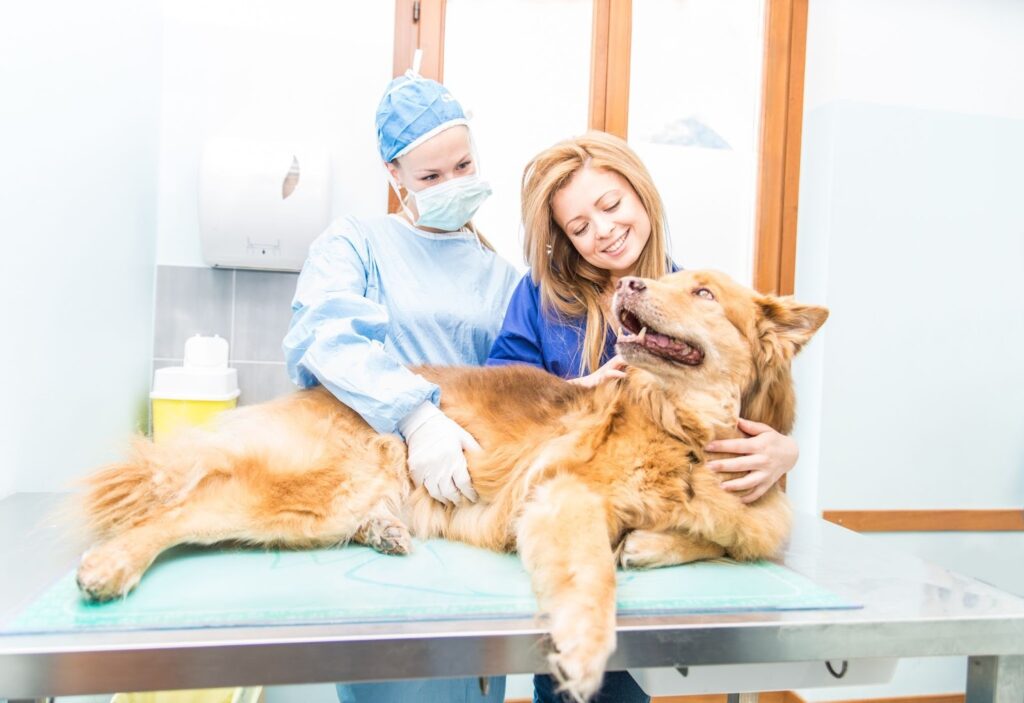
Weeks 4–6 mark the point where pregnancy becomes nutritionally demanding. Implantation is complete, organs are forming, and fetal growth accelerates. While she may only look slightly fuller, internally the puppies are developing rapidly.
This is where feeding a pregnant dog shifts from simple maintenance to intentional support. Calorie needs begin to rise gradually, but controlled increases are critical. Overfeeding at this stage still carries risk, while underfeeding can affect fetal development.
When Should You Transition to Puppy Food?
Around week four, most veterinarians recommend transitioning to a high-quality puppy formula. Puppy food is formulated for growth, which makes it appropriate for developing fetuses as well.
Puppy formulas typically provide:
- Higher protein levels to support tissue development
- Increased fat for energy density
- Balanced calcium and phosphorus for skeletal growth
- DHA for brain and eye development
The transition should be gradual over 5–7 days to avoid digestive upset. Start with 25% puppy food mixed with 75% current diet, then slowly increase the ratio until fully transitioned.
How Much Should You Increase Her Food?
Calorie needs typically increase by about 10–20% during weeks 4–6, depending on breed size and body condition.
The key is measured adjustment.
You should:
- Slightly increase total daily intake
- Monitor weekly weight gain
- Continue assessing body condition
She should appear slightly fuller but not heavy. You should still be able to feel her ribs with light pressure. Excess fat gain at this stage can reduce abdominal space later and complicate delivery.
Key Nutrients That Matter Most Now
During the second trimester, nutrient quality becomes as important as calorie quantity.
- Protein supports organ and muscle formation.
- Fat provides concentrated energy as metabolic demand increases.
- DHA (omega-3 fatty acid) supports neurological development.
- Balanced minerals ensure healthy bone growth without disrupting calcium regulation.
Avoid adding standalone supplements unless prescribed. Excess supplementation can disrupt the carefully balanced ratios already present in high-quality puppy food.
Appetite Changes During Weeks 4–6
By this stage, appetite usually increases compared to early pregnancy. Many dogs show:
- Increased hunger
- Stronger food motivation
- Steady energy levels
However, do not feed unlimited portions. Controlled increases are safer than free feeding.
Monitoring Weight Gain
A healthy pregnant dog typically gains about 15–25% of her pre-pregnancy body weight by the end of gestation, with much of that occurring in the final trimester.
During weeks 4–6, weight gain should be gradual. Rapid gain now often signals overfeeding rather than fetal growth.
The second trimester is about building nutritional reserves carefully. You are preparing her body for the intense growth phase that happens in the final three weeks.
Feeding a Pregnant Dog in the Third Trimester (Weeks 7–9)
The final three weeks are the most nutritionally demanding stage of pregnancy. Nearly 70% of fetal growth happens now, which means energy needs rise quickly. At the same time, expanding puppies reduce stomach space, making large meals uncomfortable.
This is where feeding a pregnant dog requires careful adjustment. She needs more calories, but she cannot always eat more at once.
Why Calorie Needs Increase Rapidly
During weeks 7–9:
- Puppies gain most of their body weight
- Mammary glands prepare for milk production
- Her metabolic rate increases significantly
Calorie needs may rise to 25–50% above maintenance levels, depending on litter size and breed. Large litters demand more energy than small ones.
If you fail to increase food during this stage, puppies may be born underweight and milk supply may suffer after birth.
How Much More Should She Eat?
Rather than doubling portions suddenly, increase intake gradually over the final weeks.
A practical guide:
- Week 7: Increase total intake by about 20–25%
- Week 8: Increase to 30–40% above maintenance
- Week 9: Up to 50% if appetite allows
These are general guidelines. Always adjust based on body condition and veterinary advice.
You should still feel her ribs lightly, but abdominal fullness will be obvious due to pregnancy.
Why Smaller, More Frequent Meals Work Best
Because the uterus occupies more abdominal space, large meals can cause discomfort. Instead:
- Divide daily food into 3–4 smaller meals
- Use energy-dense puppy formula
- Ensure constant access to fresh water
Smaller meals improve digestion and help maintain steady blood sugar levels.
What If She Loses Her Appetite Near Labour?
It is common for appetite to decrease 24–48 hours before whelping, alongside other signs a dog is ready to give birth. This is normal and often signals that labour is approaching.
Do not force-feed during this period. Keep water available and monitor her closely for nesting behaviour and signs of labour.
If appetite drops earlier than expected or is accompanied by vomiting, weakness, or discharge, consult a veterinarian immediately.
Preparing for Lactation
Do not reduce food right after birth. Energy needs increase even further once milk production begins.
Continue feeding high-quality puppy formula during nursing, and expect her intake to rise dramatically in the first 2–3 weeks postpartum.
The third trimester is where precision matters most. Gradual increases, frequent meals, and close monitoring help ensure both healthy puppies and a strong mother going into whelping.
Should You Give Supplements to a Pregnant Dog?

Supplementation is one of the most debated areas in feeding a pregnant dog. Many owners assume adding vitamins or calcium will strengthen the litter. In reality, unnecessary supplements can cause more harm than good.
If your dog is eating a high-quality, complete puppy formula, most nutritional needs are already balanced. Adding extra nutrients without veterinary guidance can disrupt those ratios and create preventable complications.
When Supplements May Be Appropriate
There are situations where targeted supplementation makes sense, but only under veterinary supervision. These may include:
- Underweight dams before pregnancy
- Dogs carrying very large litters
- Confirmed nutrient deficiencies
- Specific medical conditions
In these cases, a veterinarian may recommend controlled supplementation of iron, omega-3 fatty acids, or other nutrients based on blood work or clinical assessment.
Supplementation should be precise, not guessed.
Why Extra Calcium Can Be Dangerous
Calcium is the most common supplement owners add during pregnancy. Unfortunately, this is also where serious mistakes happen.
Excess calcium during pregnancy can suppress the body’s natural calcium regulation system. After birth, when milk production begins, the body may struggle to mobilise calcium properly. This can lead to eclampsia, a life-threatening condition characterised by:
- Muscle tremors
- Restlessness
- High body temperature
- Seizures
For most healthy dogs on balanced puppy food, additional calcium is unnecessary and potentially harmful.
What About Multivitamins?
General canine multivitamins are rarely needed during pregnancy if diet quality is high. Over-supplementation of fat-soluble vitamins, such as vitamin A, can even interfere with fetal development when given in excess.
If you are unsure whether her diet meets requirements, speak to your vet rather than adding supplements independently.
The safest approach to supplementation during pregnancy is simple: focus on high-quality food first, and only add targeted nutrients when there is a documented need.
What Not to Feed a Pregnant Dog
Knowing what to avoid is just as important as knowing what to provide. During pregnancy, your dog’s immune system and digestive tolerance can shift slightly, which makes food safety even more important.
When it comes to feeding a pregnant dog, avoid experimental diets, unnecessary treats, and unbalanced homemade meals. Nutritional stability matters more now than ever.
Avoid Unbalanced Homemade Diets
Homemade feeding during pregnancy can work, but only if formulated by a qualified veterinary nutritionist. Randomly combining meats, rice, and vegetables rarely provides the correct calcium, phosphorus, and micronutrient ratios required for fetal development.
Imbalances during pregnancy can affect bone formation and organ development in puppies.
Be Cautious With Raw Diets
Raw feeding during pregnancy is controversial. While some experienced breeders manage it carefully, raw diets carry a higher bacterial risk, including Salmonella and E. coli.
Pregnancy slightly alters immune function, and bacterial infections can pose risks to both mother and litter. If feeding raw, veterinary oversight is strongly recommended.
Limit Excess Treats and Table Scraps
High-fat table scraps can cause:
- Unnecessary weight gain
- Digestive upset
- Pancreatitis
Treats should make up no more than 10% of daily caloric intake. Focus on nutrient-dense main meals rather than snacks.
Avoid Toxic Human Foods
Some foods remain dangerous during pregnancy just as they are normally. These include:
- Chocolate
- Grapes and raisins
- Onions and garlic
- Xylitol-containing products
Even small amounts can cause serious complications.
Do Not Make Sudden Diet Changes
Frequent switching between brands or formulas can lead to digestive instability. Once you transition to a high-quality puppy formula in the second trimester, maintain consistency unless a medical issue arises.
Pregnancy is not the time to experiment. Keep her diet predictable, balanced, and safe. Stability reduces stress on her body and supports healthier outcomes for the litter.
How Much Weight Should a Pregnant Dog Gain?

Weight gain during pregnancy should be steady and controlled. Too little gain can signal underfeeding or a small litter. Too much gain often reflects excess fat rather than healthy fetal growth.
When managing feeding a pregnant dog, aim for a total weight increase of about 15–25% of her pre-pregnancy body weight by the end of gestation. Most of that gain happens in the final three weeks.
What Healthy Weight Gain Looks Like
During weeks 1–3, she should look almost unchanged.
By weeks 4–6:
- A slight abdominal rounding may appear
- Ribs should still be easy to feel
- Waistline begins to soften
By weeks 7–9:
- Clear abdominal enlargement
- Mild rib coverage increase
- No excessive fat deposits over hips or neck
You are looking for pregnancy fullness, not obesity.
Signs She May Be Underfed
- Prominent ribs late in pregnancy
- Noticeable muscle loss
- Low energy
- Poor appetite that does not recover
Underfeeding can result in low birth weight puppies and weak milk production after delivery.
Signs She May Be Overfed
- Thick fat deposits along ribs
- Loss of any visible waist early in pregnancy
- Heavy fat accumulation at base of tail
Excess weight increases the risk of dystocia, which is difficulty during labour.
Why Body Condition Matters More Than the Scale
A scale number alone does not tell the full story. Large litters naturally increase weight, but that weight should primarily be puppies and fluids, not fat.
Regularly assess her body condition by touch and visual inspection. If you are unsure, your veterinarian can help score her condition properly.
Controlled weight gain is one of the clearest indicators that feeding a pregnant dog is being managed correctly. It protects both her health and the survival of the litter.
Feeding After Birth: Transitioning Into Lactation
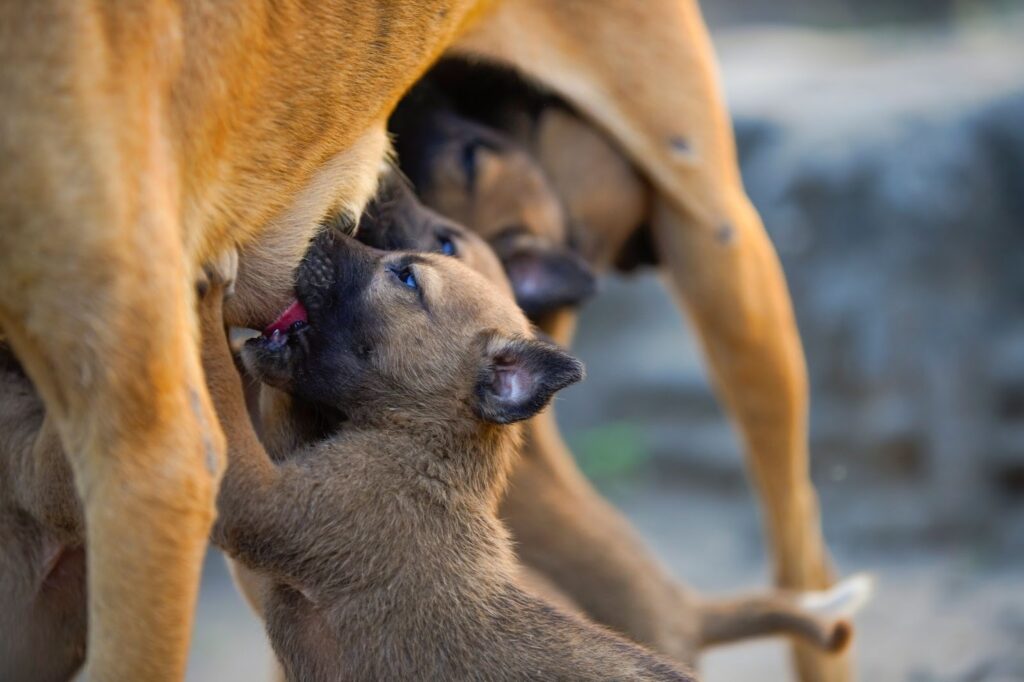
Many people think the nutritional challenge ends once the puppies are born. In reality, energy demands increase even further during nursing. Milk production requires significant calories, fluids, and nutrients, especially during the first three weeks after whelping when puppy mortality in the first two weeks is still a major concern.
If you’ve managed feeding a pregnant dog correctly, you’ve already set the foundation for successful lactation. Now the goal shifts to supporting milk production without allowing her to lose excessive body condition.
How Much Should She Eat While Nursing?
During peak lactation, a mother may need 2–3 times her normal maintenance calories, depending on litter size.
General guide:
- Week 1 postpartum: Appetite increases steadily
- Weeks 2–3 postpartum: Peak milk production and highest calorie demand
- Week 4 onward: Gradual stabilisation as puppies begin weaning
Free-feeding is often appropriate during heavy lactation, particularly with large litters.
Continue Feeding Puppy Formula
High-quality puppy food should remain the main diet throughout nursing. It provides:
- Increased protein for milk production
- Higher fat for energy
- Balanced minerals for recovery
Switching back to adult food too soon can reduce calorie density and affect milk output.
Hydration Is Critical
Milk production depends heavily on fluid intake. Always provide unlimited access to fresh water.
Signs of dehydration include:
- Sticky gums
- Reduced skin elasticity
- Lethargy
If hydration drops, milk supply can decline quickly.
Monitoring Her Condition Postpartum
It is normal for nursing mothers to lose some weight, especially with large litters. However, excessive weight loss, weakness, or poor appetite should prompt veterinary consultation.
As puppies begin weaning around 3–4 weeks, gradually reduce her food intake to prevent mastitis and digestive upset.
Proper postpartum nutrition ensures she recovers well and remains strong for future breeding cycles, if planned responsibly.
Getting Feeding Right From Day One of Pregnancy
Proper nutrition during pregnancy is not about guesswork or generosity with portions. It is about timing, balance, and observation.
Early pregnancy requires stability. Mid-pregnancy requires a gradual transition to nutrient-dense food.
The final trimester demands careful calorie increases and smaller, frequent meals.
When feeding a pregnant dog, focus on body condition rather than assumptions. Avoid overfeeding too early.
Increase intake when growth truly accelerates. Choose high-quality puppy formulas over unnecessary supplements.
And monitor appetite changes as labour approaches.
If you are planning a litter, take the time to prepare properly.
Responsible breeding starts long before whelping day, including preparing a safe whelping box setup. Safe breeding practices, recognising pregnancy signs, and planning for a safe delivery all help ensure both mum and puppies get the safest start possible.
FAQs
1. When should I switch to puppy food during pregnancy?
Most dogs should transition to a high-quality puppy formula around week four of pregnancy. This is when fetal growth accelerates and nutritional demands begin to rise. Make the switch gradually over 5–7 days to prevent digestive upset.
2. How much more should a pregnant dog eat?
During the first three weeks, food intake usually stays the same. In the second trimester, increase portions by about 10–20%. In the final trimester, intake may rise to 25–50% above maintenance, depending on breed size and litter size.
3. Can I feed a raw diet while my dog is pregnant?
Raw diets can carry bacterial risks, which may pose problems during pregnancy. If feeding raw, it should be carefully managed under veterinary supervision to ensure proper nutrient balance and food safety.
4. Should I give calcium supplements during pregnancy?
Routine calcium supplementation is not recommended if your dog is eating a balanced puppy formula. Excess calcium during pregnancy can interfere with natural regulation and increase the risk of eclampsia after birth.
5. What if my pregnant dog stops eating before labour?
A reduced appetite 24–48 hours before whelping is common and often signals that labour is near. Monitor her closely, keep water available, and contact your vet if she shows weakness, vomiting, or abnormal discharge.
6. How do I know if I’m feeding her correctly?
A well-fed pregnant dog will gain weight gradually, maintain good energy levels, and enter labour in healthy body condition. If you are unsure, regular veterinary check-ups can confirm whether her nutrition is on track.
 Add us as a preferred source