Common Whelping Complications and When to Call a Vet
Breeding & Whelping By James C. • February 24, 2026
Most dogs give birth without difficulty. However, when whelping complications occur, they can escalate rapidly and become life-threatening for both the dam and her puppies. Knowing what is normal during labour, what is not, and when to call a vet can prevent tragedy.
This guide explains the most common whelping complications, early warning signs before birth, high-risk breeds, and serious post-birth emergencies. By understanding when to act, you improve the chances of a safe delivery and healthy litter.
What Is Considered Normal Labour in Dogs?
Before recognising common whelping complications and when to call a vet, you must understand what typical labour looks like. Most deliveries progress naturally in three stages.
Stage I labour can last 6 to 24 hours. The dam may pant, pace, dig at bedding, refuse food, or appear restless. Contractions are beginning internally, but no visible straining occurs yet.
Stage II is active delivery. Puppies are usually born within 20 to 60 minutes of strong contractions. It is normal for time to pass between puppies if the mother is resting calmly.
Stage III involves passing each placenta. A small amount of dark green discharge after a puppy is born can be normal. However, labour should never exceed 24 hours in total.
Prolonged Labour (Dystocia): The Most Serious Whelping Emergency
Dystocia means difficult or obstructed labour and is the most common reason breeders seek emergency care. Early recognition of common whelping complications and when to call a vet can prevent loss of both dam and puppies.
Dystocia may be caused by uterine inertia, oversized puppies, pelvic narrowing, or abnormal puppy positioning. Flat-faced breeds such as French Bulldogs, Boston Terriers and Pugs are significantly more prone to dystocia.
Strong contractions lasting more than 30 minutes with no puppy produced require urgent veterinary attention. Likewise, more than two hours between puppies when others are expected is abnormal.
Never attempt to pull a stuck puppy without veterinary instruction. Incorrect traction can rupture the uterus or injure the puppy.
Causes of Dystocia Explained
Maternal causes include exhaustion, low calcium or glucose, uterine infection, or poor contractions. Foetal causes include large puppies, developmental defects, or malpositioning such as breech presentation.
Radiographs after day 55 of pregnancy help predict litter size and reduce surprises during labour.
Abnormal Discharge and Bleeding During Whelping
Vaginal discharge is expected during labour, but changes in colour, smell, or timing can signal serious complications. Understanding what is normal helps you identify common whelping complications and when to call a vet without delay.
A small amount of dark green discharge after a puppy is born can be normal. However, green or black discharge before the first puppy appears may indicate placental separation and reduced oxygen supply to unborn puppies.
If you see concerning discharge at any stage, seek veterinary advice immediately.
Green Discharge Before a Puppy Is Born
Dark green discharge before any puppy is delivered can signal fetal distress. This means a placenta may have detached too early, cutting off oxygen to the puppy.
This situation requires urgent veterinary attention, especially if no puppy follows shortly after the discharge appears.
Excessive Bleeding
A few drops of blood during delivery are normal. Continuous bleeding lasting more than 10 minutes, or heavy bleeding soaking bedding, is not normal.
Heavy bleeding can indicate uterine rupture, trauma, or retained tissue. This is a veterinary emergency.
Foul-Smelling or Brown Discharge
After whelping, discharge can continue for several weeks but should not smell offensive. A foul odour may suggest infection such as metritis, particularly if accompanied by fever or lethargy.
Any strong smell or sudden change in discharge warrants immediate veterinary assessment.
Puppy Presentation Problems: Breech, Stuck or Malpositioned Puppies
Most puppies are born either head first or hind legs first. Both are considered normal presentations. Problems arise when a puppy is sideways, bottom first without hind legs extended, or partially lodged in the birth canal.
Malpositioned puppies are a major cause of common whelping complications and when to call a vet. Attempting to pull a stuck puppy without professional advice can cause uterine rupture, severe bleeding, or death of the puppy.
If you can see part of a puppy or a fluid-filled sac at the vulva and it does not progress within 20–30 minutes, contact your vet immediately.
What Is a Breech Puppy?
A true breech presentation means the tail and bottom enter the birth canal first, with hind legs tucked forward. You may see the tail hanging from the vulva or notice a firm lump behind the vulval lips while your dog strains.
Some breech puppies can be delivered safely, but many require veterinary assistance to prevent oxygen deprivation.
Puppy Stuck in the Birth Canal
Large puppies, single-puppy litters, or deformed puppies are more likely to become lodged. Brachycephalic breeds such as French Bulldogs and Pugs have a higher risk of dystocia due to pelvic shape and puppy head size.
If intense contractions last over 20–30 minutes with no delivery, treat it as an emergency.
Umbilical Cord and Amniotic Sac Problems

Most dams instinctively break the birth sac and chew through the umbilical cord. However, problems can occur, especially in first-time mothers. Knowing what is normal helps you respond quickly to common whelping complications and when to call a vet.
Newborn puppies must begin breathing within moments of birth, as this can affect puppy mortality in the first two weeks. If the sac remains intact or the cord is mishandled, oxygen deprivation or infection can follow. Calm, careful intervention may be required, but veterinary advice is essential if you are unsure.
Failure to Remove the Amniotic Sac
Puppies are often born enclosed in a thin membrane. The mother should lick and tear this sac open immediately.
If she does not, gently tear the sac open with clean fingers and clear the puppy’s mouth and nose. Avoid sharp tools. If the puppy is not breathing after stimulation, contact your vet urgently.
Umbilical Cord Not Severed
Most mothers chew the cord themselves. If left attached for several hours, the cord can become infected or bleed excessively.
If you need to intervene, tie the cord with sterile thread about 2–3 cm from the puppy’s abdomen before cutting. Improper cutting can cause infection or herniation, so veterinary guidance is recommended.
Excessive Bleeding From the Cord
A small amount of spotting is normal. Continuous bleeding from the umbilical stump is not.
Apply gentle pressure with sterile gauze and seek veterinary help if bleeding does not stop promptly.
Stillborn Puppies and Retained Tissue
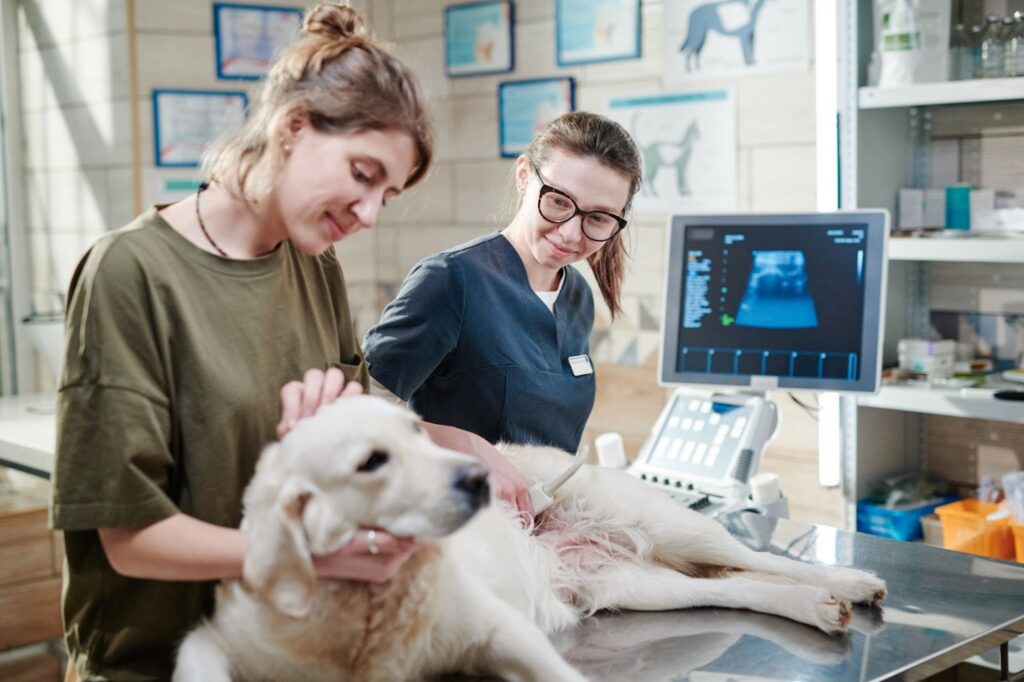
Stillborn puppies can occur, particularly in larger litters. While heartbreaking, they are not uncommon in canine reproduction. However, they may also signal serious whelping complications that require veterinary evaluation.
If a stillborn puppy has taken a long time to pass or appears swollen, it can obstruct labour and increase infection risk. Retained placentas or unborn puppies are even more dangerous, often leading to metritis or toxic shock.
Signs of Retained Puppies or Placentas
After whelping, the dam should settle, nurse her litter, and rest. Ongoing distress is a concern.
Contact your vet urgently if you notice:
- Foul-smelling vaginal discharge
- Fever or lethargy
- Continued abdominal straining
- No appetite or vomiting
- Fewer placentas passed than puppies delivered
Radiographs or ultrasound may be needed to confirm whether all tissue has passed.
When Counting Matters
A pregnancy radiograph after day 55 allows breeders to know how many puppies to expect. If you know the litter count in advance, you can quickly identify whether a puppy remains inside.
Any suspicion of retained tissue is a veterinary emergency.
Excessive Bleeding or Collapse of the Dam
Heavy bleeding during or after labour is one of the most urgent common whelping complications and when to call a vet immediately. While a small amount of blood-tinged fluid is normal during delivery, anything more than light spotting is not. Continuous bleeding, pooling blood, or bleeding lasting more than 10 minutes requires urgent veterinary attention.
What Is Normal Bleeding During Whelping?
A small amount of reddish or dark discharge can occur as puppies and placentas are delivered. This should not be excessive or bright red in large volumes. Bleeding should gradually reduce after birth and must not have a strong odour.
When Bleeding Becomes Dangerous
Contact your vet immediately if:
- Blood flows steadily rather than drips
- Large clots appear
- The dam becomes weak or pale
- Her gums look white or grey
- She shows signs of shock
Excessive bleeding may indicate uterine rupture, retained tissue, trauma to the birth canal, or clotting disorders. Delay can be fatal.
Collapse, Shock, and Severe Weakness
Collapse during or after labour is always an emergency. Causes may include:
- Severe blood loss
- Eclampsia
- Internal rupture
- Hypoglycaemia
- Infection
Warning signs include sudden weakness, trembling, cold extremities, rapid breathing, confusion, or seizures. If the dam collapses, keep her warm, transport her carefully, and call your vet immediately.
Immediate Action Steps
If you suspect serious bleeding or collapse:
- Call your vet or emergency clinic straight away.
- Keep the dam warm and calm.
- Place puppies in a separate warm box if necessary.
- Do not administer medications unless instructed.
In cases involving common whelping complications and when to call a vet, rapid action saves lives. Any sign of excessive bleeding or collapse must be treated as a medical emergency.
Neonatal Emergencies: When Puppies Need Immediate Help
Not all whelping complications involve the mother. Newborn puppies are highly vulnerable, particularly in the first 72 hours. Quick recognition of early signs of illness can save a life.
Healthy newborns should nurse frequently, sleep quietly, and feel warm to the touch. Any deviation from this pattern should raise concern.
Signs a Newborn Puppy Is in Trouble
Contact your vet immediately if a puppy:
- Is not nursing or cannot latch
- Feels cold or limp
- Cries constantly despite appearing to feed
- Lies on its side with mouth open
- Shows little movement compared to littermates
- Fails to gain weight within 24 hours
According to breeder guidelines and veterinary manuals, early intervention within the first 72 hours significantly improves survival rates.
Hypoxia and Breathing Problems
Lack of oxygen during delivery can leave puppies weak or non-responsive. If a puppy is born small, limp, or slow to breathe:
- Gently clear airways using a bulb syringe
- Rub the body firmly with a towel to stimulate breathing
- Keep the puppy warm immediately
If breathing does not stabilise quickly, emergency veterinary care is required.
Failure to Thrive
Puppies should gain approximately 5–10% of their birth weight daily, depending on breed size. Failure to gain weight may indicate:
- Inadequate milk supply
- Infection
- Congenital defects
- Hypothermia
Regular weighing is one of the simplest ways to detect developing post-whelping complications early.
When to Call a Vet During Whelping: Quick Reference Checklist
Knowing exactly when to call a vet during whelping removes hesitation in high-pressure moments. If you are unsure, it is always safer to seek advice than to wait.
Many serious outcomes occur because owners delay action, hoping labour will progress naturally. Veterinary professionals consistently emphasise that early intervention improves survival for both dam and puppies.
Call Your Vet Immediately If:
- Strong straining lasts over 30 minutes with no puppy produced
- More than 2–3 hours pass between puppies when more are expected
- Green or black discharge appears before the first puppy
- A puppy is visibly stuck in the birth canal
- The dam collapses, tremors, or has a seizure
- There is heavy bleeding lasting more than a few minutes
- The dam’s temperature exceeds 39.4°C
- A foul-smelling discharge develops during or after birth
These are not “wait and see” situations. They are emergencies.
Transporting the Dam Safely
If you must travel to a veterinary clinic:
- Place newborn puppies in a separate secure box
- Use a wrapped hot water bottle or heat pad for warmth
- Ensure puppies cannot contact hot surfaces directly
- Bring any expelled placentas if requested
Call ahead so the clinic is prepared for arrival.
Acting quickly does not mean something has gone wrong. It means you are breeding responsibly and protecting lives.
Preparing for Emergencies Before Labour Begins
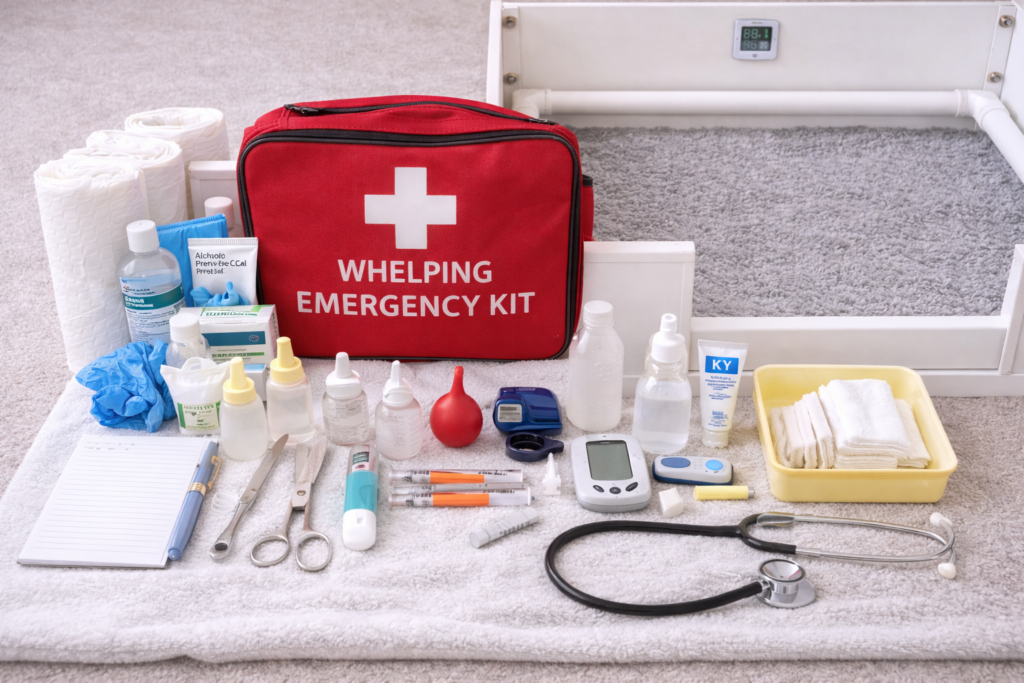
The best way to manage common whelping complications and when to call a vet is to prepare before labour ever starts. Emergency readiness reduces panic and saves valuable time.
Breeding responsibly means planning for complications, even if you hope never to face them.
Create a Whelping Emergency Kit
Keep the following items within arm’s reach:
- Clean towels and disposable gloves
- Digital thermometer
- Bulb syringe to clear airways
- Puppy scale for monitoring weight
- Hemostats and sterile scissors
- Notebook to record timing and puppy count
- Your vet’s daytime and 24-hour emergency numbers
Preparation avoids scrambling for supplies during critical moments.
Discuss Risk Factors With Your Vet
Before whelping, speak to your vet about:
- Expected due date and accurate mating timing
- Puppy count confirmed by radiograph after day 55
- Breed-related risks such as dystocia in brachycephalic breeds
- C-section logistics if required
- After-hours emergency arrangements
Veterinary guidance before labour significantly reduces preventable emergencies.
Reduce Risk Through Proper Monitoring
Simple preventative steps improve outcomes:
- Maintain a quiet, stress-free whelping box environment
- Monitor rectal temperature during late pregnancy
- Keep accurate records of contractions and delivery times
- Avoid giving medications like oxytocin without veterinary instruction
Vigilance is not overreacting. It is protecting the dam and her litter.
Prepared breeders act calmly because they have already thought through mistakes made by first-time breeders and other worst-case scenarios. That preparation can be the difference between routine support and crisis intervention.
What to Do While Waiting for Veterinary Help
When facing common whelping complications and when to call a vet, your priority is stabilisation, not intervention beyond your expertise. Acting calmly and methodically can protect both dam and puppies while professional help is on the way.
Never attempt forceful pulling, medication administration, or invasive procedures without veterinary instruction.
Keep the Dam Calm and Warm
Stress worsens uterine inertia and exhaustion.
- Move unnecessary people away
- Keep lighting soft and noise minimal
- Maintain appropriate temperature in the whelping area
- Offer small amounts of water
If she becomes weak, collapses, or shows tremors, transport immediately.
Protect Delivered Puppies
If you must travel to the clinic:
- Place puppies in a separate, secure box
- Use a wrapped heat pad or hot water bottle
- Prevent direct heat contact to avoid burns
- Keep puppies together for warmth
Neonates lose body heat rapidly, so temperature management is critical.
Do Not Attempt Forceful Extraction
If a puppy appears stuck:
- Do not pull without veterinary advice
- Do not use lubrication or tools unless instructed
- Record how long contractions have continued
Improper pulling can cause uterine rupture or fatal injury to both dam and puppy.
Provide Clear Information to the Vet
When you call, be ready to report:
- Time labour began
- Number of puppies delivered
- Time since last puppy
- Presence and colour of discharge
- Dam’s temperature and behaviour
Accurate details allow the clinic to prepare for rapid intervention, including potential emergency C-section.
Prompt action and careful observation while waiting for help improve survival rates dramatically. In whelping emergencies, steady judgement saves lives.
Conclusion: Acting Early Protects Both Dam and Puppies
Understanding common whelping complications and when to call a vet is one of the most important responsibilities of any breeder or owner overseeing a litter.
Most dogs deliver safely without intervention.
However, when labour does not progress normally, discharge appears abnormal, or your dog seems unwell, time becomes critical. Minutes can determine outcomes.
Preparation, observation, and early veterinary communication, all part of a strong dog breeding and whelping guide, dramatically improve survival rates for both mother and puppies.
Always keep emergency contact numbers accessible and discuss potential risks with your vet before labour begins.
If in doubt, call. Acting early is not overreacting. It is responsible breeding.
FAQs About Common Whelping Complications and When to Call a Vet
1. How long is too long for a dog to be in labour?
Labour should not exceed 24 hours in total. Strong straining for more than 30 minutes without a puppy, or more than two hours between puppies, is not normal. These are key signs of common whelping complications and require immediate veterinary advice.
2. Is green discharge always an emergency during whelping?
A small amount of green discharge after a puppy is born can be normal. However, green or black discharge before the first puppy or excessive discharge between puppies is an emergency and you should contact your vet straight away.
3. What is dystocia in dogs?
Dystocia means difficult or obstructed labour. It may be caused by large puppies, uterine inertia, pelvic narrowing, or abnormal puppy position. Because it can threaten both mother and litter, dystocia always requires veterinary assessment.
4. Can I give oxytocin at home if labour stops?
No. Medications such as oxytocin or calcium should never be given without veterinary supervision. Incorrect dosing can cause uterine rupture, hypoxia, or fetal distress. Always speak to your vet before administering any medication.
5. How do I know if a puppy is stuck?
Signs include visible puppy parts not progressing for 20 to 30 minutes, constant straining with no delivery, or a tail visible at the vulva. A stuck puppy is a veterinary emergency, and you should not attempt to pull it without guidance.
6. What are the signs of eclampsia after whelping?
Eclampsia symptoms include panting, tremors, stiffness, restlessness, collapse, or seizures. It is caused by dangerously low calcium levels and requires urgent hospital treatment. Do not delay if you suspect this condition.
7. Should I take newborn puppies with me to the vet?
Yes. If your dog must go to the vet during labour, bring any delivered puppies in a separate, warm box. Use wrapped heat pads or hot water bottles to maintain safe warmth during transport.
 Add us as a preferred source