Kelpie vs Border Collie for a Working Farm: Which Suits You?
Dog Breeds & Profiles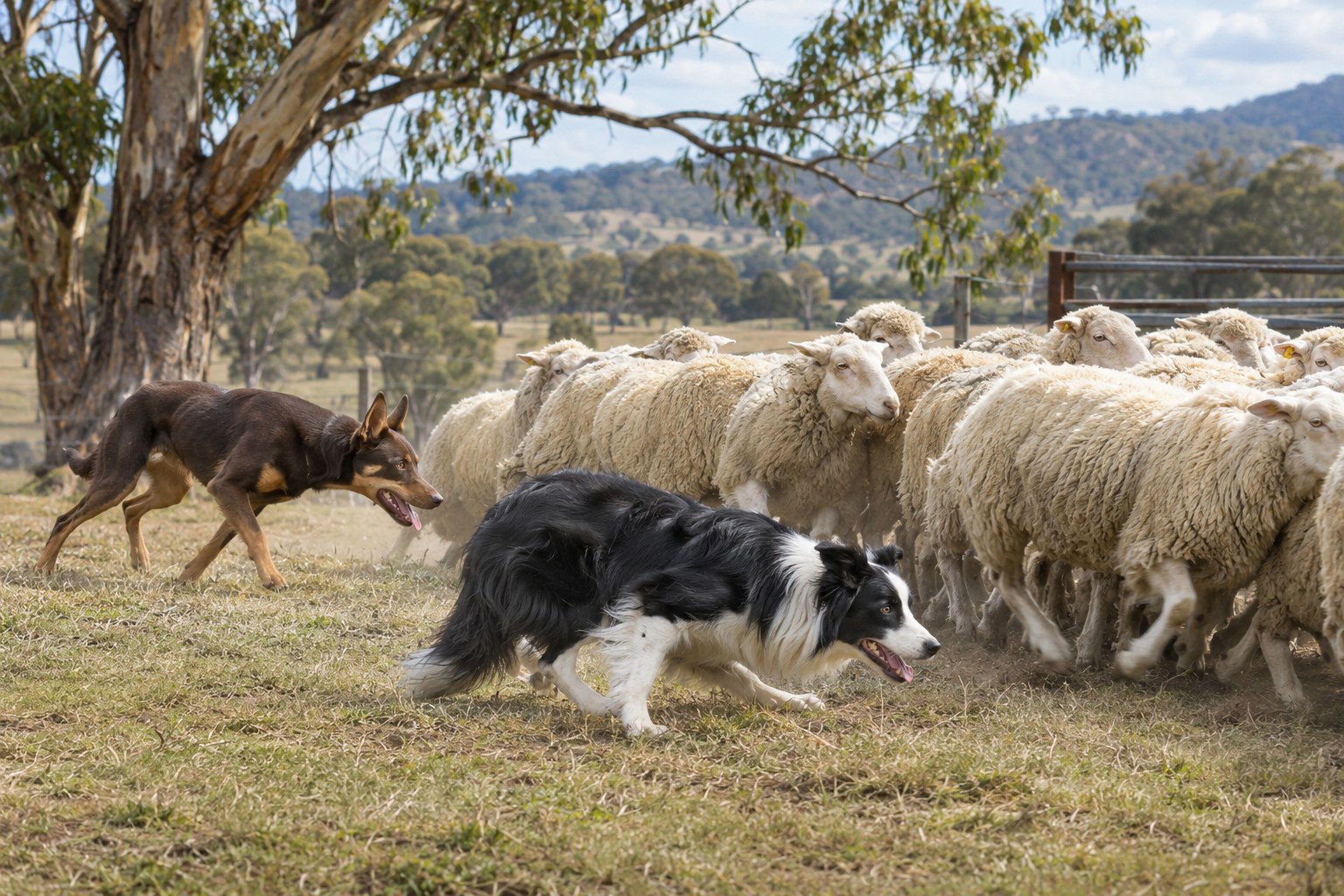 By James C. • November 16, 2026
A Kelpie usually suits big paddocks, hot country and mixed stock worked at a distance, while a Border Collie suits close, precise sheep work in yards and smaller paddocks.
Choosing between a Kelpie and a Border Collie for farm work comes down to your stock, your terrain and how much direction you want to give. Both are outstanding herding dogs, and many properties keep one of each.
Below, you will find how each breed works, a verdict by job, training differences, bloodlines and current Australian prices.
Kelpie vs Border Collie at a Glance
The Australian Kelpie is the smaller, more heat-hardy and independent all-rounder, while the Border Collie is the strong-eyed specialist for controlled sheep work.
| Trait | Australian Kelpie | Border Collie |
|---|---|---|
| Origin | Australia, bred for local sheep work | Anglo-Scottish border sheep country |
| Height (ANKC standard) | Dogs 46 to 51 cm, bitches 43 to 48 cm | Dogs 48 to 53 cm, bitches 46 to 51 cm |
| Coat | Short, weather resistant | Smooth or moderately long |
| Herding style | Moves stock with movement, less eye, backs sheep | Strong eye, wide outrun, close control |
| Best stock | Sheep, plus cattle from suitable lines | Mainly sheep |
| Best terrain | Large paddocks, hot and dry country | Yards, smaller paddocks, hill country |
| Heat tolerance | High | Moderate |
| Handler style | Independent, thinks for itself | Biddable, handler-focused |
| Registry | Working Kelpie Council (working) or ANKC (show) | ANKC; working ability judged on work and trial records |
Kelpie heights follow the ANKC Kelpie standard published by Dogs Australia. Border Collie heights come from the ANKC Border Collie standard, and working dogs often sit outside either show range.
How Each Breed Works Stock
The Kelpie tends to move stock with speed and body position, while the Border Collie uses a strong eye and a wide outrun to control stock with fine precision.
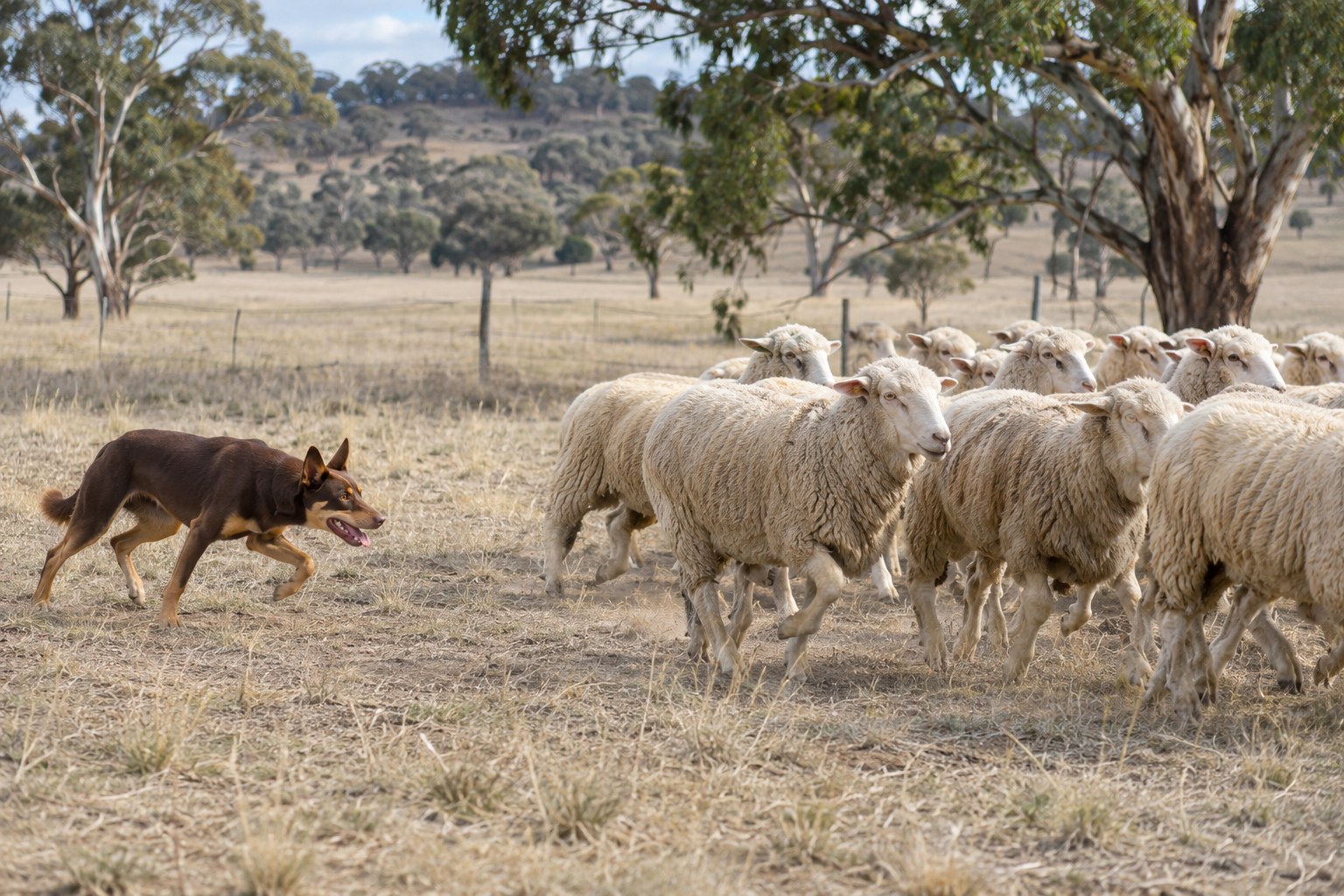
The Kelpie’s Working Style
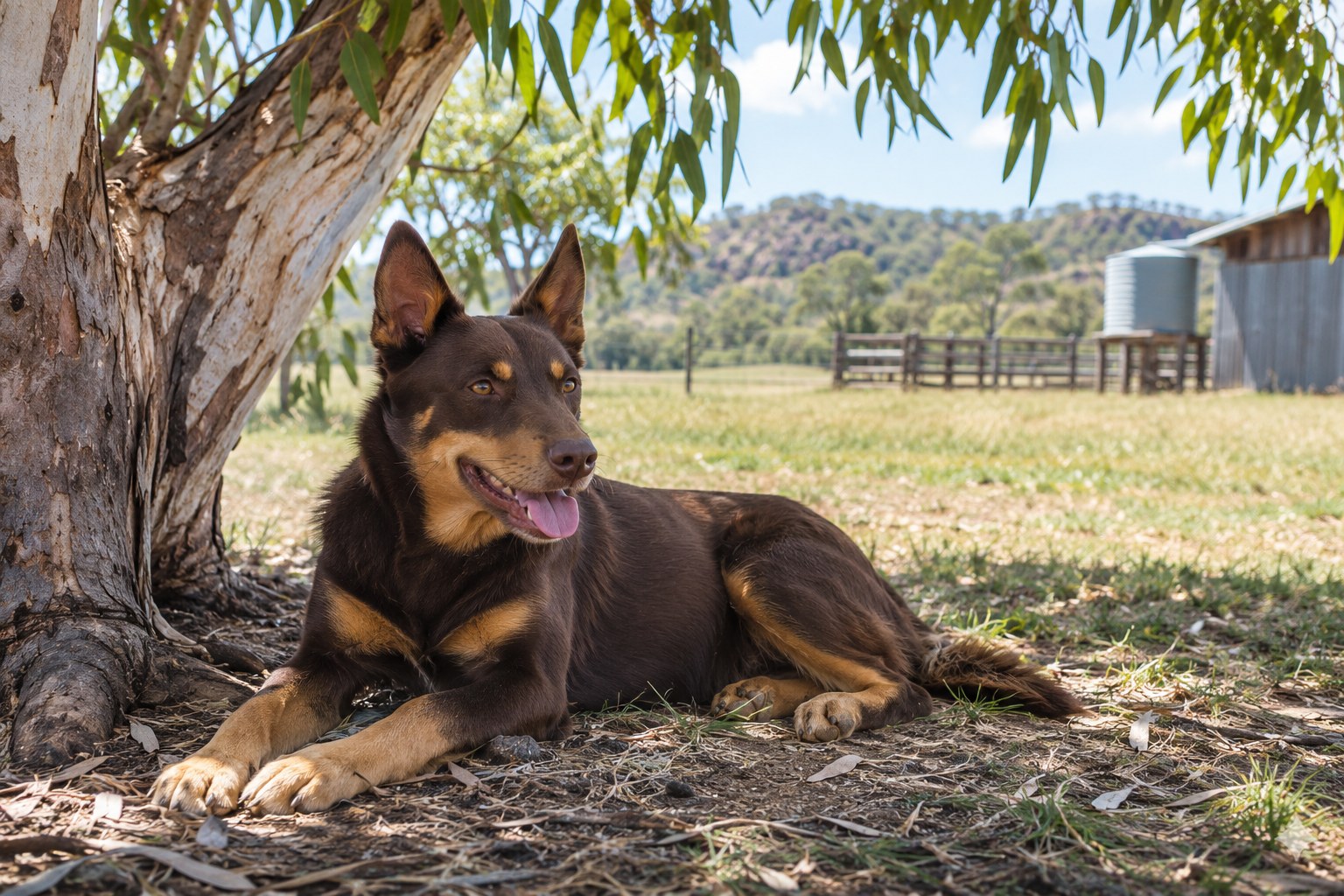
Kelpies generally work with less eye than a Border Collie, pushing and turning stock through movement. They are comfortable working out of sight of the handler and are well known for backing, running across packed sheep in yards and races to keep the mob moving.
The Border Collie’s Working Style
Border Collies typically crouch, stalk and hold stock with an intense stare. A wide outrun lets them get behind a mob without upsetting it, and they respond quickly to whistles and commands, which suits drafting, penning and trial work.
Which Breed Suits Your Property?
The right breed depends on the job: Kelpies lead for distance, heat and pushing work, while Border Collies lead for close, quiet control of sheep.

Large Paddocks and Mustering
A Kelpie is usually the better choice for big paddocks and long musters. Its stamina and independence let it cover ground and make decisions without constant commands, which matters when stock are spread over hundreds of hectares.
Yard Work, Drafting and Small Mobs
A Border Collie often excels in yards and with small mobs, where calm precision keeps stress low. Kelpies remain a strong option in yards too, because backing sheep through races and shearing sheds is one of their trademark skills.
Cattle vs Sheep
Kelpies from suitable lines work both sheep and cattle, while most Border Collies are bred for sheep. If your work is mainly cattle, the Blue Heeler remains the traditional Australian choice.
Hot and Dry Country
Kelpies generally cope better with heat thanks to their short coat and lean frame. Both breeds still need water, shade and rest, so plan work around safe working temperatures for dogs in summer.
Training, Temperament and Handler Experience
Border Collies are usually more biddable and handler-focused, while Kelpies are more independent, which suits handlers who want a dog that thinks for itself.
Both breeds are highly intelligent, so the question of which is smarter matters less than how each uses its brains. A Border Collie watches the handler closely and tends to learn commands quickly. A Kelpie is more likely to solve a problem its own way.
Border Collies can be sensitive, and harsh correction may make a young dog shut down. Kelpies tend to bounce back faster but can test a handler who is inconsistent.
For a first-time handler, a well-started dog from either breed, plus lessons or a working dog school, is often a safer start than an untrained pup.
Neither breed switches off easily. Without enough work, both may become restless, bark or chase vehicles, so plan for exercise and training on quiet days too.
Working Lines vs Show Lines
For farm work, buy from proven working lines, because show lines are bred mainly for appearance and may not carry the same working instinct.
Kelpies have two registries. The Working Kelpie Council keeps working stud records in a National Stud Book, for dogs with four or more generations of recorded breeding, and an Appendix, for dogs with a shorter verified background.
Show Kelpies are registered with the ANKC, which limits accepted colours. The WKC notes that some strains bred for colour lost working ability, so working buyers should state a colour preference rather than a requirement.
Working Border Collies are judged mainly on their parents’ work and any trial results. For either breed, use these questions to ask a breeder before paying a deposit, and add:
- What stock and terrain do the parents work on?
- Have the parents competed in trials, and with what results?
- Will you guarantee the pup to work, in writing?
Cost of a Working Pup vs a Started Dog
In late 2026, working pups typically cost about $700 to 2,500, while started and trained dogs commonly sell for several thousand dollars.
| Stage | Typical price (AUD) | Basis |
|---|---|---|
| Working Kelpie pup | 715 to 2,500 | Farm Tender listings, 2025 to 2026, incl. GST |
| Working Border Collie pup | 935 to 2,200 | Farm Tender listings, 2025 to 2026, incl. GST |
| Border Collie pup (pet market) | 1,800 to 3,500 | Pups4Sale listings on 16 Nov 2026 (2 listings, one a cross) |
| Started or trained dog at auction | About 9,144 average, top 23,500 | Casterton working dog auction, June 2026 |
At the June 2026 Casterton auction, 52 of 59 dogs and pups sold for an average of $9,144, with a top price of $23,500. Auction dogs are often the best of their year, so private started dogs usually cost less.
A started dog can be good value, since you can see it work before buying. Budget for food, vaccinations, worming and vet care too, because working dogs face injury risks pet dogs rarely meet. You can also compare current Border Collie puppies for sale.
What About a Kelpie x Border Collie Cross?
A Kelpie x Border Collie cross can make an excellent farm dog, but traits vary widely, so judge the parents’ work rather than the label.
Farmers breed the cross hoping to combine the Kelpie’s heat tolerance and drive with the Border Collie’s eye and biddability. In practice, pups in one litter can lean either way.
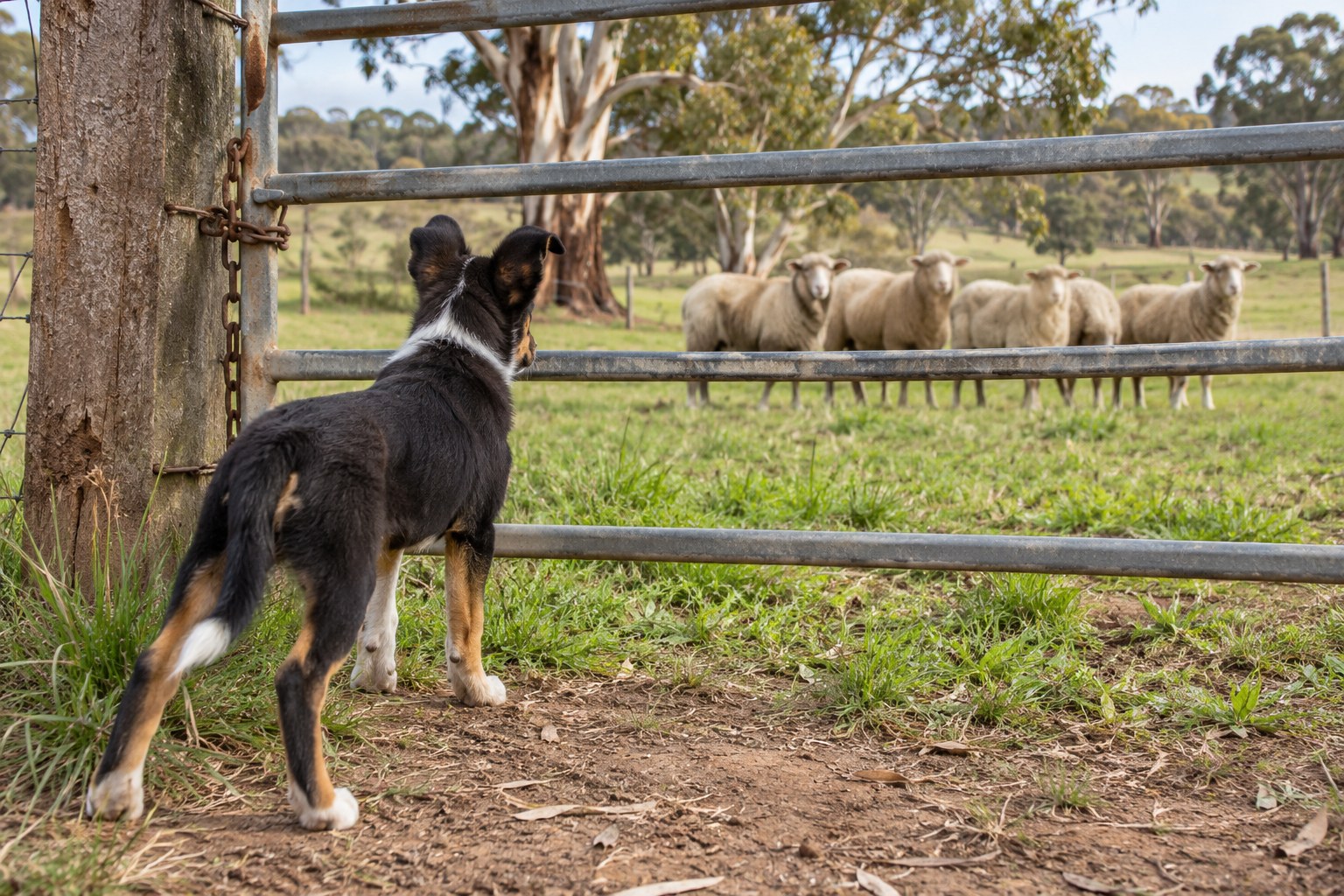
Watch the parents work and look for temperament signs to watch for at eight weeks, such as confidence and curiosity.
Can Either Breed Live as a Pet Off the Farm?
Yes, but only with an owner who provides hours of daily exercise and training, because both breeds were developed to work all day.
A suburban Kelpie or Border Collie needs more than a walk around the block. Herding classes, agility, flyball, long runs and daily training sessions help meet their need for a job.
Working-line dogs usually find suburban life harder than dogs from pet or sport lines. If you are not farming, tell the breeder honestly and ask which pup suits a family home.
Conclusion
Choose a Kelpie for big country, heat and independent work, and a Border Collie for close, precise sheep handling.
Whichever breed you pick, buy from proven working lines and ask to see the parents work.
When you are ready, browse puppies for sale across Australia and compare breeders.
Frequently Asked Questions
1. Is a Kelpie or Border Collie better for sheep?
Both are excellent with sheep. A Border Collie usually suits close, precise work such as drafting and penning small mobs, while a Kelpie suits big paddocks, long musters and backing sheep through yards. Many sheep farms keep both breeds for different jobs.
2. Which is better with cattle, a Kelpie or a Border Collie?
A Kelpie from suitable working lines is usually better with cattle than a Border Collie, since most Border Collies are bred for sheep. For mainly cattle work, many Australian producers choose an Australian Cattle Dog, also called a Blue Heeler.
3. Is a Kelpie smarter than a Border Collie?
Neither breed is clearly smarter. Both are highly intelligent working dogs that use their intelligence differently. Border Collies tend to focus on the handler and learn commands quickly, while Kelpies are more independent and often solve stock problems their own way.
4. What is the difference in size between a Kelpie and a Border Collie?
Under the ANKC standards, Kelpie dogs stand 46 to 51 cm and bitches 43 to 48 cm, while Border Collie dogs stand 48 to 53 cm and bitches 46 to 51 cm. Working dogs of both breeds can fall outside these show ranges.
5. Is a Kelpie Border Collie cross a good farm dog?
A Kelpie Border Collie cross can be a very good farm dog, combining drive, heat tolerance and eye. Traits vary widely between pups, though, so judge the cross on the parents’ working ability and ask the breeder about each pup’s temperament.
6. What is the difference between a working Kelpie and a show Kelpie?
A working Kelpie is bred for stock work and is often registered with the Working Kelpie Council, while a show Kelpie is registered with the ANKC and bred to a set appearance and colours. Farm buyers should choose proven working lines.
7. Can a Kelpie or Border Collie be kept as a family pet?
Yes, a Kelpie or Border Collie can be a family pet with an active owner who provides hours of daily exercise, training and a job such as herding or agility. Pet or sport lines usually adapt to suburban life better than working lines.
 Add us as a preferred source