Picking Up Your Puppy From the Breeder: What to Bring and Ask on the Day
Puppy Buying & Adoption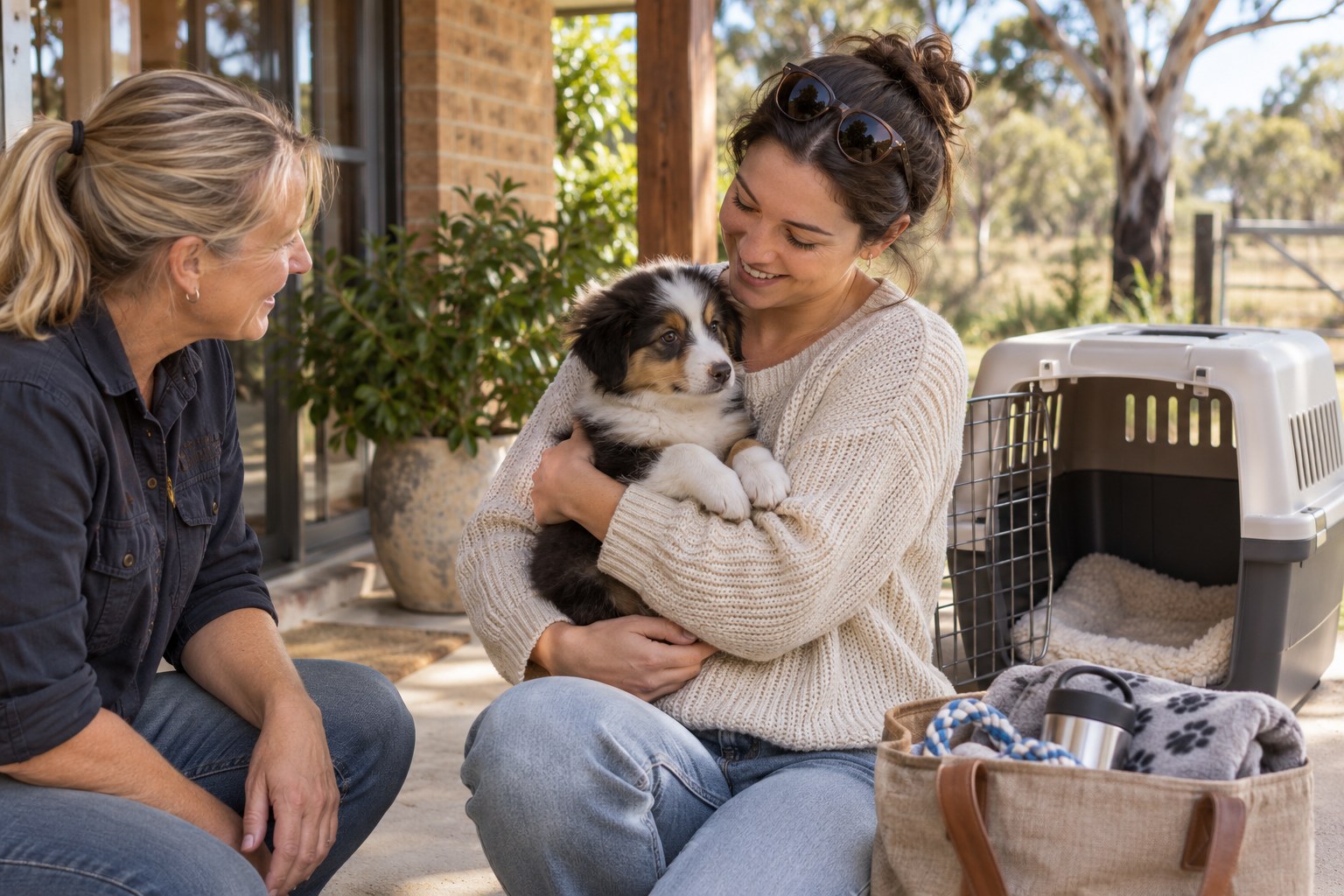 By James C. • November 16, 2026
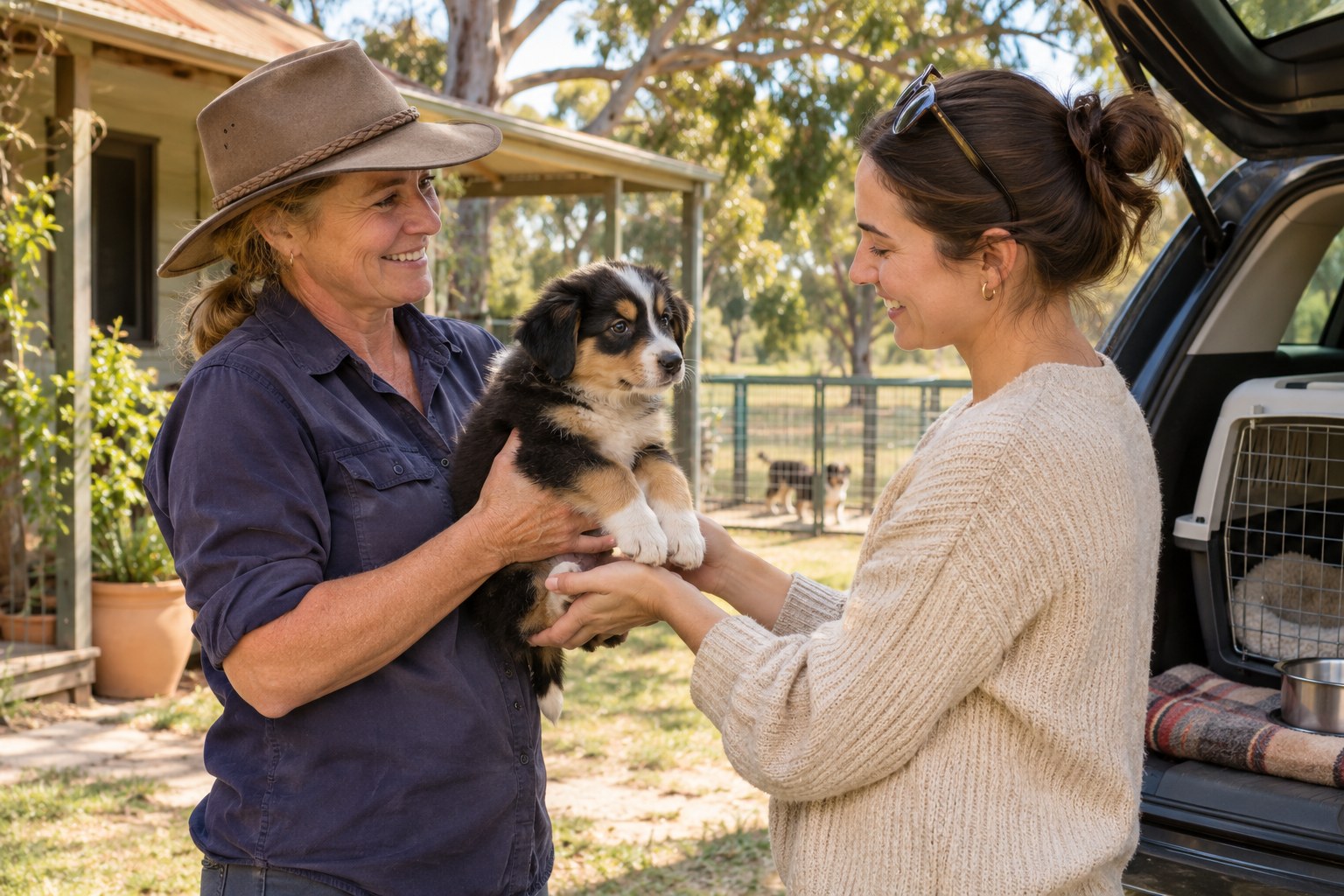
When picking up your puppy from the breeder, what to bring is simple: a secured crate or carrier, towels, a collar and lead, cleaning supplies and water. Before you leave, collect signed vaccination, worming, microchip and registration papers, plus the breeder’s feeding routine.
Collection day moves quickly, and it is easy to forget a question while you are meeting your puppy.
This checklist splits the day into three parts: what to bring, what to collect and what to ask, followed by final checks and a calm trip home.
When Should You Pick Up Your Puppy?
Most puppies are ready to collect from eight weeks of age, and some breeders prefer to wait until nine or ten weeks. Eight weeks is the minimum for good reason.
RSPCA Australia’s minimum age guidance sets eight weeks as the earliest a puppy should leave its mother, and the puppy must be fully weaned. In NSW, breeders must only sell puppies after they are eight weeks old.
Some breeders keep toy breeds or slower developers a little longer so they are confident eating, toileting and coping without their littermates. If your breeder suggests a later date, that is usually a sign of care, not delay. Those extra weeks reflect the age puppies can safely leave their mother and each pup’s own development.
Choose a collection day when you can be home for the next few days. A morning pickup gives your puppy the whole day to explore before the first night, and a quiet weekend or a few days of leave makes settling in much easier.
Avoid days with visitors, parties or major plans. Your puppy will be tired, unsettled and missing its litter, so a calm household helps.
What to Bring When Picking Up a Puppy
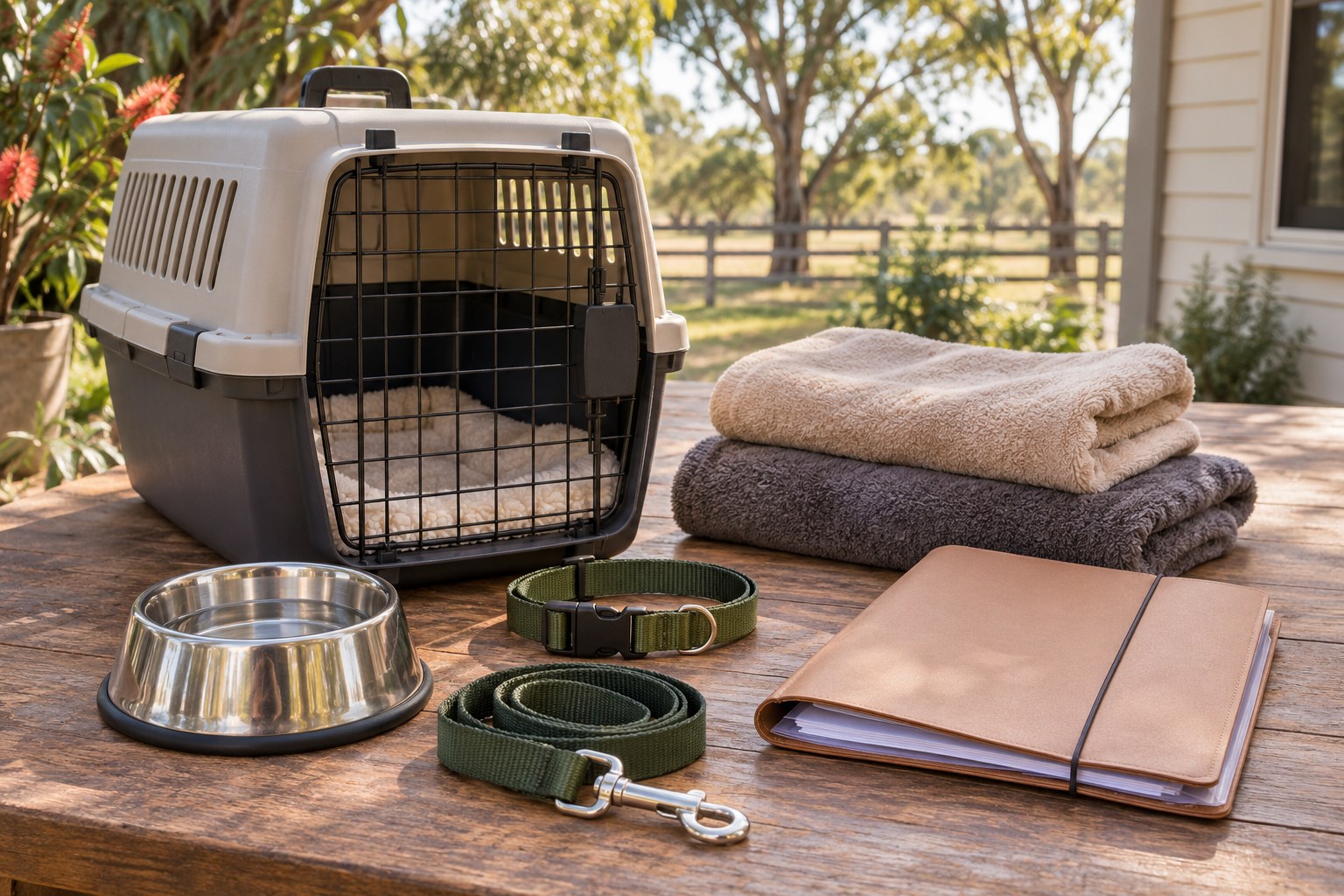
Bring items for the car, items for the puppy and your payment and paperwork essentials. Pack the night before so nothing is rushed.
For the Car
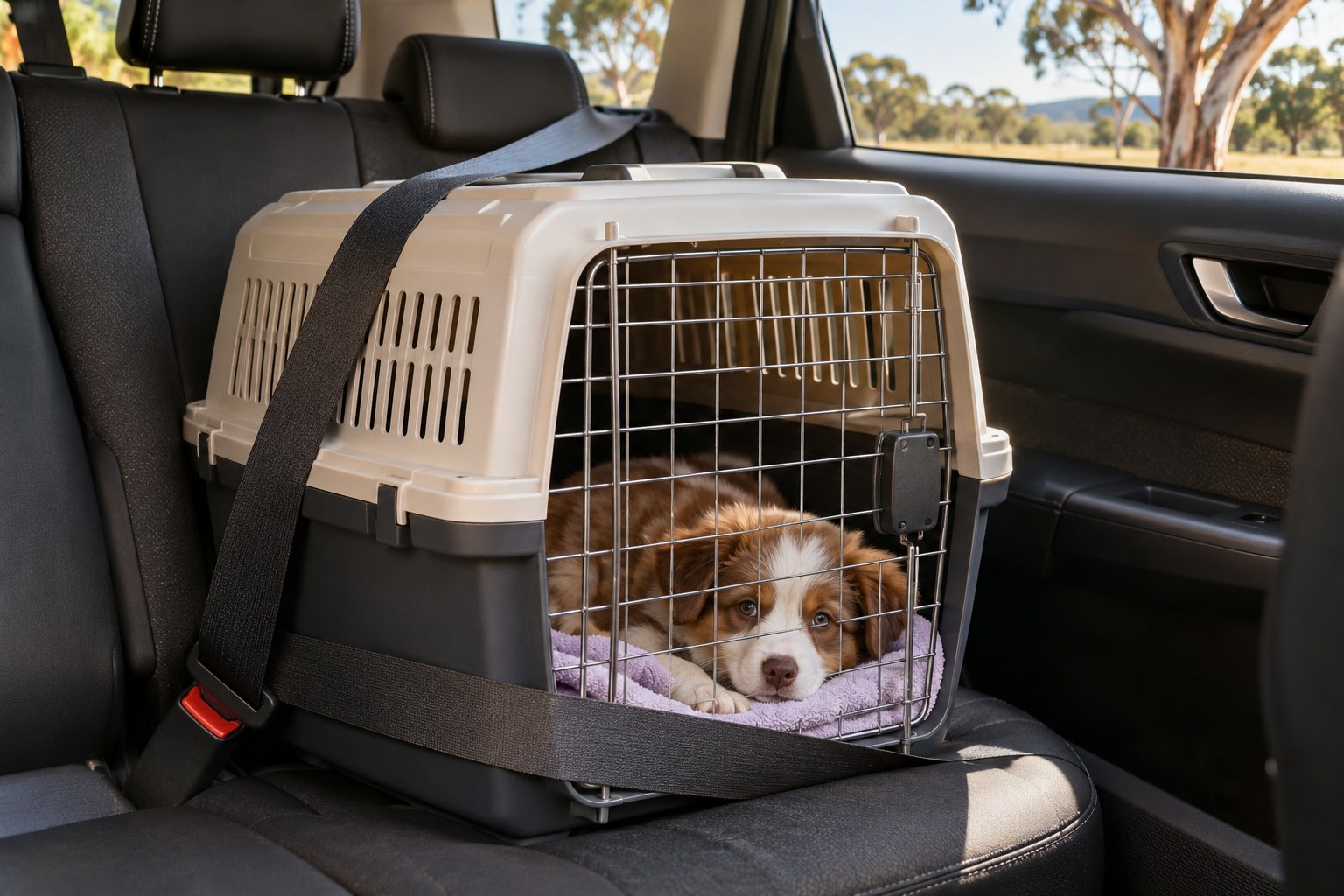
- A secured crate or carrier, strapped in or wedged so it cannot slide
- Old towels and a few puppy pads for accidents
- Paper towel, rubbish bags and pet-safe enzyme cleaner
- A second adult, so one person can drive while the other stays near the puppy
Crate placement, temperature and breaks are all part of keeping your puppy safe and calm in the car.
For the Puppy
- A soft, adjustable collar and a light lead
- An ID tag with your phone number
- Water and a small bowl
- A safe chew to settle on the trip
- A small blanket to swap for one carrying the litter’s scent
For Payment and Paperwork
- The agreed balance by a traceable method, such as bank transfer
- Your photo ID
- A folder or envelope to keep every document together
Have the full home setup, such as the bed, bowls and toys, ready before you leave, so you are not shopping with a puppy in the car.
Paperwork to Collect From the Breeder
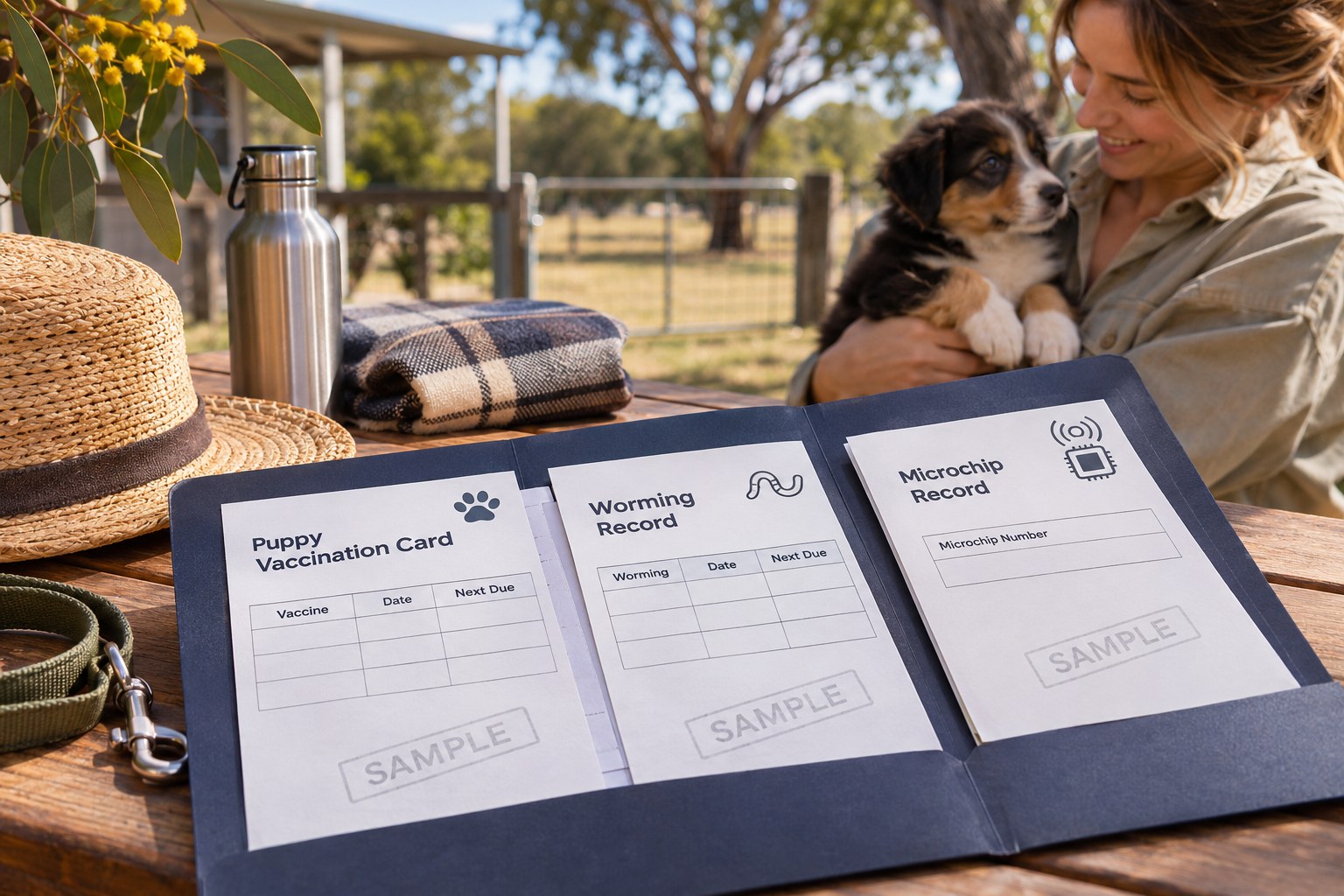
You should leave with vaccination and worming records, microchip details, the breeder’s state identification number, a contract and receipt, and care notes. Check each one before you pay the balance.
| Document | What to check | Why it matters |
|---|---|---|
| Vaccination card | Signed by a vet, with vaccine dates and the next due date | Shows protection so far and when the next vaccination is due |
| Worming record | Product used, dates and next dose | Keeps the parasite schedule on track |
| Microchip details | Number matches the puppy and the advertisement, plus transfer paperwork | Proves identity and lets you register as the owner |
| Breeder number | NSW breeder identification number, Victorian source number or Queensland supply number | Confirms the breeder is registered in their state |
| Pedigree papers | Dogs Australia Main or Limited Register details, or a signed transfer application | Confirms pedigree status if you paid for a purebred puppy |
| Contract and receipt | Price, balance paid, health guarantee and return terms | Protects you if a problem appears later |
| Care and diet notes | Food brand, amounts, feeding times and routine | Keeps your puppy’s routine consistent |
State rules shape what you should see. In NSW, buyers can confirm a breeder through the NSW Pet Registry breeder search. Victorian advertisements must show a microchip number and Pet Exchange Register source number, while Queensland breeders must quote a supply number when they sell or advertise a dog.
Pedigree certificates sometimes follow by post, as Main and Limited Register papers are processed after microchipping. Once home, follow the steps for transferring the microchip into your name in NSW, QLD and VIC, and read the contract for red flags in a puppy contract before signing.
Questions to Ask the Breeder on Collection Day
On collection day, ask about your puppy’s food, toileting, sleep, socialisation and upcoming health care, not whether to buy. Those earlier questions belong before the deposit.
- What food is the puppy eating, how much, and when was the last meal?
- How often does the puppy toilet, and on what surface?
- Where and how does the puppy sleep, and for how long at night?
- What has the puppy already been exposed to, such as car trips, children, other dogs or household noise?
- When are the next vaccination and worming doses due?
- Has the puppy had a vet check, and were any issues noted?
- What should I do if a health issue appears in the first week?
- Can I contact you with questions as the puppy settles in?
Write the answers down or ask the breeder to note them on the care sheet. Keeping the same food and routine for the first few weeks reduces stomach upsets and stress.
A good breeder will welcome these questions and usually offers ongoing support. Hesitation or vague answers about health records are worth noting before you hand over the balance.
Final Checks Before You Leave
Before you leave, confirm the puppy is bright and healthy, the microchip number matches the papers, and you understand the contract. These checks take five minutes and can prevent problems later.
- The puppy is alert, curious and moving comfortably
- Eyes, ears and nose are clean, with no discharge or strong smell
- The coat is clean, with no obvious fleas, sores or bald patches
- The puppy matches the listing and the photos you were sent
- The microchip number on the papers matches the puppy, ideally confirmed with a scanner
- You have read the contract and received a receipt for every payment
Never pay the balance for a puppy you have not seen in person. Requests for extra fees, last-minute transport charges or payment before viewing are common signs of puppy scams.
Ask the breeder to scan the microchip if they have a scanner on hand, and photograph the papers before you drive away so you have a backup copy.
If something does not feel right, it is reasonable to pause the handover and ask questions. A genuine breeder will understand.
Getting Home Calmly
Keep the trip home calm, quiet and safe, with the puppy secured in its crate and a small or skipped meal before the drive. A full stomach may make car sickness more likely.
On longer drives, plan short breaks every couple of hours for water and a toilet stop in a quiet area away from other dogs, since your puppy may not be fully vaccinated yet. Keep the car at a comfortable temperature and never leave the puppy alone in it.
Expect some whining or drooling on the way. Talk calmly, keep music low and resist holding the puppy on your lap, as an unsecured puppy is a safety risk for everyone in the car.
When you arrive, take the puppy straight to its toilet spot, then to a quiet area with its bed, water and the scent blanket. Keep visitors to a minimum for the first few days so the puppy can rest.
For bedtime, follow the steps for your puppy’s first night at home, including where the crate should go and how to handle crying.
Your First Vet Check
Book a vet check within the first few days of bringing your puppy home, and take every breeder record with you. It confirms your puppy’s health early and starts a relationship with the clinic that will care for your dog for years.
Your vet will check weight, heart, eyes, ears, skin and coat, scan the microchip and review the vaccination and worming history. It is also the right time to plan the remaining vaccinations, parasite prevention and desexing.
Bring a list of questions, including which food to continue, when to start puppy school and how to socialise safely before vaccinations are complete. Note your puppy’s weight so you can track growth over the coming weeks.
Many puppy contracts include a health guarantee that relies on an early vet check, so read the timeframes and book within them. If the vet finds a problem, keep written records and contact the breeder promptly. Keep copies of every invoice too.
If your puppy becomes unwell soon after collection, understand your rights if the puppy becomes unwell after collection before agreeing to any solution.
A Smooth Start on Collection Day
Pack the car kit the night before, and take a folder for every document.
Check the paperwork, ask about food and routine, and do your final health checks before paying the balance.
If you are still searching for the right match, browse puppies for sale from Australian breeders and start planning your own collection day.
Frequently Asked Questions
1. What should I bring when picking up my puppy from the breeder?
Bring a secured crate or carrier, old towels, puppy pads, cleaning supplies, a collar and lead, an ID tag, water and a bowl. Also bring a blanket to swap for the litter’s scent, your photo ID, the agreed balance and a folder for documents.
2. What paperwork should a breeder give you in Australia?
Expect a vet-signed vaccination card, worming record, microchip details with transfer paperwork, the breeder’s state identification number, a contract and receipt, and care notes. Pedigree puppies should also come with Dogs Australia registration papers, which sometimes arrive by post after collection.
3. What questions should I ask the breeder when picking up my puppy?
Ask what food the puppy eats, how much and when it last ate, plus its toilet and sleep routine. Also ask what it has been socialised with, when the next vaccination and worming doses are due, and what to do if a health issue appears.
4. Should I feed my puppy before the drive home?
A small meal, or skipping the meal right before the trip, is usually best because a full stomach may make car sickness more likely. Ask the breeder when the puppy last ate, offer water on breaks, and feed the next meal once you are home.
5. Can I pick up my puppy at 7 weeks?
No. RSPCA Australia sets eight weeks as the minimum age for a puppy to leave its mother, and NSW law requires breeders to sell puppies only after they are eight weeks old. A seller offering younger puppies is a warning sign.
6. How do I manage picking up a puppy on a long drive?
Secure the puppy in a crate, bring a second adult, and plan short breaks every couple of hours for water and toileting in quiet areas away from other dogs. Keep the car comfortable, never leave the puppy alone in it, and pack extra towels.
 Add us as a preferred source


