Getting a Puppy When Pregnant: Is It a Good Idea?
Dog Ownership & Lifestyle By James C. • November 16, 2026
Getting a puppy when pregnant can work for some households, but hygiene, physical safety, energy levels and timing all matter, and personal health questions are best discussed with your GP or midwife.
A puppy is a big commitment at any time, and pregnancy adds tiredness, a changing body and a fixed deadline when the baby arrives.
This article covers the health and hygiene basics, physical safety, timing, the real workload and how to prepare a puppy for a new baby.
Is It a Good Idea to Get a Puppy When You Are Pregnant?
It can be a good idea if you have support, energy and a realistic plan, but for many families it is easier to wait until the baby has settled.
A puppy needs toilet trips day and night, training, socialisation, vet visits and constant supervision for months. Pregnancy often brings fatigue, nausea and reduced mobility, especially late in the third trimester, so the timing can be hard.
Getting a puppy while pregnant tends to suit households where:
- A partner or family member can share most of the hands-on care.
- You have owned dogs before and know what the first months involve.
- The puppy will be several months into training before the birth.
- You have a secure yard and room for a pen or crate.
It may be wiser to wait if you are managing a complicated pregnancy, live alone without help, or would struggle to walk a strong, pulling dog. There is no wrong answer, and waiting is a responsible choice, not a failure.
Health and Hygiene: What Pregnant Owners Should Know
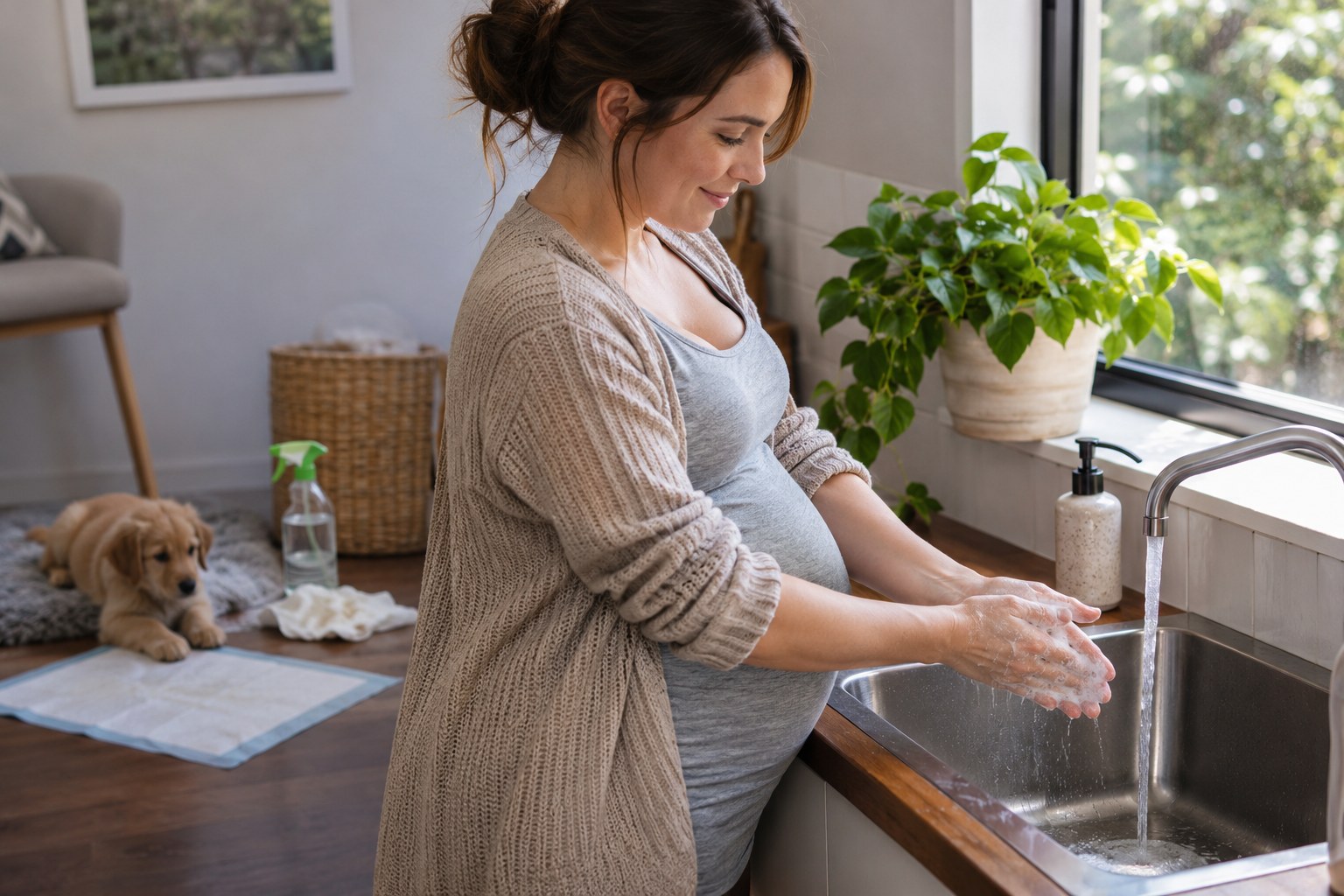
Most dog-related health risks in pregnancy are managed with good hygiene, regular worming and handwashing.
This section is general information, not medical advice. Your GP or midwife can talk through your own situation.
Infections dogs can carry
Dogs can carry intestinal worms and gut infections spread through faeces. Pregnancy, Birth and Baby advises that you worm cats and dogs regularly and dispose of pet faeces as soon as possible. Keep up with the puppy vaccination schedule and wash your hands after handling your puppy.
What about toxoplasmosis?
Toxoplasmosis is mainly linked to cats and raw or undercooked meat rather than dogs. The Better Health Channel explains how toxoplasmosis is usually picked up from undercooked meat or contact with infected cat faeces. If you feed raw puppy food, wear gloves and wash hands and surfaces afterwards.
Poo pick-up, bedding and toilet training
Share these jobs with a partner where possible. If you do them yourself, the NHMRC suggests wearing gloves when disposing of dog droppings. Wash your hands well afterwards, and wash puppy bedding regularly.
When to talk to your GP or midwife
Talk to your GP or midwife if you are bitten or scratched, feel unwell, or have any specific concern. You can also call the Pregnancy, Birth and Baby helpline on 1800 882 436 to speak with a maternal child health nurse.
Physical Safety: Trips, Jumping and Lifting
The most common practical risks are tripping over a puppy, being jumped on or pulled over, and heavy lifting.
Trip hazards around the home
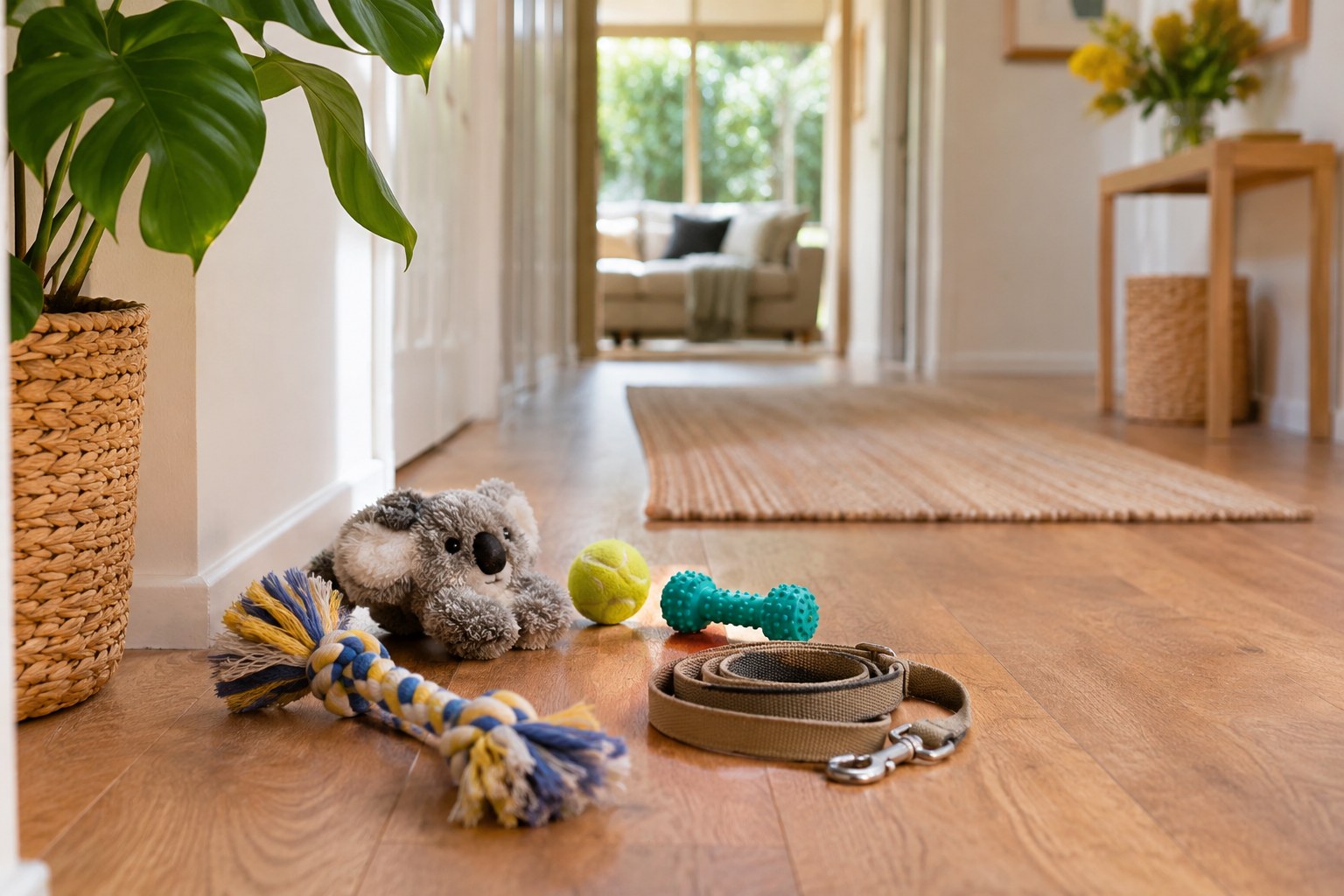
Puppies weave between legs and leave toys and leads everywhere. Use a pen or gate when you are moving around the house, pick up toys each evening, and take extra care on stairs and in the dark.
Jumping up and pulling on the lead
Start training early so the puppy keeps four paws on the floor. Learning how to stop jumping up protects your belly, and loose lead walking reduces the risk of being pulled over.
Lifting, bending and car trips
Crates, food bags and wriggling puppies can be heavy and awkward. Ask others to lift heavy items, and use a ramp or a low crate for car trips as your pregnancy progresses. Your midwife can advise on safe lifting for you.
When Is the Best Time to Get a Puppy Before a Baby?
For many families, the easiest times are early in pregnancy, with lots of support, or well after the baby has settled.
| Timing | Pros | Cons |
|---|---|---|
| First trimester | Most time to train before the birth | Nausea and tiredness can make early puppy care hard |
| Second trimester | Energy often returns; time for puppy school | Puppy reaches adolescence when the baby is a few months old |
| Third trimester | Puppy still young and adaptable | Reduced mobility, little training time, newborn arrives mid toilet training |
| After the birth | You know your capacity and routine | Waiting may mean the puppy you wanted is gone |
A puppy bought mid-pregnancy will usually be an adolescent when the baby is a few months old. That stage can bring renewed chewing, testing boundaries and pulling, just when sleep is shortest.
The Real Workload of a Puppy and a Newborn
A puppy and a newborn together mean two sets of night wakings, two feeding routines and a lot of supervision.
Young puppies need overnight toilet trips, regular meals, short training sessions and early socialisation. Newborns need feeds around the clock. Many parents find the first months with a baby leave little time for training.
There is also the cost. Food, vet care, insurance and training add up, and the average monthly cost of owning a dog is worth budgeting for alongside baby expenses.
Questions to Ask Yourself Before You Commit
Honest answers to a few questions usually make the decision clear.
- Do I have the energy for night toilet trips now and later in pregnancy?
- Who will walk and train the puppy in late pregnancy and after the birth?
- Do we have room for a pen, crate and separate puppy space?
- Can we afford puppy costs alongside baby costs?
- Would a calm adult dog suit us better than a puppy?
If You Go Ahead: Choosing the Right Puppy and Breeder
Choose a calm, manageable puppy from health-tested parents and a breeder who answers questions openly.
Size and energy matter. A large, high-energy breed can be hard to manage with a pram. Looking at dogs that suit families with young children is a sensible starting point.
Watch for temperament signs when choosing a puppy, and ask the breeder about parent temperament and health testing. Having a list of questions to ask a breeder helps you compare litters.
Preparing Your Puppy for the Baby’s Arrival
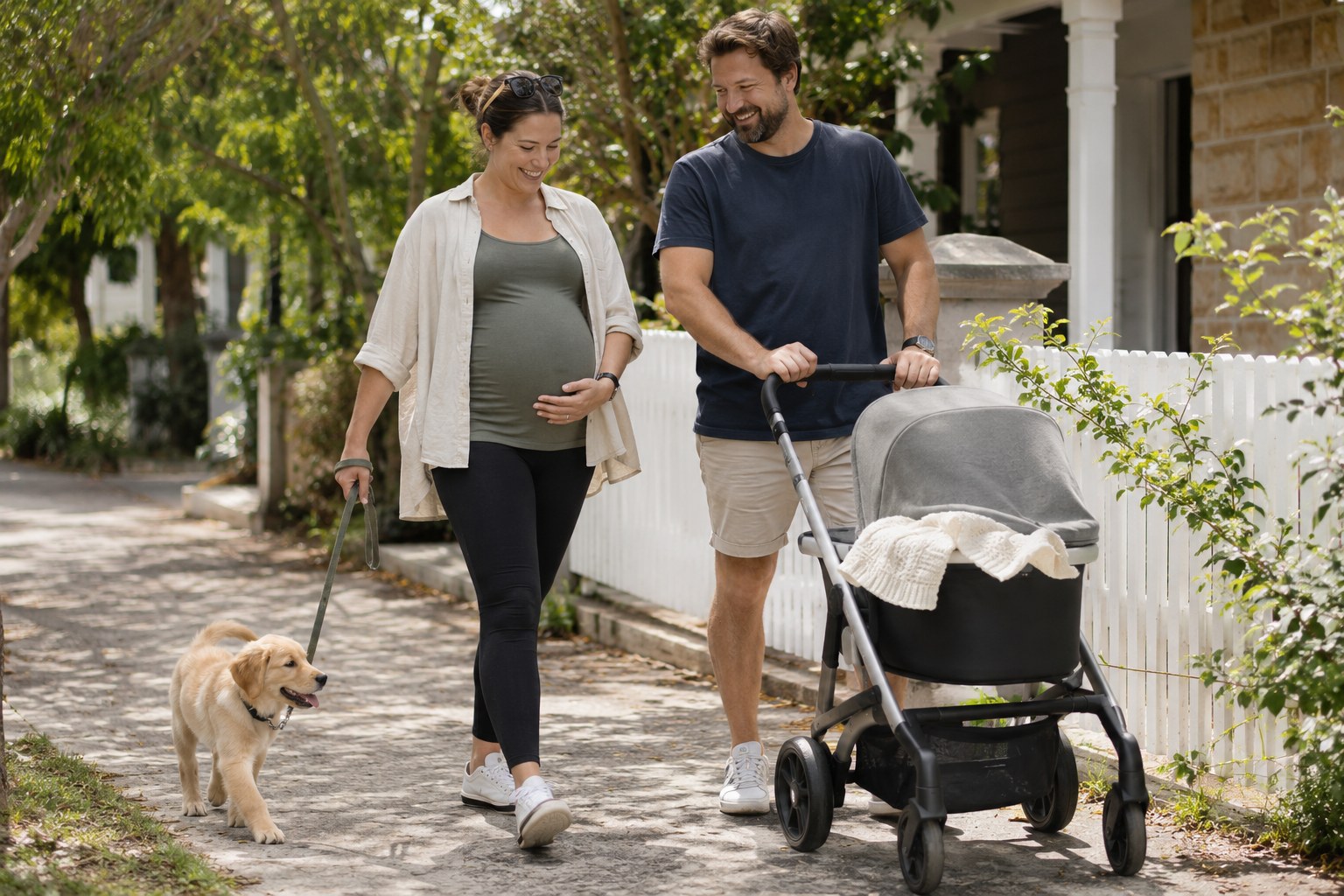
Start preparing your puppy for the baby months ahead, with basic manners, new routines and calm introductions.
Teach sit, stay, settle on a mat and loose lead walking. Practise walking beside an empty pram, play recordings of baby sounds at a low volume, and set up any off-limits rooms before the birth.
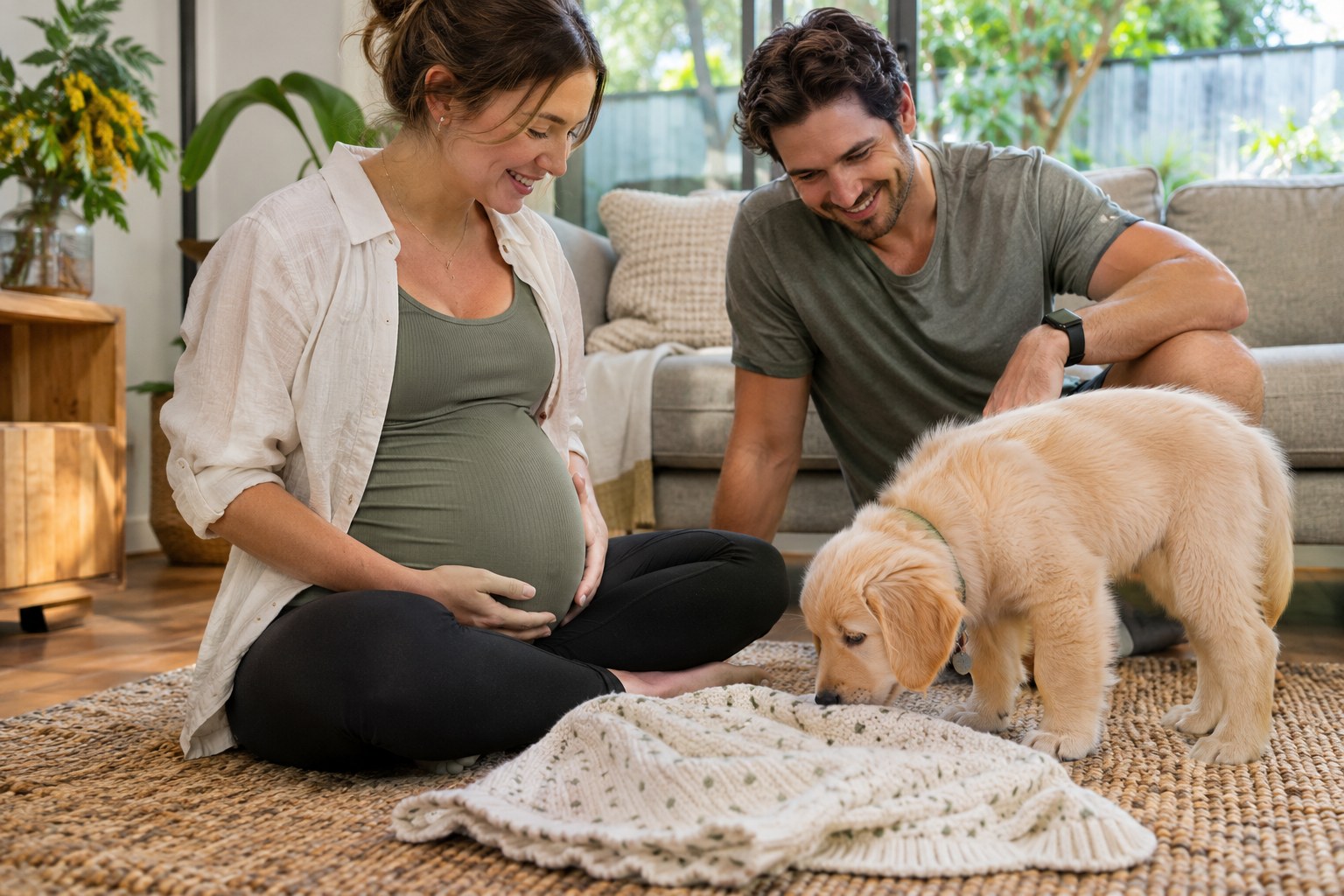
RSPCA Australia advises that you never leave your baby and dog together unsupervised, and to separate them with a secure barrier when you cannot watch. After the birth, let your dog sniff a blanket with the baby’s scent before a calm, leashed first meeting.
Alternatives If Now Is Not the Right Time
If a puppy feels like too much right now, there are good alternatives.
You could wait until your baby is older and routines have settled. An adult dog with a known, calm temperament may suit you better, since it is usually past the chewing and toilet training stage.
You can also prepare now and buy later. Research breeds, shortlist breeders and set up the home, then bring a puppy home when you have the time and energy.
Making the Right Choice for Your Family
Getting a puppy when pregnant is a personal decision that depends on your health, support and capacity.
Be honest about the workload, and talk to your GP or midwife about any health questions.
When the time is right, browse puppies for sale from Australian breeders and choose a calm puppy that fits your growing family.
Frequently Asked Questions
1. Is it safe to have a puppy while pregnant?
For many people it can be, with good hygiene and sensible precautions. Keep the puppy wormed and vaccinated, wash your hands after handling it, avoid trip hazards and train it not to jump. Talk to your GP or midwife about any concerns specific to your pregnancy.
2. Can dogs pass infections to pregnant women?
Dogs can carry worms and gut infections spread through faeces, so hygiene matters. Regular worming, prompt poo pick-up, gloves and handwashing reduce the risk. Toxoplasmosis is mainly linked to cats and raw meat. If you feel unwell or are bitten, contact your GP or midwife.
3. Is it better to get a puppy before or after the baby is born?
For many families it is easier after the baby has settled, when you know your routine and energy. Getting a puppy early in pregnancy can also work with strong support, since it allows months of training. Late pregnancy is usually the hardest time to start.
4. Can I pick up dog poo while pregnant?
Ideally, share this job with a partner or family member. If you pick it up yourself, wear gloves or use a bag, dispose of it promptly and wash your hands well. Keeping your puppy regularly wormed also helps. Ask your GP or midwife if you have concerns.
5. Can a puppy jumping on my belly hurt the baby?
It is sensible to avoid any knock to your belly, so train your puppy to keep four paws on the floor and take extra care with larger, boisterous dogs that could knock you off balance. If you fall or are knocked, contact your midwife or GP promptly.
6. How do I prepare my puppy for a new baby?
Start early with basic manners, loose lead walking beside a pram and any new house rules. Introduce baby sounds and smells gradually, reward calm behaviour and set up quiet resting spaces. Never leave your baby and dog together unsupervised, even if your dog seems gentle.
7. Should I get an adult dog instead of a puppy when pregnant?
An adult dog can be a good choice, since it is usually past toilet training and chewing, and its temperament is easier to judge. Look for a calm, well-socialised dog with a known history around children. Meet the dog several times before deciding.
 Add us as a preferred source